
REVIEW · TOKYO FOOD TOURS
Tokyo: Togoshi Ginza Street Food Tour
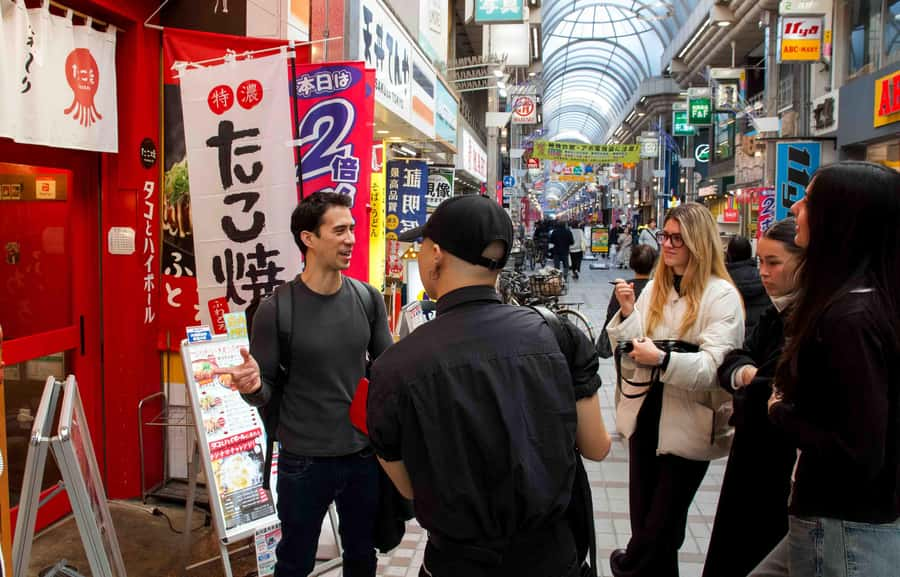
Tokyo tastes better off the main tourist routes. This two-hour walk links Musashi Koyama and Togoshi Ginza, two lively residential districts where food shops serve everyday Japanese favorites rather than tourist set pieces. You get seven tastings, one drink, and an English-speaking guide for $95 per person.
I like the mix of familiar and surprising food, from charcoal-grilled yakitori to rice balls filled with bacon and cream cheese. I also like the small group limit of eight, which makes it easier to ask questions and follow your guide through busy shopping streets. The main drawback is the pace: you walk about 1.86 miles, or 3 kilometers, while eating several substantial portions, so this is not a great pick if you have low stamina or prefer a slow seated meal.
The tour currently carries a perfect 5 rating from 34 reviews. Guides including Sahori, Daisy, Bunga, Brian, and Frank have been praised for friendly service, clear explanations, and help with local transport. Come hungry, wear comfortable shoes, and expect more food than the short duration might suggest.
Key Points Before You Book
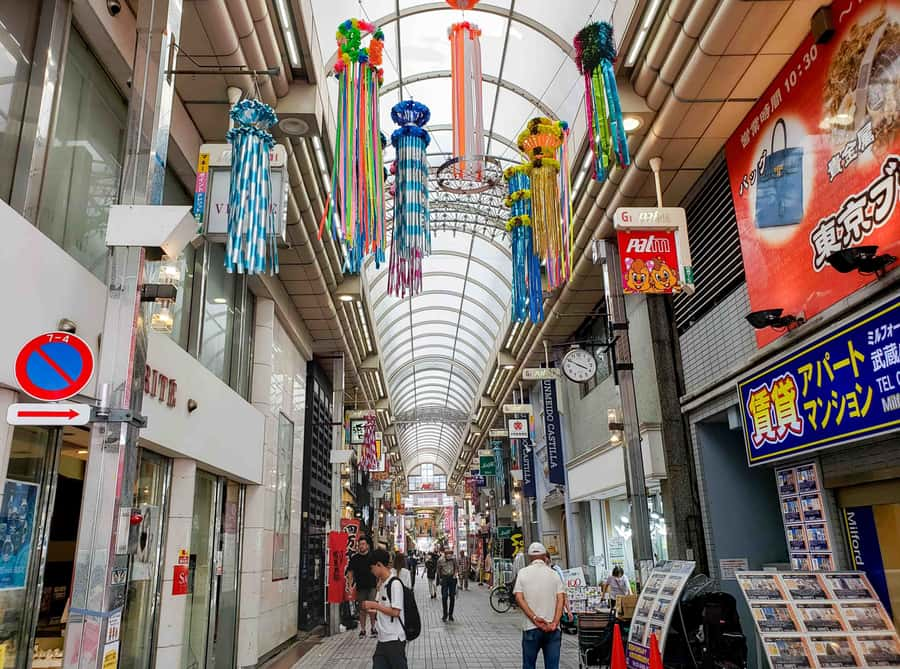
- Two connected shopping districts: Start at Musashi Koyama Palm Shopping Street, then continue to Togoshi Ginza, Tokyo’s longest shopping street.
- Seven food tastings: The lineup includes yakitori, karaage, onigiri, curry bread, Japanese pudding, and another dessert.
- More than 40 onigiri fillings: Choices range from spicy tuna to bacon and cream cheese.
- Small English-speaking group: The tour is limited to eight people, with one guide leading the walk.
- A local side of Tokyo: You spend time in residential neighborhoods that see fewer tourists than central Tokyo sights.
- A filling two hours: The $95 price includes food tastings, a drink, and guiding, but you should arrive hungry.
Starting at Musashi Koyama Palm Shopping Street
Your meeting point is outside the Starbucks at the entrance to Musashi Koyama Palm Shopping Street. Look for a guide holding a Food Tours Tokyo sign. This simple arrangement matters in Tokyo, where a clear landmark can save time at the start of a walking tour.
The first district gives you a useful change of pace from famous central areas. Instead of racing between major sights, you follow your guide through a local shopping street and surrounding neighborhood. The point is not just to eat. You also learn how each dish fits into Japanese food culture and daily life.
The tour is conducted in English and uses a small group format, capped at eight participants. That size is a real advantage at food shops. You can hear explanations more easily, ask about ingredients, and avoid the awkwardness of trying to organize a large crowd around a narrow counter or takeaway window.
Guides have different personalities, but the feedback points to a consistent strength: a warm, personal approach. Sahori has been praised for her communication and local explanations. Daisy made the experience feel especially comfortable for families and small private groups. Bunga brought fun facts and practical advice, while Brian was praised for explaining a neighborhood that many visitors would not find on their own.
More Street Food Tours in Japan
- Tsukiji Fish Market: Street Food & Culture Walking Tour
★ 5.0 · 669 reviews - Tsukiji Fish Market: Street Food & Culture Walking Tour
★ 4.8 · 259 reviews - Hungry Osaka Street Food Tour:15 Tastings & 3 Drinks with a Local
★ 5.0 · 1,727 reviews
Yakitori From a Shop Dating to 1929
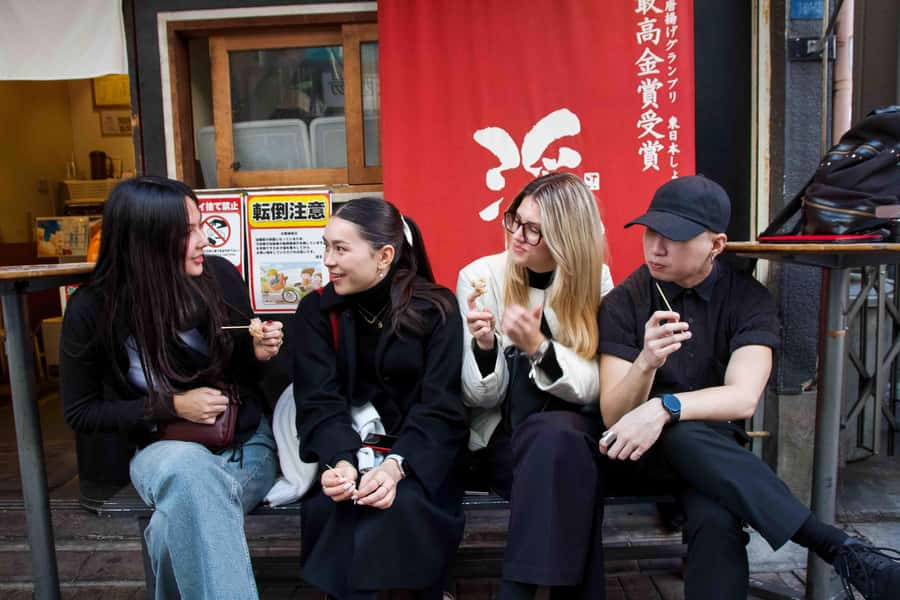
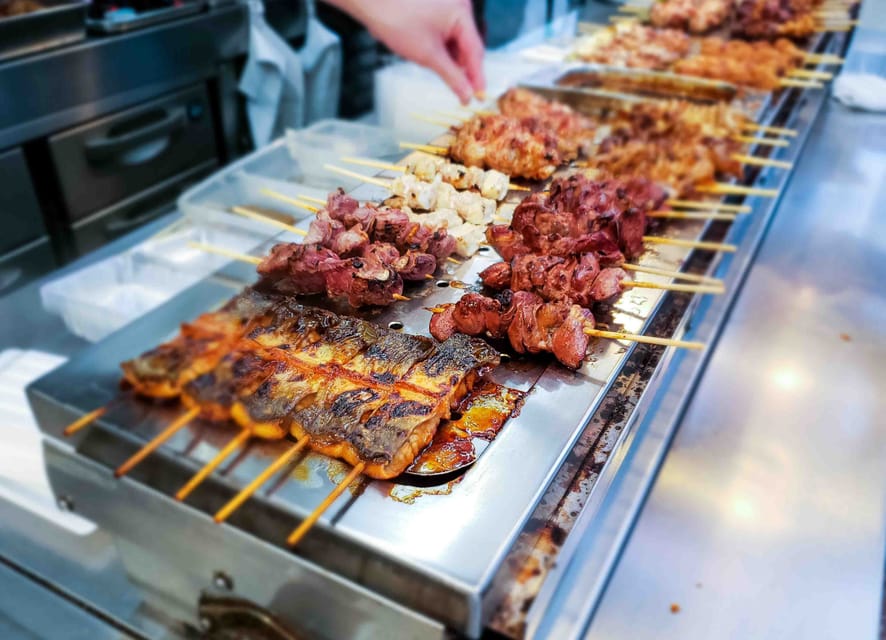
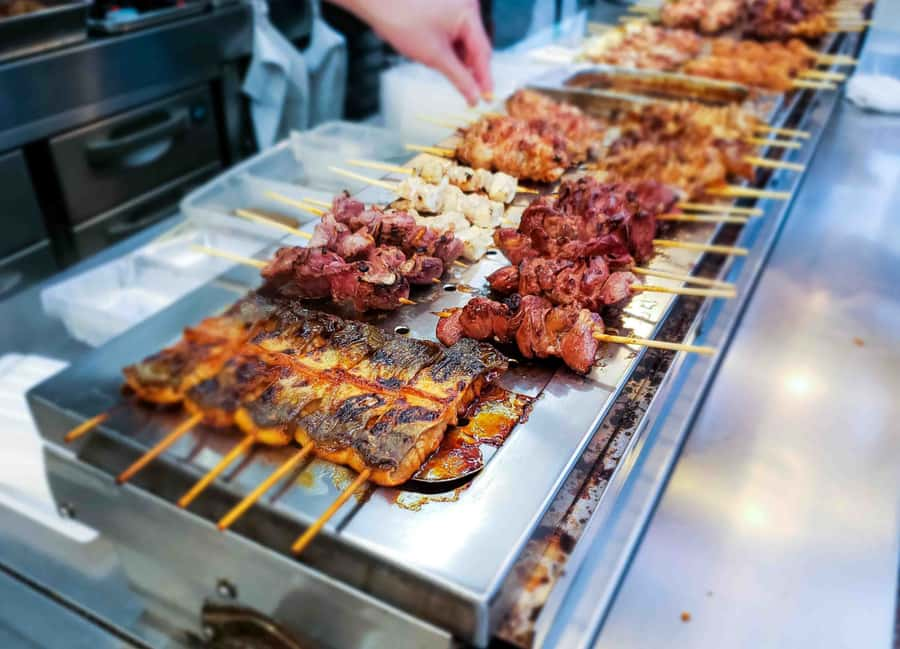
Your first tasting is charcoal-grilled chicken skewers, known as yakitori. The shop has been around since 1929, giving this stop a useful sense of continuity. You are not simply sampling a fashionable snack. You are tasting food from a type of shop that has served local customers for generations.
Yakitori is a good opening dish because it is easy to eat while walking and gives your guide a chance to explain the basics of Japanese grilled chicken. The charcoal cooking adds a smoky quality, and the skewer format lets you sample without committing to a full meal.
This stop also helps set expectations for the rest of the tour. You are moving from shop to shop, tasting a little at each place rather than sitting down for one long course. That keeps the tour active, but it also means you should be ready to eat outdoors or on the move for much of the experience.
One practical point is worth noting: the tour includes a lot of food in a short period. The yakitori may seem modest at first, but it is only the beginning. If you normally eat a light breakfast or lunch, that is useful preparation.
Walking From Musashi Koyama to Togoshi Ginza
After exploring Musashi Koyama, you continue toward Togoshi Ginza. The walking is part of the experience, not dead time between tastings. You see local streets, shops, and the steady rhythm of a part of Tokyo that many first-time visitors skip.
The route covers about 3 kilometers in total. That is manageable for most people who are comfortable walking, but it is not a standing-still food crawl. You should wear supportive shoes and consider the weather, since one review specifically notes that the tour is outdoors for much of the time and recommends dressing warmly on cold days.
This section also creates a useful balance. Food tours can become a parade of bites with little sense of place. Here, walking between districts gives your guide room to explain the area and gives you a look at where people live and shop. You see a more ordinary side of Tokyo without giving up the pleasure of trying local food.
The route is not designed around Tokyo’s famous landmarks, so it may feel less rewarding if you want constant sightseeing. If your goal is to see a quieter neighborhood and eat where local shopping happens, the walk is a strong part of the tour.
Togoshi Ginza and Award-Winning Karaage
Togoshi Ginza is known as Tokyo’s longest shopping street, with about 400 shops. That makes it a natural setting for a food tour. The street offers plenty of everyday food businesses, and you get to experience it as an active local shopping area rather than as a museum display.
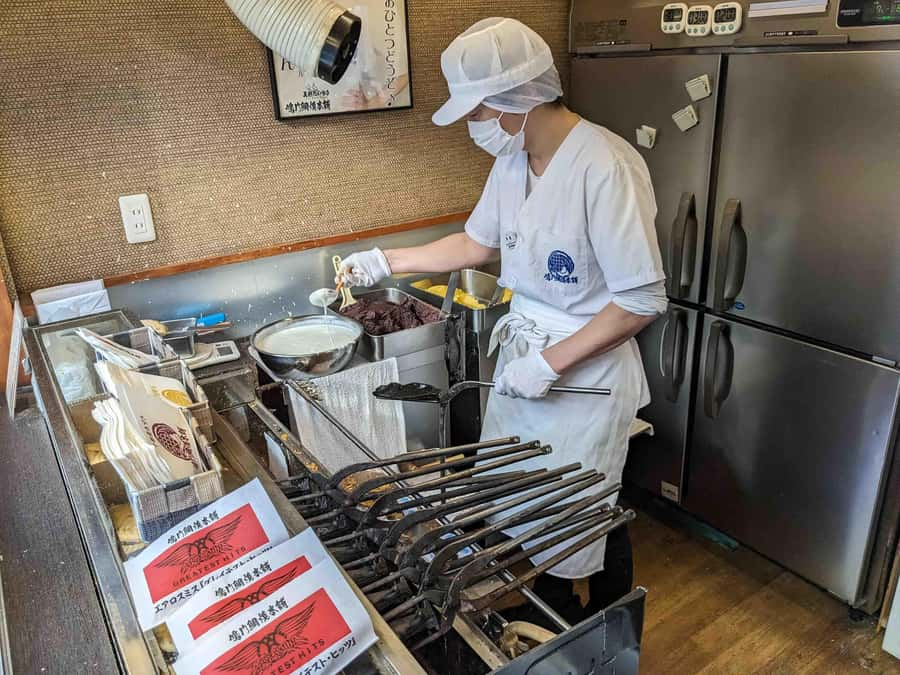
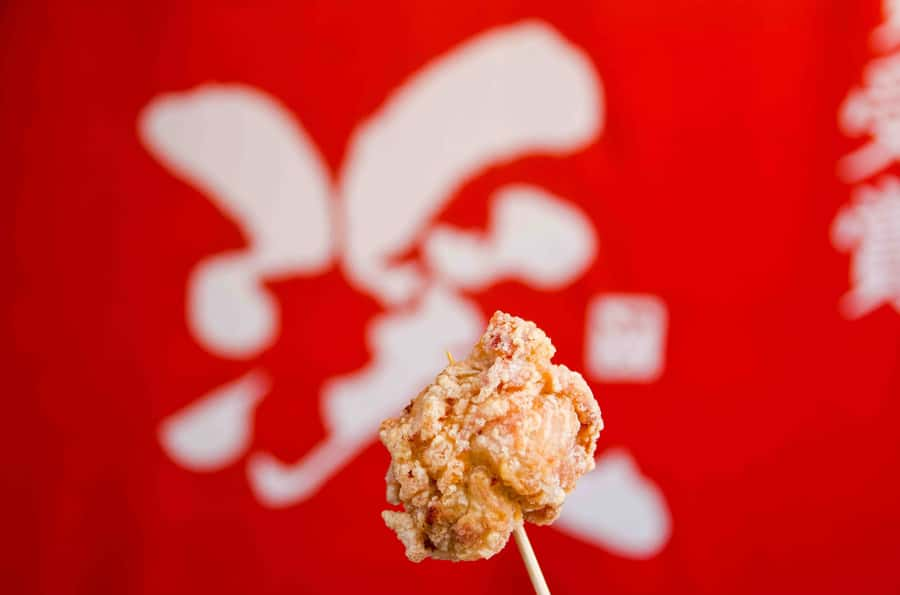
Here you try karaage, Japanese fried chicken. This is one of the tour’s most praised food stops, described as award-winning and repeatedly singled out as delicious. The appeal is easy to understand: karaage is crisp, juicy, savory, and satisfying, with enough substance to make the tour feel like lunch rather than a string of samples.
Your guide also explains the background of the dishes, which adds value to the tasting. You are not left to guess what you are eating or how it fits into Japanese cooking. For visitors who might hesitate at an unfamiliar shop because of the language barrier, that support can make a big difference.
The busy shopping street gives the karaage stop a lively setting, but do not expect a private dining room or a long, relaxed meal. This is a street food tour. You may be standing, walking, or eating in a compact shop environment.
More street food tours in Tokyo:
- Ho Chi Minh City Street Food Tour & Sightseeing By Motorbike
★ 5.0 · 9,413 reviews - Naples: Street Food Walking Tour with Local Guide
★ 4.9 · 4,976 reviews - Small Group Hanoi Street Food Tour with a Real Foodie
★ 5.0 · 4,682 reviews - Rome: Street Food Tour with Local Guide
★ 4.8 · 4,077 reviews
Onigiri With More Than 40 Filling Choices
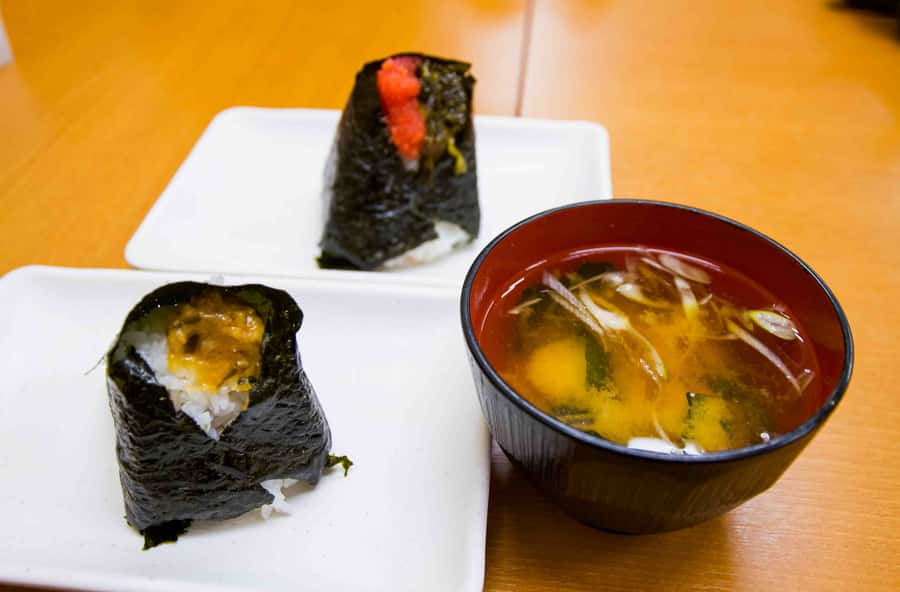
The onigiri stop is one of the most distinctive parts of the route. These traditional rice balls come with more than 40 filling choices, so you get an unusually broad look at how flexible this simple food can be.
Classic options may appeal to you if you already know Japanese food, but the less expected combinations make the stop more interesting. Choices include spicy tuna, bacon, and cream cheese. That range shows how an old-fashioned staple can adapt to changing tastes without losing its basic identity.
You select from the available fillings, so this is the one stop where personal preference matters most. If you like seafood, spicy flavors, or familiar Western-style ingredients, you have room to choose. If you are traveling with children, the broad selection may also make it easier to find something they will eat.
The onigiri is also more filling than it looks. Rice, fried chicken, skewers, curry bread, and desserts add up quickly. Several people have found themselves pleasantly stuffed by the end, so pace yourself early even if every stop looks tempting.
Curry Bread With a Savory Center
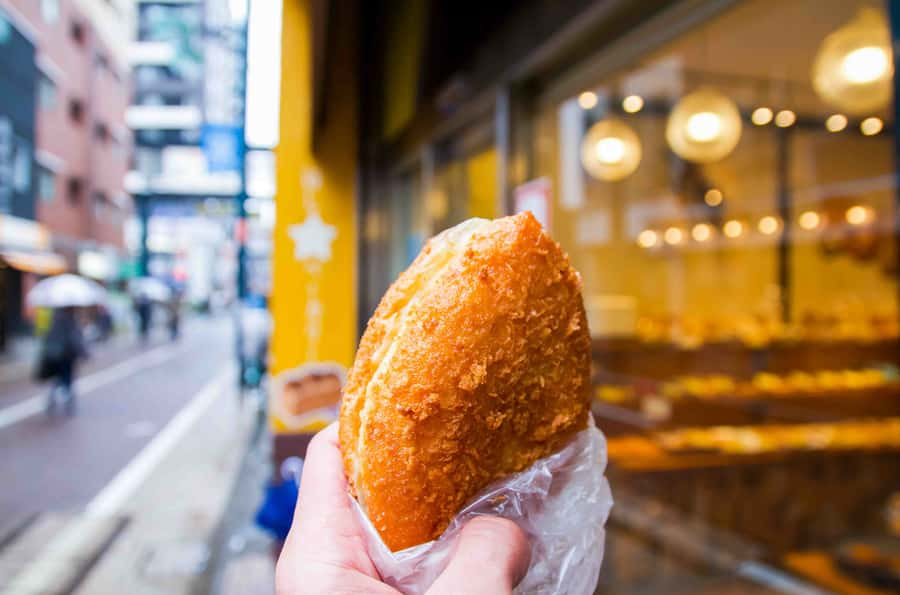
Next comes bread filled with beef curry. Japanese curry bread, often called kare-pan, combines a crisp or baked bread shell with a savory curry filling. It is a useful example of how Japanese bakeries turn familiar foods into portable snacks.
The curry bread adds a different texture to the tour. Yakitori gives you smoky grilled meat, karaage brings a crunchy coating, and onigiri provides soft rice. The bread adds a bakery-style bite and a warm, substantial middle.
This is also a good point to notice the tour’s variety. You are not eating seven versions of the same dish. The tasting list moves across grilled food, fried food, rice, bread, and sweets. That variety is one reason the $95 price can make sense for visitors who want a guided introduction instead of ordering blindly at several separate shops.
Still, value depends on how much you eat and how much guidance you want. If you are comfortable reading menus, navigating Japanese shopping streets, and choosing food on your own, you could spend less by exploring independently. The fee pays for the guide, the planned stops, the explanations, and the ease of sampling several places in two hours.
Finishing With Pudding and Dessert
The final planned tasting is extra-rich Japanese pudding, followed by another dessert if you still have room. After the salty food, the switch to sweets gives the tour a proper finish.
Japanese pudding is often softer and more custard-like than many Western puddings, though the exact preparation can vary. Here, the important point is that the tour ends with a richer sweet rather than leaving you full of only savory food.
You should take the phrase if you still have room seriously. This tour includes seven tastings and one alcoholic or non-alcoholic drink. The dessert is not a token final bite after a light walk. It arrives after several filling foods, so you may want to avoid a large meal beforehand.
The drink inclusion is useful, though it is limited to one alcoholic or non-alcoholic option. If you want more drinks, additional purchases are not included in the stated price.
What the Guides Add to the Experience
The food is the main reason to book, but the guide can determine how comfortable and useful the tour feels. The strongest comments focus on friendly personalities, clear communication, and the ability to explain local food without making the experience feel like a lecture.
Sahori receives especially warm praise. She has been described as friendly, informative, and attentive, and one participant appreciated her help with Tokyo’s complicated train system after the tour. That kind of practical assistance is not guaranteed as a formal part of the program, but it shows the personal care some guides bring to the experience.
Daisy has been praised for making a small group feel relaxed and personalized. Bunga was noted for fun facts and for helping guests try foods they might not normally order. Brian was praised for his fluency in Japanese language and culture, even though he was not born in Japan.
The guide roster may vary, so you should not book expecting one specific person unless the operator confirms it. What you can expect is an English-speaking guide and a group limited to eight.
Is $95 a Fair Price for Two Hours?
At $95 per person, this is not the cheapest way to eat in Tokyo. Japan offers many inexpensive snacks, and you can explore a shopping street on your own for far less.
The price becomes easier to justify if you value convenience and variety. You receive seven tastings, one drink, an English-speaking guide, and a planned route through two local districts. You also avoid the guesswork that can come with unfamiliar menus and small food shops.
The tour is especially good value for a first visit to Tokyo, for families who want someone else to handle the food choices, and for people who enjoy trying several dishes without committing to full portions. It is less compelling for confident independent eaters who speak Japanese or who prefer to spend two hours at one sit-down restaurant.
A perfect 5 rating from 34 reviews suggests strong satisfaction, but it does not remove the practical limits. The tour is short, the walking is steady, and the food comes quickly. Think of the $95 as payment for a compact neighborhood food lesson, not simply for a meal.
Who Should Book This Food Walk?
I would recommend this tour to you if you want to see a residential side of Tokyo and sample foods that you might overlook on your own. It suits curious eaters, first-time visitors, families, and anyone who feels nervous ordering at small Japanese shops.
It also works well for people who have already seen the major central districts and want something less familiar. Togoshi Ginza and Musashi Koyama offer a different kind of Tokyo experience, centered on local shopping and everyday food.
You may want to skip it if walking 3 kilometers is difficult, if you dislike eating outside or standing between stops, or if you want a quiet restaurant meal. It may also be too much food for anyone with a small appetite.
The cancellation policy is generous enough for flexible planning: you can cancel up to 24 hours ahead for a full refund, and you can reserve now while paying later. Hotel pickup and drop-off are not included, so you must reach the Starbucks meeting point yourself.
Final Verdict: A Strong Pick for Food and Neighborhoods
Book this tour if your ideal Tokyo afternoon includes smoky yakitori, crisp karaage, unusual onigiri fillings, curry bread, and dessert, with a local guide showing you how the pieces fit together.
The best reason to go is the combination of food and place. You are not just eating Japanese snacks in a tourist district. You are walking through two residential shopping areas, learning about each dish, and seeing a part of Tokyo that is easy to miss.
Just arrive hungry, wear comfortable shoes, and keep your schedule flexible after the tour. Seven tastings can leave you very full, and the walk takes more energy than the two-hour label suggests.
FAQ
Where does the tour meet?
Meet outside the Starbucks at the entrance to Musashi Koyama Palm Shopping Street. Your guide will hold a Food Tours Tokyo sign.
How long does the tour last?
The tour lasts two hours.
How much walking is involved?
The route involves about 1.86 miles, or 3 kilometers, of walking.
What food is included?
The tastings include charcoal-grilled yakitori, Japanese fried chicken called karaage, onigiri, beef curry bread, extra-rich Japanese pudding, and another dessert. There are seven food tastings in total.
How many onigiri fillings can I choose from?
The onigiri stop offers more than 40 filling choices, including bacon and cream cheese and spicy tuna.
Is a drink included?
Yes. The tour includes one alcoholic or non-alcoholic drink.
Is the tour conducted in English?
Yes. The tour has a live English-speaking guide.
How large is the group?
The group is limited to eight participants.
Is hotel pickup included?
No. Hotel pickup and drop-off are not included.
Can I cancel for a refund?
Yes. You can cancel up to 24 hours in advance for a full refund. You can also reserve now and pay later.
Just added in Tokyo
- Tokyo: Allstar Food Tour★ 4.7 · 29 reviews
- Tokyo: West-Side Cycling and Food Tour with Guide★ 5.0 · 37 reviews
- Tokyo Tsukiji Food & Culture Private Tour Licensed Guide★ 4.9 · 28 reviews
- Tokyo: Wagyu and Sushi Gastronomic Journey★ 4.3 · 24 reviews
- Tokyo: Sushi and Ramen Cooking Class with Sake Pairing Set★ 5.0 · 81 reviews
- Tokyo: Sushi Making Class★ 4.9 · 390 reviews
- Tokyo: Best of Shibuya Food Tour★ 4.7 · 119 reviews
- Tokyo: Ramen Tasting Tour with 6 Mini Bowls of Ramen★ 4.9 · 432 reviews
Street Food Tours, compared.
Ho Chi Minh City Street Food Tour & Sightseeing By Motorbike
Read our review →
Small Group Hanoi Street Food Tour with a Real Foodie
Read our review →
Saigon By Night and Street Food By Motorbike | Opt: Ao Dai Riders
Read our review →
Private Street Food Tour by Motorbike/Car with Local Students
Read our review →
Cinque Terre Park Day Trip with Optional Street Food
Read our review →
Street Food Tasting & Sightseeing Tour by Motorbike
Read our review →Browse the lists this tour appears in