REVIEW · TOKYO FOOD TOURS
Tsukiji Fish Market: Street Food & Culture Walking Tour
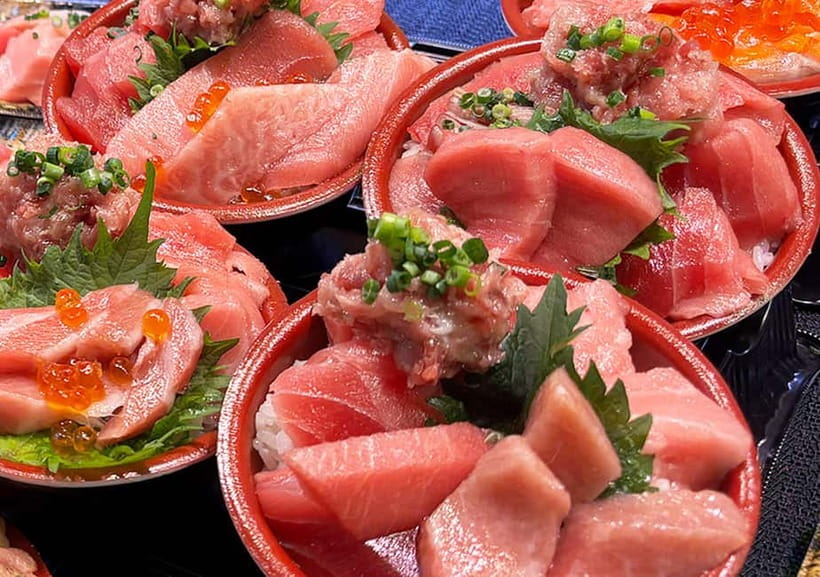
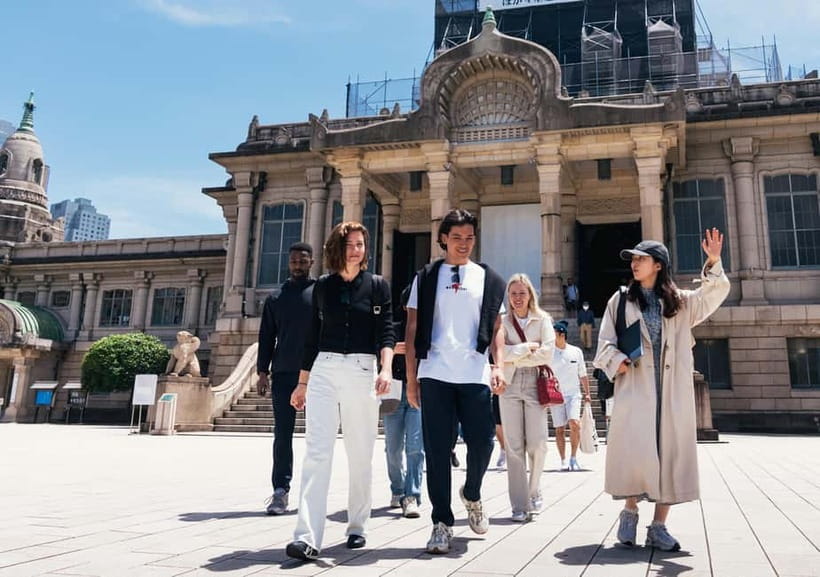
Come hungry, leave curious. This two-hour walk brings Tokyo’s food culture into focus through the Tsukiji Outer Market, where you can taste fresh tuna, wagyu, grilled seafood, traditional snacks, and carefully prepared ingredients. The visit begins at Tsukiji Hongwanji Temple, then moves into the market with an English-speaking local guide.
I especially like the fresh-grated wasabi tasting, a small touch that changes how you taste sushi and seafood. I also like the practical guidance: guides such as Kawa, George, Mao, Kenny, and Chihiro have helped visitors choose good stalls, understand unfamiliar ingredients, and avoid wasting money. The main drawback is timing. On Wednesdays, Sundays, and national holidays, roughly half the shops may be closed, so the market can feel much quieter.
Five things worth knowing before you go
- Fresh wasabi is a highlight: The special wasabi set adds a sharper, cleaner flavor to seafood and sushi.
- The temple gives the tour context: Tsukiji Hongwanji offers an architectural and cultural introduction before the food stops begin.
- You choose what to eat: You can sample a little or spend more on tuna, wagyu, scallops, eel, sushi, and other market food.
- Guides make the market easier: Local guidance helps with ordering, ingredient names, cooking methods, and finding good-value stalls.
- Bring cash: Cash is specifically recommended, and you may want it for extra tastings or purchases.
- Avoid quiet market days if possible: Wednesdays, Sundays, and national holidays can mean fewer open shops and fewer demonstrations.
Starting at Tsukiji Hongwanji Temple
The tour begins at Tsukiji Hongwanji Temple, with the exact meeting point depending on the option you book. The stated coordinates are 35.66661467955698, 139.77199430835137, but check your booking details carefully because there are two listed starting options at the temple.
The temple visit lasts about 20 minutes. That may sound brief, but it helps you understand that Tsukiji is more than a place to buy breakfast. The building has striking architecture, detailed carvings, and a calm interior that contrasts with the market streets outside.
Your guide may explain the proper purification procedure before entering, as Chihiro did for one group. That small lesson gives the morning a useful cultural frame. You are not simply rushing from stall to stall. You are learning how food, ritual, trade, and neighborhood life fit together.
I like this opening because it gives the tour a sense of place. If you went directly to the market, you could easily focus only on the next bite. The temple slows things down first.
More Market Food Tours in Japan
- Tokyo Tsukiji Fish Market Food and Culture Walking Tour
★ 5.0 · 3,184 reviews - Tsukiji Fish Market Guided Tour and Sushi Making with Pro Chef
★ 5.0 · 775 reviews - Tokyo: Tsukiji Fish Market Food and Culture Walking Tour
★ 4.7 · 757 reviews
Eighty minutes among Tsukiji’s food stalls
Most of the tour takes place in the outer market. The guided market visit and food tasting last about 80 minutes, followed by another 20 minutes of guided exploration.
Tsukiji is the kind of place where a first visit can feel confusing. Stalls are close together, signs may be difficult to read, and many foods are unfamiliar. A guide helps you make decisions without turning the walk into a rigid tasting menu.
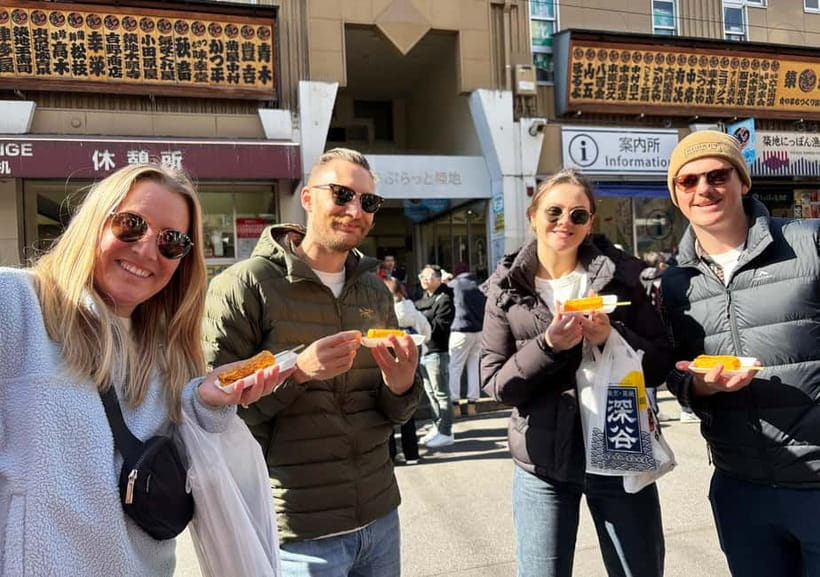
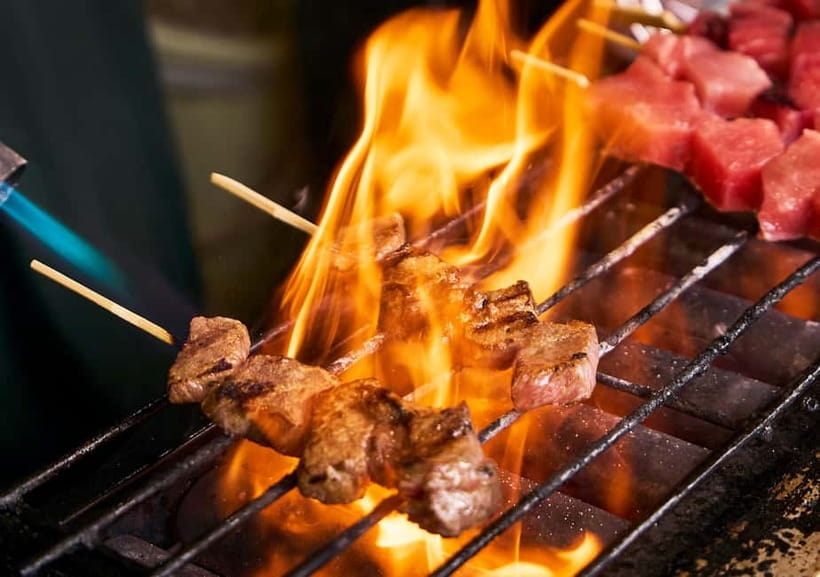
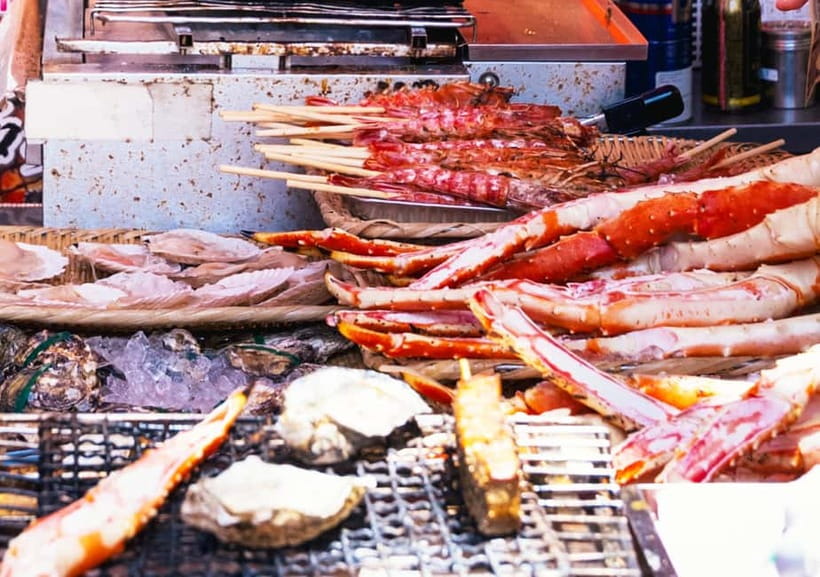
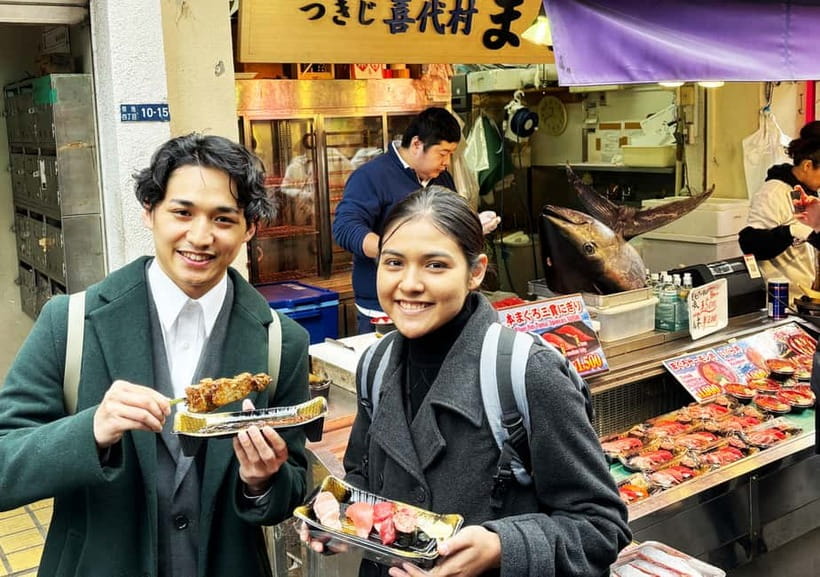
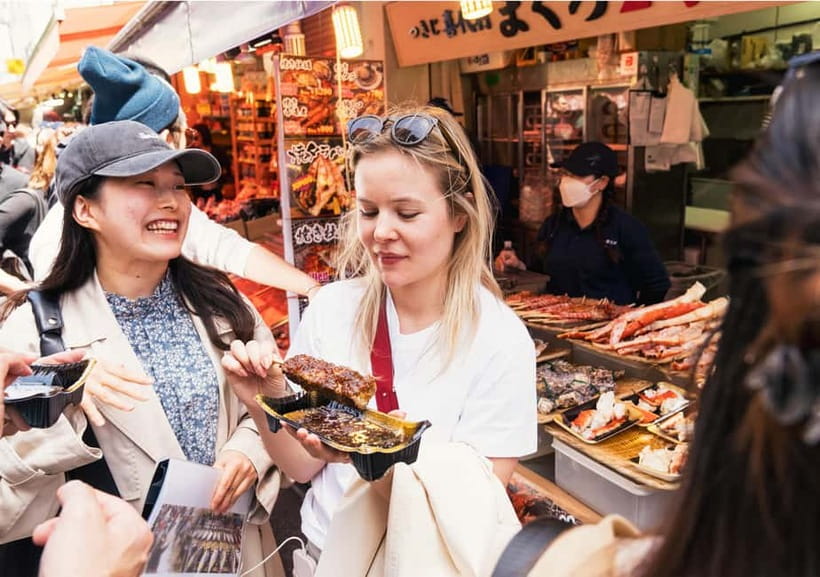
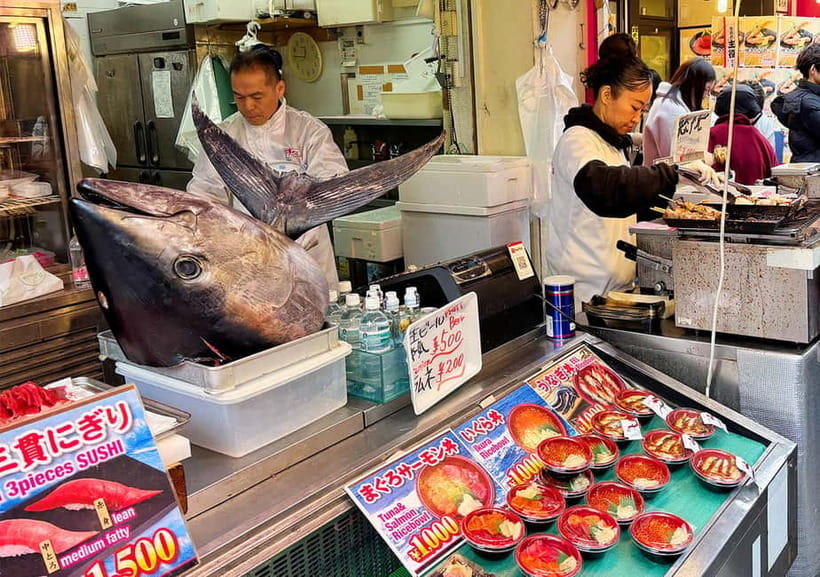
The route can include fresh tuna, sushi, eel, grilled scallops, wagyu, fish cake, omelet, dumplings, octopus, and other traditional foods. Exact stops depend on what is open and what suits the group. Several guides have also taken people to shops selling ceramics, rice snacks, spices, and ingredients for later use.
The food is not presented as a formal restaurant meal. It is more like a series of market samples, with the chance to buy more if something catches your eye. That format works well because you control the pace and spending. You might try a small bite at one stall, then put your money toward a larger sashimi bowl or wagyu skewer at the next.
Bring cash for this reason. The tour price is $22 per person, which is a strong value for two hours of guiding, temple access, market orientation, and food advice. Still, you should expect to carry extra money if you want to sample widely or shop for snacks. The supplied information does not state that all food purchases are covered by the tour fee.
Why the fresh wasabi matters
The special wasabi set is one of the most distinctive details of this experience. Several guides have served fresh-grated wasabi, and it has become a favorite part of the walk.
Many people know wasabi only as the smooth green paste served beside sushi. Fresh wasabi offers a different experience, with a more delicate heat and a flavor that can make tuna, sushi, or other seafood taste clearer. The guide can show you how to use it rather than treating it as just another condiment.
This is also a good example of what a local guide adds. You can visit Tsukiji alone and find food everywhere, but you may not know which ingredient deserves attention or how it is traditionally used. The wasabi demonstration gives you a small piece of Japanese food knowledge you can carry into later meals.
Tuna, wagyu, seafood, and more
The food range is broad enough to suit different tastes. Seafood lovers can look for tuna, sushi, eel, scallops, and fish prepared in several ways. If raw fish is not your favorite, wagyu, grilled items, dumplings, omelet, and fish cake give you other choices.
The tasting style also helps hesitant eaters. One guide, Mao, was praised for making people comfortable when trying foods they had never considered. Another guide, Kawa, was noted for adjusting recommendations to individual preferences. That personal attention matters in a market where a single unfamiliar sign can make ordering feel like a gamble.
The quality of the food is only part of the experience. The guides also explain preservation methods, preparation, and umami, the savory quality central to many Japanese dishes. Traditional preservation can concentrate flavor and help explain why a simple-looking ingredient may taste far more intense than expected.
Food demonstrations may also appear during the tour. Fish cutting was a highlight for several people, although the chance to see it depends on the day and which shops are operating. This is another reason to avoid Wednesday, Sunday, or a national holiday if you have flexibility.
More Market Food Tours in Tokyo
- Tsukiji Fish Market: Street Food & Culture Walking Tour
★ 5.0 · 669 reviews - Tsukiji Fish Market Small-Group Food Walking Tour
★ 5.0 · 621 reviews - Tokyo: Tsukiji Fish Market Sushi Making Class with Pro Chef
★ 4.9 · 506 reviews - Tokyo: Toyosu Tuna Auction &Tsukiji Market Gourmet Adventure
★ 4.8 · 187 reviews
The value of having a guide
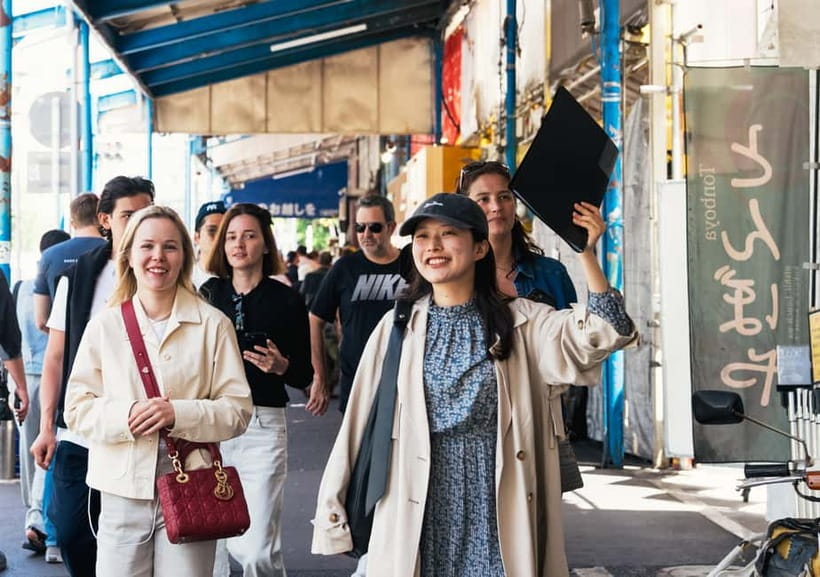
Tsukiji is possible to explore without a tour. You can walk through the market, choose a stall, and buy food on your own. One visitor even felt that a little research could make a self-guided visit work well.
That is a fair point. The tour is not essential if you enjoy independent food hunting and are comfortable ordering without help. Its value is in saving time and reducing guesswork.
Guides can explain what an ingredient is, how it is cooked, and what it is normally used for. They can also point you toward good food at reasonable prices. George was praised for steering people away from touristy prices, while Keni was appreciated for making accurate food recommendations.
The practical help can be just as useful as the history. Kenny has taken care of lines and photos for some groups, and Hauto was praised for standing in food lines while the rest of the group explored nearby stalls. These details may vary by guide and day, but they show how the experience can feel personal rather than scripted.
The tour is offered as a small group, and some bookings may feel nearly private. That makes it easier to ask questions and explain dietary preferences. It also allows the guide to slow down when a food demonstration or shop deserves more attention.
What the guides do best
The strongest part of this experience is the quality of the guiding. Across the supplied comments, the guides are repeatedly praised for clear English, local food advice, friendly personalities, and a good feel for what each group wants.
George is frequently singled out for his English and broad knowledge of the area. Kawa is praised for answering questions, explaining details, and adapting the food choices. Mao, Tomo, Chihiro, Kenny, Daichi, Naoto, Ayaka, and Mal are also described as warm, attentive, and well prepared.
Their approach seems to be relaxed rather than lecture-heavy. You get explanations about market history, food customs, and cooking methods while moving between stalls. That is ideal for a walking tour because you learn in short pieces, then see the subject in front of you.
Small practical touches also matter. Some guides carry napkins and wipes, and fresh wasabi has been an unexpected extra. In hot weather, one guide made a point of finding shade. These are modest actions, but they make a food walk more comfortable.
Market timing and the Wednesday problem
The biggest planning issue is the market calendar. About half of the Tsukiji Outer Market shops may be closed on Wednesdays, Sundays, and national holidays.
The tour can still operate on those days, but the experience may be different. You could find fewer stalls, fewer food choices, and less activity. One group specifically wished it had not booked on a Wednesday because it missed some open shops and a fresh fish-cutting demonstration.
If your schedule allows, choose a day outside those closures. If Wednesday, Sunday, or a holiday is your only option, the temple visit, open food stalls, and guide’s explanations can still make the tour worthwhile. Just set your expectations correctly. This is not a guarantee of the full market scene.
Morning timing may also matter because food markets change through the day, but starting times depend on availability. Check the schedule when booking and aim to arrive ready to walk and eat.
Who should book this two-hour walk?
I would recommend it most strongly to first-time visitors to Tokyo who want an easy introduction to Japanese food. It is also useful if you are curious about seafood but do not know how to choose, order, or identify it.
Families and mixed groups can benefit because the food choices are flexible. One person can try sushi while another chooses wagyu, grilled seafood, or a cooked snack. People who enjoy photography may also appreciate guides who help with photos while keeping the walk moving.
The tour is listed as wheelchair accessible, but the market setting itself may vary from stall to stall. If you have specific mobility needs, confirm the details before booking.
You should think twice if you want a long, quiet temple tour or a formal sit-down meal. This is a short, active market walk with food samples, standing, questions, and movement through busy commercial streets.
Practical details that affect the experience
The activity lasts two hours and is conducted in English. It starts and ends at Tsukiji Hongwanji Temple, with the exact meeting option shown at booking.
The price is $22 per person. For that fee, you receive the guided market walk, temple visit, food and ingredient explanations, and help choosing where to stop. Your additional food budget depends on how much you decide to buy.
Free cancellation is available up to 24 hours in advance, and you can reserve now and pay later. Those policies are useful if your Tokyo schedule is still changing, but the main preparation is simple: wear comfortable shoes, bring cash, and avoid the quieter market days when possible.
Should you book Tsukiji Fish Market Street Food and Culture Walking Tour?
Book it if you want guidance, tastings, and cultural context in one compact experience. The $22 price is especially appealing if you are new to Tsukiji and want to avoid spending your first hour guessing which stall to try.
I would choose a day when most shops are open and bring extra cash for food. If you are comfortable exploring alone, you can certainly visit Tsukiji independently. But if you want fresh wasabi, useful explanations, market history, and a local person to steer you toward good bites, this is a smart and affordable introduction.
FAQ
How long does the Tsukiji Fish Market tour last?
The tour lasts two hours. The schedule includes about 20 minutes at Tsukiji Hongwanji Temple, around 80 minutes of guided market exploration and food tasting, and another 20 minutes in the outer market.
What is the price of the tour?
The listed price is $22 per person. You should also bring cash for food purchases or additional tastings at market stalls.
Is food included in the tour price?
The experience includes food tasting, but the supplied information does not specify that every food purchase is covered by the tour price. Bring cash so you can choose and buy items during the market visit.
What food can I expect to try?
Possible foods include tuna, sushi, eel, grilled scallops, wagyu, fish cake, omelet, dumplings, octopus, and other traditional market foods. The exact selection depends on the open stalls and your group’s preferences.
Is fresh wasabi part of the experience?
A special wasabi set is a highlighted feature, and fresh-grated wasabi has been served by guides during the tour. Availability may depend on the day and guide.
What happens at Tsukiji Hongwanji Temple?
You receive a guided visit lasting about 20 minutes. The temple has distinctive architecture, detailed carvings, and a quiet interior, and the guide may explain the purification procedure before entering.
Which days may have fewer open shops?
About half of the Tsukiji Outer Market shops may be closed on Wednesdays, Sundays, and national holidays. The tour can still operate, but the food choices and market atmosphere may differ.
Is the tour offered in English and is it wheelchair accessible?
Yes. The tour has a live English-speaking guide and is listed as wheelchair accessible. Small-group availability is also offered.
More Street Food Tours in Japan
- Tokyo: Togoshi Ginza Street Food Tour
★ 5.0 · 34 reviews - Hungry Osaka Street Food Tour:15 Tastings & 3 Drinks with a Local
★ 5.0 · 1,727 reviews - Hungry Osaka Street Food Tour: 15 Dishes & 3 Drinks
★ 4.9 · 694 reviews - [1 Group Only] Osaka Street Food Tour for Family
★ 5.0 · 208 reviews
More Seafood Tours in Japan
- Tokyo: Sushi Making with Pro Chef & Tsukiji Fish Market Tour
★ 4.6 · 49 reviews - Osaka: Wakayama Cat Train, Seafood market, Hot Springs Tour
★ 4.6 · 24 reviews
Just added in Tokyo
- Tokyo: Allstar Food Tour★ 4.7 · 29 reviews
- Tokyo: West-Side Cycling and Food Tour with Guide★ 5.0 · 37 reviews
- Tokyo: Wagyu and Sushi Gastronomic Journey★ 4.3 · 24 reviews
- Tokyo: Togoshi Ginza Street Food Tour★ 5.0 · 34 reviews
- Tokyo Tsukiji Food & Culture Private Tour Licensed Guide★ 4.9 · 28 reviews
- Tokyo: Sushi and Ramen Cooking Class with Sake Pairing Set★ 5.0 · 81 reviews
- Tokyo: Sushi Making Class★ 4.9 · 390 reviews
- Tokyo: Ramen Tasting Tour with 6 Mini Bowls of Ramen★ 4.9 · 432 reviews
Street Food Tours, compared.
Ho Chi Minh City Street Food Tour & Sightseeing By Motorbike
Read our review →
Small Group Hanoi Street Food Tour with a Real Foodie
Read our review →
Saigon By Night and Street Food By Motorbike | Opt: Ao Dai Riders
Read our review →
Private Street Food Tour by Motorbike/Car with Local Students
Read our review →
Cinque Terre Park Day Trip with Optional Street Food
Read our review →