REVIEW · TOKYO FOOD TOURS
Tsukiji Fish Market: Street Food & Culture Walking Tour
Come hungry and wear comfortable shoes. This two-hour walk gives you a useful introduction to Tsukiji through food, local customs, and a traditional fish-cutting demonstration. I especially like the chance to sample the market with a guide rather than guess your way through every stall, and the stop at Tsukiji Hongwanji Temple adds a cultural layer beyond seafood.
The price is reasonable at $33.16 per person, particularly if you want help choosing what to eat and an explanation of Japanese ingredients. The main caution is group size: the tour can include up to 30 people, so it may not always feel like the small, personal outing suggested by the description. Crowds, waiting, and a quiet guide can also affect the experience.
Key points before you book
- A food-first look at Tsukiji: The focus is on street food, ingredients, and the daily life of the market rather than a long lecture about Tokyo.
- A traditional fish-cutting show: You see a whole fish filleted using established techniques, then have the chance to enjoy a seafood bowl.
- A useful temple stop: Tsukiji Hongwanji gives you a short introduction to Japanese Buddhist culture before or during the market visit.
- Food costs extra: The tour includes the guided market experience, but meals are not included, so bring room in your budget for tastings.
- Accessible meeting point: The tour starts at the main hall of Tsukiji Hongwanji and is described as wheelchair and stroller accessible.
- A flexible cancellation policy: You can cancel up to 24 hours before the start time for a full refund, although bad weather can also affect the schedule.
Starting at Tsukiji Hongwanji Temple
Your meeting point is the main hall of Tsukiji Hongwanji Temple at 3-chōme-15-1 Tsukiji. This is a practical place to begin because it gives you a clear landmark near the market, and the temple itself becomes part of the tour instead of merely serving as a rendezvous point.
The temple portion lasts about 15 minutes. Your guide introduces the building’s appeal, Japanese Buddhist culture, and some background about the site. That is not enough time for a detailed religious study, but it gives the food stalls a wider setting. Tsukiji is not just a place to buy breakfast or snacks. It is also part of an old neighborhood with customs, beliefs, and working traditions that shape the way food is prepared and sold.
I like this short opening because it helps you begin with context. Still, the temple stop is brief, and it may feel secondary if your main reason for booking is seafood. One direct assessment is that this part adds value for visitors who want a culture-and-food walk, but it will not satisfy anyone looking for an in-depth temple tour.
The starting point is near public transportation, and most people can participate. Since the tour is listed as wheelchair and stroller accessible, it can suit families and visitors who need step-free access. You should still consider the practical challenge of moving through a busy market with a larger group.
More Market Food Tours in Japan
- Tokyo Tsukiji Fish Market Food and Culture Walking Tour
★ 5.0 · 3,184 reviews - Tsukiji Fish Market Guided Tour and Sushi Making with Pro Chef
★ 5.0 · 775 reviews - Tokyo: Tsukiji Fish Market Food and Culture Walking Tour
★ 4.7 · 757 reviews
Street food through a local guide’s eyes
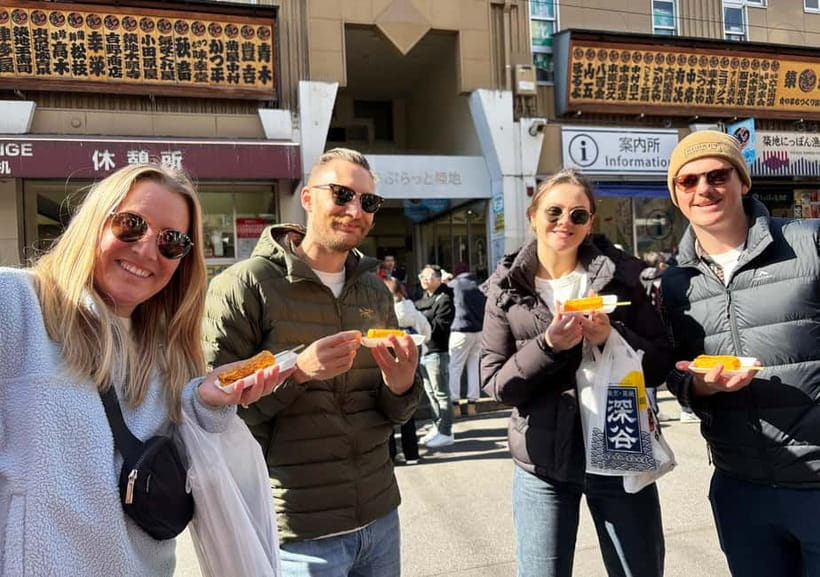
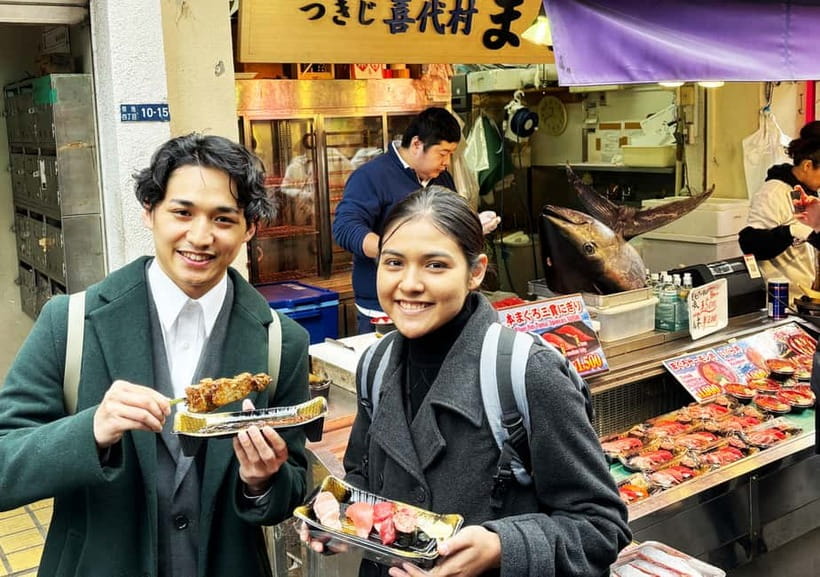
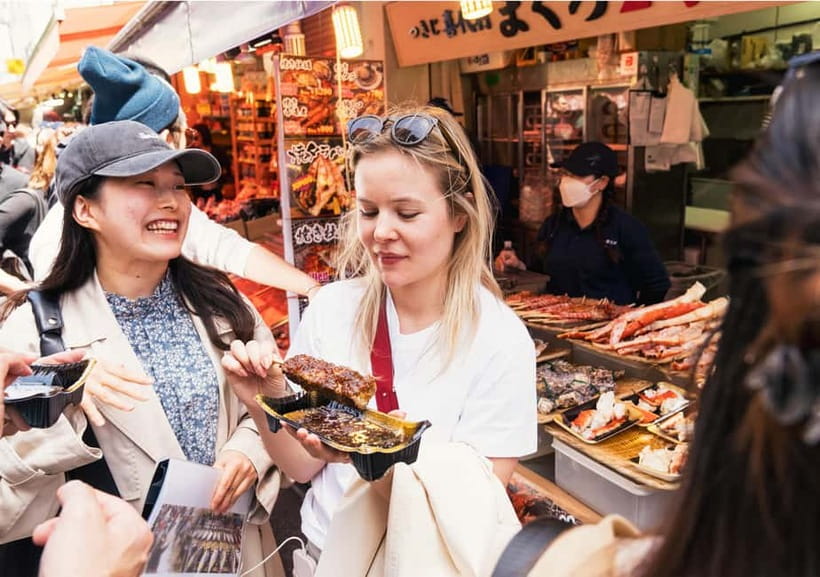
The first market segment lasts about 45 minutes at Tsukiji Jogai Market, the outer market area. This is where the tour’s main appeal comes through. Rather than simply wandering past rows of food stalls, you have a guide pointing out Japanese ingredients, explaining cooking ideas, and helping you understand what makes the food worth trying.
The emphasis is not on a formal meal. You move through the market, stop at food stands, and choose what interests you. I like this format for a first visit because Tsukiji can feel confusing when every counter offers something unfamiliar. A guide can help you focus on the food culture instead of spending your entire visit trying to work out what each stall sells.
The tour’s strongest praise centers on the food selection and the guides’ ability to lead people to good places to eat. George is specifically praised for taking people to the best spots and helping them try a wide range of appealing foods. Tomo is also praised for explaining local culture and history clearly while keeping the food enjoyable.
Keep your expectations in check. The price does not cover meals, so you pay separately for the food you choose. That is useful because you control how much you eat and spend, but the final cost can rise above the advertised $33.16 if you sample several items.
This part is best for people who enjoy making small food stops rather than sitting down for one long meal. It also works well for cautious eaters who want a guide nearby when trying something new. If you already know Tsukiji well, the value will depend on the guide’s personal recommendations and conversation.
The fish-cutting demonstration and seafood bowl
The second market stop lasts around 30 minutes and includes an exclusive fish-cutting show. A skilled chef fillets a whole fish using traditional methods, giving you a close look at the precision behind Japanese seafood preparation.
This is more than a quick spectacle. It shows how much care goes into turning a whole fish into clean, usable portions. You get to see the knife work, the sequence of preparation, and the practical skill involved. For someone who thinks of seafood only as a finished dish, this is a helpful change of perspective.
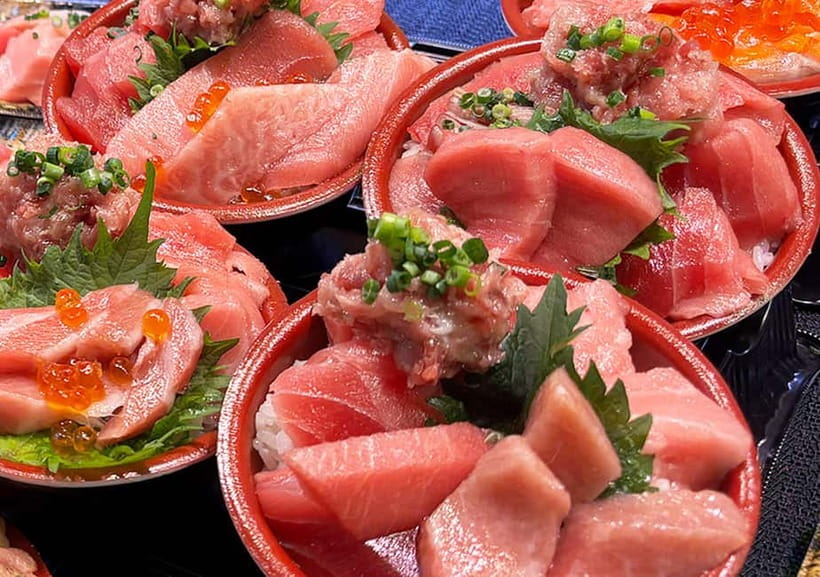
After the demonstration, you can enjoy a fresh seafood bowl and learn more about Japanese food customs. The bowl is an important part of the experience because it connects the demonstration with the final product. You do not just watch the fish being prepared. You also see how that work becomes a meal.
There is one point to handle carefully: meals are not included in the tour price. The fish-cutting presentation is included, but you should expect to pay for the seafood bowl and other food yourself unless the operator gives you different instructions at booking. Bring enough money for the dishes you want, and remember that market food costs can vary.
The demonstration may be the most distinctive feature of the tour. You can walk through food stalls on your own, but you are less likely to receive this focused look at a traditional preparation technique without a planned activity. It gives the two-hour visit a clear centerpiece.
Seeing the working side of Tsukiji Fish Market
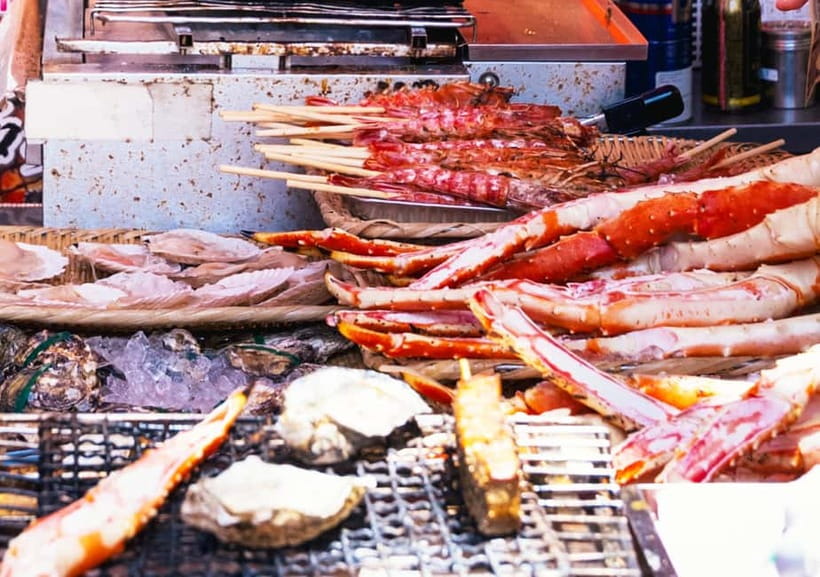
The third stop lasts about 30 minutes and shifts attention toward the professional side of Tsukiji Fish Market. You see an area where traders operate and get a sense of the market as a workplace, not only as a row of places selling snacks to the public.
That distinction matters. The outer market is designed for shoppers and food lovers, while the working market reflects the commercial system behind Tokyo’s seafood culture. The tour does not promise a long technical explanation of fish distribution, so you should expect an atmospheric look rather than a full industry lesson.
This is also where crowd control becomes important. One person found the tour hectic and felt that some stalls were skipped because the market was too busy. Another found the group difficult to follow during a crowded period near New Year. Those details point to a real issue: your experience can depend on how busy Tsukiji is and how well the guide keeps the group together.
The tour is capped at 30 people. That is not a tiny group, even if the experience is marketed as small-group. A group that size can make it harder to hear explanations, gather around a food stall, or keep pace through narrow areas. If you need frequent breaks or must stay close to the guide, position yourself near the front and make your needs clear at the start.
One practical concern is the guide’s speaking volume. A participant found the guide hard to hear in the market noise, and this is worth taking seriously. Tsukiji is full of conversation, movement, and competing sounds. A guide with clear English and a strong voice can make the difference between a useful explanation and a blur of background noise.
More Market Food Tours in Tokyo
- Tsukiji Fish Market Small-Group Food Walking Tour
★ 5.0 · 621 reviews - Tokyo: Tsukiji Fish Market Sushi Making Class with Pro Chef
★ 4.9 · 506 reviews - Tsukiji Fish Market: Street Food & Culture Walking Tour
★ 4.8 · 259 reviews - Tokyo: Toyosu Tuna Auction &Tsukiji Market Gourmet Adventure
★ 4.8 · 187 reviews
What the guides add to the experience
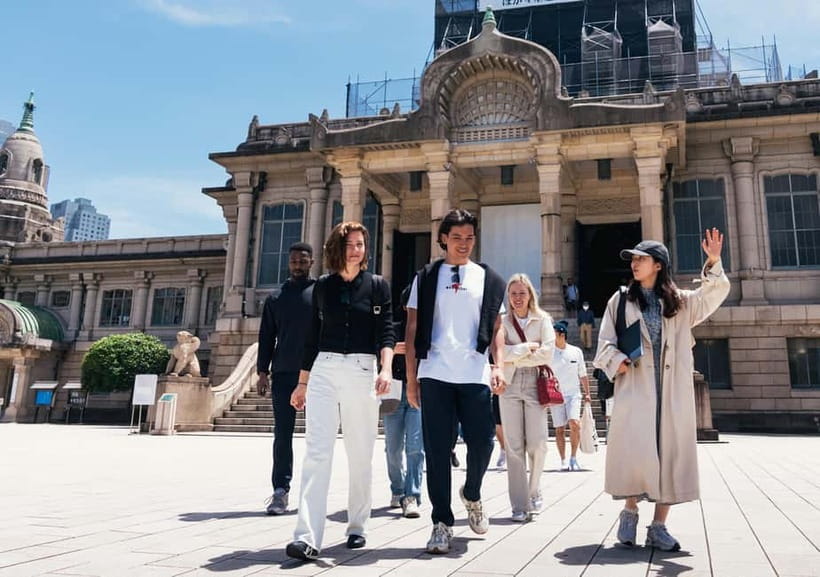
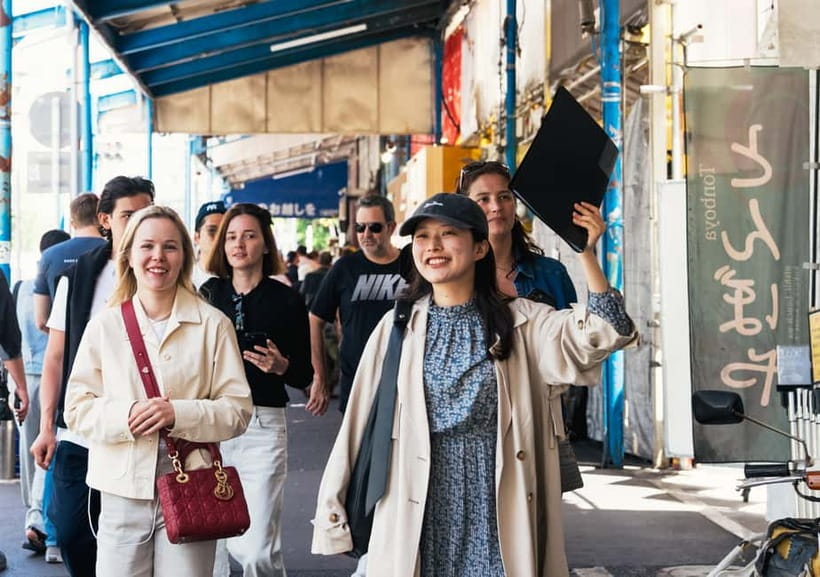
The guide is the main reason to pay for this walk instead of exploring Tsukiji alone. The strongest guides do three jobs: they help you choose food, explain what you are seeing, and keep the group moving.
George receives particularly warm praise for knowing where to take the group for food. Tomo is praised for explaining culture and history in clear English. Those comments suggest that guide quality can be excellent, but the experience may not be identical every time. Your enjoyment will depend heavily on who leads the group and how crowded the market is that day.
The tour does not appear to be built around a long, academic history talk. One less favorable assessment found too much waiting and not enough historical explanation, with most of the time spent visiting food stands and encouraging people to try dishes. That criticism is useful because it clarifies the product.
Book this if you want a guided introduction to Tsukiji’s food culture. Do not book it expecting a detailed lecture on Tokyo’s past, an extensive Buddhist lesson, or a private food tour with constant one-on-one attention.
Is $33.16 good value?
At $33.16 per person, the tour sits at a sensible price for a two-hour guided walk with a fish-cutting demonstration and a temple visit. You are paying for orientation, local food advice, cultural explanation, and access to a planned demonstration. The fee can be worthwhile on a first Tokyo visit when your time is limited.
The value is less clear if you are comfortable exploring markets alone. Admission to the open market areas is free, and you can choose your own stalls without paying a guide. In that case, the tour needs to deliver useful recommendations and clear explanations to justify the added cost.
Food is extra, which is normal for a market walk but important for your budget. The listed price is not the final cost of eating. Think of the fee as covering the guide and organized experience, then set aside additional money for the seafood bowl and street food.
The tour becomes a better deal if you make full use of the guide. Ask about ingredients, cooking methods, and local customs. If you simply follow the group from stall to stall without asking questions, you may feel that you paid for access to places you could have found yourself.
Timing, comfort, and accessibility
The full experience lasts approximately two hours and ends back at the meeting point. That makes it easy to fit into a Tokyo morning or combine with other plans in the Tsukiji and Ginza area, although the tour itself does not state a specific start time.
Wear shoes suitable for walking and standing. You may pause at stalls, wait for demonstrations, and move at the pace of the group. The market can be crowded, and one account describes a hectic visit with skipped stalls, so patience matters.
The tour is listed as wheelchair and stroller accessible, and most people can participate. That is a useful advantage for families and visitors with mobility needs. Still, accessibility in a busy market can involve practical limits, especially when a large group gathers near a stall or demonstration.
The experience requires good weather. If the operator cancels because of poor conditions, you are offered another date or a full refund. You can also cancel for a full refund if you do so at least 24 hours before the start time. Changes or cancellations inside that window are not accepted, so keep the local start time in mind.
Who should book this Tsukiji walk?
I would recommend it to a first-time visitor who wants a clear introduction to Japanese food without planning every stop alone. It is also a good match for curious eaters, families, and anyone who values a short cultural stop alongside market food.
You may especially enjoy it if you want:
- Help choosing dishes at Tsukiji stalls
- A guided look at Japanese ingredients and cooking
- A traditional fish-cutting demonstration
- A seafood bowl after the presentation
- A short introduction to Buddhist culture at Hongwanji Temple
- An accessible activity near public transportation
I would be more cautious if you dislike crowds, need a quiet and slow-paced tour, or want a private guide. A group of up to 30 people can feel less personal than expected, and the market noise may make explanations hard to hear.
You should also skip it if your only goal is to wander freely and spend as little as possible. Tsukiji’s public areas can be explored without a ticket. The tour earns its price through guidance, food suggestions, and the fish-cutting show, not through exclusive access to the entire market.
Should you book it?
Book this tour if you want a friendly, food-centered introduction to Tsukiji and like the idea of pairing street food with a fish-cutting demonstration and a temple visit. At $33.16, it offers solid value for a first look, especially when a strong guide such as George or Tomo leads the group.
Go independently if you already know Japanese food markets, prefer to avoid group pacing, or want a deeper history lesson. The experience is at its best when you treat it as a guided orientation with optional eating, not as a full historical tour or private culinary adventure.
FAQ
How long does the Tsukiji Fish Market tour last?
The tour lasts approximately two hours and ends back at the meeting point.
Where does the tour begin?
The tour begins at the main hall of Tsukiji Hongwanji Temple, at 3-chōme-15-1 Tsukiji, Chuo City, Tokyo 104-0045, Japan.
Is food included in the tour price?
No. Meals are not included, so you should plan to pay separately for street food and the seafood bowl.
Is the tour wheelchair and stroller accessible?
Yes. The experience is described as wheelchair and stroller accessible.
How many people can join the tour?
The activity can have a maximum of 30 participants.
What happens during the fish-cutting show?
A skilled chef fillets a whole fish using traditional techniques. Afterward, you can enjoy a fresh seafood bowl and learn about Japanese food culture.
Can I cancel for a full refund?
Yes. You can cancel at least 24 hours before the experience start time for a full refund. If poor weather causes the operator to cancel, you are offered another date or a full refund.
More Street Food Tours in Japan
- Tokyo: Togoshi Ginza Street Food Tour
★ 5.0 · 34 reviews - Hungry Osaka Street Food Tour:15 Tastings & 3 Drinks with a Local
★ 5.0 · 1,727 reviews - Hungry Osaka Street Food Tour: 15 Dishes & 3 Drinks
★ 4.9 · 694 reviews - [1 Group Only] Osaka Street Food Tour for Family
★ 5.0 · 208 reviews
More Seafood Tours in Japan
- Tokyo: Sushi Making with Pro Chef & Tsukiji Fish Market Tour
★ 4.6 · 49 reviews - Osaka: Wakayama Cat Train, Seafood market, Hot Springs Tour
★ 4.6 · 24 reviews
Just added in Tokyo
- Tokyo: Allstar Food Tour★ 4.7 · 29 reviews
- Tokyo: West-Side Cycling and Food Tour with Guide★ 5.0 · 37 reviews
- Tokyo: Togoshi Ginza Street Food Tour★ 5.0 · 34 reviews
- Tokyo Tsukiji Food & Culture Private Tour Licensed Guide★ 4.9 · 28 reviews
- Tokyo: Wagyu and Sushi Gastronomic Journey★ 4.3 · 24 reviews
- Tokyo: Sushi Making Class★ 4.9 · 390 reviews
- Tokyo: Sushi and Ramen Cooking Class with Sake Pairing Set★ 5.0 · 81 reviews
- Tokyo: Ramen Tasting Tour with 6 Mini Bowls of Ramen★ 4.9 · 432 reviews
Street Food Tours, compared.
Ho Chi Minh City Street Food Tour & Sightseeing By Motorbike
Read our review →
Small Group Hanoi Street Food Tour with a Real Foodie
Read our review →
Saigon By Night and Street Food By Motorbike | Opt: Ao Dai Riders
Read our review →
Private Street Food Tour by Motorbike/Car with Local Students
Read our review →
Cinque Terre Park Day Trip with Optional Street Food
Read our review →