REVIEW · TOKYO FOOD TOURS
Tsukiji Fish Market Guided Tour and Sushi Making with Pro Chef
Fresh fish is only half the story. This four-hour experience links Tsukiji’s outer market with a hands-on sushi class, so you see ingredients in their selling place before shaping them into lunch. I like the way the tour adds Tsukiji Hongwanji Temple and local customs to the food walk, and I especially like the patient, step-by-step instruction from the sushi chef. The main drawback is that the market portion focuses on shops and culture rather than included tastings, so the $104.13 price may feel high if you mainly want to eat your way through Tsukiji.
The tour suits you best if you want a guided introduction to sushi rather than a serious culinary qualification. Guides such as Monami, Sachi-san, Ko, Mari-san, Yuki, and Tad have earned praise for clear explanations and friendly help, while Chef Kate has been noted for making the class relaxed and easy to follow. Wear good walking shoes, arrive early at the temple’s main gate, and keep your schedule loose because the ending location and timing can vary.
Key points to know before booking
- Tsukiji’s working market has moved: You visit the outer market and a small wholesale area, not the former inner market business zone.
- The tour begins at a temple: Tsukiji Hongwanji provides a short introduction to Buddhist customs, local history, and proper temple etiquette.
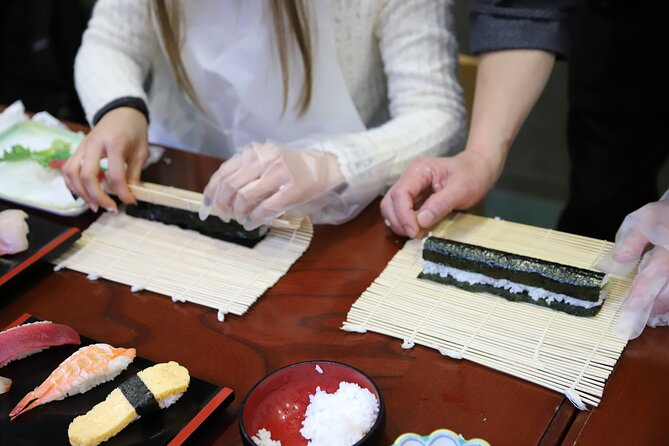
- You make six kinds of sushi: The class covers five types of nigiri plus one rolled sushi, with guidance from a professional chef.
- Lunch is your own work: You eat the sushi you prepare, along with a piece made by the sushi master, dashi soup, wasabi, and green tea.
- The class location can change: Sushi making may take place in Tsukiji, Asakusa, or Yotsuya, and the final stop depends on the date.
- Plan for stairs and walking: The classroom may be on the third floor of a traditional building with no elevator, and the tour group can reach 22 people.
Why this Tsukiji tour works
Tsukiji is easy to visit on your own, but it is not always easy to understand. The outer market is a maze of seafood shops, food stalls, cooking supplies, and small businesses. A guide gives you a framework for what you are seeing, from Japanese ingredients and utensils to the path seafood takes from the ocean to the customer.
That context is the real point of the first half. You are not just looking at fish. You are learning how seafood is caught, distributed, displayed, and sold, and how closely it is tied to daily Japanese food culture.
The tour also makes a useful connection between market and meal. After seeing ingredients in their commercial setting, you handle them yourself in the sushi class. That makes the lesson feel less like a stand-alone cooking demonstration and more like the next chapter of the market visit.
The experience has earned a 4.9 rating from 775 reviews, with 97 percent recommending it. Those numbers suggest a strong overall experience, but they do not erase the key limitation: the market walk does not include tastings. You can buy food from stalls along the way, but those purchases are extra.
More Market Food Tours in Japan
- Tokyo Tsukiji Fish Market Food and Culture Walking Tour
★ 5.0 · 3,184 reviews - Tokyo: Tsukiji Fish Market Food and Culture Walking Tour
★ 4.7 · 757 reviews - Tsukiji Fish Market: Street Food & Culture Walking Tour
★ 5.0 · 669 reviews
Starting at Tsukiji Hongwanji Temple
The meeting point is the main gate of Tsukiji Hongan-ji Temple, at 3-chōme-15-1 Tsukiji, Chuo City. Be careful here. The meeting point is at the front side of the temple, while some map directions lead toward the back.
The guide waits with a Japan Wonder Travel sign. The tour leaves at the stated time, and late arrivals cannot join the group after it has departed. Since there is no refund for arriving late on the day, I would reach the area early enough to locate the correct gate without stress.
The temple stop gives the tour a cultural opening. Guides explain local customs and may show you how to pray properly at a Buddhist temple. One particularly useful part is learning the difference between simply passing through a religious site and approaching it with the right behavior.
Some people may find this opening longer than expected. If you booked the tour mainly for seafood, the temple and shrine visits take time away from the market. If you enjoy understanding how food fits into Japanese culture, the added context is worthwhile.
Walking through the outer Tsukiji market
Tsukiji’s inner fish market moved to Toyosu in 2018, so set your expectations correctly. This experience visits the outer market and a small wholesale area. You will not enter the former inner-market business zone.
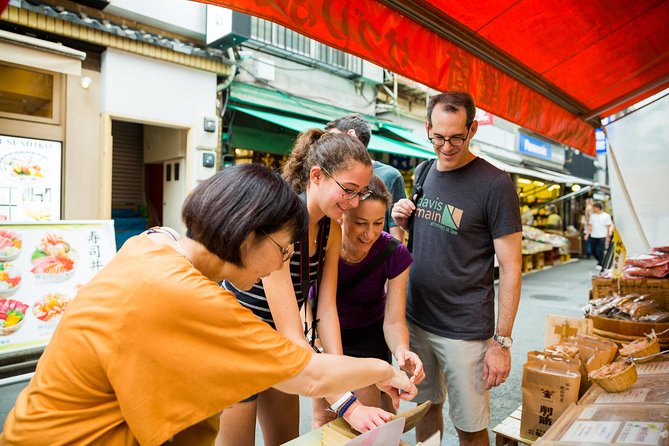
The outer market is still a useful place to learn about Japanese food. The guide points out seafood, snacks, ingredients, kitchen tools, and specialist shops that can be easy to miss when you walk alone. The focus is on explanation and orientation rather than a long series of free samples.
Guides such as Monami, Ko, Yuki, Mari-san, and Tad have been praised for making the route easy to follow. Ko, in particular, has been praised for explaining different foods and giving recommendations about what to try. Yuki’s strong English helped one family understand both the market and the later class.
You should think of this as a guided market introduction, not a food crawl. If you want to sample every stall, a group schedule may feel limiting. You can buy food as you go, and it is wise to carry cash for those purchases, but the cost is not included in the tour price.
The group can include up to 22 people. That is large enough to affect your freedom at crowded stalls, especially if you want to stop for an unplanned snack. On the positive side, a group also keeps the route organized in a busy commercial district.
What makes the market portion valuable
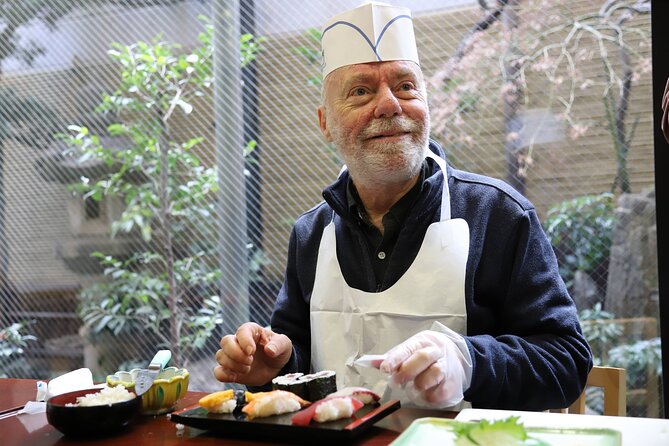
The best market guides do more than point at fish. They explain the role of different products, the customs around food, and how Japanese shoppers use the market. This is where the guide’s personality matters most.
The strongest feedback centers on the human side of the tour. Monami has been praised for helping people find good food at fair prices. Sachi-san has been described as patient and helpful, with clear explanations about the temple and market. Mari-san has received praise for hospitality and English, while Tad has been credited with making the route work well for families with children.
The market section also introduces you to items you may not recognize. You might see unfamiliar seafood, preserved products, Japanese sweets, cooking tools, and ingredients used in everyday meals. You do not need to know what to buy in advance. The guide helps you make sense of the displays.
Still, the tour could be too basic for someone who has already spent a morning at Tsukiji. One person found the market portion focused on ordinary food stalls and shopping areas, with less depth than expected. That is a fair warning. The value comes from orientation and cultural explanation, not access to a restricted fish auction or a private wholesale operation.
More Market Food Tours in Tokyo
- Tsukiji Fish Market Small-Group Food Walking Tour
★ 5.0 · 621 reviews - Tokyo: Tsukiji Fish Market Sushi Making Class with Pro Chef
★ 4.9 · 506 reviews - Tsukiji Fish Market: Street Food & Culture Walking Tour
★ 4.8 · 259 reviews - Tokyo: Toyosu Tuna Auction &Tsukiji Market Gourmet Adventure
★ 4.8 · 187 reviews
Moving from market sights to sushi skills
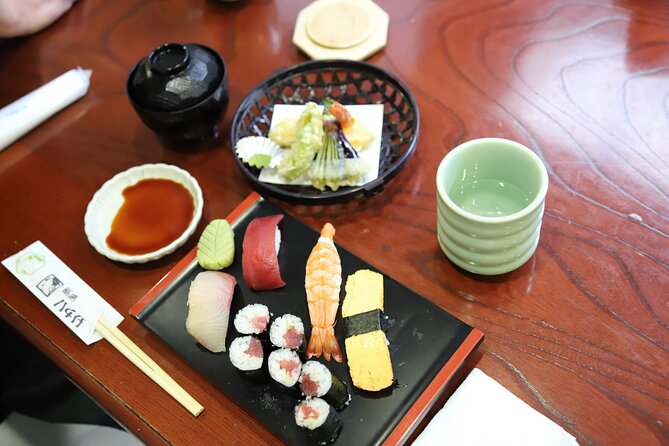
The sushi class takes place in a Japanese-style classroom in a traditional building. The room may be upstairs, often on the third floor, and there are stairs only. That makes comfortable shoes useful for both the walking route and the class venue.
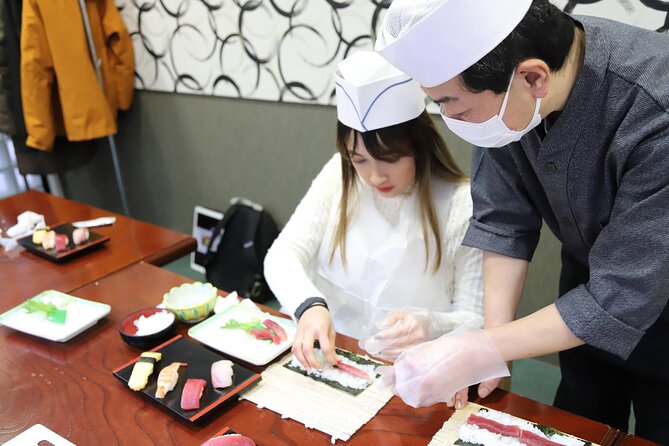
The class is designed as an introduction. You learn how to make five types of nigiri sushi and one rolled type. A professional sushi chef demonstrates the process and helps you work through it step by step.
The lesson may include a presentation, demonstrations, and hands-on preparation. A sushi master has been praised for showing how to debone fish, and the class is conducted in Japanese and English so you can follow the instructions. Several people found the lesson easy to understand, including families with children and participants who had never made sushi before.
This is not a course in every part of professional sushi preparation. One useful suggestion from a past participant was to spend more time showing how fish is sliced for sushi. Cleanup may also happen quickly, so if you want to study an ingredient or technique, pay close attention while the chef is demonstrating.
The practical lesson is the star of the experience. You learn by making the sushi yourself, not by watching a chef work from across the room. That makes the class especially good for families, couples, and anyone who wants a skill to repeat at home.
Eating the sushi you make
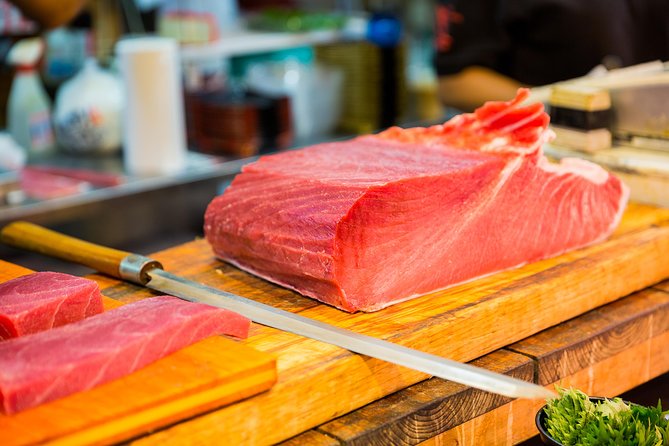
After the preparation, you eat your own sushi for lunch. You also receive sushi prepared by the master, which gives you a direct comparison between a beginner’s work and the chef’s technique.
The meal includes fresh wasabi, traditional dashi soup, and green tea. The wasabi is treated as part of the lesson rather than an afterthought, and the soup and tea complete the Japanese-style meal.
The food quality has been one of the most praised parts of the experience. People have described the seafood as fresh and the finished sushi as delicious. The preparation space has also received positive comments for being clean, an important point when you are handling raw fish.
You should not expect a large restaurant lunch. This is a tasting of what you make, supported by a few traditional accompaniments. If you arrive very hungry, you may still want to buy something at the outer market, either before or after the class.
Price, timing, and the changing end point
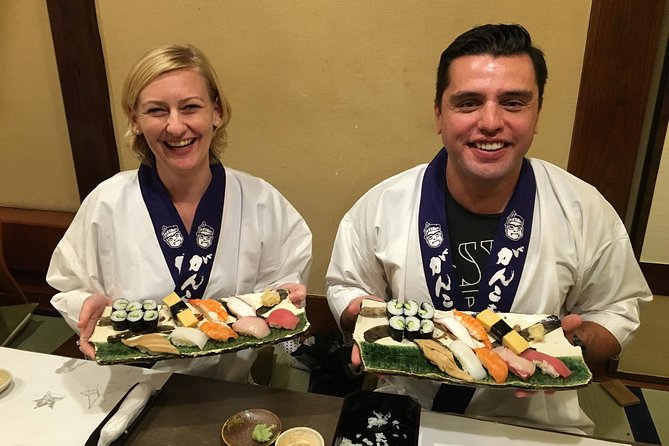
At $104.13 per person, this is not the cheapest way to visit Tsukiji. You can walk through the outer market without a guide, and you can buy sushi or snacks separately. The price becomes easier to justify if you value the temple visit, market interpretation, professional instruction, lunch, and the convenience of combining them in one four-hour outing.
The tour lasts about four hours, but the end may run late. Avoid booking a train, reservation, or other fixed appointment immediately afterward. The stated end point may be Tsukiji or Shinjuku, depending on the date.
The sushi venue can also change. Some sessions may take place in Tsukiji, while others may be held in Asakusa or Yotsuya. In those cases, the tour ends in that area. You are not told the final venue until the day, so this is not the best choice if you need a tightly controlled route.
The class is offered near public transportation, but transportation to and from the attractions is not included. Hotel pickup and drop-off are not included either. You meet the guide at the temple and make your own way there.
Who will enjoy this experience most
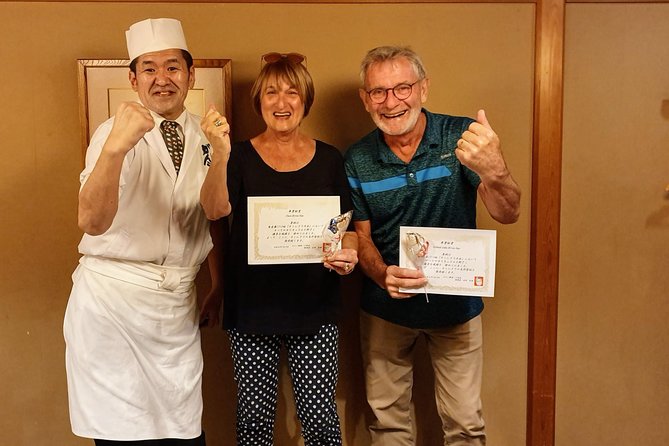
I would recommend this tour to:
- First-time visitors who want a clear introduction to Tsukiji
- Families with older children who enjoy hands-on activities
- People curious about sushi but unsure where to begin
- Food lovers who want market context before cooking
- Visitors who appreciate local customs along with food
- Anyone who wants a practical activity rather than another sightseeing stop
It is less suitable if you want a private tour, a long tasting session, or access to the former inner market. It may also disappoint you if you expect a quiet, highly polished cooking studio. The classroom is described as simple, and the group may be fairly large.
The class is a good fit for children and teens, provided they are comfortable with walking and stairs. One family enjoyed it with children aged 12 and 16, while another family included an 18-year-old. The hands-on format gives younger participants something real to do.
Dietary needs require care. The information provided gives mixed guidance, saying you should list allergies or restrictions when booking while also warning that vegetarian, halal, gluten-free, kosher, and some allergy-related requests may not be accommodated. Contact the provider before booking and do not assume substitutions are possible.
How to prepare for the morning
Wear comfortable walking shoes. The route includes the temple, outer market, and possibly additional stops, and the classroom may be up several flights of stairs.
Arrive early at the main gate of Tsukiji Hongwanji. Confirm that you are on the front side, not the back. The guide cannot wait for late arrivals, and the tour cannot be extended if you miss the start.
Carry some cash if you want to buy food from market vendors. Bring water if you prefer it, since green tea is provided but bottled water is not listed as part of the experience.
Keep your afternoon flexible. The venue may move to Asakusa or Yotsuya, and the tour may finish in a different district from where it began. That uncertainty is manageable if you treat the class as a central activity rather than one stop in a tightly packed day.
Should you book the Tsukiji sushi tour?
Book it if you want the market explained, enjoy learning local customs, and like the idea of eating sushi you made yourself. The guides receive strong praise for friendliness and cultural insight, and the chef-led class gives the tour a clear purpose beyond sightseeing.
Skip it if you mainly want unlimited market tastings, a private guide, or a tour of the former inner fish market. The outer-market walk is informative but not highly specialized, and food purchases cost extra.
For most first-time visitors who want a practical Tokyo food experience, the combination is worth considering. Just arrive early, wear good shoes, expect stairs, ask clearly about dietary restrictions, and leave room in your schedule for a flexible finish.
FAQ
Where does the tour begin?
It begins at the main gate of Tsukiji Hongan-ji Temple, at 3-chōme-15-1 Tsukiji, Chuo City, Tokyo. Meet at the front side of the temple, not the back side.
How long does the experience last?
The experience lasts approximately four hours.
What part of Tsukiji does the tour visit?
The tour visits Tsukiji’s outer market and a small wholesale area. The former inner fish market business area moved to Toyosu in 2018 and is not part of this tour.
What sushi will I learn to make?
You learn to make five types of nigiri sushi and one rolled type.
Is lunch included?
Yes. You eat the sushi you prepare and receive an additional piece made by the sushi master. Traditional dashi soup, green tea, and fresh wasabi are also provided.
Is transportation included?
No. Hotel pickup and drop-off, transportation to and from attractions, and personal food or drink purchases are not included.
Can I join with a vegetarian, halal, gluten-free, or kosher diet?
The provider asks you to list dietary needs during booking, but the experience may not accommodate vegetarian, halal, gluten-free, kosher, or allergy-related requests. Contact the provider before booking for a clear answer.
Do I need to wear anything special?
Wear comfortable walking shoes. The tour is mainly a walking activity, and the classroom may be on the third floor of a traditional building with stairs only.
Can the sushi class location change?
Yes. The class may take place in Tsukiji, Asakusa, or Yotsuya, depending on venue availability. The final location cannot be announced until the day, and the tour ends at the location used for that session.
More Sushi and Ramen Tours in Tokyo
- Sushi Making Tokyo Roll and Authentic Japanese Sushi Class
★ 5.0 · 3,971 reviews - Tokyo: Roll and Authentic Sushi Making Class in Asakusa
★ 4.9 · 1,957 reviews - Best of Shinjuku: Izakaya Food Tour (4 Stops, 14+ Tastings)
★ 5.0 · 1,863 reviews - Tokyo: Sushi Making Class in a Happi Coat near a Famous Spot
★ 4.9 · 1,377 reviews
More Seafood Tours in Japan
- Tokyo: Sushi Making with Pro Chef & Tsukiji Fish Market Tour
★ 4.6 · 49 reviews - Osaka: Wakayama Cat Train, Seafood market, Hot Springs Tour
★ 4.6 · 24 reviews
Just added in Tokyo
- Tokyo: Allstar Food Tour★ 4.7 · 29 reviews
- Tokyo: West-Side Cycling and Food Tour with Guide★ 5.0 · 37 reviews
- Tokyo: Togoshi Ginza Street Food Tour★ 5.0 · 34 reviews
- Tokyo Tsukiji Food & Culture Private Tour Licensed Guide★ 4.9 · 28 reviews
- Tokyo: Wagyu and Sushi Gastronomic Journey★ 4.3 · 24 reviews
- Tokyo: Sushi and Ramen Cooking Class with Sake Pairing Set★ 5.0 · 81 reviews
- Tokyo: Sushi Making Class★ 4.9 · 390 reviews
- Tokyo: Best of Shibuya Food Tour★ 4.7 · 119 reviews
Market Food Tours, compared.

Tokyo Tsukiji Fish Market Food and Culture Walking Tour
Read our review →
London Bridge & Borough Market Food Tour with 7 Authentic Dishes
Read our review →
Small Group Cooking Class & Market Food Tour in Florence
Read our review →
Nishiki Market Brunch Walking Tour (7 Tastings + Brunch)
Read our review →
Bologna Food & Market Tour with 6 Tastings, Pasta, Wines & More
Read our review →