
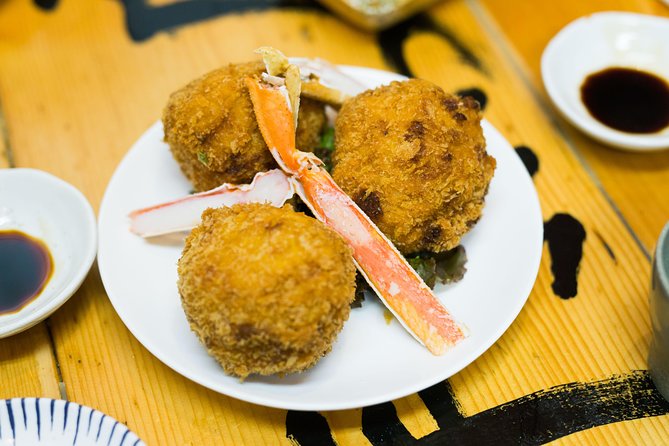
REVIEW · TOKYO FOOD TOURS
Best of Shinjuku: Izakaya Food Tour (4 Stops, 14+ Tastings)
Neon, skewers, and tiny bars await. This three-and-a-half-hour izakaya tour gives you a friendly route through Shinjuku, with more than 14 tastings, three drinks, and stops in areas that can feel confusing after dark. I like the generous amount of food and the small maximum of 10 people. I also like that guides such as Taiga, Yusuke, Nobu, Chi, and Joe add local advice instead of simply pointing at dishes.
The main consideration is that the exact restaurants and walking route can change. Some people expect secret back-alley places throughout, but parts of the evening may use ordinary local spots along main streets. Food restrictions need advance notice, and vegan, vegetarian, and gluten-free choices are limited.
Key things to know before booking
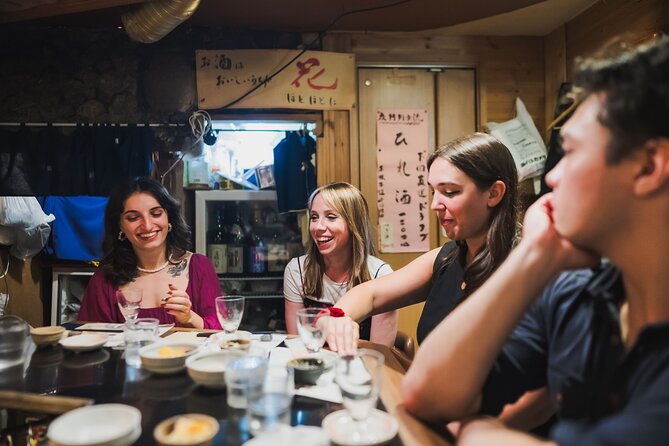
- Four food stops, 14-plus tastings: Expect grilled skewers, sashimi, sushi-style dishes, comfort food, and other Japanese specialties.
- Three drinks are included: Choose from sake, local beer, soft drinks, and other available options.
- A small group of up to 10: This makes it easier to ask questions, share dishes, and get to know the people around you.
- Shinjuku after dark: The route covers Nishishinjuku, Kabukicho, Golden Gai, and Omoide Yokocho.
- A filling dinner, not a light nibble: Several people finish the evening very full, so arrive hungry.
- Food restrictions require planning: Contact the operator at least one week ahead. Last-minute requests may not be possible.
Why an izakaya tour works so well in Shinjuku
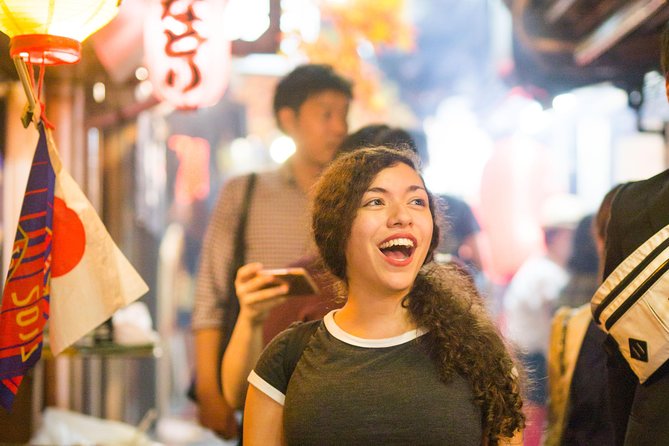
An izakaya is part restaurant, part neighborhood bar, and part social meeting place. Menus can be hard to decode, portions are often meant for sharing, and many places feel much easier to enter when a local guide leads the way.
That is where this experience earns its keep. You are not simply eating one meal in one restaurant. You move through several establishments and get a quick sense of how different Japanese drinking spots work. One may focus on skewers, another on sashimi, and another on comforting cooked dishes.
I especially like this format for a first evening in Tokyo. Shinjuku has plenty of food, but abundance can become a problem. You can spend an hour choosing a restaurant, order one dish, and still have no idea what else you missed. Here, the guide handles the route and ordering while you concentrate on eating.
The group size matters, too. With no more than 10 people, the evening should feel social without becoming a parade. Several guides have been praised for making conversation easy, explaining how to eat particular dishes, and recommending drinks that suit the food. That is useful when you are trying sake for the first time or facing a dish you would not order alone.
More Sushi and Ramen Tours in Tokyo
- Sushi Making Tokyo Roll and Authentic Japanese Sushi Class
★ 5.0 · 3,971 reviews - Tokyo: Roll and Authentic Sushi Making Class in Asakusa
★ 4.9 · 1,957 reviews - Tokyo: Sushi Making Class in a Happi Coat near a Famous Spot
★ 4.9 · 1,377 reviews
Starting in Nishishinjuku with several small dishes
The evening begins at Kirin City Shinjukuhigashi in the Shinjuku 3-chome area. From there, the first part of the route spends about 1 hour and 55 minutes around Nishishinjuku, visiting two or three local izakayas.
This is the most food-focused section of the evening. You can expect the dishes to arrive in a steady series rather than as one large plated dinner. The included tastings may feature grilled skewers, sashimi, local comfort food, and other items selected for the group. The menu changes, so you should not book this expecting a fixed list of dishes.
That changing menu is a strength if you want variety. You might try something familiar beside a regional dish you would never have spotted on a standard English menu. Guides have also helped diners understand sauces, spices, and the right way to approach unfamiliar food.
The generous portions are worth noting. This is not a tasting menu in the minimalist sense. Food keeps coming, and several people finish the tour stuffed. I would eat lightly before meeting the group, but I would not skip food earlier in the day. You want to arrive hungry without arriving exhausted.
The first stop also acts as a social warm-up. You share food, compare impressions, and get used to the rhythm of ordering in an izakaya. If you are traveling alone, this can be the most useful part of the evening because the meal gives everyone something easy to talk about.
Walking through Kabukicho and its nightlife
The route then moves through Kabukicho, Shinjuku’s famous entertainment district. The walk takes about an hour and includes another izakaya that is popular with local diners.
Kabukicho can feel loud and disorienting at night, especially if it is your first time in the area. A guide gives the district some shape. You can focus on the signs, narrow streets, and nightlife atmosphere without worrying about missing the next restaurant.
This section is not only a transfer between meals. Guides add bits of information about the area as you walk, and the route can help you understand how Shinjuku changes from office district to nightlife center after sunset. One detailed account described a stop at a convenience store where the group picked up drinks before continuing. That may not happen on every departure, but it shows how informal the evening can be.
Food here may include more sashimi, sushi rolls, skewers, and other shared plates. One group particularly enjoyed the sashimi and traditional sake. If you do not eat meat, substitutions may sometimes be possible, such as a shrimp skewer, but you need to tell the operator ahead of time.
The important caveat is expectation. The experience is advertised around Shinjuku’s izakayas and atmospheric alleys, but not every restaurant will be tucked into a mysterious side street. Some stops may be straightforward establishments on or near main roads. If you value good food, local guidance, and a smooth introduction to the area, that is no major problem. If your main goal is a string of obscure bars that you could never find alone, you may find the route less dramatic than expected.
Golden Gai brings the narrow alleys
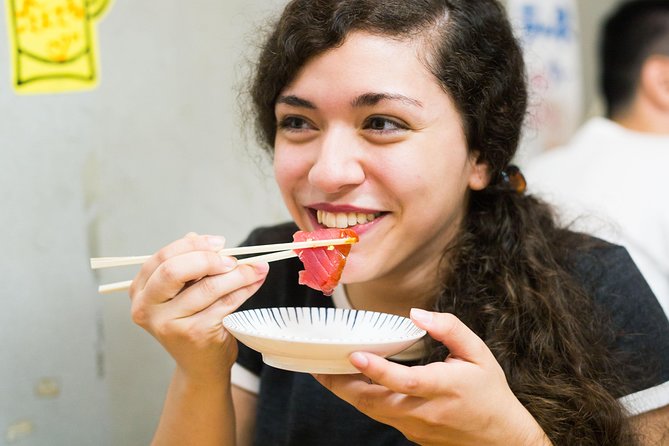
The tour ends around Shinjuku Golden Gai, with about 30 minutes in the area. Golden Gai is known for its tight lanes and very small bars, each with its own character and limited seating.
This is one of the best parts of the route for atmosphere. The alleys feel very different from the wide streets and large signs around the station. You get a glimpse of a compact nightlife district where the setting can be as memorable as the drink.
Do not expect a long bar crawl here. The timing suggests a walk through the area and perhaps a nearby final food or drink stop, depending on how the evening is arranged. Some accounts describe a traditional Okinawan restaurant near this part of the route, with more food and beer arriving after the group was already quite full. The precise sequence can vary.
That variation is worth keeping in mind. The published route identifies Golden Gai as the ending area, while the included package describes four local izakaya stops. In practice, you should think of this as a food tour with four eating venues and several neighborhood walks, not a rigid timetable in which every group enters the same four restaurants in the same order.
Same city, a different table:
- Tokyo: Shinjuku Food Tour (13 Dishes at 4 Local Eateries)
★ 5.0 · 6,603 reviews - Tokyo Tsukiji Fish Market Food and Culture Walking Tour
★ 5.0 · 3,184 reviews - Tokyo: Shinjuku Food Tour (15 Dishes and 4 Eateries)
★ 4.9 · 2,033 reviews - Sushi Making Tokyo! Popular Maki Sushi & Japanese Sushi(+Recipe!)
★ 5.0 · 1,314 reviews
A quick look at Omoide Yokocho
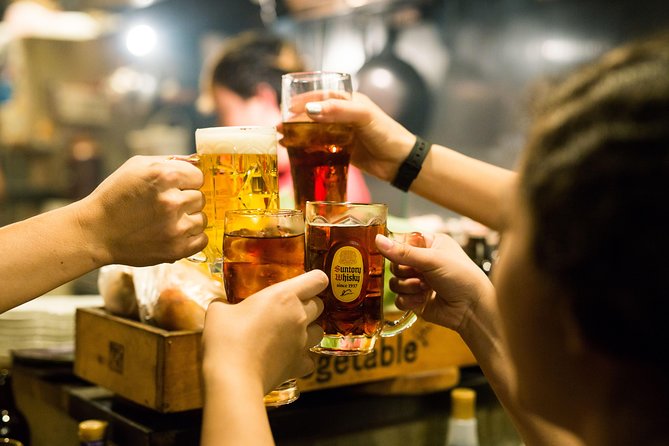
The final listed stop is Omoide Yokocho, an iconic alley near Shinjuku Station. The walk through the area takes about five minutes, so this is a brief look rather than a full meal stop.
Omoide Yokocho is associated with compact eateries and old-style Shinjuku nightlife. Even a short pass through it helps connect the evening’s food to the city’s older drinking districts. It also makes a handy final landmark before you continue your night or return to your hotel.
Because the stop is brief, do not book the tour mainly for extended time in Omoide Yokocho. Golden Gai receives more attention in the stated route. The value comes from seeing both areas as part of a wider Shinjuku evening.
What you actually eat and drink
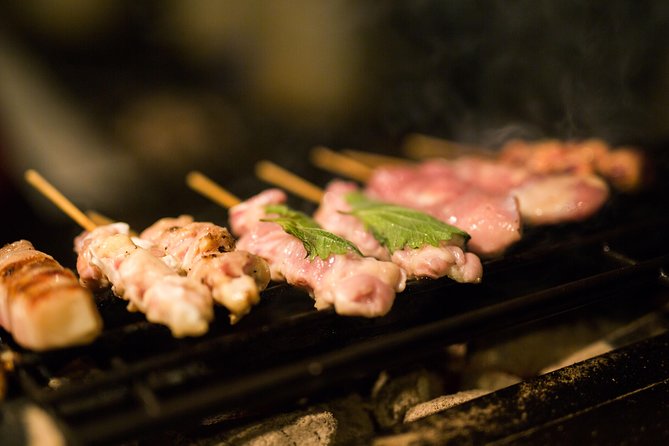
The package includes at least 14 tastings and three drinks. Available drinks include sake, local beer, soft drinks, and other choices. That is a useful balance for a group with mixed drinking habits. You can sample Japanese alcohol without being forced into a full evening of sake.
The food is designed to show range rather than one specialty. Possible dishes include:
- Grilled skewers
- Sashimi
- Sushi rolls
- Japanese comfort food
- Regional dishes
- Shrimp or other alternatives when available
- Okinawan-style dishes at some departures
The menu is not fixed. That matters for two reasons. First, it keeps the experience tied to the restaurants and ingredients available that evening. Second, it means you should not treat a particular dish described by another customer as guaranteed.
I like the shared format because it makes unfamiliar dishes less intimidating. You can take a small portion, ask the guide what it is, and decide if you want more. Guides have explained which sauce or spice to use and suggested drinks to match a dish. Those small lessons often stay useful after the tour, especially when you eat at another izakaya on your own.
The guides make the biggest difference
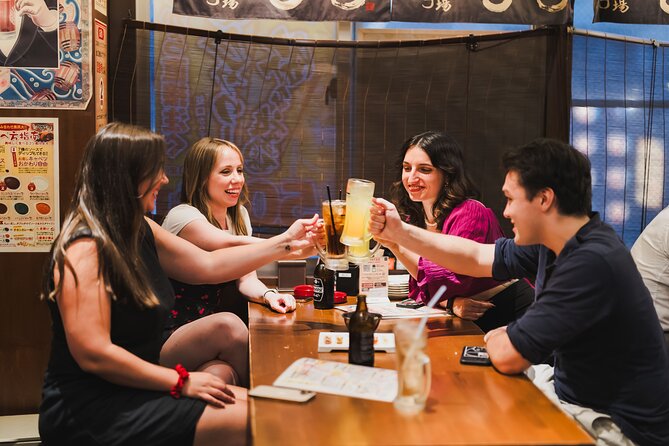
The route and food matter, but the guide shapes the evening. Names praised in the supplied material include Taiga, Yusuke, Nobu, Chi, Joe, Chizuru, Max, Tadashi, Yusuke, and Nobuto. You should not assume a particular person will lead your departure, but the repeated pattern is clear: the guide is expected to explain, order, translate, and keep the group moving.
Taiga has been praised for arranging food for vegetarian diners and for mixing local history with the meal. Yusuke has been described as warm, clear in English, and good at taking people to smaller places they might not find alone. Nobu and Nobuto are known for energy and humor, while Chi has been praised for making the evening relaxed and informative.
Tadashi brings a food background as a trained sushi chef, according to one account. That kind of experience can add detail when the group wants to know more than a dish’s name. Joe has also been praised for explaining how to eat the food and for making the walk through the entertainment district and Golden Gai interesting.
The guide style may vary from one departure to the next. Still, the strongest reason to choose this tour is not simply access to food. It is having someone take responsibility for the route, explain local customs, and help you feel comfortable in places that may otherwise seem hard to enter.
Is $92.85 a fair price?
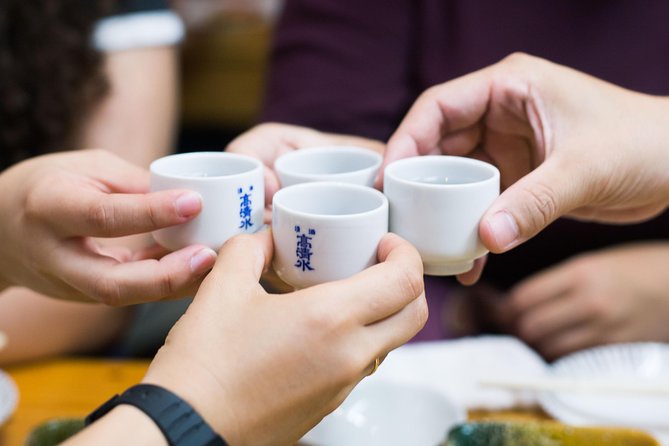
At $92.85 per person, this is not the cheapest way to eat in Tokyo. You can buy an inexpensive meal for far less. The comparison is not quite fair, though, because this price includes dinner at four local izakaya, at least 14 tastings, three drinks, a guide, and a walking route through several Shinjuku districts.
The value improves if you are new to Tokyo or unsure about Japanese menus. You are paying for variety, organization, translation help, and the chance to try several places without making four separate decisions. Three included drinks also make the price easier to justify, especially if you choose beer or sake.
The value is weaker if you already know Shinjuku well, speak enough Japanese to order comfortably, and prefer choosing your own restaurants. You may also feel the price is high if your main interest is only Golden Gai or Omoide Yokocho, since both receive limited walking time compared with the food portion.
For most first-time visitors, I consider the price reasonable for a full dinner and a guided night out. The quantity is a major part of that judgment. This is not a tour where you leave looking for a second meal.
Timing, meeting points, and practical planning
The tour lasts about 3 hours and 30 minutes. It starts at Kirin City Shinjukuhigashi, at 3-chome 25-9 Shinjuku, and ends near SoftBank Nishishinjuku at 7-chome 8-10. Both points are in Shinjuku, but they are not the same place, so plan your evening around the end point rather than assuming you will return to the start.
A mobile ticket is provided, and the meeting points are near public transportation. You should arrive with comfortable shoes because the night includes repeated walks between food stops and districts.
The experience is limited to a maximum of 10 people, though one account described a larger group. Group size may therefore depend on how departures are arranged. The published maximum is the safer figure to use when deciding if the format suits you.
An optional pre-tour sake tasting is available at 3:30 p.m. for $29.99 per person. It is separate from the main tour, so you do not need to add it if the included three drinks are enough for you. If you enjoy sake and want more background before dinner, the add-on may be worth considering.
Free cancellation is available up to 24 hours before the start time. The experience can be canceled for poor weather or if the minimum number of participants is not reached, with a different date or full refund offered.
Food restrictions and who should skip it
Tell the operator about food restrictions at least one week before the tour. Vegan, vegetarian, and gluten-free options are limited, and last-minute requests may not be accommodated.
This tour suits you best if you:
- Want a substantial introduction to Japanese food
- Prefer a guide to handle ordering and navigation
- Enjoy sharing dishes with a small group
- Want both food and a short walking tour
- Are comfortable eating in informal restaurants
- Like trying dishes without knowing exactly what will appear
It may not suit you if you need a strict dietary plan, dislike alcohol-centered settings, or want a quiet fine-dining meal. It may also disappoint you if you expect every stop to be a secret back-alley restaurant.
Should you book the Shinjuku izakaya tour?
I would book this tour early in a Tokyo visit, especially for a first or second night in the city. It gives you a practical introduction to izakaya dining, feeds you generously, and leaves you with restaurant ideas for later.
Book it for the food, the guide, and the ease of the evening. Treat Golden Gai and Omoide Yokocho as atmospheric parts of the route, not the entire purpose. If you accept that the restaurants and menu can change, the $92.85 price buys a well-filled evening with useful local direction and very little guesswork.
FAQ
How long does the izakaya food tour last?
The experience lasts approximately 3 hours and 30 minutes.
How many tastings are included?
The tour includes 14 or more tastings. The menu may include grilled skewers, sashimi, local comfort food, sushi rolls, and other Japanese dishes.
How many drinks are included?
Three drinks are included. Choices may include sake, local beer, soft drinks, and other available beverages.
How many people can join the tour?
The published maximum is 10 participants.
Where does the tour start?
The meeting point is Kirin City Shinjukuhigashi in Shinjuku 3-chome, Tokyo.
Where does the tour finish?
The tour ends at SoftBank Nishishinjuku in Shinjuku 7-chome, Tokyo.
Can the tour accommodate vegetarian, vegan, or gluten-free diets?
Options are limited. You must contact the operator about food restrictions at least one week before the tour date, and last-minute requests may not be accommodated.
Is the pre-tour sake tasting included?
No. The optional sake tasting takes place at 3:30 p.m. and costs $29.99 per person. It is separate from the main tour.
More drinks tours in Tokyo
- Tokyo: Sushi and Ramen Cooking Class with Sake Pairing Set
★ 5.0 · 81 reviews - Madrid Tapas & Wine Tasting Walking Tour – Small Group Local Bars
★ 5.0 · 3,644 reviews - Kyoto Night Foodie Tour in Gion (9+ dishes + 6 Sake tastings)
★ 5.0 · 1,762 reviews - Porto Craft Beer Tour: 7 Beers + 3 Food Pairings in a Small Group
★ 5.0 · 1,725 reviews
Just added in Tokyo
- Tokyo: Allstar Food Tour★ 4.7 · 29 reviews
- Tokyo: West-Side Cycling and Food Tour with Guide★ 5.0 · 37 reviews
- Tokyo: Togoshi Ginza Street Food Tour★ 5.0 · 34 reviews
- Tokyo Tsukiji Food & Culture Private Tour Licensed Guide★ 4.9 · 28 reviews
- Tokyo: Wagyu and Sushi Gastronomic Journey★ 4.3 · 24 reviews
- Tokyo: Sushi Making Class★ 4.9 · 390 reviews
- Tokyo: Sushi and Ramen Cooking Class with Sake Pairing Set★ 5.0 · 81 reviews
- Tokyo: Ramen Tasting Tour with 6 Mini Bowls of Ramen★ 4.9 · 432 reviews
Sushi and Ramen Tours, compared.
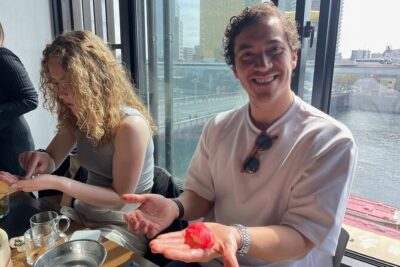
Sushi Making Tokyo Roll and Authentic Japanese Sushi Class
Read our review →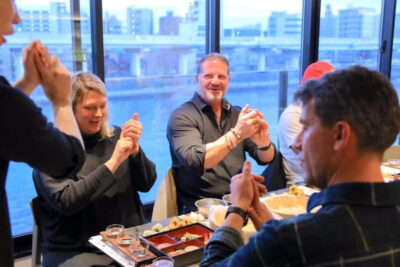
Roll and Authentic Sushi Making Class in Asakusa
Read our review →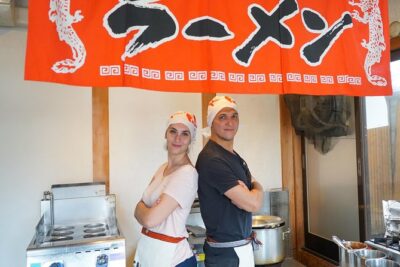
Ramen Cooking Class at Ramen Factory in Kyoto
Read our review →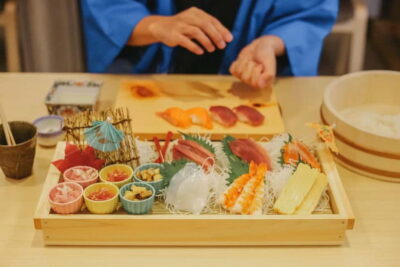
Sushi Making Class in a Happi Coat near a Famous Spot
Read our review →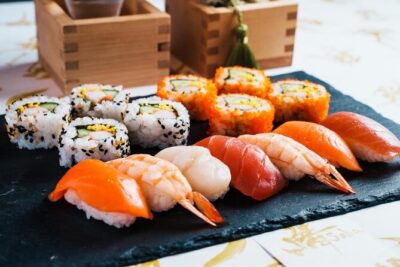
Sushi Making Tokyo! Popular Maki Sushi & Japanese Sushi(+Recipe!)
Read our review →
Sushi Making Osaka Roll and Authentic Japanese Sushi Class
Read our review →
Tokyo Sushi Making Class in Tsukiji with Professional Chef
Read our review →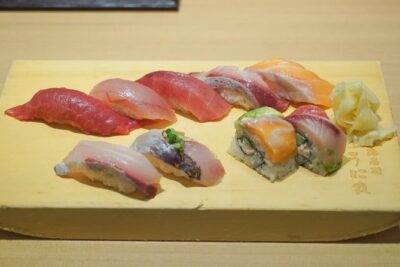
Tokyo Night Foodie Tour in Shinjuku – Seasonal Sushi, Wagyu Beef
Read our review →Browse the lists this tour appears in