
REVIEW · OSAKA FOOD TOURS
Sushi Making Osaka Roll and Authentic Japanese Sushi Class
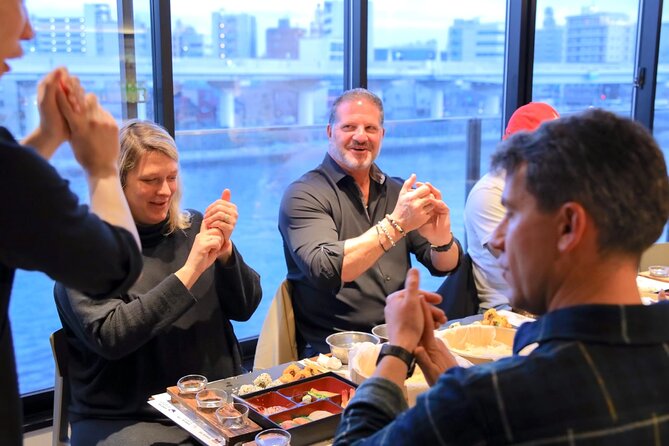
Sushi is better when you make the mess yourself. This Osaka class gives you a friendly, practical introduction to maki rolls and nigiri in a convenient location near Dotonbori and Shinsaibashi. I like the English-speaking instruction and the fact that all ingredients are prepared before you arrive, so you can focus on technique rather than kitchen prep. I also like that you eat what you make, with enough food for many people to count it as lunch.
The main consideration is time. The class lasts about 1 hour and 40 minutes, but some sessions may feel brisk once instruction, preparation, eating, photos, and cleanup are all included. Arrive early, since the small classroom can be tricky to find, and note any dietary needs when booking.
Key points before you book
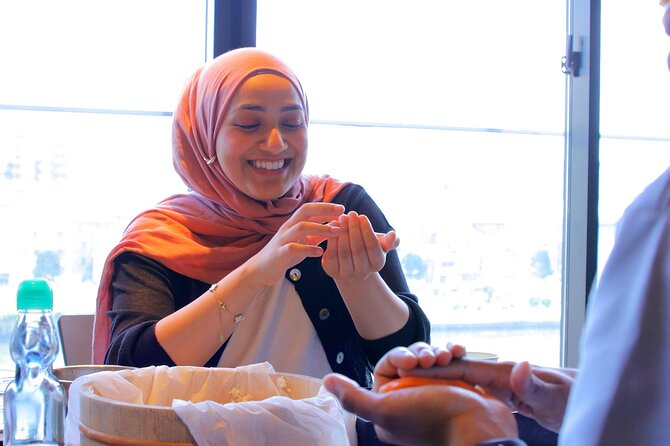
- Near Dotonbori and Shinsaibashi: The class is held at 1-chōme-16-20 Higashishinsaibashi, making it easy to pair with central Osaka sightseeing.
- You make both maki and nigiri: Expect a rolled sushi preparation plus several hand-shaped pieces.
- Prepared ingredients save time: You can practice the sushi techniques without starting with shopping, chopping, or rice preparation.
- Friendly English instruction: Instructors explain the steps, offer cultural background, and help beginners around the table.
- A real meal, not just a demonstration: The sushi you make is included, and many people produce one roll plus roughly four to eight nigiri.
- Small timing trade-off: The maximum group size is 20, and a few sessions have felt rushed during eating and photos.
Making sushi in the heart of Osaka
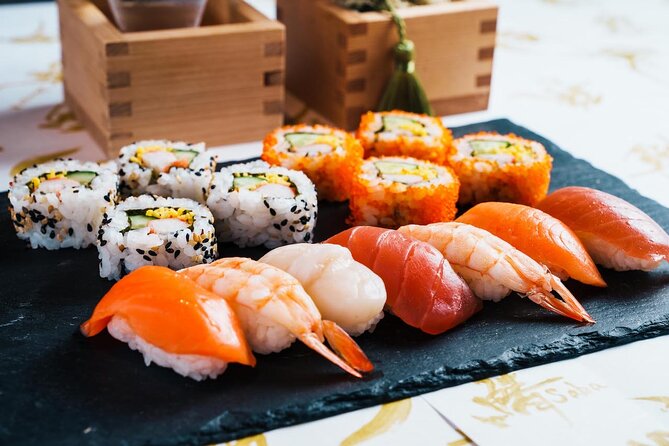
The setting is one of the class’s strongest points. You meet at Sushi Making Osaka, at 1-chōme-16-20 Higashishinsaibashi in Chuo Ward. It is close to Dotonbori and Shinsaibashi, so you can fit the class between shopping, food stops, and Osaka’s famous canal-side signs.
That central location is useful, but do not treat it as a place you can find without a moment’s planning. The classroom is on the third floor of a small building, and the entrance can be easy to miss. Give yourself extra time instead of arriving at the last minute with your phone in one hand and a takoyaki skewer in the other.
The activity begins and ends at the same meeting point. There is no hotel pickup or drop-off, but public transportation is nearby. Since the class runs in morning, afternoon, and evening time slots, you have a fair amount of freedom when fitting it into your day.
More Sushi and Ramen Tours in Osaka
- Osaka: Five Must-See Highlights Walking Tour & Ramen Lunch
★ 4.7 · 411 reviews - Osaka Sushi Making Experience
★ 5.0 · 400 reviews - Osaka: Ramen and Gyoza Cooking Class in Dotonbori
★ 5.0 · 378 reviews
What the 1-hour-40-minute class includes
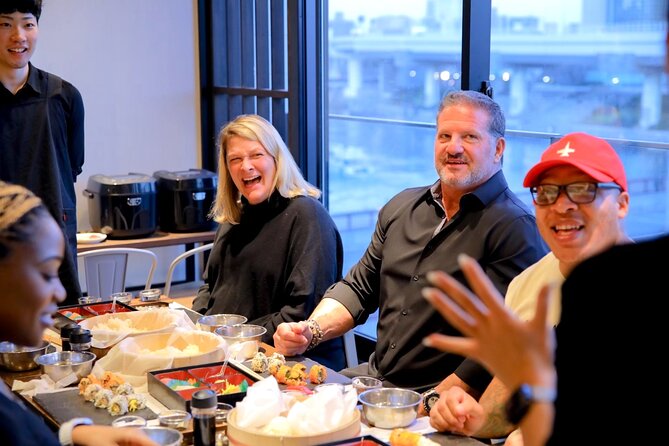
This is a group cooking class rather than a private lesson. The maximum group size is 20 people, so the room may have a social, communal feel. That is part of the appeal for families and small groups, though it also means you may share the instructor’s attention with several other students.
Your ingredients are prepared before the class. That removes the dull parts of a cooking lesson and gets you quickly to the useful work: handling rice, arranging fillings, rolling maki, and shaping nigiri. You are not simply watching an instructor assemble sushi. You are expected to work with your own ingredients and follow each step.
The class covers two important forms of sushi:
- Maki rolls: Sushi rice and fillings are arranged with nori, then rolled and cut.
- Nigiri: Rice is shaped by hand and paired with fish or another topping.
You may produce one maki roll and around four to eight pieces of nigiri, depending on your pace. That amount is substantial enough to serve as a light meal or lunch for many people, rather than a tiny sample that leaves you searching for noodles ten minutes later.
The exact flow can vary with the group and instructor. In general, you can expect an introduction, some explanation of sushi traditions, step-by-step instruction, hands-on preparation, and time to eat what you made. English is used throughout, and the instructors are described as friendly, patient, and encouraging with beginners.
Learning from instructors such as Reika, Fuko, and Aina
The teaching is the heart of this experience. Several instructors have received especially warm praise for making the class easy to follow and keeping the mood light. Reika has been appreciated for explaining sushi’s background, while Fuko has been praised for patience, humor, and a clear introduction to sushi culture.
Aina has also been singled out for being personable and helpful with group instruction. Other instructors, including Arisa, Yui, and Matty, have been described as entertaining and supportive. The important point for you is that the class does not depend only on a printed recipe. You get live demonstrations and help as you work.
That matters because sushi looks simple until you try to make it. A professional piece may appear to be only rice and fish, but the rice shape, pressure, topping placement, and roll tension all affect the result. A patient instructor can correct your grip or show you why your roll is loose before the whole thing falls apart.
The class also gives you a chance to ask sushi-related questions. You may learn a little about how sushi developed in Japan, how maki differs from nigiri, and what makes a finished piece hold together. The cultural explanation is useful, although one person felt the session spent slightly too much time on history and not enough on making and eating.
That criticism is worth taking seriously. If your only goal is to eat as much sushi as possible, a restaurant is more efficient. If you want a social activity with food, instruction, and some cultural context, the balance works better.
The hands-on part: rolling maki and shaping nigiri
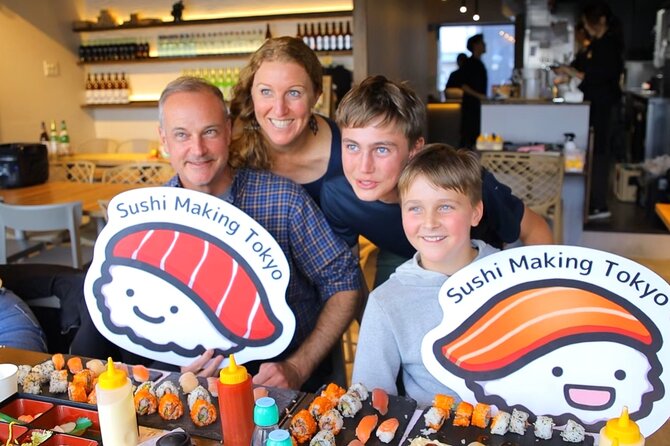
The maki portion gives you the most obvious sense of achievement. You start with prepared ingredients, then follow the instructor’s method for building and rolling the sushi. Getting the roll tight and even takes more care than it appears to require. Cutting it cleanly is another small test of patience.
Nigiri offers a different lesson. Instead of rolling ingredients inside seaweed, you shape small portions of rice and place fish or another topping over them. The finished pieces may not look identical to those made by a sushi chef, and that is fine. The value is in learning the basic method and understanding how much control goes into a neat piece.
The class is designed for people with no cooking experience. You do not need to arrive knowing how to prepare sushi rice or wield a knife like a chef. Beginners, families, and first-time sushi makers are the natural audience.
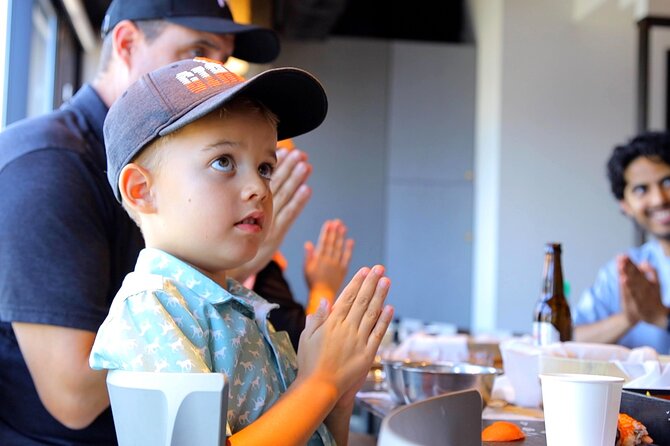
Children can also take part, provided they can follow the class format and work at the table. The activity has been praised as a family option, including for older children and teenagers. Parents should still keep the time issue in mind. If your children need long breaks or eat slowly, the final part may feel hurried.
Same city, a different table:
- Osaka: Shinsekai Food Tour with 13-15 Dishes at 5 Eateries
★ 4.8 · 2,204 reviews - Osaka Food Tour: 13 Dishes at 5 Local Eateries
★ 5.0 · 2,149 reviews - Hungry Osaka Street Food Tour:15 Tastings & 3 Drinks with a Local
★ 5.0 · 1,727 reviews - Osaka Local Foodie Walking Tour in Dotonbori and Shinsekai
★ 5.0 · 985 reviews
How much food do you actually get?
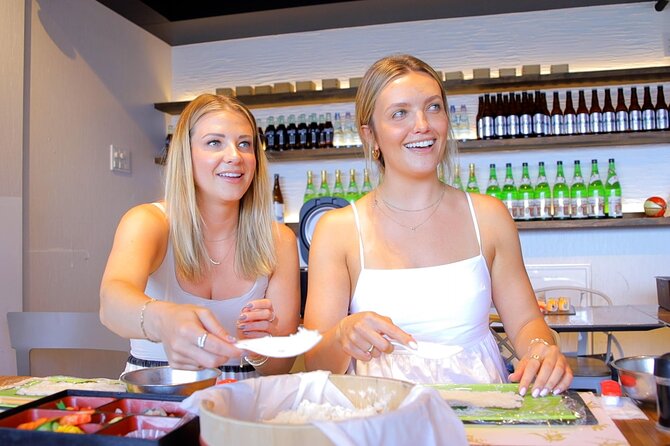
The included ingredients and meal are one of the best reasons to consider the class. You eat the sushi you make, and the portion is generally described as generous. A typical result is one maki roll and four to eight nigiri, though your total depends on how quickly you work.
That makes the $31.01 price reasonable for many visitors. You are paying for instruction, ingredients, a central Osaka activity, and a meal. It is not the cheapest way to eat sushi, but it is good value if you want an experience rather than a plate delivered to your table.
The value is strongest for couples, families, and friends who want something they can do together. You leave with a shared story, not just another restaurant receipt. The class also gives you enough technique to try making sushi at home, though you should think of that as a useful bonus rather than the sole reason to book.
Fish and vegetarian options are available, and the vegetarian choices have been well received. Still, tell the provider about dietary preferences when you reserve. One person who did not eat shrimp was unable to switch it for another fish during the class because the request had not been included in the booking.
That is a small but important planning detail. Do not assume substitutions can be made on the day. State allergies, seafood restrictions, and dietary preferences in advance.
Photos, pacing, and the main weakness
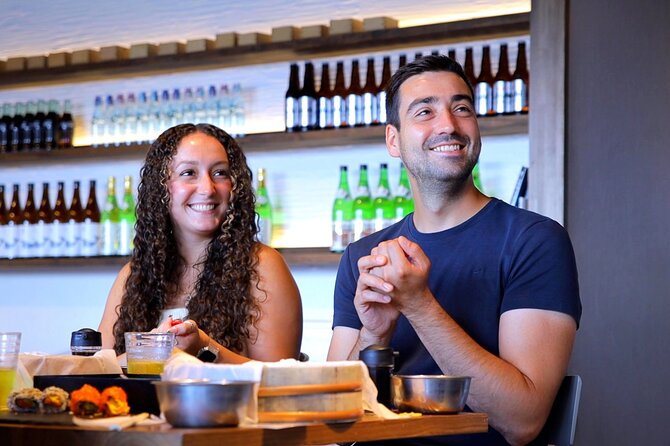
The class is designed to create a memorable group activity, and taking photos is part of that appeal. You will likely want pictures of your finished maki and nigiri, especially if the pieces look better than you expected.
The timing is the weak spot. The listed duration is approximately 1 hour and 40 minutes, but the work can feel compressed when the instructor needs to explain techniques, circulate around a table of students, and prepare for the next session. One person felt there was not enough time to eat slowly or take photos before cleanup began.
A separate practical complaint concerned the room’s lighting. If you care about food photos, do not expect perfect restaurant-style illumination. The finished sushi may taste better than it photographs.
The class also does not include sake or beer. That may disappoint adults imagining a long, relaxed evening with drinks and sushi. The format is a cooking lesson with a defined schedule, not a leisurely tasting session. You can enjoy a drink before or after elsewhere in Dotonbori.
There has also been a concern about fish sitting out during the session. This was an individual criticism, not a stated feature of the activity, but it is reasonable to pay attention to how ingredients are handled and to raise any food-safety concerns with the instructor.
Who will enjoy this Osaka activity most?
I would recommend this class to you if you want a short, social activity that combines food and culture. It works particularly well for:
- Families looking for something beyond shopping and sightseeing
- Couples who want a shared activity near central Osaka
- First-time sushi makers
- Visitors who enjoy learning by doing
- Groups with mixed cooking abilities
- People who want an included meal during a busy sightseeing day
It is less suitable if you want a quiet, private lesson or a slow meal with drinks. It may also disappoint you if you expect professional-level sushi results or a long restaurant-style dining experience.
The class is friendly to beginners, but it is still hands-on. You will need to listen, copy the demonstrations, and work at a reasonable pace. That is part of the fun, but it is not a sit-back-and-watch activity.
Booking, timing, and cancellation advice
The experience costs $31.01 per person and offers a mobile ticket. Confirmation is provided at booking, and service animals are allowed. Free cancellation is available if you cancel at least 24 hours before the local start time. Cancellations or changes made inside that window are not accepted for a refund.
Because the meeting point can be hard to spot, plan to arrive early. The address is in Higashishinsaibashi, near Dotonbori and Shinsaibashi, but being close to a famous district does not guarantee an obvious entrance.
The class ends back at the starting point, so you can continue exploring the area afterward. That makes an evening booking especially convenient if you want to finish with more food, shopping, or a walk around Dotonbori.
Should you book Sushi Making Osaka?
Yes, if you want a cheerful, beginner-friendly activity where you make and eat your own sushi. The strongest features are the central location, prepared ingredients, supportive English-speaking instructors, and a generous amount of food for the price.
Go in with realistic expectations. This is a group class, not a private chef lesson. The session may feel rushed during eating and photos, and dietary changes must be arranged ahead of time. Still, for $31.01, it offers a practical taste of Japanese food culture and a better shared memory than another meal eaten in silence.
If you are already planning to visit Dotonbori or Shinsaibashi, this is an easy activity to add. Arrive early, mention dietary needs during booking, and leave a little room in your schedule so you can enjoy the sushi before the classroom moves on to its next group.
FAQ
Where does the sushi-making class take place?
The class meets at Sushi Making Osaka, 1-chōme-16-20 Higashishinsaibashi, Chuo Ward, Osaka, 542-0083, Japan. It is near Dotonbori and Shinsaibashi.
How long does the class last?
The experience lasts approximately 1 hour and 40 minutes. Morning, afternoon, and evening sessions are available.
What types of sushi will I make?
You will learn to make maki rolls and authentic nigiri sushi.
Is the class suitable for beginners?
Yes. No cooking experience is required, and the class is designed for beginners and families.
Is food included?
Yes. The cooking ingredients and the sushi meal you prepare are included. Vegetarian and fish options are available.
Is hotel transportation provided?
No. Hotel pickup and drop-off are not included. The class ends at the same meeting point where it begins.
More Workshops in Osaka
- Osaka: Roll and Authentic Sushi Making Class in Dotonbori
★ 4.9 · 239 reviews - Osaka: Sushi Class in Dotonbori
★ 4.9 · 160 reviews - Osaka: Cooking Class Ramen & Gyoza Course in Nanba
★ 4.9 · 86 reviews - Osaka: Gluten-Free Ramen and Gyoza Cooking Class
★ 5.0 · 42 reviews
Just added in Osaka
- Hidden Osaka – Yukaku Red Light Tour & Culinary Adventure★ 4.8 · 96 reviews
- Eat Like a Local in Osaka – Private Custom Street Food Tour★ 4.3 · 33 reviews
- Osaka: Sushi Class in Dotonbori★ 4.9 · 160 reviews
- Osaka: Sushi Making in Spacious Studio (SAME-DAY OK!)★ 5.0 · 75 reviews
- Osaka: Gluten-Free Ramen and Gyoza Cooking Class★ 5.0 · 42 reviews
- Osaka: Kuromon Market Food Walking Tour (6 stops, 6 tastes)★ 4.6 · 272 reviews
- Osaka: Roll and Authentic Sushi Making Class in Dotonbori★ 4.9 · 239 reviews
- Osaka: Guided Food Tour with 12 Dishes at 4 Local Eateries★ 4.9 · 90 reviews
Sushi and Ramen Tours, compared.
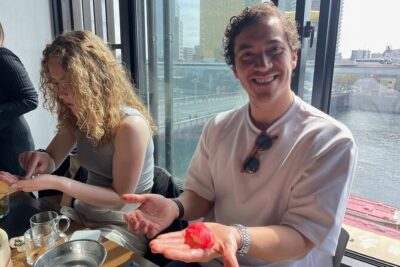
Sushi Making Tokyo Roll and Authentic Japanese Sushi Class
Read our review →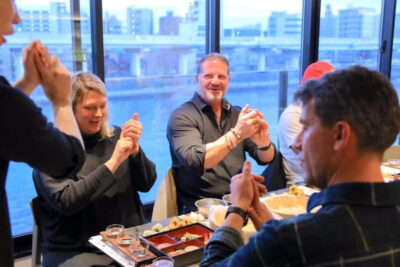
Roll and Authentic Sushi Making Class in Asakusa
Read our review →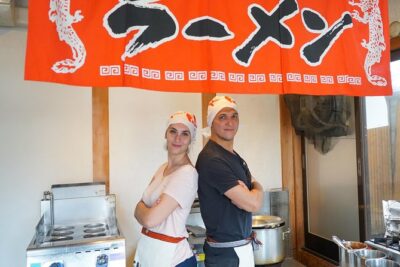
Ramen Cooking Class at Ramen Factory in Kyoto
Read our review →
Best of Shinjuku: Izakaya Food Tour (4 Stops, 14+ Tastings)
Read our review →
Sushi Making Class in a Happi Coat near a Famous Spot
Read our review →
Sushi Making Tokyo! Popular Maki Sushi & Japanese Sushi(+Recipe!)
Read our review →
Tokyo Sushi Making Class in Tsukiji with Professional Chef
Read our review →
Tokyo Night Foodie Tour in Shinjuku – Seasonal Sushi, Wagyu Beef
Read our review →Browse the lists this tour appears in