
REVIEW · OSAKA FOOD TOURS
Osaka Sushi Making Experience
Make sushi, then eat your homework. This 90-minute class in Dōtonbori gives you a hands-on way to learn nigiri and gunkan sushi instead of simply ordering another plate. I like the central location and the chance to make 12 pieces yourself. I also like that guides can provide instruction in English, Chinese, or Korean.
The main drawback is that the class can feel a little polished and tourist-focused, especially if you prefer a quiet, traditional cooking lesson. Finding the entrance may also take some patience, and alcohol details are not completely clear, so check what is available when you book.
Key Points at a Glance
- Make 12 pieces of sushi: Practice shaping and assembling your own set, with nigiri and gunkan styles included.
- Learn useful home techniques: Guides explain ingredients, rice portions, shaping, and the differences between sushi styles.
- Choose an afternoon or evening time: You can place the class around your sightseeing and eat when you are ready for a meal.
- Dietary requests are accepted: Vegetarian, vegan, and halal sushi can be arranged in advance.
- Meet in central Dōtonbori: The activity begins and ends at Sushi Making Experience Namba1A, near public transportation.
- Expect a friendly, social lesson: The maximum group size is 16, though some sessions may be much smaller.
What This Dōtonbori Sushi Class Is Really Like
This is a practical cooking activity in the heart of Osaka. You arrive at Sushi Making Experience Namba1A in the Nishi-Shinsaibashi area, close to Dōtonbori, and spend about an hour and a half learning how sushi is put together.
The focus is not on becoming a professional sushi chef. It is on giving you enough skill and confidence to make a respectable plate at home. You learn about the ingredients needed for sushi, how different types are formed, and how to handle the rice without turning it into a sticky handful.
The lesson includes 12 pieces of sushi. The advertised formats are nigiri and gunkan sushi, two useful styles to know. Nigiri is the familiar hand-shaped mound of rice topped with fish or another ingredient. Gunkan has a small band of seaweed around the rice, creating a cup for toppings.
Some sessions have also included three different styles, so the exact mix may vary. That is worth keeping in mind if you arrive expecting a fixed menu of forms.
More Sushi and Ramen Tours in Osaka
- Sushi Making Osaka Roll and Authentic Japanese Sushi Class
★ 5.0 · 1,220 reviews - Osaka: Five Must-See Highlights Walking Tour & Ramen Lunch
★ 4.7 · 411 reviews - Osaka: Ramen and Gyoza Cooking Class in Dotonbori
★ 5.0 · 378 reviews
Starting the Lesson With Sushi Basics
The class begins with guidance from the instructors, who explain the sushi styles and show you how to work. The teaching is aimed at beginners, so you do not need previous cooking experience or special knowledge of Japanese food.
This matters because sushi can look simple while being surprisingly fussy. Too much rice makes nigiri heavy. Too little pressure causes it to fall apart. The class gives you a chance to correct those small mistakes while someone is standing nearby to help.
A particularly useful detail from the class is the rice portion. One session taught participants to use exactly 10 grams of rice for the right balance. You may not get a kitchen scale at home, but learning the idea of a consistent portion is more useful than simply copying a hand movement.
Guides have been praised for explaining each stage clearly and patiently. Names that have come up positively include Mika, Kosei, Yui, Mako, Shiori, Toshiki, and Hana. The individual instructor for your session may be different, but the pattern is clear: the teaching is friendly, active, and designed to keep beginners moving.
Shaping Nigiri and Gunkan Sushi
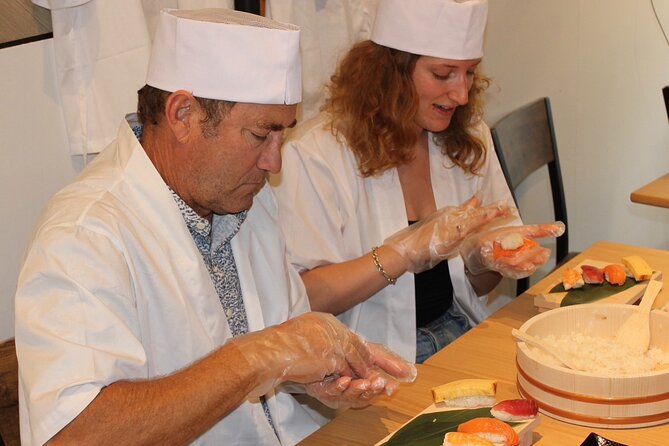
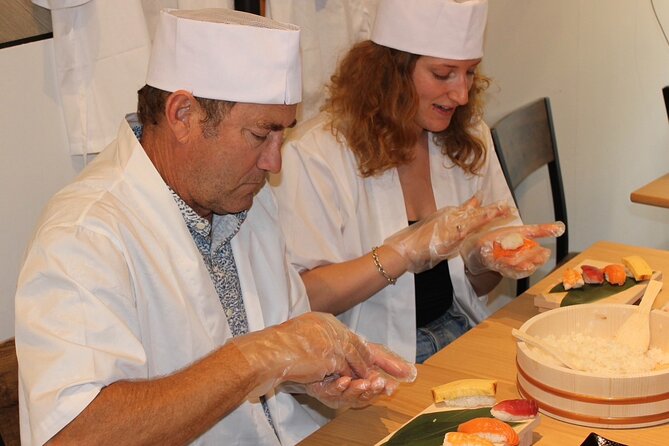
The hands-on portion is the heart of the activity. You watch a demonstration, then copy the technique with help close by. Expect to shape rice, add toppings, and work through the pieces one by one.
Nigiri is likely to test your sense of pressure. You want the rice to hold together, but you do not want to crush it. Gunkan requires a different approach because the seaweed forms a small wall around the rice and topping.
The class also explains how sushi types differ and where they came from. That bit of context helps the food make more sense. You are not just following steps; you are learning why a particular style has its shape and how it is meant to be assembled.
The instructions are offered in English, Chinese, and Korean. English-language guidance has been described as clear and easy to follow. Still, this is a busy, social class rather than a private culinary school, so expect demonstrations, repetition, and a lively tone rather than a long lecture.
Twelve Pieces to Eat at the End
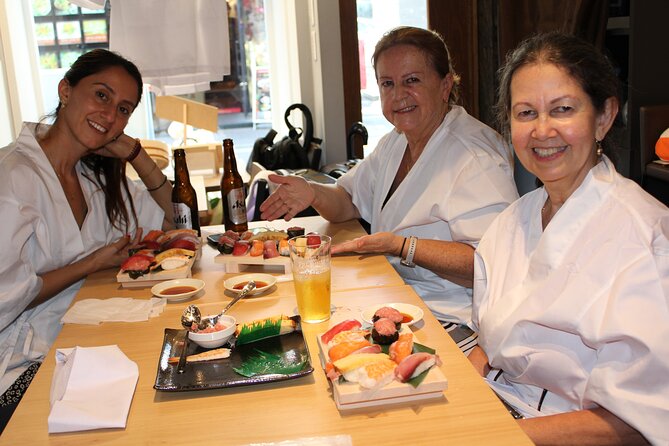
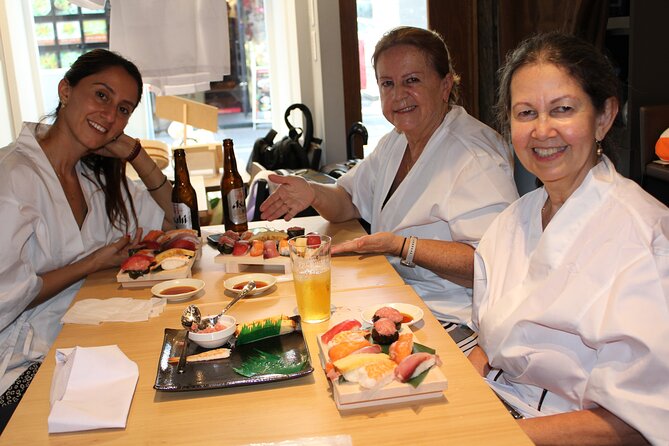
The best part is straightforward: you eat what you make. The class provides 12 pieces, enough to feel like a light meal or a substantial snack, depending on how hungry you are.
The food has received strong praise for taste and freshness. That does not mean every piece will look professional. In fact, the fun comes partly from seeing your own uneven shapes lined up on the plate, then realizing they taste good anyway.
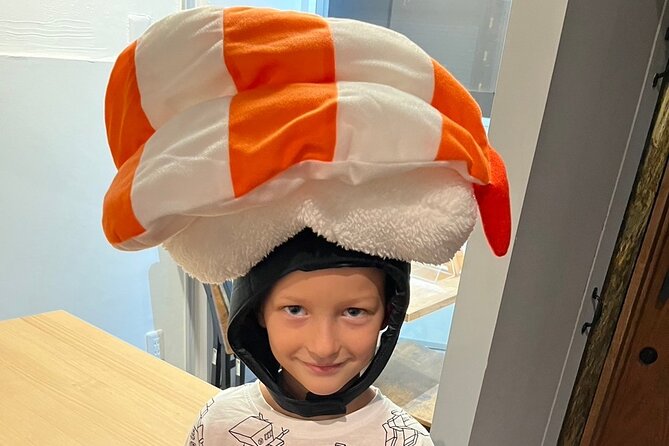
This is also why the activity works well for families and couples. Children can take part in the shaping, and solo participants have plenty of contact with the instructors. One family of five found the class enjoyable for both adults and children.
Afternoon and evening sessions are available. I would choose the time based on your appetite and Osaka plans. An evening class can make a simple dinner plan in Dōtonbori, while an afternoon booking leaves the night open for exploring the area.
Same city, a different table:
- Osaka: Shinsekai Food Tour with 13-15 Dishes at 5 Eateries
★ 4.8 · 2,204 reviews - Osaka Food Tour: 13 Dishes at 5 Local Eateries
★ 5.0 · 2,149 reviews - Hungry Osaka Street Food Tour:15 Tastings & 3 Drinks with a Local
★ 5.0 · 1,727 reviews - Osaka Local Foodie Walking Tour in Dotonbori and Shinsekai
★ 5.0 · 985 reviews
A Friendly Class With a Tourist-Friendly Feel
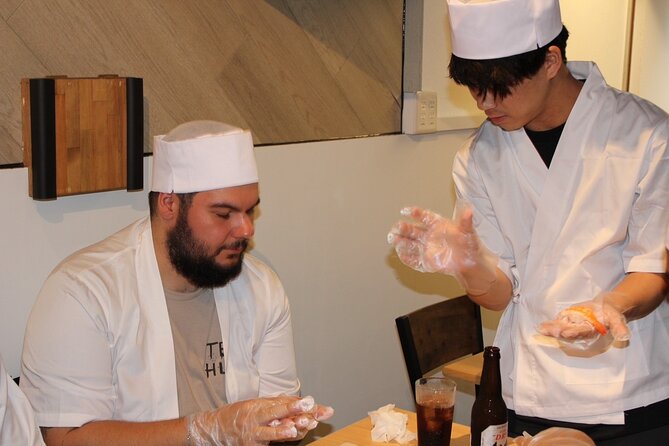
The tone is one of the experience’s strongest points. Instructors use warm welcomes, conversation, photos, and encouragement to keep the class relaxed. Some sessions have included a certificate with your name written in Japanese characters, along with a photograph or a small personalized touch.
That warmth will suit many people. If you want an easy activity where you can talk with local instructors and ask about Osaka, Japanese writing, or food customs, this class offers more than a silent cooking demonstration.
I would set your expectations correctly, though. One person found the presentation overly commercial and felt the instructors were trying to move quickly. That criticism is fair to consider. The class is built for a broad international audience, and its cheerful energy may feel rehearsed at times.
The group limit is 16 people. That is small enough for a class setting, but it is not a guaranteed private lesson. Some bookings may be tiny, even private in feel, while others may have a fuller room. Your experience will depend partly on the group booked for your time.
Dietary Choices and What to Request
Vegetarian, vegan, and halal sushi are available by request. This is an important option in Osaka, where seafood appears in many standard sushi meals.
You should request your dietary choice in advance rather than wait until you arrive. The information provided confirms that vegetarian sushi is available, but one participant felt the vegan selection was more limited than the seafood option. That is a useful warning: a dietary alternative may be suitable and tasty, but it may not have the same range of ingredients.
The class is therefore a good fit for people with different diets, but it may not satisfy someone expecting a large vegan menu. Ask what your requested version will include if variety matters to you.
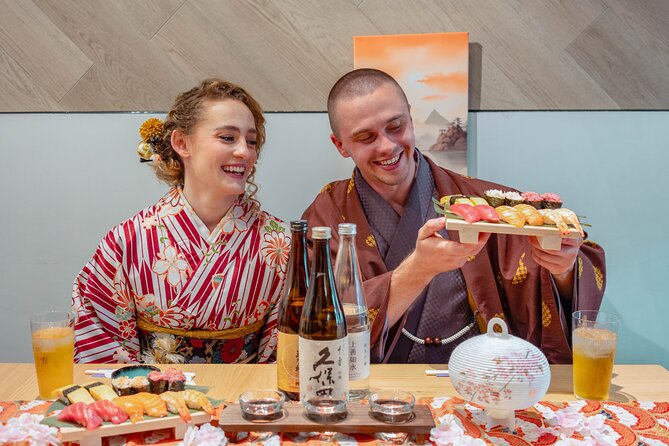
Alcohol needs a similar bit of care. The experience information mentions Japanese sake and beer, but the inclusions list says alcoholic beverages are not included. Treat alcohol as an optional extra or an item to confirm locally, not as part of the guaranteed price.
The Dōtonbori Location and Meeting Point
The location is one of the strongest practical features. The class begins and ends at Sushi Making Experience Namba1A, at 2 Chome-6-11 Nishishinsaibashi, Chuo Ward, Osaka, near public transportation and the Dōtonbori area.
That puts the activity in a useful place for a day of sightseeing. You can combine it with a walk through Dōtonbori, shopping around Namba, or an evening meal nearby without spending time crossing the city.
The meeting point can be harder to spot than you expect. At least one participant had trouble finding it, so allow extra time and keep the full address handy. Do not plan to arrive at the last possible minute, especially if you are unfamiliar with Osaka’s dense streets and indoor commercial spaces.
The activity returns to the same meeting point. There is no separate drop-off or final sightseeing stop, which makes planning the rest of your day simple.
Is $29.85 a Fair Price?
At $29.85 per person, this is a reasonable price for a central Osaka activity that combines instruction, food, and a structured experience. You are not paying only for ingredients. You are also paying for a guide, translation support, preparation, and the chance to handle sushi under supervision.
The value is strongest if you want to learn a skill or add something active to a sightseeing day. If you only want the cheapest sushi meal in Osaka, a restaurant will likely be a better fit. The class takes about 90 minutes and gives you food plus a memory, rather than simply a plate and a bill.
The package includes 12 pieces of sushi and all fees and taxes. Alcohol is not included according to the price information, despite the separate mention of sake and beer. That distinction is small but worth noting when you plan your budget.
The class has been booked more than 10 times in the past week, and the available rating is 5 out of 5 from 400 reviews, with 100 percent recommending it. Those figures suggest strong demand and broad appeal, though they do not remove the possible drawbacks of a commercial group lesson.
Who Will Enjoy This Most?
I would recommend this class to first-time visitors who want a simple cultural activity with food at its center. You will get the most from it if you enjoy learning by doing and do not mind a little friendly performance from the instructors.
It is also a strong choice for:
- Couples looking for a shared activity in Namba
- Families with children who enjoy hands-on food preparation
- Solo visitors who want an easy social experience
- Sushi fans who want to learn basic home techniques
- People seeking vegetarian, vegan, or halal options
- Visitors with a free afternoon or evening in central Osaka
You may want to skip it if you already make sushi often, dislike group activities, or want an advanced lesson in knife skills and fish preparation. The class focuses on shaping and assembling sushi, not on a full professional training course.
Practical Advice Before You Go
Request your dietary menu before the class. Vegetarian, vegan, and halal options are available, but the vegan version may offer fewer ingredients than the standard seafood menu.
Bring the meeting address and leave extra time to find the entrance. The central location is convenient once you arrive, but the exact spot may not be obvious on a first visit.
Arrive ready to participate. This is not a demonstration where you sit back and watch a chef do everything. You will handle the rice, shape the sushi, and eat the results.
If you want photos or a certificate, listen for details during the session. Some people have received a photo and a certificate with their name in Japanese characters, but these extras are not clearly listed among the formal inclusions.
The booking has free cancellation up to 24 hours before the start time. Changes or cancellations made less than 24 hours ahead are not refunded, and cut-off times follow Osaka local time.
Should You Book This Osaka Sushi Experience?
Book it if you want a cheerful, well-organized introduction to sushi in a central location. The strongest reasons are the clear beginner-friendly instruction, the 12 pieces you make and eat, the flexible afternoon and evening schedule, and the option to request vegetarian, vegan, or halal food.
I would not choose it for a quiet, highly traditional chef-led lesson. The atmosphere can feel commercial, and the pace may be brisk. Still, at $29.85, it offers good value for an active 90-minute experience, especially for families, couples, and first-time sushi makers.
For many Osaka itineraries, this is a smart break from sightseeing: short, filling, social, and useful enough that you can try making sushi again at home.
FAQ
Where is the sushi making class held?
The class starts and ends at Sushi Making Experience Namba1A, 2 Chome-6-11 Nishishinsaibashi, Chuo Ward, Osaka, near Dōtonbori and public transportation.
How long does the experience last?
The sushi making experience lasts approximately 1 hour and 30 minutes.
How many pieces of sushi will I make?
The class includes making 12 pieces of sushi.
Which types of sushi are included?
The advertised class includes nigiri and gunkan sushi. Some sessions may include three different sushi styles.
Is the class taught in English?
Yes. Guidance is available in English, Chinese, and Korean.
Are vegetarian, vegan, and halal options available?
Yes. Vegetarian, vegan, and halal sushi can be provided by request. You should make the request in advance.
Is alcohol included in the price?
Alcoholic beverages are listed as not included. The experience information also mentions Japanese sake and beer, so confirm availability and cost when booking.
What is included in the booking price?
The price includes the sushi, snacks listed as 12 pieces, and all fees and taxes. Alcohol is not included.
Can I cancel for a full refund?
Yes. You can cancel at least 24 hours before the experience start time for a full refund. Cancellations or changes made less than 24 hours before the start time are not accepted for a refund.
Just added in Osaka
- Hidden Osaka – Yukaku Red Light Tour & Culinary Adventure★ 4.8 · 96 reviews
- Eat Like a Local in Osaka – Private Custom Street Food Tour★ 4.3 · 33 reviews
- Osaka: Sushi Class in Dotonbori★ 4.9 · 160 reviews
- Osaka: Sushi Making in Spacious Studio (SAME-DAY OK!)★ 5.0 · 75 reviews
- Osaka: Gluten-Free Ramen and Gyoza Cooking Class★ 5.0 · 42 reviews
- Osaka: Kuromon Market Food Walking Tour (6 stops, 6 tastes)★ 4.6 · 272 reviews
- Osaka: Roll and Authentic Sushi Making Class in Dotonbori★ 4.9 · 239 reviews
- Osaka: Local Foodie Tour in Dotonbori and Shinsekai★ 4.7 · 95 reviews
Sushi and Ramen Tours, compared.
Sushi Making Tokyo Roll and Authentic Japanese Sushi Class
Read our review →
Roll and Authentic Sushi Making Class in Asakusa
Read our review →
Ramen Cooking Class at Ramen Factory in Kyoto
Read our review →
Best of Shinjuku: Izakaya Food Tour (4 Stops, 14+ Tastings)
Read our review →
Sushi Making Class in a Happi Coat near a Famous Spot
Read our review →
Sushi Making Tokyo! Popular Maki Sushi & Japanese Sushi(+Recipe!)
Read our review →
Sushi Making Osaka Roll and Authentic Japanese Sushi Class
Read our review →
Tokyo Sushi Making Class in Tsukiji with Professional Chef
Read our review →Browse the lists this tour appears in