
REVIEW · OSAKA FOOD TOURS
Osaka Local Foodie Walking Tour in Dotonbori and Shinsekai
Osaka eats best on foot. This three-hour walk links Shinsekai and Dotonbori, two of the city’s most famous food districts, with local dishes, narrow lanes, shrines, shopping streets, and plenty of neon. I like the small group size, capped at seven, and the chance to try kushikatsu, okonomiyaki, and takoyaki without planning every stop yourself. The local guides, including Aika, Yuma, Michiko, Emi, and Justin, have often added useful food tips and cultural detail.
I also like that the tour ends at the Glico sign, right in the heart of Dotonbori, where you can continue eating or shopping. The main caution is value: at $111.42 per person, this is not a bargain food crawl, and some people found the number of food stops too small for the price. You should book it for guidance and orientation as much as for the meal.
Key points at a glance
- Six kushikatsu skewers are included: You try Osaka’s famous deep-fried skewers in Shinsekai, with three included drinks, alcoholic or non-alcoholic.
- The route joins two very different Osaka districts: Shinsekai feels older and more local, while Dotonbori is bright, crowded, and built around food, shopping, and entertainment.
- The group is small: A maximum of seven people allows for conversation and personal help, though the quality of the experience depends heavily on your individual guide.
- The food is filling rather than highly varied: The plan includes kushikatsu, okonomiyaki, and takoyaki, but some dishes are served in larger portions at only a few venues.
- The tour is useful on your first Osaka evening: You finish at Dotonbori and receive an easy introduction to places you may want to revisit on your own.
- Dietary limits matter: Gluten-free and vegan diets cannot be accommodated. Vegetarian requests must be made by the day before, and pork-based dashi may still be used.
Starting in Shinsekai beneath Tsutenkaku
The tour begins at a FamilyMart in Nishinari Ward, near the Shin-Imamiya and Dobutsuen-mae area. The meeting point is close to public transportation, but it is not the most polished or obvious place to find a guide. Give yourself extra time, especially if this is your first visit to Osaka. Arriving late means you cannot join, reschedule, or receive a refund.
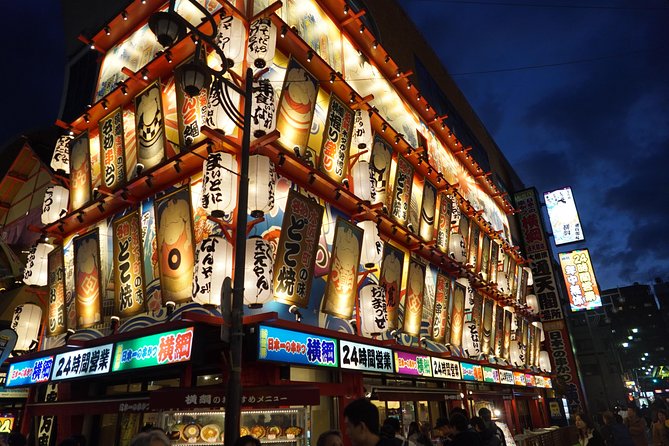
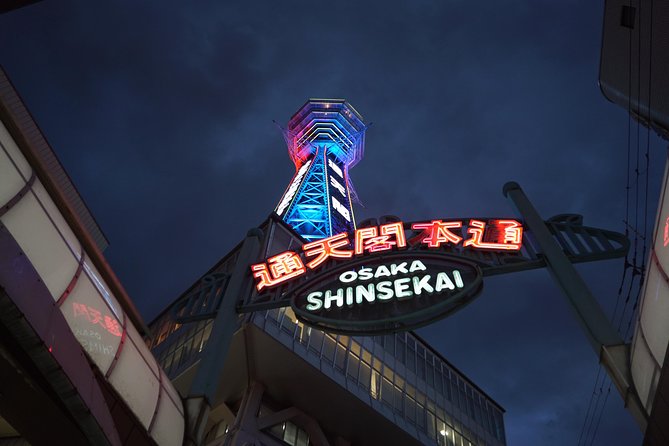
From there, you walk toward Tsutenkaku Tower, Shinsekai’s familiar landmark. The tower gives the district a clear visual anchor, and the surrounding streets have a very different mood from modern shopping zones such as Umeda. Shinsekai developed as an entertainment district and still has a slightly old-fashioned feel, with signs, small eateries, game arcades, and local businesses packed around the tower.
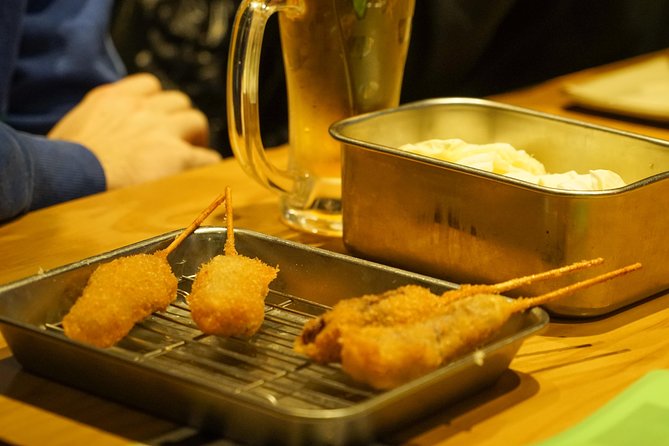
The first food stop is kushikatsu, a dish closely tied to Osaka. You receive six skewers of meat and vegetables, deep-fried and served hot. This is the kind of food that makes sense early in the tour because it is easy to share, immediately satisfying, and strongly associated with Shinsekai.
Three drinks are included, and you can choose alcoholic or non-alcoholic options. That sounds generous, but it also affects the price calculation. If you do not drink much, part of the package may not feel useful. I would not choose this tour mainly because of the drinks.
More food walking tours in Osaka:
- Kuromon Market Food Walking Tour in Osaka (6 stops, 6 tastes)
★ 5.0 · 550 reviews - Osaka: Kuromon Market Food Walking Tour (6 stops, 6 tastes)
★ 4.6 · 272 reviews - Reykjavik Food Walk – Local Foodie Adventure in Iceland
★ 5.0 · 18,952 reviews
Jan-Jan Yokocho and an older side of Osaka
The route passes through Jan-Jan Yokocho, a narrow alley near Tsutenkaku. The alley helps explain why Shinsekai is worth seeing beyond its food. It has a compact, old Osaka character, with small shops and restaurants close together rather than a grand sightseeing layout.
One section is presented as a museum-like passage that recalls Osaka as it appeared more than 80 years ago. The tour also points out the Billiken statue, a well-known Shinsekai figure connected with good fortune. These details give the food a setting, rather than treating the district as a series of anonymous restaurants.
This is also where guide quality matters most. Aika and Yuma received especially warm praise for explaining food, local customs, and the surrounding streets in an easy, lively way. Other experiences were less satisfying because the guide walked quickly and offered little commentary unless someone asked a question.
You should feel comfortable asking questions. If you want to know why kushikatsu matters in Osaka, how locals eat it, or what makes one shop different from another, say so. The tour can be much better when the conversation is active.
From shopping streets to Dotonbori
The route then shifts toward Dotonbori, passing through the Shinsaibashi-suji area and later Sennichimae Doguyasuji Shopping Street. The exact order and amount of walking can vary, especially between daytime and evening departures.
Doguyasuji is a particularly useful stop for people who enjoy cooking or shopping for souvenirs. It is known for kitchen supplies, restaurant equipment, food models, and Japanese knives. The plan includes a visit to Hōchō-ya, a knife shop, during the day route. At night, the guide may explain the area near Namba Grand Kagetsu before taking you to nearby shops instead.
This section is less about eating and more about seeing the tools behind Osaka’s food culture. You may find it more interesting than another restaurant stop, especially if you want a practical souvenir. If your main goal is sampling many small dishes, though, this walking and shopping time may feel like a trade-off.
A few people found the walk slow, while another person found the guide too fast. That sounds contradictory, but it points to a real issue: the pace depends on the group and guide. If you have mobility concerns or simply prefer a relaxed walk, mention it early.
Hozen-ji Temple and Ukiyo Alley
Near Dotonbori, the route reaches Hozen-ji Temple, a small temple tucked among restaurant streets. It is a welcome change from the bright commercial signs nearby. The temple is best appreciated as a quiet pause, not as a major sightseeing attraction.
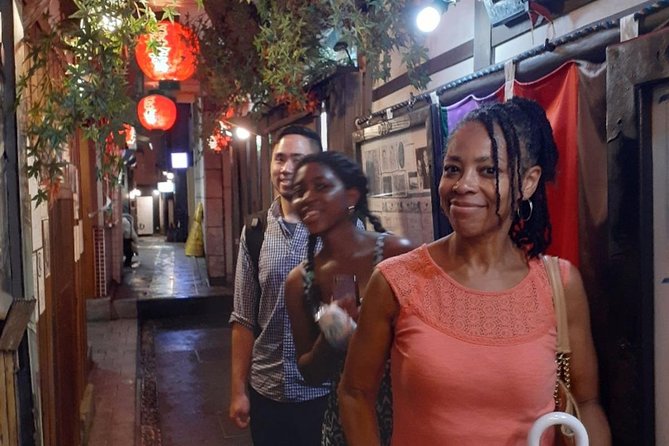
The walk continues through Ukiyo-koji, a narrow alley with a traditional feel. Here, the contrast is the point. You move from giant signs and crowds into a much smaller space, then return to Dotonbori’s food streets.
The timing matters. At night, the temple and alley can be dark, and one person felt this reduced the value of the stop. If you care about seeing architectural details or taking clear photos, a daytime tour may suit you better. At night, the area works more as atmosphere than as a formal temple visit.
The plan also includes takoyaki, sweets, and other small snacks, with an approximate extra cost of ¥500 noted for this portion. The included food list says you receive one box of takoyaki, but a few people did not receive every listed dish, or reached the takoyaki when they were already full. I would confirm the food schedule with your guide at the beginning.
A few more food tours in Osaka worth a look
- Osaka: Shinsekai Food Tour with 13-15 Dishes at 5 Eateries
★ 4.8 · 2,204 reviews - Osaka Food Tour: 13 Dishes at 5 Local Eateries
★ 5.0 · 2,149 reviews - Hungry Osaka Street Food Tour:15 Tastings & 3 Drinks with a Local
★ 5.0 · 1,727 reviews - Hungry Osaka Street Food Tour: 15 Dishes & 3 Drinks
★ 4.9 · 694 reviews
Okonomiyaki and the cooking experience
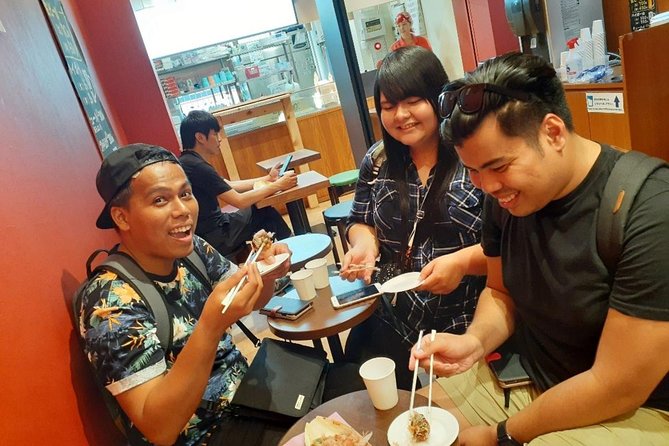
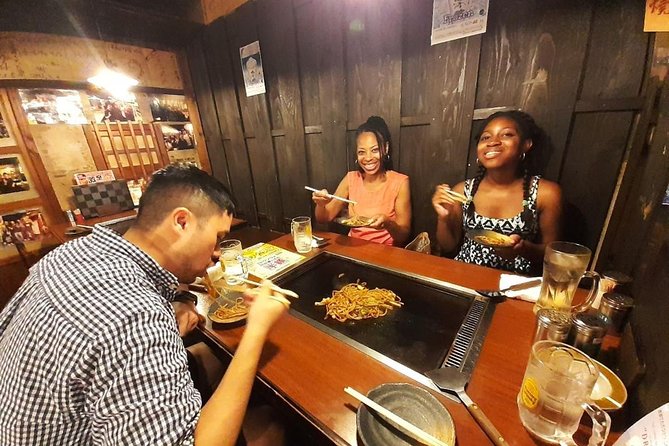
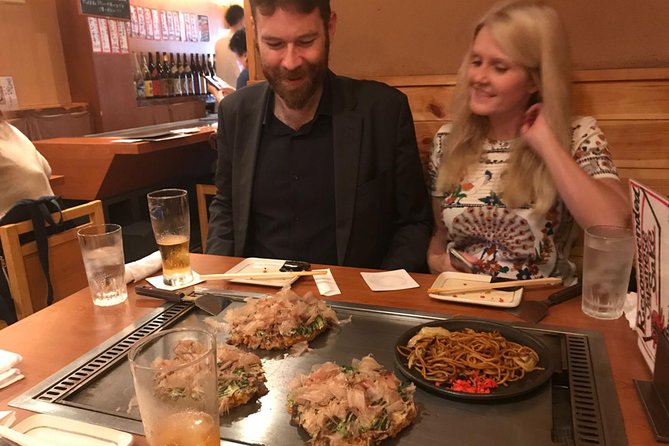
The main meal includes one serving of Osaka-style okonomiyaki, the savory pancake made with batter, cabbage, and toppings. The name combines the ideas of what you like and grilled, which fits the dish’s flexible nature.
Several people especially enjoyed grilling their own okonomiyaki. That small hands-on element makes the meal more memorable than simply receiving a finished plate. It also gives the guide a chance to explain what is being cooked and how the toppings are used.
The portion can be substantial. This is good news if you arrive hungry, but it can make the later takoyaki stop less appealing. One practical tip is to avoid eating a large meal before the tour, but do not arrive so hungry that you rush through the walking portion just to reach the restaurant.
The food quality appears to vary by venue and guide. Many people found the okonomiyaki delicious, while a few felt the restaurant was aimed more at visitors than at local diners. That does not make it a bad stop, but serious food hunters may want a tour with more small independent stalls and more dishes prepared in different ways.
Dotonbori’s famous Glico photo
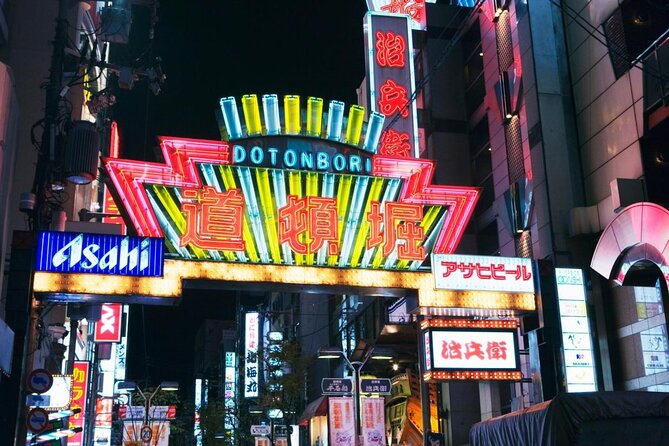
The walk ends near the Glico Running Man sign, one of Osaka’s most recognizable photo spots. The guide takes pictures here, which is useful because the area is crowded and it can be awkward to arrange a good shot for your whole group.
Ending at this sign is practical. You are already close to restaurants, shops, bars, and Namba transportation. Justin even helped one group navigate Osaka’s subway system after the tour, a thoughtful touch if this is your first night in the city. Do not assume every guide will provide the same level of after-tour help, but you can ask for directions before saying goodbye.
The Glico sign itself is not a major cultural sight. It is a playful Osaka landmark and a convenient finish. Think of it as a final photo stop, not the reason to book the tour.
What the guides add to the experience
The strongest part of this tour is often the guide. Aika was praised for her local perspective, food advice, and suggestions for snacks to take home. Yuma was described as friendly, clear in English, and good at explaining how the dishes are made. Emi connected restaurants and everyday food habits with daily life in Osaka, while Michiko combined food stops with historical explanations and photo help.
That personal element is important because the route itself is easy to repeat on your own. You can find Shinsekai, Dotonbori, Hozen-ji Temple, and the Glico sign without a guide. The added value comes from having someone explain what you are seeing, help you order, and point out details you might pass by.
The experience is not perfectly consistent. Some guides have been described as still gaining confidence, and one person felt that information was offered only after questions. If you want a formal lecture at every stop, this may disappoint you. If you prefer an informal walk with room for conversation, it is a better fit.
Is $111.42 a fair price?
At $111.42, the tour costs more than simply buying kushikatsu, okonomiyaki, takoyaki, and drinks yourself. The included food is six kushikatsu pieces, one serving of okonomiyaki, one box of takoyaki, and three drinks. Transportation is not included, with ¥190 listed separately.
The price makes more sense if you value the guide, small group, translation help, route planning, and the convenience of joining several neighborhoods in one outing. It makes less sense if you judge it by the number of restaurants or the amount of food alone.
This is not a full-scale food crawl with many tiny tastings. It is a guided neighborhood walk with a few substantial food experiences. Some people found the portions plentiful but the choices too limited. Others felt the dishes were delicious and appreciated trying foods they might not have ordered alone.
For the best value, book it early in your Osaka stay. You can use the guide’s suggestions for later meals, learn the layout of Dotonbori, and return to the places you liked. Booking it on your last evening wastes some of that practical benefit.
Who should book this Osaka food walk?
I would recommend it to first-time visitors who want a friendly introduction to Osaka food without handling menus and restaurant choices alone. Families can benefit from the small group, and a group of six may sometimes end up with a private departure if no other spaces are booked.
It also suits people who enjoy food plus local streets, temples, shopping, and photo stops. You will get more from it if you ask questions and enjoy walking between meals.
I would hesitate to recommend it to strict food enthusiasts seeking rare dishes, many independent vendors, or a long list of small tastings. It is also a poor match for vegan or gluten-free diets. Vegetarian food can be arranged only if requested by the day before, and even vegetarian kushikatsu may use pork-based dashi. Allergies cannot be guaranteed safe because the food is prepared in outside kitchens.
The weather deserves attention. Osaka summers can reach 40°C, while winter temperatures may fall to -5°C. Wear comfortable shoes, carry water in hot weather, and dress properly for the season. Smoking may be allowed at some venues, and the route cannot always be changed for that reason.
Should you book it?
Book this tour if you want a guided first look at Osaka’s best-known food districts, three familiar local dishes, and a small group rather than a large bus outing. The guides can add real value, especially people such as Aika, Yuma, Michiko, Emi, and Justin, who have been praised for food explanations, local advice, photos, and practical help.
Skip it if your priority is maximum food variety per dollar. At this price, you may prefer to explore Dotonbori and Shinsekai independently and spend the difference at several small restaurants.
The fairest way to view this experience is as a cultural walking tour with food built in. It gives you an easy route, a friendly introduction, and a useful Osaka orientation. Just do not expect a serious tasting marathon.
FAQ
How long does the Osaka Local Foodie Walking Tour last?
The tour lasts approximately three hours.
How many people can join the tour?
The tour has a maximum of seven participants.
What food is included?
The listed inclusions are six kushikatsu skewers, one piece or serving of okonomiyaki, one box of takoyaki, and three drinks. Alcoholic and non-alcoholic drinks are available.
Where does the tour start and finish?
It starts at the FamilyMart near 1-chōme-17 in Sannō, Nishinari Ward. It finishes at the Glico Sign in Dotonbori.
Can the tour accommodate vegetarian, vegan, or gluten-free diets?
Gluten-free and vegan diets cannot be accommodated. A vegetarian option must be selected when booking or requested no later than the day before. Vegetarian kushikatsu may still use pork-based dashi.
What happens if I arrive late or need to cancel?
The tour starts on time, and late arrivals cannot join, reschedule, or receive a refund. You can cancel for a full refund up to 24 hours before the start time.
Just added in Osaka
- Hidden Osaka – Yukaku Red Light Tour & Culinary Adventure★ 4.8 · 96 reviews
- Eat Like a Local in Osaka – Private Custom Street Food Tour★ 4.3 · 33 reviews
- Osaka: Sushi Class in Dotonbori★ 4.9 · 160 reviews
- Osaka: Sushi Making in Spacious Studio (SAME-DAY OK!)★ 5.0 · 75 reviews
- Osaka: Gluten-Free Ramen and Gyoza Cooking Class★ 5.0 · 42 reviews
- Osaka: Kuromon Market Food Walking Tour (6 stops, 6 tastes)★ 4.6 · 272 reviews
- Osaka: Roll and Authentic Sushi Making Class in Dotonbori★ 4.9 · 239 reviews
- Osaka Dotonbori: Sushi Making Experience★ 4.9 · 122 reviews
Food Walking Tours, compared.
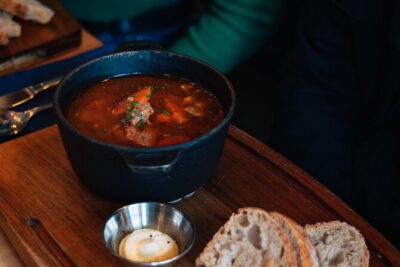
Reykjavik Food Walk – Local Foodie Adventure in Iceland
Read our review →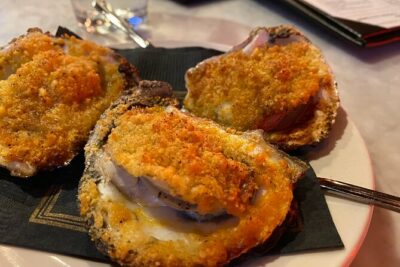
New Orleans Food Walking Tour of the French Quarter with Small-Group Option
Read our review →
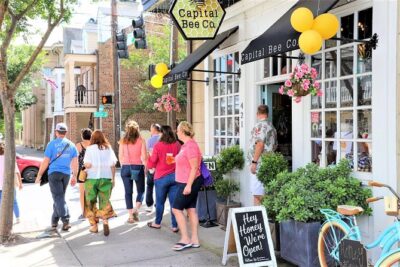
Savannah First Squares Culinary & Cultural Walking Food Tour
Read our review →
Guided Food Walking Tour with Wine in Trastevere
Read our review →
Trastevere & Campo de Fiori Street Food Walking Tour
Read our review →Browse the lists this tour appears in