
REVIEW · OSAKA FOOD TOURS
Osaka: Sushi Class in Dotonbori
Sushi is better when you make it. This three-hour Osaka class gives you a hands-on introduction to three different styles, from familiar nigiri to local pressed sushi that many visitors never encounter on a restaurant menu. I especially like the mix of practical cooking and Japanese food culture, plus the chance to eat what you prepare.
The small group of up to eight makes the lesson feel personal, and the English-speaking instructors explain each step clearly. At $67 per person, the price is strong for a three-hour class with all ingredients included and a substantial meal at the end. The main thing to consider is that you do not appear to slice the fish yourself, so serious sushi hobbyists may find the preparation less advanced than they hoped.
Key points to know before booking
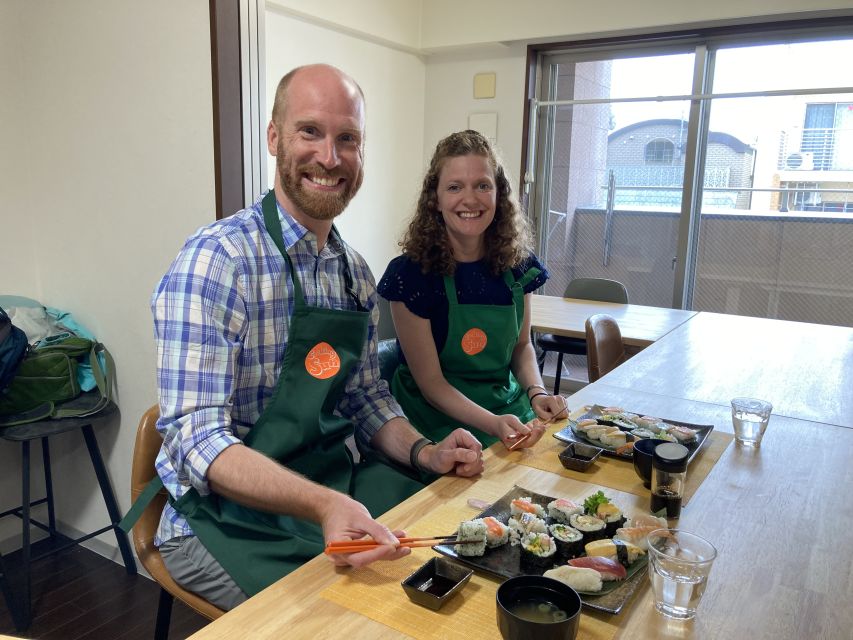
- You make three distinct kinds of sushi: salad roll, nigiri, and Osaka-style oshizushi.
- Oshizushi gives the class a local angle: this pressed, square sushi is a Kansai specialty also called box sushi.
- The food is part of the value: you eat the sushi you prepare, and past sessions have included enough food to satisfy very hungry diners.
- English instruction is a major strength: instructors such as Yoshi, Yoko, Ami, Amy, Naomi, and Eriko have been praised for clear teaching and friendly conversation.
- The class is held at Cooking Sun Osaka: go to room 202 and press 202 followed by the 呼出 call button at the entrance.
- Food requests need advance notice: leave a note when booking for a vegetarian or gluten-free option.
Three hours of sushi, not just a quick demonstration
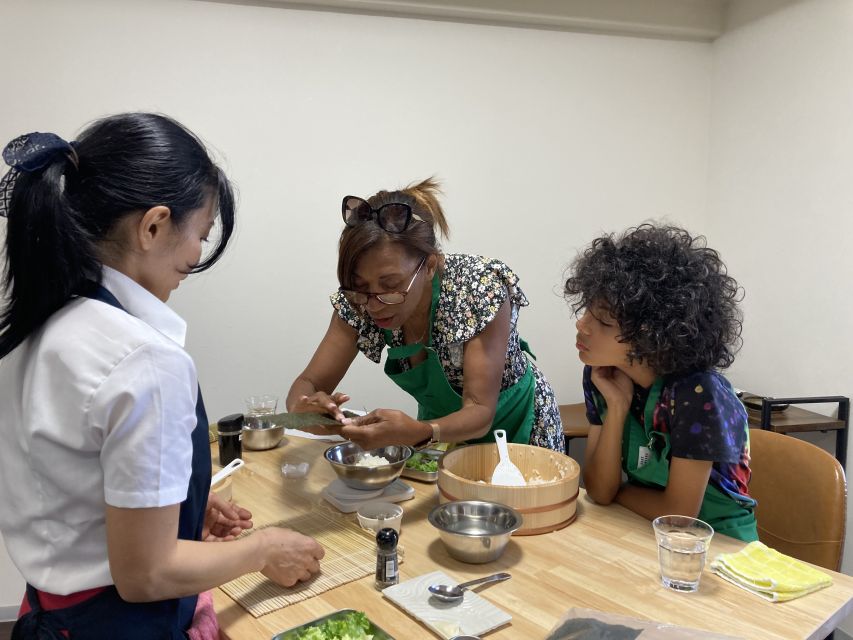
This is a proper cooking lesson rather than a short show-and-tell. Over roughly three hours, you prepare three sushi styles, learn how the ingredients are handled, and finish by eating the results.
That length matters. Sushi looks simple when an experienced chef works quickly, but rice temperature, seasoning, shaping, and portion size all affect the finished dish. A longer class gives you time to see the process, try it yourself, correct mistakes, and ask questions.
The group limit of eight is another plus. You are not lost at the back of a large room, and the instructor can watch how you shape the rice or roll the nori. Smaller sessions have sometimes had only four people, which makes the teaching even more direct, though the exact group size depends on the date.
The class is taught in English. That does not mean every cooking term will be familiar at once, but the instruction has been praised for being patient, clear, and easy for beginners to follow. Several participants described making sushi successfully even when they had no previous experience.
More Sushi and Ramen Tours in Osaka
- Sushi Making Osaka Roll and Authentic Japanese Sushi Class
★ 5.0 · 1,220 reviews - Osaka: Five Must-See Highlights Walking Tour & Ramen Lunch
★ 4.7 · 411 reviews - Osaka Sushi Making Experience
★ 5.0 · 400 reviews
Starting with the salad roll
The first preparation is a salad roll, a friendly way to begin because it teaches the basic mechanics of filling and rolling nori. The ingredients include crab-flavored kamaboko, lettuce, cucumber, tuna mixed with mayonnaise, and tamagoyaki, or Japanese rolled omelet, at the center.
This is not a traditional sushi-counter order in the same way as nigiri, but it is useful for learning. You get a lesson in placing fillings evenly, keeping the roll together, and cutting it into manageable pieces. The lettuce and cucumber also give the roll a fresh, crisp texture, while the tuna mayonnaise and egg make it filling.
The salad roll may be the easiest style for children, first-time cooks, or anyone nervous about handling raw fish. It also helps you understand why the amount of filling matters. Too little and the roll feels skimpy. Too much and it becomes a seaweed-wrapped escape attempt.
The class is not only about making an attractive plate. Instructors also explain ingredients and Japanese food customs, and some sessions have included discussion of preserving and pickling food. That extra context gives the cooking more meaning than simply copying hand movements.
Shaping nigiri, Japan’s familiar sushi
Nigiri is the dish most people picture when they hear the word sushi. It consists of a small piece of vinegared rice with a topping placed on top. The topping may be fish, shellfish, or omelet, depending on what is prepared in class.
The challenge is restraint. Nigiri is bite-sized, so the rice must be compact without becoming hard. You also need enough topping to balance the rice. The instructor demonstrates the shape, then guides you as you form your own pieces.
This is where clear teaching matters most. A novice can make a roll that looks slightly uneven and still enjoy it. Nigiri is less forgiving because the shape is exposed. The positive reports about step-by-step instruction are especially useful here. You should expect help rather than being handed ingredients and left to guess.
One limitation is worth noting. At least one participant who had taken other cooking classes in Japan wished for the chance to slice the fish. This class focuses on assembling and shaping the sushi rather than giving you a full fish-cutting lesson. If your main goal is knife work, ask before booking.
Making Osaka’s pressed oshizushi
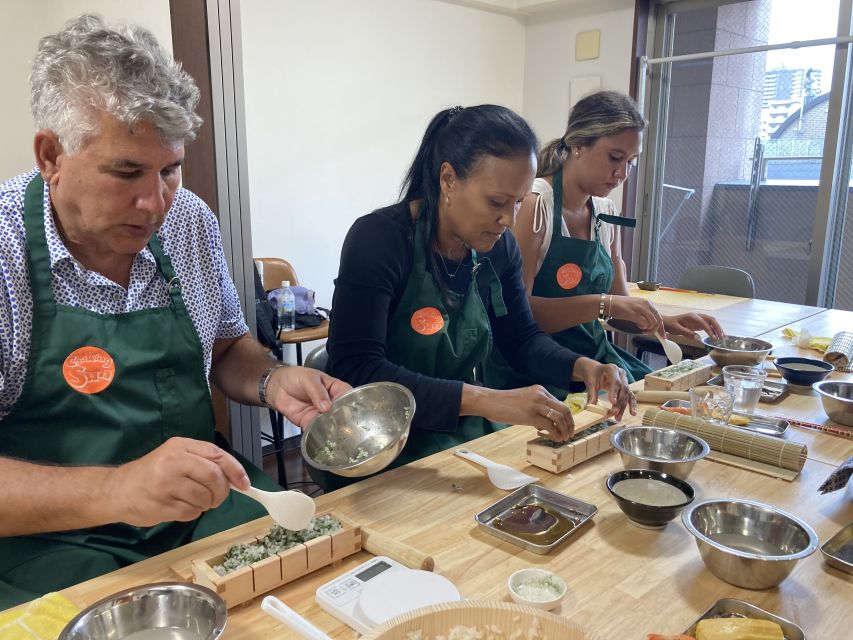
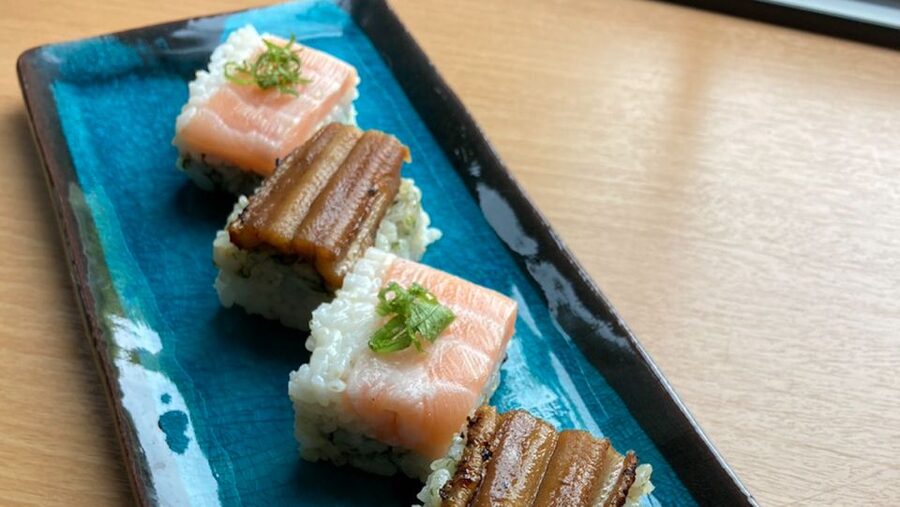
The most distinctive part of the class is oshizushi, the traditional pressed sushi of the Kansai region. Osaka also calls it box sushi, and its square shape gives it a very different look from rolled sushi or nigiri.
You fill a square wooden frame with sushi rice and toppings, then press the mixture so the rice holds against the topping. Once the block is released, it is cut into pieces just before eating.
This technique is valuable because it connects the class directly to Osaka’s food traditions. Sushi is often associated with Tokyo-style nigiri, but Kansai has its own forms and methods. Oshizushi was designed around pressing and preserving ingredients, and the finished shape is neat, firm, and easy to divide.
You do not need advanced cooking skills to take part, but you do need to follow the order of the layers carefully. The frame does much of the shaping, yet the pressing still requires attention. Press too lightly and the pieces can fall apart. Press too hard and the texture may become dense.
For me, this is the class’s best reason to choose it over a generic sushi workshop. You are not making only the style you already know from home. You are also learning a regional Osaka specialty.
Same city, a different table:
- Osaka: Shinsekai Food Tour with 13-15 Dishes at 5 Eateries
★ 4.8 · 2,204 reviews - Osaka Food Tour: 13 Dishes at 5 Local Eateries
★ 5.0 · 2,149 reviews - Hungry Osaka Street Food Tour:15 Tastings & 3 Drinks with a Local
★ 5.0 · 1,727 reviews - Osaka Local Foodie Walking Tour in Dotonbori and Shinsekai
★ 5.0 · 985 reviews
What you eat at the end
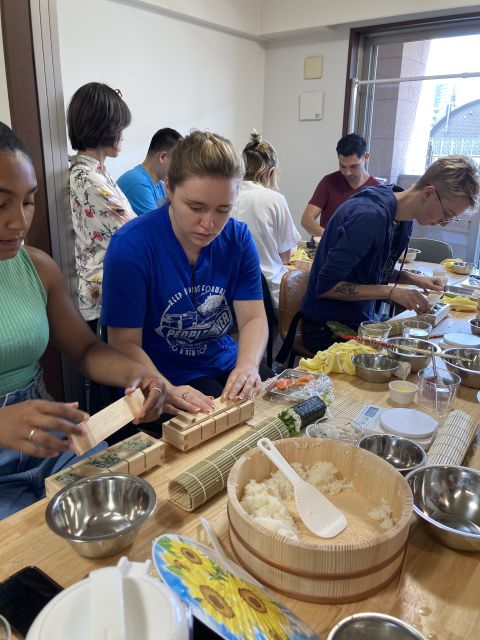
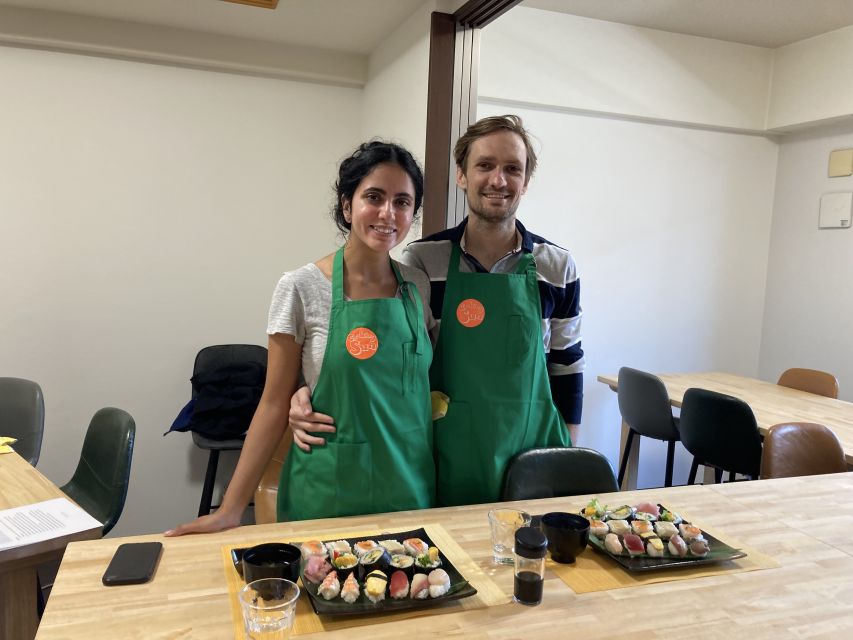
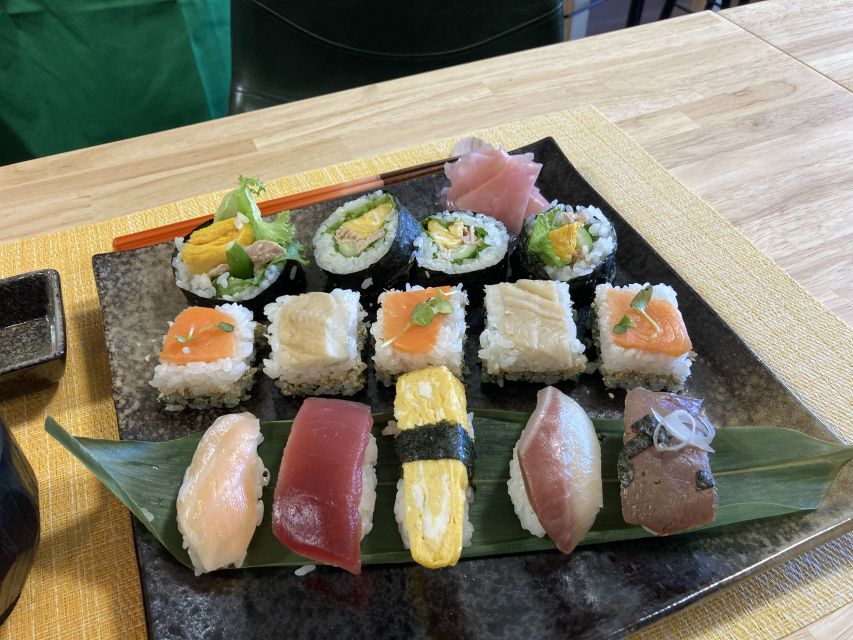
The finished meal is the payoff. You eat the sushi you have made, including the salad roll, nigiri, and oshizushi. The amount of food has been described as generous, with several people noting that it was enough for diners with large appetites.
Some sessions have also included dashi and miso soup, along with an explanation of Japanese cooking methods. Those additions may vary, so I would treat them as possible extras rather than guaranteed parts of the advertised three sushi preparations.
The ingredients are intended for making sushi, and the food has been praised as fresh and delicious. Still, keep your expectations sensible. This is a cooking class, not an omakase meal served by a sushi master. You will be eating your own work, including any pieces that are a little crooked.
That is part of the fun. The finished plate gives you a clear sense of what you learned, and you can take the basic methods home. The lesson has also included advice about finding food items locally and remaking sushi outside Japan, which adds practical value for keen home cooks.
Friendly instruction and Japanese food culture
The teaching seems to be one of the strongest parts of the experience. Yoshi has been praised for patient explanations, trip advice, and recommendations for food to try in Osaka. Yoko has been described as funny, friendly, and well prepared, while Ami, Amy, Naomi, and Eriko have also received warm praise for helping participants through the lesson.
Staff do more than explain how to place rice on nori. They may discuss Japanese food traditions, the meanings connected with different dishes, and methods such as dashi preparation, pickling, and preservation.
That conversational side works well in a small group. You can ask about what you are eating, how to shop for ingredients, or how Japanese home cooking differs from restaurant sushi. It turns the class into a food and culture lesson, not just a craft activity.
The English level appears to be strong enough for detailed instruction. This is important because sushi-making depends on small physical actions that are hard to understand from a rushed demonstration.
Price and value at $67 per person
At $67, this is not the cheapest meal you can buy in Osaka. It is also not meant to be. The fair comparison is with a three-hour activity that includes food, instruction, a small group, and cultural explanation.
The price looks particularly good if you value the meal at the end. You are not paying for a short lesson and then needing to find lunch. The completed sushi has been described as plentiful enough for two people with substantial appetites, although exactly how much you eat will depend on the class session and your own appetite.
I also like that the lesson covers three techniques. A class devoted only to rolling maki would teach one useful skill, but the combination of salad roll, nigiri, and oshizushi gives you a wider view of Japanese sushi.
The value is less clear if you already make sushi regularly or want professional-level knife training. In that case, the beginner-friendly pace may feel basic. For a first sushi lesson, couples, families, and food-focused visitors, the price is easier to justify.
Finding Cooking Sun Osaka
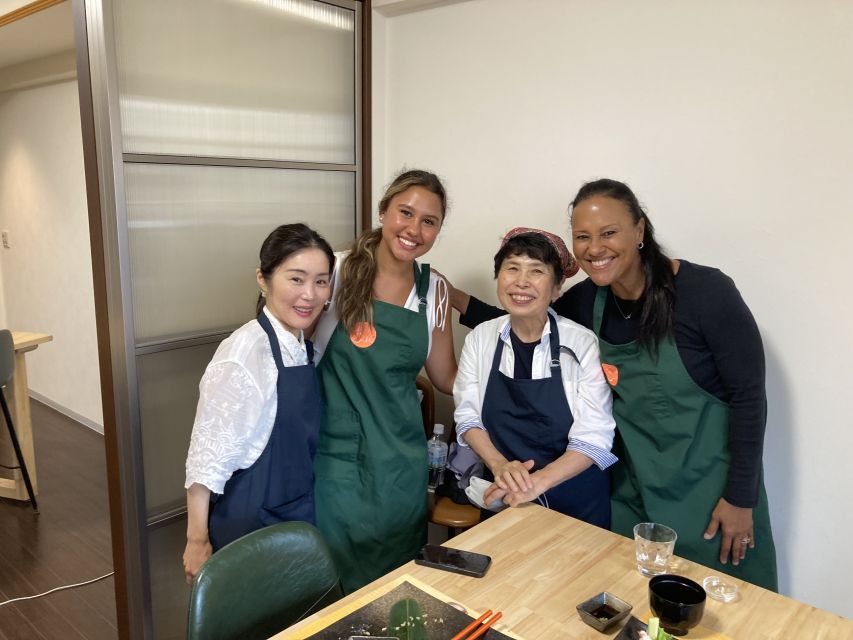
The meeting point is Cooking Sun Osaka, room 202. At the entrance, press 202 and then the 呼出 call button.
This detail deserves attention because the entrance can be easy to miss. One participant had trouble finding the building, and even a cab driver struggled. The tree outside was noted as a useful landmark once you are looking for it, but do not leave the search until the last minute.
I would arrive early enough to locate the entrance without rushing. Dotonbori is a busy part of Osaka, and a cooking class is not the place to begin with a frantic walk up and down the street. Keep the room number written down, and look for the entrance rather than assuming the cooking space will be obvious from the main road.
The activity lasts three hours, and starting times vary by availability. Check the time carefully when booking so you can fit it around your Dotonbori sightseeing and meals.
Who should take this class?
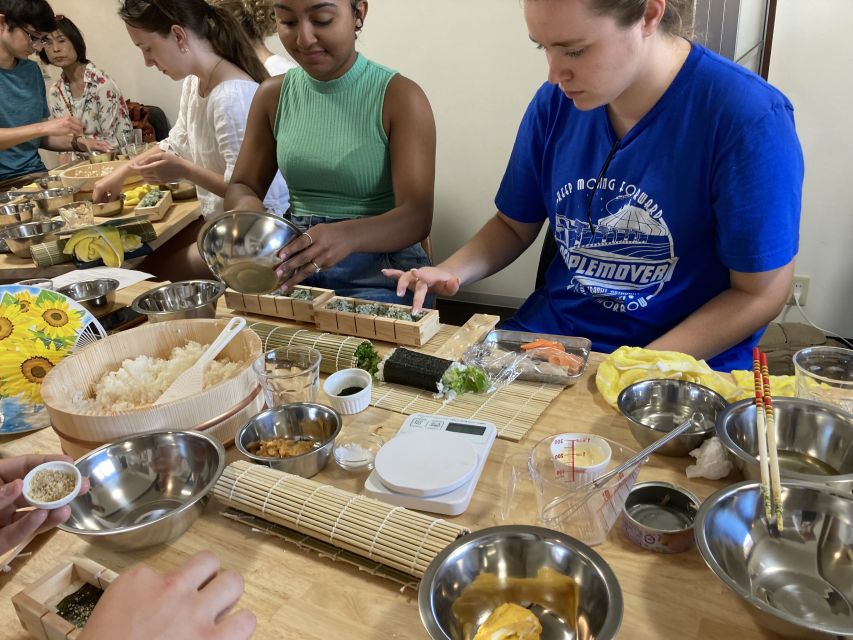
This is a good match for first-time sushi makers, couples looking for a shared activity, and families with an interest in Japanese food. You do not need a professional kitchen background, and the clear demonstrations make the basic techniques approachable.
It also suits anyone who wants more than a standard restaurant meal. Oshizushi gives you a local Osaka connection, while the explanations about food culture help you understand what you are eating.
Sushi lovers will enjoy it, but I would not limit the class to sushi experts. Beginners seem to get the most from the patient instruction and the satisfaction of producing a full plate themselves.
You should think twice if you want to cut fish, work with advanced knife techniques, or receive a long lesson on professional sushi preparation. That is not the main purpose here. The focus is accessible preparation, regional context, and eating a generous amount of what you make.
Vegetarians and people avoiding gluten should leave a note when booking. The activity specifically asks you to request those options in advance, so do not assume the standard ingredients can be changed on the day.
The class is wheelchair accessible. Free cancellation is available until 24 hours before the activity for a full refund, and you can reserve now and pay later, which helps if your Osaka schedule is still changing.
Should you book the Osaka sushi class?
I would book this class if you want a relaxed, practical food activity with a strong chance of personal attention. The best features are the small group, the English instruction, the generous food, and the inclusion of oshizushi, a regional style that makes the lesson feel tied to Osaka.
I would also book it for a first sushi-making experience. You will learn three useful formats, eat the results, and leave with a better sense of how Japanese food is assembled and served.
Skip it only if you want advanced fish preparation or a chef-focused lesson built around slicing. For most visitors, $67 is a fair price for three hours of instruction and a substantial meal, especially when you add the cultural conversation and the chance to make something you can repeat at home.
FAQ
Where is the sushi class held?
It is held at Cooking Sun Osaka, in room 202.
How do I enter the building?
At the entrance, press 202 and then press the 呼出 call button.
How long does the class last?
The class lasts three hours.
What kinds of sushi will I make?
You will make a salad roll, nigiri, and oshizushi, which is pressed or box sushi.
Is the class taught in English?
Yes. The instructor teaches in English.
How many people can join?
It is a small-group activity limited to eight participants.
Can I request vegetarian or gluten-free food?
Yes. Leave a note when booking to request a vegetarian or gluten-free option.
Can I cancel for a refund?
Yes. You can cancel up to 24 hours in advance for a full refund.
More Workshops in Osaka
- Osaka: Ramen and Gyoza Cooking Class in Dotonbori
★ 5.0 · 378 reviews - Osaka: Roll and Authentic Sushi Making Class in Dotonbori
★ 4.9 · 239 reviews - Osaka: Cooking Class Ramen & Gyoza Course in Nanba
★ 4.9 · 86 reviews - Osaka: Gluten-Free Ramen and Gyoza Cooking Class
★ 5.0 · 42 reviews
Just added in Osaka
- Hidden Osaka – Yukaku Red Light Tour & Culinary Adventure★ 4.8 · 96 reviews
- Eat Like a Local in Osaka – Private Custom Street Food Tour★ 4.3 · 33 reviews
- Osaka: Sushi Making in Spacious Studio (SAME-DAY OK!)★ 5.0 · 75 reviews
- Osaka: Gluten-Free Ramen and Gyoza Cooking Class★ 5.0 · 42 reviews
- Osaka: Kuromon Market Food Walking Tour (6 stops, 6 tastes)★ 4.6 · 272 reviews
- Osaka: Roll and Authentic Sushi Making Class in Dotonbori★ 4.9 · 239 reviews
- Osaka: Local Foodie Tour in Dotonbori and Shinsekai★ 4.7 · 95 reviews
- Osaka: Guided Food Tour with 12 Dishes at 4 Local Eateries★ 4.9 · 90 reviews
Sushi and Ramen Tours, compared.
Sushi Making Tokyo Roll and Authentic Japanese Sushi Class
Read our review →
Roll and Authentic Sushi Making Class in Asakusa
Read our review →
Ramen Cooking Class at Ramen Factory in Kyoto
Read our review →
Best of Shinjuku: Izakaya Food Tour (4 Stops, 14+ Tastings)
Read our review →
Sushi Making Class in a Happi Coat near a Famous Spot
Read our review →
Sushi Making Tokyo! Popular Maki Sushi & Japanese Sushi(+Recipe!)
Read our review →
Sushi Making Osaka Roll and Authentic Japanese Sushi Class
Read our review →
Tokyo Sushi Making Class in Tsukiji with Professional Chef
Read our review →Browse the lists this tour appears in