
REVIEW · HONG KONG FOOD TOURS
Hong Kong’s Tin Hau Hidden Eats Food Tour with 7+ Local Tastings
Come hungry, and leave with a Tin Hau map. This three-hour food walk combines seven or more tastings with temples, a wet market, and useful lessons in Hong Kong eating. I like the small groups, capped at 12 people, and I like that your guide helps you order and understand dishes you might otherwise pass by. The price is $107 per person, so it is not a cheap snack crawl, but the number of full tastings and the local orientation make it a fair buy for a first visit.
The main catch is the walking and the market stop. You will cover busy city streets and should wear comfortable shoes, while the wet market may feel confronting if you prefer not to see where meat and produce come from. Come with a light breakfast, especially for a morning departure. Several people finish very full.
What makes this Tin Hau food tour worth considering
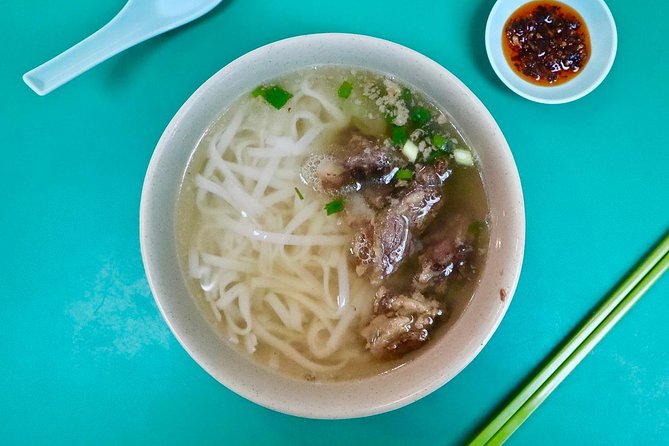
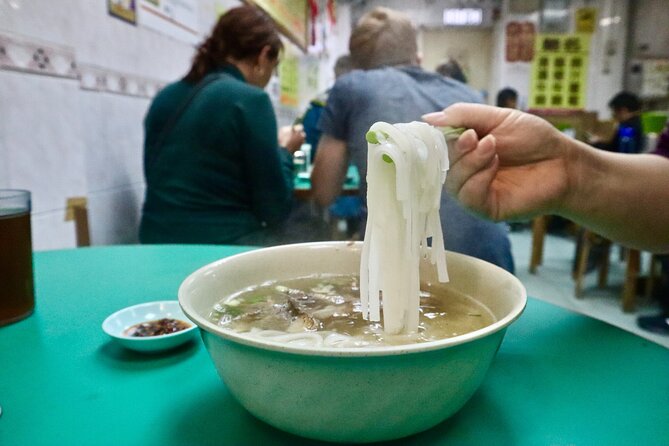
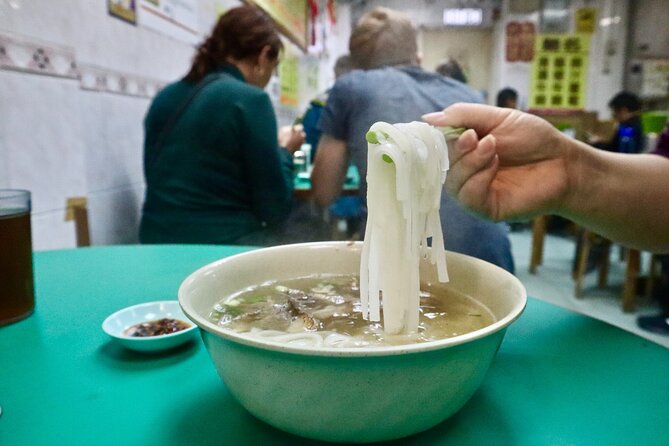
- Michelin-mentioned brisket noodles: Beef brisket soup with rice noodles gives you a classic Hong Kong comfort food to start the meal.
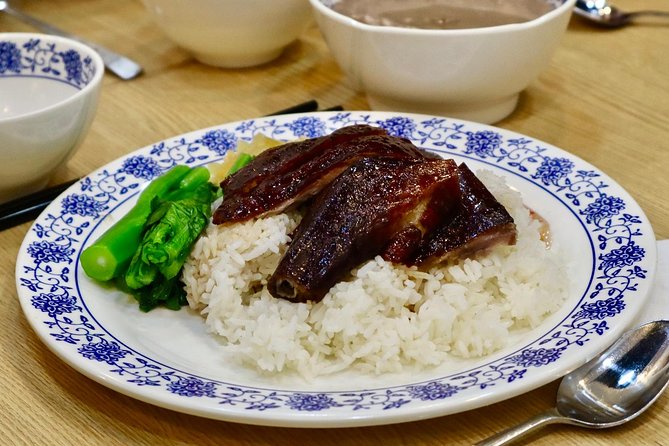
- Roast goose with plum sauce: A proper Cantonese dish adds more substance than the usual pastry-and-snack food tour.
- Tin Hau beyond the restaurants: The route can include Tin Hau Temple, Lin Fa Kung Temple, Victoria Park, Queen’s College, the central library, and a local wet market.
- Guides who shape the experience: Sandy, Sonya, Katie, Roger, Bessy, and Michael have all led tours praised for clear explanations, good pacing, and local recommendations.
- A genuine appetite test: Dim sum, fruit, sweets, tea, water, and a secret dish join the main courses, so you should not plan a large meal afterward.
- Easy first-day introduction: You return to the Tin Hau and Causeway Bay area with a better sense of what to order for the rest of your stay.
Why Tin Hau is a smart place to eat
Tin Hau sits on the north side of Hong Kong Island, near Causeway Bay. It is not as instantly associated with sightseeing as Central or Victoria Peak, which helps the food experience feel tied to ordinary neighborhood life rather than a parade of famous landmarks.
The name comes from Tin Hau Temple, a declared monument that also gave its name to the MTR station and surrounding district. That makes the meeting point practical. You can reach the area by public transportation, and the tour ends where it begins.
I like this setup because food and place are connected from the start. You are not simply moved from restaurant to restaurant. The guide uses the streets, temples, market, and public buildings to explain how the district works.
The tour lasts about three hours and has a maximum of 12 people. That is large enough to create a little company, but small enough for a guide to answer questions and help with unfamiliar food. The exact route and menu can change with weather, availability, and other local conditions, so you should treat the listed dishes as the plan rather than an absolute promise.
A few more food tours in China worth a look
- Authentic Local Food Tour in Central Shanghai
★ 5.0 · 1,382 reviews - Shanghai: 3-Hour Local Food Tasting Tour
★ 4.9 · 806 reviews - Xi’an Evening Food Tour by TukTuk
★ 5.0 · 715 reviews
Brisket noodles and the first lessons in Hong Kong eating
A likely early stop is beef brisket soup with rice noodles. This is a useful introduction because it is filling, familiar in format, and distinctly local in flavor. Some previous versions of the route have included an egg noodle soup stop at a well-regarded neighborhood restaurant.
The value here is not just the bowl. Your guide can explain how to approach a local noodle shop, what the ingredients are, and how Cantonese food balances broth, meat, noodles, and condiments. If you do not speak Cantonese, that assistance matters. It removes the worry of pointing at a menu and hoping for the best.
The brisket portion is one reason you should not eat a full breakfast before the tour. The experience is built around repeated tastings, and this is one of the more substantial servings.
Roast goose, rice, and a proper Cantonese plate
Roasted goose with rice and plum sauce is another central tasting. This brings a classic Cantonese roast-meat tradition into the tour, with crisp skin, tender meat, rice, and a sweet sauce that cuts through the richness.
A particularly nice detail from the route is the possibility of meeting the person behind the roast goose restaurant. One guide took the group to Ki’s Roasted Goose, where the owner, Mr. Ki, greeted the group. That kind of encounter cannot be guaranteed, but it shows the sort of neighborhood connection the tour aims for.
This stop also helps justify the price. You are not merely collecting tiny samples. The included food can amount to a series of small meals, and the roast goose is a dish you may want to seek out again during your stay.
If you eat meat, this will likely be one of the strongest parts of the tour. If you do not, contact the operator before booking so dietary needs can be discussed. The tour asks you to provide dietary information in advance, but the menu is not presented as fully flexible at the last minute.
Dim sum, pineapple buns, and the sweet finish
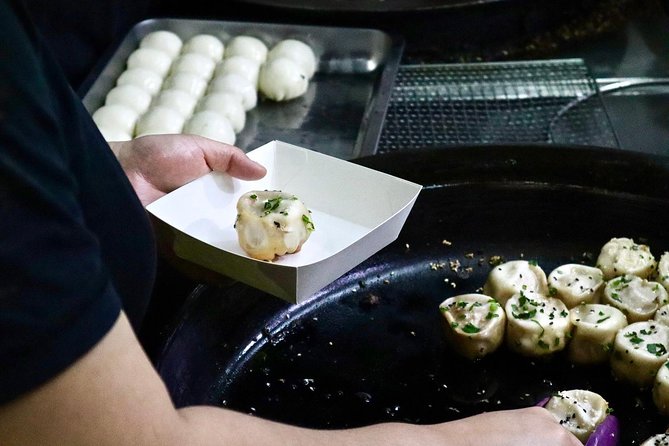
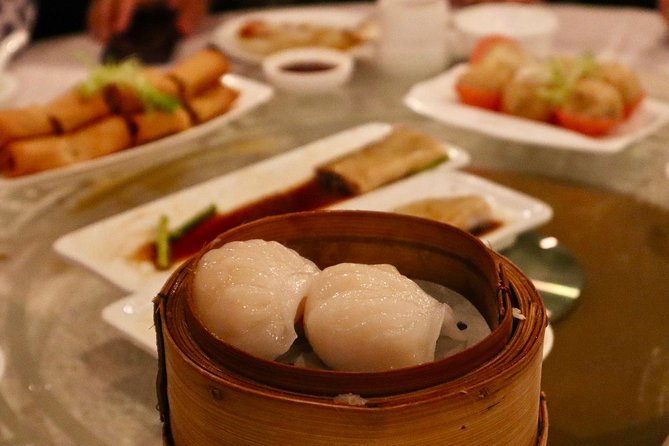
Fresh-baked dim sum adds a softer, more delicate stop after the meat and noodles. The route has included Empire, a dim sum restaurant, and the tastings may change according to what is available. You can expect the guide to explain what you are eating and how it fits into Hong Kong’s everyday food culture.
Local sweets and seasonal fruit keep the menu from becoming an all-meat affair. Pineapple buns have been a favorite for some participants, although the name refers to the golden, crackly topping rather than actual pineapple. Other versions of the route have included milk tea and Hong Kong-style French toast.
One dessert needs a small warning. The sandwich with butter received less enthusiasm than the savory stops, and that is useful to know if sweets are your main reason for booking. The food quality appears strongest in the brisket, roast goose, and dim sum portions, while the dessert element can be more uneven.
A secret dish is also included. Since its identity is not published, you should see it as a bonus rather than a reason to book. The uncertainty is part of the fun, but it also means the experience is not ideal if you need to know every item in advance.
Chinese tea and water are included. Tea is especially welcome because the tour includes rich foods and a fair amount of walking between stops.
Same city, a different table:
- Eat Like A Local: Shanghai Night Food Tour
★ 5.0 · 616 reviews - Tuktuk Food Tour Through Chengdu’s Local Eats
★ 5.0 · 435 reviews - Small-Group Hong Kong Island Food Tour
★ 5.0 · 343 reviews - Hong Kong Food Tour: Central and Sheung Wan Districts
★ 5.0 · 333 reviews
Tin Hau Temple gives the food a sense of place
Tin Hau Temple is more than a photo stop. It is a declared monument and the reason the district carries its name. A guide can help you notice how worship, neighborhood identity, and daily city life meet in a place that many visitors would pass without context.
You should expect a short cultural visit rather than a long temple lecture. The strength of the stop is the connection to the district. The food businesses around Tin Hau are not being presented as random restaurants. They belong to a neighborhood shaped by its temple, transit station, markets, and residents.
Lin Fa Kung Temple offers another religious and architectural pause in the Tai Hang area. It sits at the end of Lin Fa Kung Street, which takes its name from the temple. This adds variety to the walk and keeps the tour from feeling like three hours spent indoors at tables.
The walking pace is generally active but not described as a race. One guide was praised for keeping the tour moving while still allowing time to eat and ask questions. That balance matters in Hong Kong, where a short distance on a map can involve crowded pavements, crossings, and frequent stops.
Victoria Park and the public side of Hong Kong
Victoria Park lies between Causeway Bay and Tin Hau MTR stations. It gives you a look at a major public open space in a city better known for towers and narrow streets.
The park is not a food tasting, but it breaks up the meal sequence. You get a chance to walk, listen, and put the restaurant stops into a larger picture of Hong Kong Island. If you are arriving from a quiet resort or small town, the scale and pace of the area may be part of the cultural lesson.
The route may also pass Queen’s College, the first public secondary school founded in Hong Kong by the British colonial government. The school received its present name in 1894 and is now in Causeway Bay.
Hong Kong Central Library is another possible landmark along the route. It is the largest library in Hong Kong, with 2.3 million items listed in its collections. You are not joining a library tour, but seeing the building helps show the range of public institutions around Tin Hau and Causeway Bay.
These landmarks work best as short explanations between meals. If you want extended sightseeing inside each place, this is not the right tour. The food remains the main event.
The wet market is useful, but not for everyone
The local wet market is one of the most revealing stops. You can see fresh produce and meat being sold in the same neighborhood where the restaurants source ingredients and residents shop for dinner.
For me, this is an important part of a food tour because it turns an abstract idea of local eating into something concrete. You see the raw materials, the pace of shopping, and the working side of the food system.
It can also be uncomfortable. The market may include meat preparation and sights that some people would rather avoid. If you are sensitive to that side of food production, you should know about it before booking. The stop is not presented as a polished market hall, and that is precisely why it can feel more real.
The guide helps here by explaining what you are seeing rather than leaving you to guess. This is one place where a small group has a clear advantage. You can ask a question without trying to get the guide’s attention across a crowd.
The guides are a major part of the value
The dishes matter, but the guide may decide whether the tour feels like a meal plan or a useful introduction to Hong Kong.
Sandy has led several highly praised versions of the route. She is described as energetic, clear, and generous with both food information and general advice for first-time visitors. One particularly useful feature is her willingness to answer questions and suggest places to eat during the rest of your stay.
Sonya has also been praised for strong English and familiarity with the Tin Hau area. Katie has been described as someone who knows the neighborhood and its restaurants from long experience. Roger, Bessy, and Michael have each received praise for friendly explanations and an easy manner.
Guides can vary, of course. The operator assigns the guide, so you should not book on the assumption that a specific person will lead your departure. Still, the repeated emphasis on guide quality is encouraging.
This experience suits you best if you enjoy asking questions. You will get more from the tour if you want to know why a dish matters, how to order it, or where to return later. If you prefer to eat quietly and move at your own pace, a self-guided food crawl may suit you better.
Is $107 fair for three hours?
At $107 per person, this is a fairly expensive short tour. The price makes more sense when you count the food: brisket soup and rice noodles, roast goose with rice and plum sauce, fresh fruit, local sweets, baked dim sum, a secret dish, tea, and water.
You are also paying for the guide’s restaurant access, explanations, translation help, route planning, and local context. A first-time visitor could spend plenty of money on trial and error, especially when menus are unfamiliar. The tour reduces that guesswork.
The value is strongest if you arrive hungry and use the tour as your first food orientation in Hong Kong. It is weaker if you have already learned the local dining scene or if you do not eat meat and cannot enjoy several core dishes.
Group discounts are available, and mobile tickets make the meeting process simple. Hotel pickup and drop-off are not included, so you need to reach the Tin Hau or Causeway Bay meeting area yourself.
Practical advice before you book
Wear comfortable shoes. The walk is a meaningful part of the experience, and you will be on city streets between stops.
Eat very lightly beforehand. A full breakfast is one of the easiest ways to spoil a tour built around substantial tastings. You should plan on being full at the end.
Tell the operator about dietary requirements in advance. The tour can try to accommodate them, but the menu may change only within the limits of the participating restaurants.
The tour requires good weather and a minimum number of participants. If poor weather or low enrollment causes cancellation, you are offered another date, another experience, or a full refund.
You can cancel for a full refund up to 24 hours before the start time. Cancellations or changes made within 24 hours are not refunded or accepted. Most people can participate, and the minimum drinking age is 18, although the listed inclusions focus on tea and water rather than alcohol.
Who should book this Tin Hau food walk?
I would recommend it most strongly for first-time visitors, curious eaters, and anyone who feels unsure about ordering Cantonese food independently. The combination of translation help, full tastings, temples, public spaces, and the market gives you a useful start to the city.
It is also a good choice for couples, families with older children, and small groups who want one organized food day without committing to a full-day excursion. The 12-person maximum keeps the format personal.
I would hesitate if you dislike meat, have strict dietary restrictions, avoid markets, or want a slow restaurant meal. The route is active, the menu is built around Cantonese meat dishes, and the itinerary can change.
Should you book it?
Book this tour if you want an efficient, filling introduction to Hong Kong food and Tin Hau, especially at the beginning of your visit. The brisket noodles, roast goose, dim sum, local sweets, and guide-led ordering help you get past the language barrier quickly.
Skip it if $107 feels high for three hours, or if you want complete control over every dish and stop. For most first-time visitors who arrive hungry, enjoy walking, and want more than a list of restaurants, the tour offers solid value and a useful head start.
FAQ
How long does the Tin Hau food tour last?
The tour lasts approximately three hours.
Where does the tour start?
It starts in the Tin Hau and Causeway Bay area of Hong Kong. The exact meeting point is listed as Tin Hau, Causeway Bay.
Where does the tour finish?
The tour ends back at the meeting point.
How many people can join the tour?
The maximum group size is 12 participants.
What food is included?
Included tastings are beef brisket soup with rice noodles, roasted goose with rice and plum sauce, seasonal fruit, local sweets, fresh-baked dim sum, and a secret dish. Chinese tea and water are also included.
Is hotel pickup included?
No. Hotel pickup and drop-off are not included.
Does the tour involve much walking?
Yes. The tour involves a fair amount of walking, so comfortable shoes are recommended.
Can dietary requirements be accommodated?
You should contact the operator in advance with any dietary requirements so they can assess how best to accommodate you.
What is the cancellation policy?
You can cancel at least 24 hours before the start time for a full refund. Cancellations or changes made less than 24 hours before the start time are not accepted or refunded. If the tour is canceled because of poor weather or insufficient enrollment, you are offered another date, another experience, or a full refund.
Just added in China
- Tuktuk Food Tour Through Chengdu’s Local Eats★ 5.0 · 435 reviews
- Half-Day Chengdu Back Alley Foodie Tour★ 5.0 · 58 reviews
- 4-Hour Private Tour: Lama Temple, Confucius Temple, Guozijian Museum with Dim Sum★ 5.0 · 21 reviews
- Online Cooking Class Beijing Dumplings and Cuisine by Sunflowerli Renowned Chef★ 5.0 · 65 reviews
- Experience Beijing Walking Food Tour Private★ 5.0 · 56 reviews
- Beijing Walking Food Tour with a Local Friend★ 5.0 · 73 reviews
- Beijing Hutong Breakfast Food Tour★ 5.0 · 120 reviews
- 3-Hour Private Night Tour: Beijing Foodie Experience★ 5.0 · 53 reviews
Hong Kong Food Tours, compared.
Street Food Tour with Locals – Dim Sum and Wonton
Read our review →
Hong Kong Food Tour: Central and Sheung Wan Districts
Read our review →
Hong Kong Day Tour: Priority Peak Tram, City Walk & Dim Sum
Read our review →
Browse the lists this tour appears in