
REVIEW · PARIS FOOD TOURS
Paris: French Macaron Culinary Class with a Chef
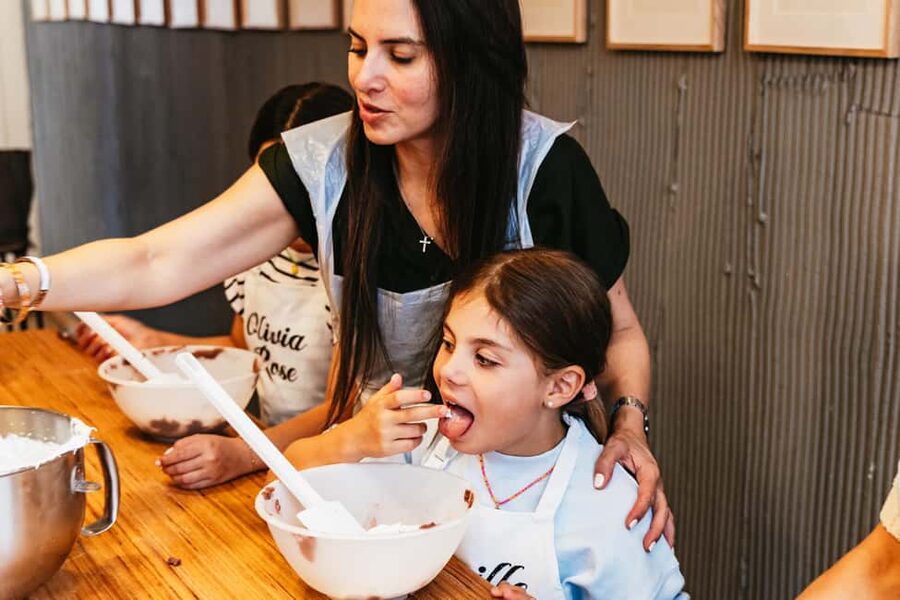
Macarons are small, but the lesson is hands-on. At Maison Fleuret School, you learn how meringue, ganache, and crisp shells come together in a friendly 150-minute class. I like the limited group of six, which gives the chef time to help each person, and I like that you leave with a box of macarons you made yourself. One thing to consider: the class may feel introductory if you already bake macarons, and one participant finished in about 1 hour 45 minutes rather than the advertised 2.5 hours.
I also like the family-friendly mood. Children as young as five and six have taken part successfully, and instructors such as Amélie, Delphine, Matthieu, Alice, and Christian are praised for being patient, funny, and clear. The main practical wrinkle is finding the entrance, since there may be little or no signage outside. Look for the grey door and arrive at the stated meeting time.
Key points to know before booking
- Six-person maximum: The small group lets the chef give personal help, even when children or first-time bakers need extra attention.
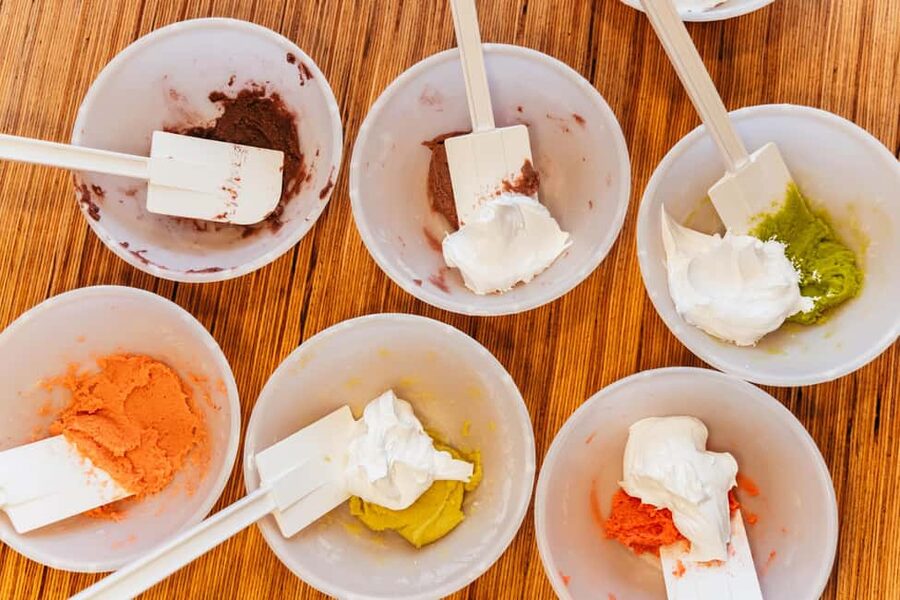
- You make the key components: The lesson covers meringue, ganache, shell texture, and the soft center, not just decoration.
- A useful family activity: Children and teenagers can take part, with several instructors adapting the work for younger hands.
- You choose colors and flavors: Some sessions include multicolored macarons and a choice of flavors.
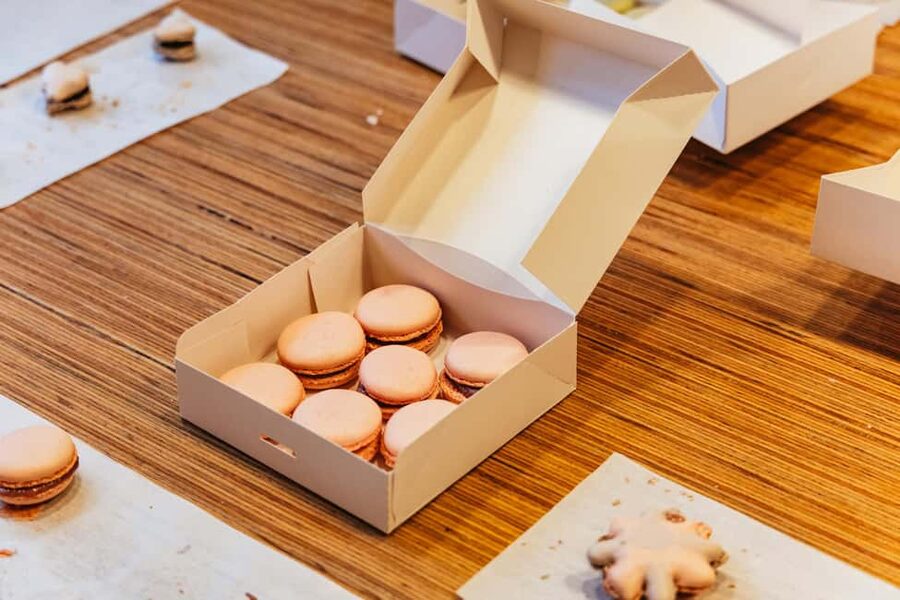
- You take home the results: The finished macarons are packed in a box, often enough to enjoy for several days.
- English instruction: The class is taught in English, and at least one instructor, Delphine, has explained the steps in both French and English.
What this Paris macaron class is really like
This is a practical pastry workshop rather than a demonstration where you sit back and watch. You arrive at Maison Fleuret School, meet the other members of your group, and join a professional chef at the workstations.
The official duration is 150 minutes. That gives the class enough time to cover the main stages without turning the afternoon into a full baking course. One participant reported finishing after about 1 hour 45 minutes, so your exact timing may depend on the pace of the group and the day’s setup.
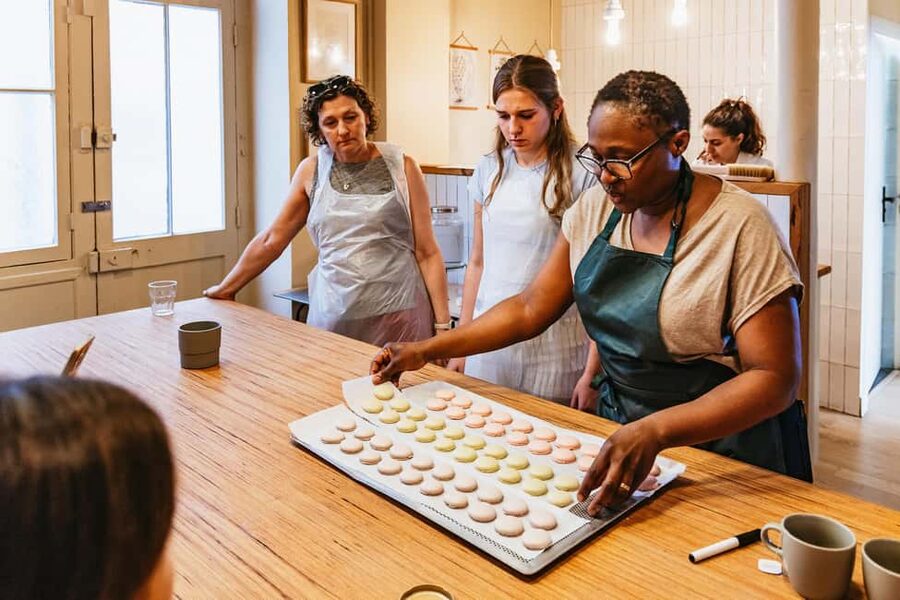
The class is limited to six people. That detail matters more than it may first appear. Macarons are fussy pastries, and small mistakes in mixing, piping, or baking can affect the final shape. In a large class, you might only get a quick glance from the instructor. Here, the chef can watch your technique and step in when needed.
The atmosphere appears relaxed and social. You work alongside other people, compare shapes and colors, and share the occasional laugh when a shell does not land quite where you intended. A few participants have even traded treats with people in nearby classes making croissants.
A few more food tours in Paris worth a look
- Sushi Making Tokyo Roll and Authentic Japanese Sushi Class
★ 5.0 · 3,971 reviews - Authentic Pizza Making Class in Naples with Appetizers and Drink
★ 5.0 · 3,178 reviews - Tokyo: Roll and Authentic Sushi Making Class in Asakusa
★ 4.9 · 1,957 reviews
Finding the grey door at Maison Fleuret School
Your meeting point is in front of the grey door at Maison Fleuret School. The instructions are simple, but the lack of a large sign may make the entrance less obvious than you expect. Give yourself a little extra time to locate it, especially if you are coming straight from another Paris sight.
The exact address is provided with your reservation, so use that information rather than relying only on the school name. Arrive at the scheduled time, since the class moves through several stages and a late arrival could make the first instructions harder to follow.
The school has been described as a beautiful, clean kitchen space in a central Paris location. The facilities are part of the appeal. You are not simply standing at a counter in a shop while someone hands you a finished pastry. You work in a proper teaching kitchen, with the tools and setup needed for the class.
The activity is listed as wheelchair accessible. Hotel pickup and drop-off are not included, so you make your own way to the school.
Step one: learning why the meringue matters
The first major lesson is the meringue. This is the base that gives a macaron its light body and helps create the familiar smooth shell.
Your chef explains the process and shows you how the mixture should look and behave. The goal is not simply to follow a recipe by weight. You also learn to notice texture, consistency, and the point at which the mixture is ready for the next step.
That is useful because macarons can look easy on a recipe card. In practice, small changes in mixing can affect whether the finished shells are smooth, cracked, hollow, or uneven. The instructor-led format gives you a chance to see the right texture before trying it yourself.
The class is designed for beginners, and that comes through in the teaching style. First-time bakers have left feeling able to try the recipe at home. People who had already attempted macarons, sometimes without success, also found the step-by-step guidance useful.
The chefs do not appear to leave every measurement to the class. One participant noted that the instructor measured the ingredients, which keeps the session moving and lets you focus on technique. If you want a lesson on professional production methods or recipe scaling, this may feel basic. If you want to understand the process without being overwhelmed, it is a sensible approach.
Step two: making ganache for the soft center
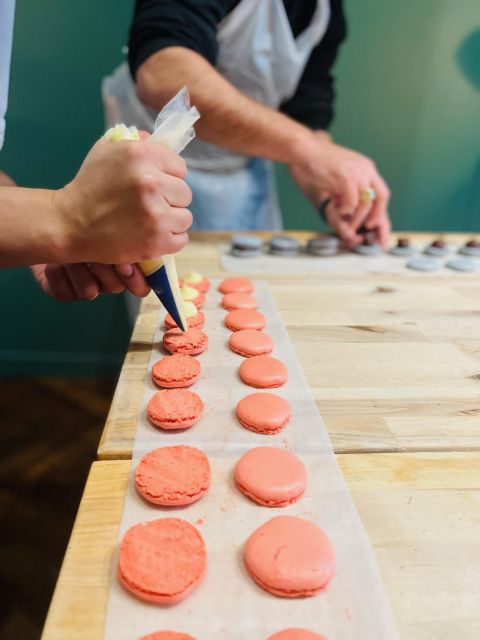
Once the shells are underway, the lesson turns to ganache. This filling gives the macaron its soft, flavorful center and balances the delicate outer shell.
The chef explains the technique and helps you understand how the filling should come together. This is one of the most useful parts of the class because the finished macaron depends on contrast: a light crisp shell outside and a tender center inside.
You also learn how the filling affects the eating experience. A shell that is too hard or a center that is too loose will not produce the texture you want. The lesson connects these separate components so the final pastry feels like one finished item rather than two unrelated halves.
Some sessions allow you to choose colors and flavors. One family also learned to make multicolored macarons, which adds a creative element without turning the class into a decoration-only activity. The exact choices may vary, so do not book this expecting a guaranteed list of fillings or colors.
The chefs are there to help you correct problems as you go. Alice, Amélie, Delphine, Christian, Matthieu, and several other instructors have been singled out for being encouraging and patient. Their names may differ depending on the session, but the strong pattern is clear: the chef is active at the workstations, not hidden at the front of the room.
Same city, a different table:
- Bateaux Parisiens Seine River Gourmet Dinner & Sightseeing Cruise
★ 4.5 · 6,930 reviews - Authentic Parisian Gourmet Food Tour with 10 Local Dishes & Wines
★ 5.0 · 4,754 reviews - Bateaux Parisiens Seine River Gourmet Lunch & Sightseeing Cruise
★ 4.5 · 2,680 reviews - Montmartre Hill French Gourmet Food and Wine Tasting Walking Tour
★ 5.0 · 2,588 reviews
Step three: piping shells and aiming for the right texture
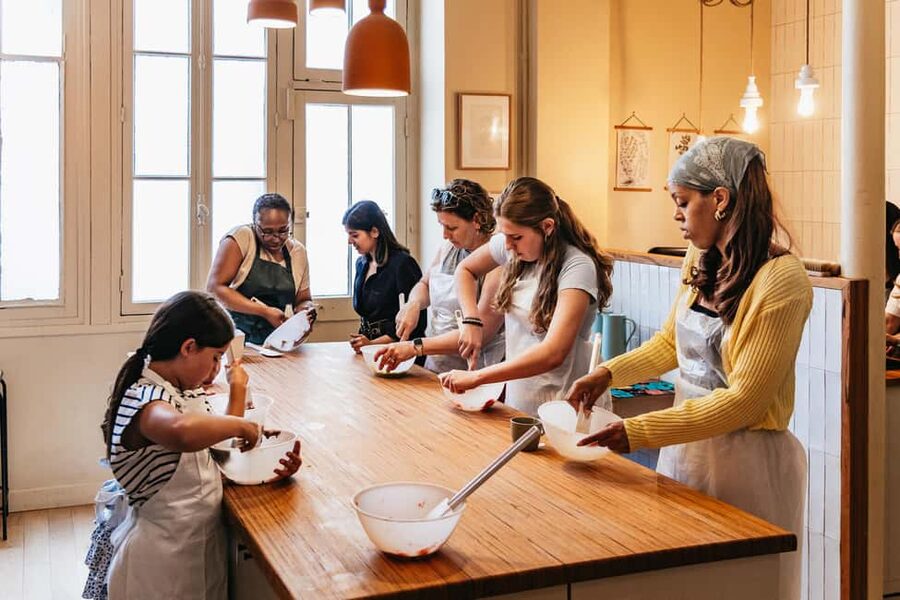
Piping is where the macarons begin to look like macarons. You work toward evenly shaped rounds with a smooth surface and enough space between them.
This part can be surprisingly satisfying. The finished pastry looks precise and polished, but you can see exactly how it began. Children often enjoy this stage because it feels creative, while adults appreciate the challenge of making a set of shells match.
The chef demonstrates how to achieve a crisp outer layer and a soft middle. That texture is one of the central goals of the class. You are not just making sweet sandwich cookies. You are learning why a proper macaron has a delicate shell and a tender center.
Expect the chef to help with small corrections. The hands-on format means you can ask questions as you work, rather than trying to remember every instruction from a demonstration at the beginning. This is particularly helpful if you have never made meringue before.
The method also seems forgiving enough for family groups. A six-year-old has successfully taken part alongside adults, and families with children aged seven, nine, eleven, thirteen, and fourteen have enjoyed the activity. That does not mean every child will perform every technical step alone. It does mean the class can include younger participants without making them feel like spectators.
The final reveal and your box of macarons
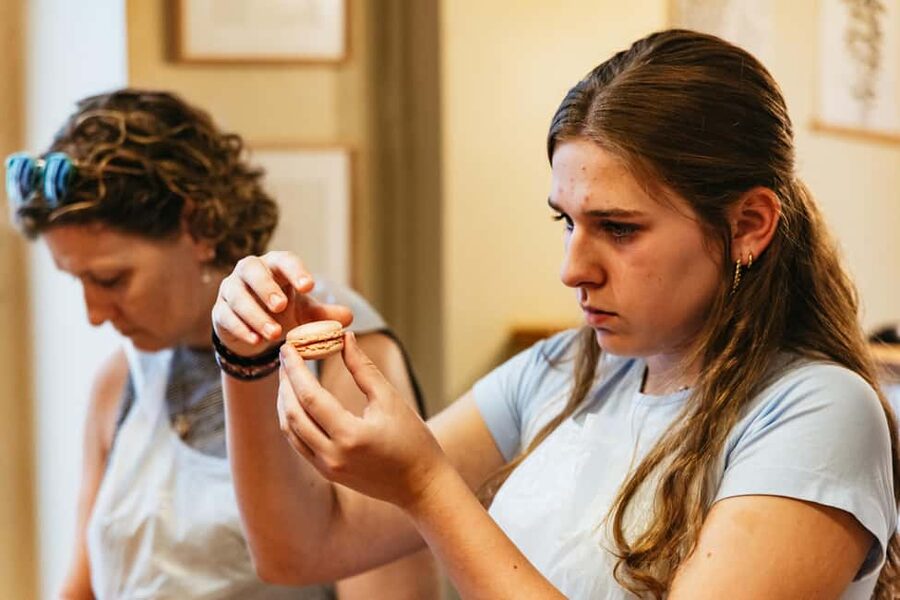
At the end, you receive a box of macarons made during the lesson. The exact quantity can vary, but one participant said each person made roughly a dozen plus a few extra.
This take-home box adds real value. You get to eat the results later, share them with friends or family, and compare the finished texture after the class. Several families said their children enjoyed having macarons for the rest of the week.
The box is also a small souvenir of Paris that feels more personal than a packaged pastry from a shop. You made it, with guidance from a chef, and you can explain how the shells and filling came together.
Take care with the box after leaving. One participant managed to carry the macarons back to the United Kingdom, even in warm weather, but noted that keeping the box intact required some care. The provided information does not give specific transport or storage instructions, so protect the box from heat and rough handling as much as you reasonably can.
The chefs make the difference
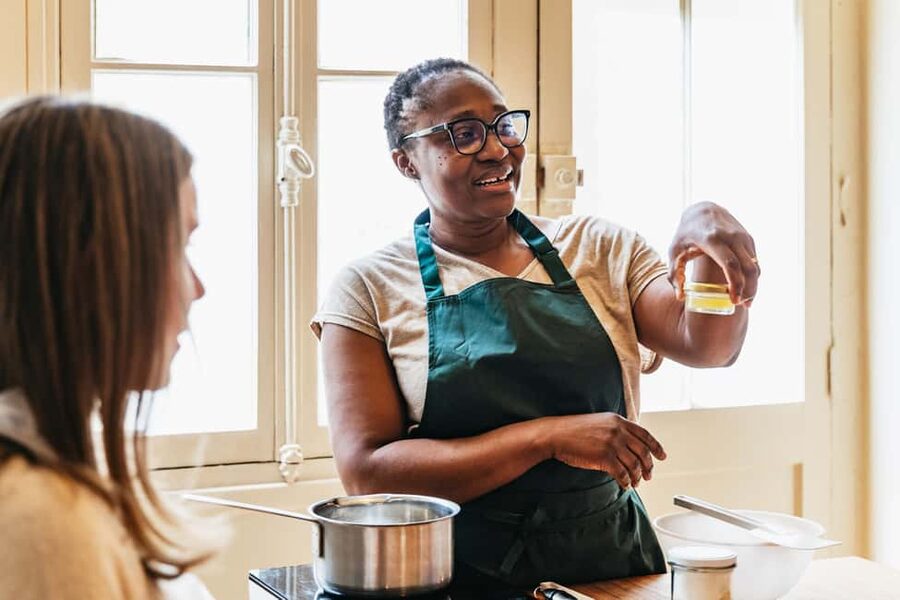
The strongest part of this activity is the teaching. The chefs are repeatedly praised for being warm, organized, humorous, and willing to help each person individually.
Alice has been described as upbeat and encouraging. Delphine is praised for clear explanations in French and English, as well as advice for making macarons at home. Matthieu is noted for explaining each step carefully and making the class feel relaxed. Amélie is especially popular with families and younger children.
Christian is described as patient and professional, while William and Felix have also received strong praise for making the class fun. The instructor changes by session, so you cannot choose a particular chef unless the booking system specifically allows it.
This matters because the macaron process includes several points where a quick correction can save a batch. A good teacher can explain what to look for, not just tell you that something went wrong. That is the difference between making a box of pastries once and gaining enough confidence to try the recipe at home.
Is the 150-minute format enough?
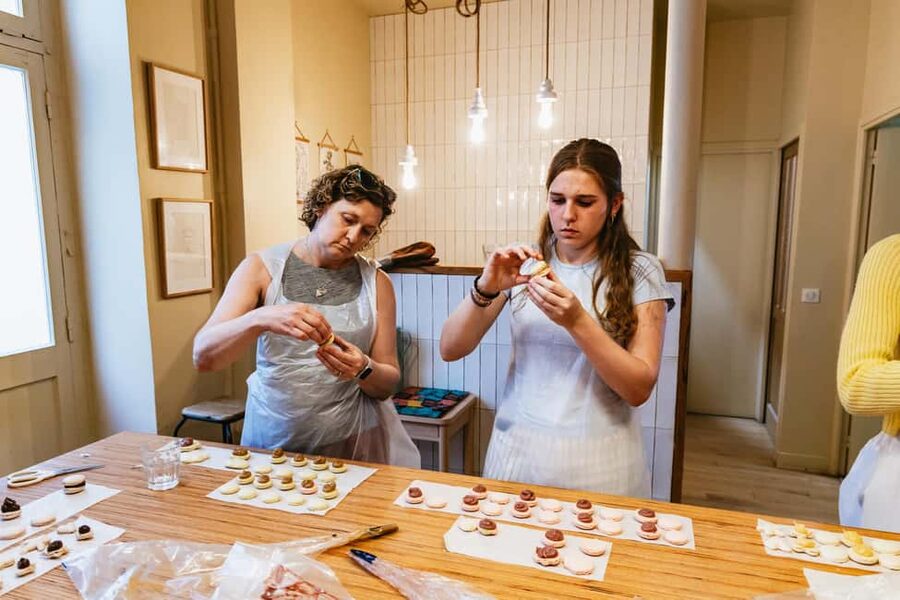
For most first-time bakers, yes. The class covers the main tasks: meringue, ganache, piping, shell texture, and finishing the macarons.
You should not expect an advanced pastry seminar. The session is aimed at beginners and mixed groups, including families. If you already make macarons regularly, you may want more detail on professional troubleshooting, ingredient chemistry, aging, or recipe adjustments.
The class can also finish sooner than the stated 150 minutes. One participant reported completing it in 1 hour 45 minutes. That is not necessarily a problem if the main techniques are covered, but it is worth knowing if you are planning a precise afternoon schedule.
Noise may be another minor issue. One person found the final part of the class too loud. With a small group and nearby pastry classes, the room may not always feel perfectly quiet.
Value, group size, and who should book
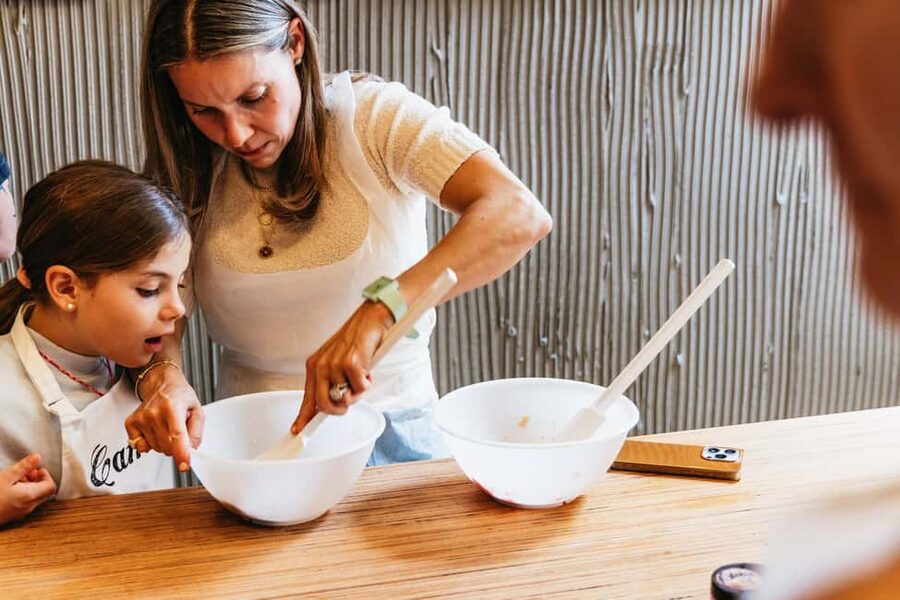
A price is not provided here, so I cannot judge the cost against a specific figure. I can judge what you receive: a 150-minute chef-led lesson, a small group limited to six, a proper kitchen setting, hands-on instruction, and a box of finished macarons.
That is good value for people who want both an activity and something edible to take away. The small group is especially important. You are paying for access to the chef as much as for the ingredients.
I would choose this class for:
- Families with children or teenagers
- Couples looking for a relaxed indoor activity
- First-time bakers who want a clear introduction
- Food lovers who want to make a classic French pastry
- Anyone who likes social classes rather than solo sightseeing
I would think twice if you want a long, advanced technical course. The class is friendly and approachable, but it is not presented as a professional pastry qualification. It is also not the right choice if you need hotel transportation, since you must reach the school independently.
The activity is taught in English and is listed as wheelchair accessible. You can cancel up to 24 hours ahead for a full refund, and the reserve-now, pay-later option keeps your plans flexible.
My final take on this macaron workshop
I would book this class if you want a useful, cheerful break from museums and monuments. The combination of a six-person group, active chef support, and a take-home box makes it more personal than a standard food demonstration.
The best reason to go is not simply the macarons. It is the chance to learn why the pastry works, then test the technique with a chef close enough to correct you. The main limits are the beginner level, the possibly shorter finish, and the unclear entrance.
Book it for a family afternoon, a rainy-day plan, or a hands-on food memory in Paris. Skip it only if you already have strong macaron skills and want advanced pastry instruction.
FAQ
How long does the macaron class last?
The advertised duration is 150 minutes. One participant reported finishing in about 1 hour 45 minutes, so the exact length can depend on the pace of the session.
Where does the class meet?
The class meets at Maison Fleuret School. You are asked to meet in front of the grey door at the time of your reservation.
Is the class taught in English?
Yes. The listed instruction language is English. Delphine has also taught a class in both French and English.
How many people are in each group?
The class is described as a small group limited to six participants. Some individual descriptions mention groups of up to eight, so check the details attached to your chosen session.
What is included in the activity?
The booking includes the macaron cooking class, a chef instructor, and a box of macarons made during the lesson.
Is the class suitable for children?
Yes. Families with children and teenagers have taken part successfully, including children aged five, six, seven, nine, eleven, thirteen, and fourteen.
Can I cancel the booking?
You can cancel up to 24 hours in advance for a full refund. The reserve-now, pay-later option is also available.
Just added in Paris
- The Official Emily in Paris Food Tour★ 4.8 · 39 reviews
- Paris: Taste of Montmartre Food & Wine Walking Tour★ 4.9 · 29 reviews
- Paris: Saint Germain des Prés Guided Foodie Walking Tour★ 4.8 · 146 reviews
- Paris: Pastries and Chocolate Walking Food Tour★ 4.8 · 57 reviews
- Paris: Guided Champagne & Food Tour in St-Germain-des-Pres★ 4.6 · 26 reviews
- Paris Le Marais Food Tour: Full Traditional French Feast★ 4.8 · 119 reviews
- Paris: Montmartre Food Tour with 10 Local Tastings & Wines★ 4.8 · 191 reviews
- Paris: Le Marais Bakery and Pastry Food Tour with Tastings★ 4.7 · 64 reviews
Workshops, compared.
Sushi Making Tokyo Roll and Authentic Japanese Sushi Class
Read our review →
Authentic Pizza Making Class in Naples with Appetizers and Drink
Read our review →
Roll and Authentic Sushi Making Class in Asakusa
Read our review →
Ramen Cooking Class at Ramen Factory in Kyoto
Read our review →
Small Group Cooking Class & Market Food Tour in Florence
Read our review →
Sushi Making Class in a Happi Coat near a Famous Spot
Read our review →
Sushi Making Osaka Roll and Authentic Japanese Sushi Class
Read our review →
Tokyo Sushi Making Class in Tsukiji with Professional Chef
Read our review →Browse the lists this tour appears in