
REVIEW · BEIJING FOOD TOURS
Beijing Hutong Breakfast Food Tour
Breakfast is where Beijing gets personal. This three-hour food walk leads you through a quieter hutong neighborhood, a local market, and four or five small eateries while you sample more than 10 dishes and drinks. I like the small group of fewer than 10 and the way the food is tied to ordinary local life, not just sightseeing. I also like that guides such as Lynn, Lin, and Winnie have earned repeated praise for their warm, informed help.
The main consideration is the meeting point. The voucher gives an address near the National Art Museum of China, but one poor experience involved an incorrect phone number and unclear meeting details. Arrive early, double-check the contact information, and come very hungry. The menu is adventurous, too, with fermented mung bean soup, tofu pudding, zongzi, flatbread, yoghurt, pancakes, coffee, and more.
Key points to know before booking
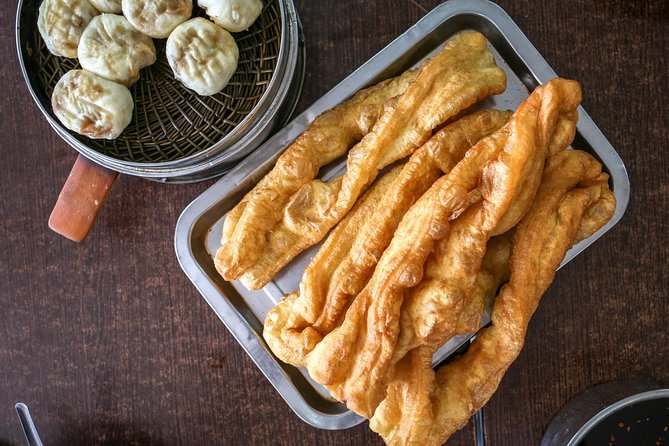
- More than 10 tastes in three hours: You get a full Beijing breakfast rather than one sit-down meal.
- A local market visit: Fresh vegetables, spices, sliced meat, and seasonal goods add useful context to the food.
- Douzhi is the boldest bite: This tangy fermented mung bean soup is memorable, but it may not suit every palate.
- Hutong walking between meals: The strolls give your stomach a break and show how old lanes still function as living neighborhoods.
- A maximum of 10 people: The small group makes it easier to ask questions and keep up with the guide.
- $45 includes food and drinks: For a three-hour outing with breakfast, bottled water, and several eateries, the price is reasonable if you enjoy variety.
Why this Beijing breakfast tour works
I like food tours that explain a city through its everyday meals. This one starts at 9:00 a.m., when breakfast activity is still part of the morning routine, then moves on foot through hutongs and food stops around Dongcheng.
You are not simply handed a plate and told its name. The route connects breakfast with markets, family life, street design, and the way older homes are organized. That makes the experience useful for first-time visitors who want a quick introduction to Beijing beyond the major monuments.
The pace also helps. Eating more than 10 items in three hours sounds like a challenge, but the walking between stops keeps the morning from becoming one long meal. You sample, listen, stroll, and sample again.
The small group matters here. With fewer than 10 people, you should have a fair chance to hear explanations and ask about unfamiliar ingredients. Food tours can become awkward when a guide is trying to manage a crowd on narrow streets. This format is more personal and less cumbersome.
A few more food tours in Beijing worth a look
- Beijing: Hidden Gems Guided Food Tour with Beer and Tastings
★ 4.9 · 306 reviews - Beijing Private Hutong Food Walking Tour
★ 5.0 · 299 reviews - Beijing: Hutong Culinary Walking Tour with 15+ Tastings
★ 5.0 · 162 reviews
Starting near the National Art Museum
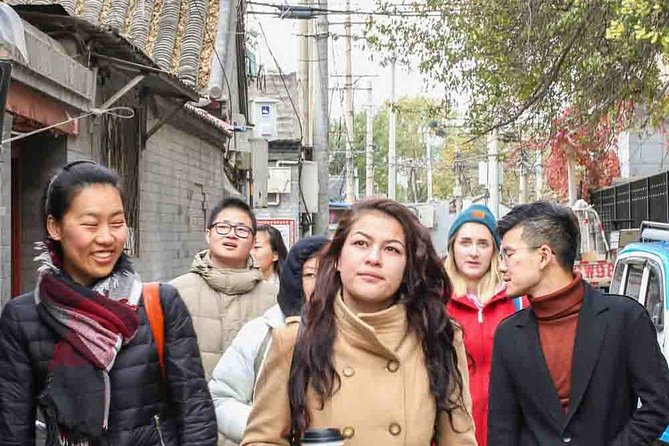
The meeting point is at the Yin Yan Aviation Service ticket office on Meishuguan East Street, near the National Art Museum of China. The tour starts at 9:00 a.m. and ends back at the same meeting point.
The area is near public transportation, which is useful in Beijing, where road traffic can turn a short taxi ride into a slow one. I would build in extra time anyway. One poor experience involved trouble reaching the operator and uncertainty about the exact meeting place, so you should confirm the address and contact details before leaving your hotel.
Once the group gathers, the morning begins with a short walk toward the market. The tour is designed for people who can walk between stops, but the information provided says most people can participate. It operates in all weather, so your clothing should match the forecast.
A factory turned into a local market
The first major stop is a local market set inside a former factory. This is a strong opening because it shows food before it reaches the plate.
You can expect to see fresh vegetables, spices, and neatly cut meat. The market gives the guide a chance to explain what is in season and how local households shop. For you, that means the meal has a setting and a source, rather than appearing as a string of disconnected snacks.
A stop at Aunt Jie’s stall includes zongzi, glutinous rice dumplings with a filled center. Zongzi are filling, compact, and especially useful as an early taste because they introduce a familiar Chinese staple in a market setting.
The market visit lasts about 30 minutes. That is enough time for a focused look, but not so long that you lose the food-tour rhythm. I would pay attention to the guide’s explanations here, since the market may be the best place to ask about ingredients you later encounter at the eateries.
The drawback is that markets are working places, not staged attractions. You may find the surroundings crowded or practical rather than polished. That is part of the value, but visitors who want a tidy, photo-ready food stop should adjust their expectations.
Longfusi Street and the douzhi challenge
The route then reaches Longfusi Street, where the morning turns more daring. Here you try douzhi, a fermented mung bean soup with a sharp, tangy flavor.
Douzhi has a reputation for splitting opinions. You may enjoy its sour character, or you may decide one taste is enough. Either way, it is worth trying because it is closely tied to Beijing’s local food culture and gives the tour a dish you are unlikely to order by accident.
The stop has also received recognition from the Michelin Guide, which adds some interest, but do not expect a fine-dining setting. The appeal is the food itself and the chance to try a local specialty in a casual environment.
This is one place where the guide adds real value. Without an explanation, fermented mung bean soup can seem like a dare. With some context, it becomes a way to understand local taste and the kinds of breakfast foods that have staying power.
If you dislike sour or fermented flavors, do not worry that the whole tour follows this direction. Douzhi is only one part of a much larger spread. You will also have milder dishes, sweets, drinks, and warm comfort foods.
Same city, a different table:
- Beijing Hutong Breakfast Food Tour
★ 5.0 · 120 reviews - Beijing Walking Food Tour with a Local Friend
★ 5.0 · 73 reviews - Beijing: Dumpling Making Workshop with Meal and Tea
★ 4.7 · 69 reviews - Online Cooking Class Beijing Dumplings and Cuisine by Sunflowerli Renowned Chef
★ 5.0 · 65 reviews
Beijing comfort food with Mr. Yu
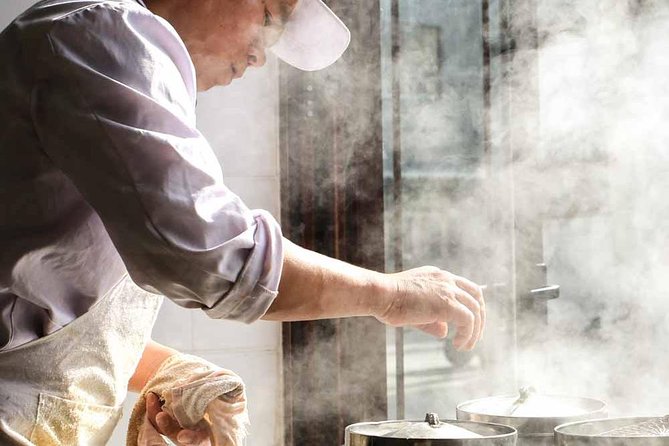
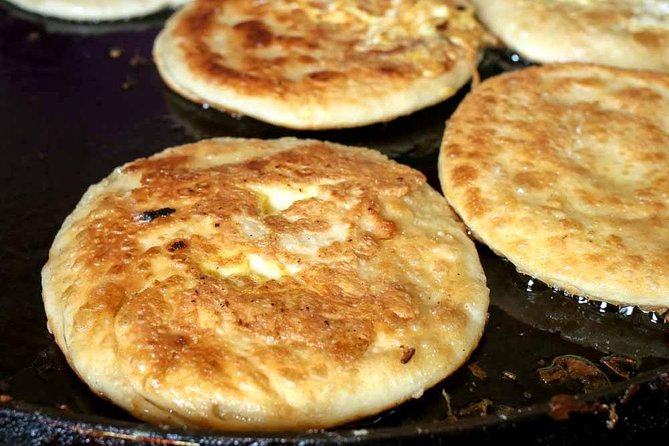
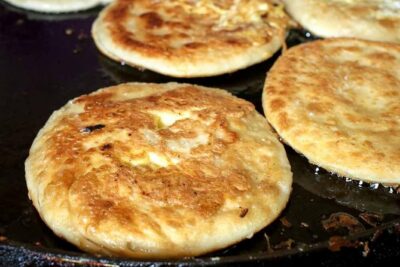
Another Longfusi Street stop introduces a more immediately approachable combination: a crisp sesame flatbread filled with cured beef, served with tofu pudding.
This pairing shows the range of Beijing breakfast. The flatbread offers crunch, salt, sesame, and savory beef, while the tofu pudding gives you a softer, warmer contrast. It is the sort of meal that makes sense as breakfast because it is satisfying without being elaborate.
The stop is associated with Mr. Yu, who serves food connected to childhood memories. That personal element helps turn the dish into more than a menu item. You get a sense of how food can carry family stories and daily routines across generations.
I would consider this one of the safer parts of the tour if you are traveling with children or with someone cautious about unfamiliar food. A family with two children initially faced some reluctance about getting up early, but the food won them over. The morning may work well for families, provided everyone is ready for walking and several small tastings.
The tour also includes yoghurt and pancakes, along with coffee served with a view. Exact portions and selections can vary, but the stated format includes unlimited food and drinks during the experience. That does not mean you should treat it as a buffet. The practical idea is that you can taste the full range without worrying about paying separately at each stop.
Reading the hutongs on Dongsi North Street
The food is only half of this experience. On Dongsi North Street, the guide points out details in the hutongs that are easy to miss when you walk alone.
You may learn how stone doorway pillars offer clues about a home, what color-coded street signs mean, and how to estimate the number of families living inside a courtyard compound. These details turn a simple stroll into a lesson in how Beijing neighborhoods are arranged.
The route focuses on a less visited hutong area rather than sending you through only the city’s best-known sights. That is useful if you have already seen the major attractions or want to understand how people live away from the grand avenues.
Hutongs are not museum pieces. They are working neighborhoods, and the tour’s value comes from seeing the relationship between small lanes, old residences, markets, and food businesses. You should be respectful with photos and follow the guide’s lead around private doorways.
The walking sections also provide a natural pause between tastings. After a dumpling, flatbread, soup, and other samples, a 30-minute walk can be welcome. Comfortable shoes are more important than dressing up for breakfast.
The guide can shape the whole morning
The guide is a major part of the experience. Food tours depend on translation, timing, and explanation, especially when dishes have unfamiliar names or textures.
Lynn receives especially strong praise for her friendly manner and understanding of Beijing food and culture. She also helped one visitor with a recommendation for Peking duck after the tour. That is a useful sign that the guide may be able to offer practical suggestions beyond the scheduled stops.
Lin and Winnie are also named positively for making the experience informative and memorable. Guide assignments can change, so you should not book solely on the hope of getting one specific person. Still, the repeated praise for the guiding team is encouraging.
I value a guide who tells you what you are eating, but also explains when people eat it, why it matters, and how it fits into the city. This experience appears strongest on that point. You are not just collecting snacks. You are learning how food connects with markets, homes, streets, and family memory.
Is $45 good value?
At $45 per person, the tour is not the cheapest way to eat breakfast in Beijing. You could buy individual dishes for less if you already know where to go and can manage ordering on your own.
The value comes from the range and the guidance. Your fee covers breakfast, more than five food stops, unlimited food and drinks, bottled water, an English-speaking local guide, and the organization of a three-hour route. You also visit several separate eateries and a market without needing to research each address.
I see the price as fair for a first morning in Beijing, particularly if you want to sample many dishes quickly. It is also practical if you have limited time and do not want to spend several days working out which breakfast specialties to try.
The value is weaker if you are a very light eater, dislike group activities, or prefer to choose every dish yourself. You may also find the quantity challenging. Arrive hungry, but pace yourself. The point is to taste broadly, not to rush through the first few stops and struggle later.
Dietary needs and practical limits
Vegetarian food is available, but you must advise the provider when booking. You should also report any other dietary requirements in advance. Since the tour includes cured beef and market foods, last-minute requests may be harder to manage.
The experience runs in all weather. Beijing mornings can change quickly, so dress for the conditions and wear shoes suited to a few hours on foot. Bottled water is included, which is a small but useful touch during a food-heavy walking route.
The start time is fixed at 9:00 a.m. This is good for seeing breakfast culture at the right hour, but less appealing if you are adjusting from a late arrival or dealing with jet lag. Families can participate, and the experience has worked well for teenagers, but tired children may need some encouragement before setting out.
Free cancellation is available up to 24 hours before the start time. Canceling or changing later does not qualify for a refund, and the tour requires a minimum number of participants. If that minimum is not reached, the provider offers another date or experience, or a full refund.
Who should book this morning walk?
I would choose this tour if you want a fast, friendly introduction to Beijing food and neighborhood life. It suits first-time visitors, curious eaters, families with older children, and anyone who enjoys learning while walking.
It is especially useful early in a Beijing stay. The guide can help you recognize dishes, understand local eating habits, and possibly suggest other foods to try later, including Peking duck.
I would think twice if you want a quiet private meal, have strict dietary limits that were not arranged in advance, or dislike fermented flavors and unfamiliar textures. The food is varied, but the point is to try beyond the obvious.
Should you book the Beijing Hutong Breakfast Food Tour?
Book it if you want more than a standard breakfast and like the idea of tasting over 10 foods while walking through a real neighborhood. The combination of market, hutongs, small eateries, and a group capped at 10 gives the morning a good balance of food and local context.
Before booking, confirm the meeting details, tell the provider about dietary needs, and leave room in your morning for a generous breakfast. At $45, this is a sound choice for an organized introduction to Beijing food, especially if you value a guide who can explain what is on the table and what it says about daily life.
FAQ
How long does the Beijing Hutong Breakfast Food Tour last?
The tour lasts approximately three hours.
What time does the tour begin?
The tour begins at 9:00 a.m.
Where does the tour start and end?
It starts at the Yin Yan Aviation Service ticket office on Meishuguan East Street near the National Art Museum of China, and it ends back at the meeting point.
How many people can join the tour?
The tour has a maximum of 10 travelers.
How much food is included?
You sample more than 10 different delicacies and drinks at four or five separate eateries, with more than five food stops included overall.
Is breakfast included in the price?
Yes. Breakfast, food, drinks, and bottled water are included.
Is there a vegetarian option?
Yes. A vegetarian option is available, but you must request it when booking.
Does the tour operate in bad weather?
Yes. The tour operates in all weather conditions, so you should dress appropriately.
Can I cancel for a full refund?
Yes. You can cancel at least 24 hours before the start time for a full refund. Changes or cancellations made less than 24 hours before the start time are not accepted for a refund.
Just added in Beijing
- 4-Hour Private Tour: Lama Temple, Confucius Temple, Guozijian Museum with Dim Sum★ 5.0 · 21 reviews
- Online Cooking Class Beijing Dumplings and Cuisine by Sunflowerli Renowned Chef★ 5.0 · 65 reviews
- Beijing Walking Food Tour with a Local Friend★ 5.0 · 73 reviews
- Beijing Hutong Breakfast Food Tour★ 5.0 · 120 reviews
- Experience Beijing Walking Food Tour Private★ 5.0 · 56 reviews
- 3-Hour Private Night Tour: Beijing Foodie Experience★ 5.0 · 53 reviews
- Half-Day Private Beijing Hutong Walking Tour with Dim Sum★ 5.0 · 48 reviews
- Authentic Local Food Tour in Center Beijing★ 5.0 · 26 reviews
Beijing Food Tours, compared.
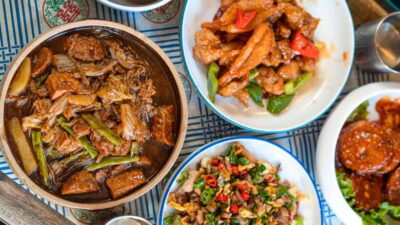
Hidden Gems Guided Food Tour with Beer and Tastings
Read our review →
Online Cooking Class Beijing Dumplings and Cuisine by Sunflowerli Renowned Chef
Read our review →
Browse the lists this tour appears in