
REVIEW · HONG KONG FOOD TOURS
Small-Group Hong Kong Island Food Tour
Come hungry, leave happily full. This four-hour food walk links old Cantonese eateries, British-era food traditions, markets, tea shops, and a classic Ding Ding tram ride across Hong Kong Island. I like the mix of local food and city history, especially the family-run restaurants that can feel daunting without a guide. I also like the small group size, capped at nine people, which gives the guide room to explain dishes and help you order.
The main drawback is the menu. Seafood, wheat noodles, roast meat, milk tea, and egg pastry shape the experience, so it is not a good fit for vegetarians, people avoiding gluten, or anyone with seafood allergies. At $115.52 per person, the price is not cheap, but it covers several substantial tastings, a professional guide, and a useful introduction to Hong Kong Island.
Five food stops, old neighborhoods, and a Ding Ding ride
- Dim sum by trolley: Begin at an old Sheung Wan tea house with a lively yum cha breakfast.
- Wonton noodles from a family business: Taste a simple dish where broth, noodles, and shrimp wontons depend on careful local technique.
- British Hong Kong in a teacup: Hong Kong milk tea shows how Cantonese and British food customs met.
- Roast meat in Wan Chai: Try char siu and other roasted meats at a long-running family restaurant.
- Egg tart finale: Finish with dan tat from a bakery with six decades of local appeal.
- A moving lesson in city life: Walk through markets and shops, then ride the historic double-decker tram known locally as Ding Ding.
Why this Hong Kong food tour works
The best food tours do more than feed you. They help you understand why a city eats the way it does. This one connects Cantonese cooking with Guangzhou traditions, British rule, postwar changes, Chinese medicine, dried seafood, and everyday market life.
You do not simply stop at a restaurant, eat, and move on. You pass soy sauce makers, preserved fruit sweets, a Chinese medicine shop dating from the 1940s, dried seafood stores, and the old Graham Street Market. These places give the food a setting.
The tour begins at 9:30 a.m. in Sheung Wan, a good choice for a morning start. The neighborhood has temples, old shops, steep streets, and traditional businesses beside newer cafes and boutiques. You finish in Wan Chai, so the tour also works well as a first-day orientation to Hong Kong Island.
The group limit of nine matters. Small restaurants can be cramped, and a guide can do a better job explaining ingredients and helping you share dishes when the group is not large. The experience is conducted in English, and the guide helps with language barriers at local eateries.
Guides vary by date. Ivy has been praised for her clear English, warm manner, and explanations of both Cantonese food and recent Hong Kong history. Sinclair is known for his friendly delivery, cultural stories, and practical local advice. Andy has been praised for keeping people well fed and helping with small practical needs, including finding a good bathroom stop. Mel has adapted the route for questions and added extra food or cultural stops when useful. Alex and Jane have also received strong praise for food knowledge and careful pacing.
That variation is worth noting. The quality of the experience depends partly on the person leading your group, but the repeated praise centers on the guides’ ability to make unfamiliar restaurants feel easy to enter.
A few more food tours in China worth a look
- Authentic Local Food Tour in Central Shanghai
★ 5.0 · 1,382 reviews - Shanghai: 3-Hour Local Food Tasting Tour
★ 4.9 · 806 reviews - Xi’an Evening Food Tour by TukTuk
★ 5.0 · 715 reviews
Dim sum in Sheung Wan, the right way to start
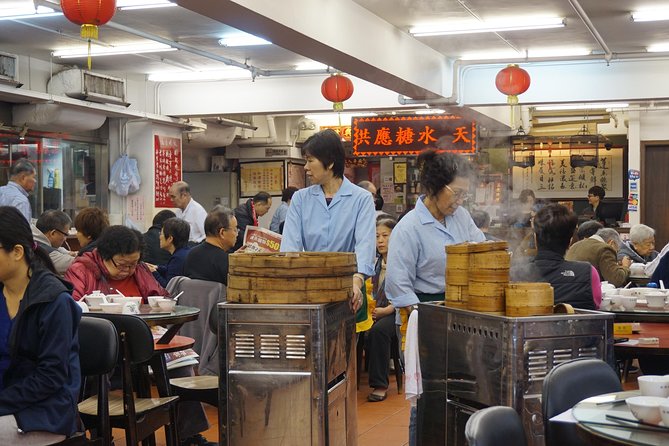
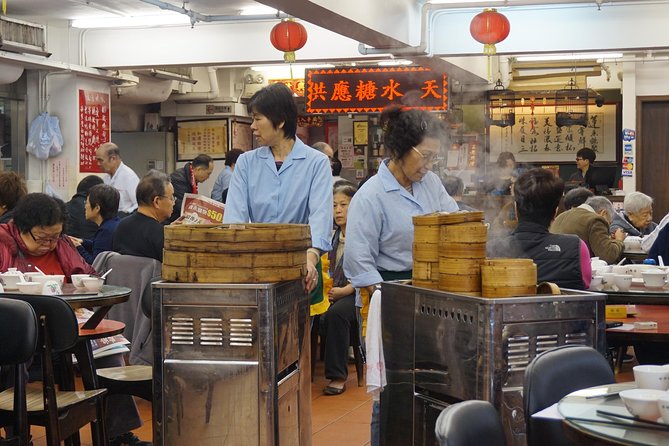
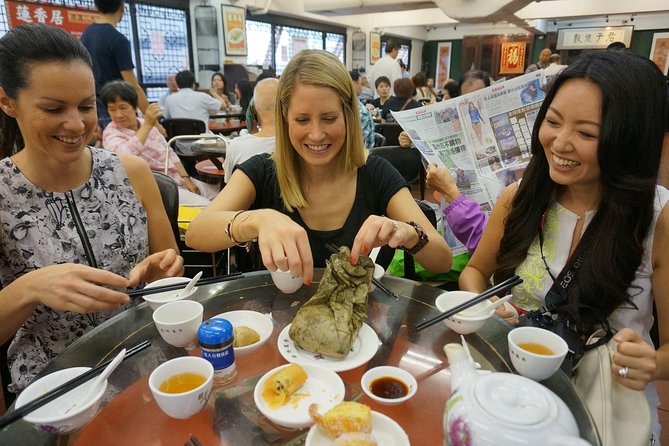
Your first serious stop is an old tea house for yum cha, or dim sum. The restaurant is described as nearly a century old, and the trolley service adds an old-school touch. Instead of selecting from a modern printed menu, you watch dishes pass by and choose what looks good.
Dim sum is a smart opening meal for a walking tour. You can try several small portions rather than fill up on one large plate. The food also introduces the social side of Cantonese dining, where dishes are shared and tea keeps arriving.
Expect a crowded, energetic room rather than a quiet breakfast. That is part of the point, but it can be a lot if you prefer calm meals. Bring patience and let your guide handle the ordering and serving details.
The timing also explains the strong advice to skip breakfast before the tour. This is not a token tasting. It is the first of several proper meals and snacks.
Sheung Wan’s dried seafood and traditional shops
After dim sum, the route moves through Sheung Wan and Seafood Street, the section of Des Voeux Road West known for dried seafood shops. Dried scallops, seafood, herbs, and other preserved ingredients are important in Cantonese cooking and traditional tonics.
For many people, this will be unfamiliar territory. Shops can display ingredients with little explanation in English, and the smells may be strong. That is exactly where a local guide earns the fee. You get context instead of simply walking past shelves of unusual food.
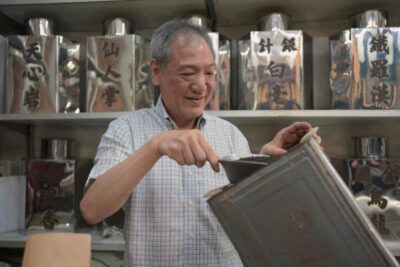
The tour also includes a family-run soy sauce producer and a Chinese medicine shop dating from the 1940s. These are short visits, but they broaden the meal into a lesson about the pantry behind Cantonese cooking. You begin to see that Hong Kong food is not just restaurant food. It is also dried goods, sauces, tonics, preserved fruit, and market produce.
Kai Fat Tea and Hong Kong’s sweet side
Kai Fat Tea is a small Sheung Wan shop that has sold tea and Chinese sweets for more than 30 years. You can try preserved fruit sweets and other traditional candies here.
This stop gives the morning a change of pace. After savory dim sum and wonton noodles, the fruit-based sweets show another part of local taste. Some may be sweet, sour, salty, or unfamiliar, so do not expect a standard Western candy shop.
The visit is brief, but it is useful for understanding how tea, preserved foods, and small sweets fit into daily life. You may also find the shop easier to appreciate with the guide explaining what you are tasting and why it is preserved.
Same city, a different table:
- Eat Like A Local: Shanghai Night Food Tour
★ 5.0 · 616 reviews - Tuktuk Food Tour Through Chengdu’s Local Eats
★ 5.0 · 435 reviews - Hong Kong’s Tin Hau Hidden Eats Food Tour with 7+ Local Tastings
★ 5.0 · 352 reviews - Hong Kong Food Tour: Central and Sheung Wan Districts
★ 5.0 · 333 reviews
Graham Street Market and old Central
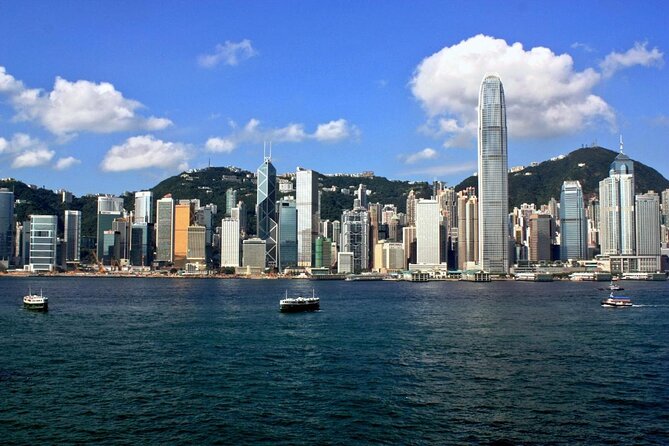
Graham Street Market has more than a century of history and remains a practical place to see vegetables, seafood, and other daily ingredients. The market sits along a sloped street, which gives you a feel for Hong Kong’s hilly geography as well as its food culture.
The market visit is short, around ten minutes in the listed schedule. That means you should not expect a long, leisurely market exploration. Instead, treat it as a quick look at the food supply behind the restaurant dishes.
The route continues through Gough Street and the Western District, where older Chinese businesses sit near colonial-era buildings, boutiques, and restaurants. The mix is one of the strongest parts of the tour. You get more than a list of dishes. You see how old and new Hong Kong occupy the same few blocks.
The walk also passes near the Mid-Levels Escalator and Tai Kwun. The escalator runs about 800 meters and climbs 135 meters toward Conduit Road. Tai Kwun, in the restored Central Police Station compound, adds another glimpse of the city’s preserved civic past.
These sightseeing moments are not the main event, and the tour does not promise a full visit to every site. They work as scenery and context between meals.
Wonton noodles and the craft of simplicity
At a family-run business dating from the 1960s, you stop for wonton noodle soup. The restaurant has been recommended by the Michelin Guide, but the dish itself is famously modest: noodles, broth, and wontons.
That simplicity makes this a useful tasting. There is nowhere for poor technique to hide. The noodles need the right texture, the broth needs balance, and the wontons need a good filling and wrapper. Your guide can explain what to notice instead of leaving you to judge the bowl as just another soup.
This stop is also a good example of why the tour takes you to older local eateries. You could find wonton noodles on your own, but you might not know which shop is worth your time or how to order without help.
Milk tea and the British influence
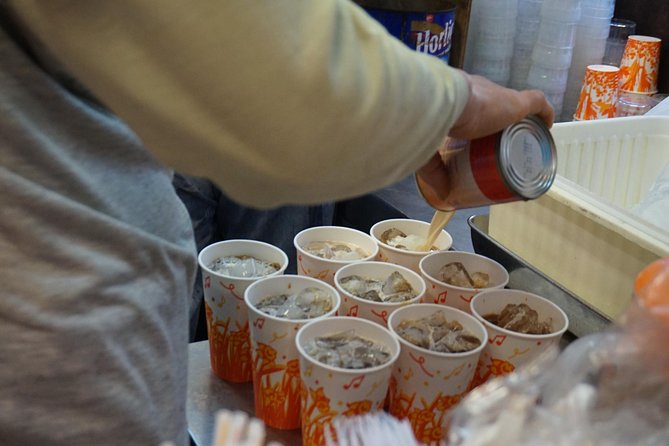
Hong Kong milk tea is one of the clearest food links to the city’s British period. It is strong, smooth, and closely tied to local cafe culture.
The stop is not just a drink break. It shows how an outside influence became part of everyday Hong Kong life. The tour’s food story moves from traditional Guangzhou cooking to British customs and then to a distinctly Hong Kong result.
You should pace yourself here. By this point, dim sum and wonton noodles have already made breakfast substantial. Milk tea adds caffeine and richness before the walking continues.
The Mid-Levels and Ding Ding tram ride
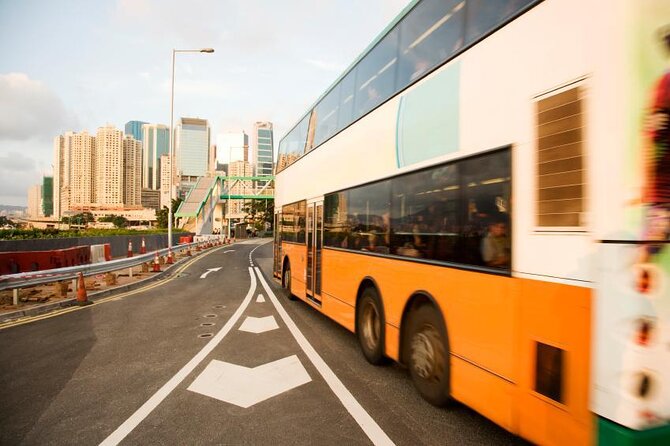
The route includes the Mid-Levels Escalator and later a ride on the Hong Kong tramway. The Ding Ding system began operating in 1904 under British rule and is known for its double-decker electric trams.
The tram is a pleasant break from walking and gives you a moving view of Hong Kong Island. It also connects the western part of the tour with Wan Chai, where the final food stops take place.
The supplied tour details list the Ding Ding ride as included, while also noting that the fare may be at your own expense. Carry some small money and check the exact arrangement after booking. Either way, the ride is a useful part of the experience, not a random add-on.
Roast pork and rice in Wan Chai
In Wan Chai, the food focus shifts to roasted meat. The family-run restaurant dates back to the Qing dynasty and is known for English char siu, or roast barbecue pork, served with rice and homemade sauces.
You may also taste a mixture of traditional roasted meats rather than only pork. The plate is more filling than the earlier samples, so this is another reason to arrive hungry and avoid breakfast.
The restaurant’s age and family connection give the stop a sense of continuity. You are not just tasting a fashionable interpretation of char siu. You are eating a dish linked to a long-running local business.
Wan Chai itself adds another layer. The neighborhood has changed quickly, but old eateries, markets, offices, and public spaces still share the same streets. The tour uses food to make that change easier to read.
Egg tarts and Southorn Playground
The final food stop is a bakery on Hennessy Road with 60 years of history. Its dan tat, or egg tart, is associated with a former Hong Kong governor, adding a little local color to the final bite.
Egg tarts show another meeting point between Chinese and English food traditions. The custard tart is familiar in concept, but the Hong Kong version has its own place in local bakery culture.
Afterward, the route reaches Southorn Playground in Wan Chai. The public sports ground is used by office workers, sportsmen, spectators, and people taking a short break. It is a simple ending, but a fitting one. You finish where ordinary city life continues around you, rather than at a staged attraction.
Price, pace, and what you receive
At $115.52 per person, this is a mid-priced food tour. You are paying for more than the food itself: a four-hour route, a professional English-speaking guide, five main food experiences, small sweets, several cultural stops, and the Ding Ding ride.
The value is strongest if you are new to Hong Kong or uneasy about ordering in small local restaurants. It is also strong if you want several neighborhoods covered in one morning. The tour saves you from guessing which old shop to enter and how to make sense of unfamiliar dishes.
The value is weaker if you already know Hong Kong’s food scene well or prefer to spend four hours at one market or restaurant. The route covers a lot of ground, and some market and shop visits are brief. It is a tasting route and city introduction, not a slow food seminar.
Wear comfortable shoes. You will walk through sloped streets and busy neighborhoods, use public transport, and eat at a steady pace. The tour ends in Wan Chai, not back at the Sheung Wan meeting point, so plan your afternoon from there.
Free cancellation is available up to 24 hours before the start time. The experience requires a minimum number of participants, so a cancellation by the operator may lead to another date, another experience, or a full refund.
Who should book this tour?
I would book this tour for a first visit to Hong Kong, especially if food is one of your main reasons for coming. It suits solo visitors, couples, and small groups who want an easy way into Cantonese cuisine without spending the morning decoding menus.
It also suits people who like history in small doses. You hear about British influence, Qing-era restaurants, Chinese medicine, dried seafood, markets, and old neighborhoods while eating your way between them.
I would not choose it for a vegetarian, gluten-free visitor, or anyone with a seafood allergy. It is also not suitable for children aged five or younger. The operator advises booking a private food tour for that age group instead.
Should you book the Hong Kong Island food tour?
Book it if you want a full morning of authentic Cantonese food, practical guidance, and neighborhood walking with a small group. The strongest reasons are the local restaurants, the well-liked guides, and the way the route links food to Hong Kong’s Chinese and British past.
Skip it if you want a relaxed sit-down meal, a vegetarian menu, or a narrow focus on one cuisine. For most first-time visitors who can eat the menu, the combination of dim sum, wonton noodles, milk tea, roast meat, egg tart, markets, and a Ding Ding ride makes the $115.52 price reasonable. Just skip breakfast and arrive ready to eat.
FAQ
Where does the Hong Kong Island food tour begin?
The tour begins at 28 Des Voeux Road West in Sheung Wan, Hong Kong. Directions to the meeting point are sent after booking.
What time does the tour start?
The scheduled start time is 9:30 a.m.
How long does the experience last?
The tour lasts approximately four hours.
Where does the tour finish?
The tour ends in Wan Chai, Hong Kong, rather than at the Sheung Wan starting point.
What foods are included?
The tastings include dim sum or yum cha, wonton noodle soup, Hong Kong milk tea, char siu or other roasted meat with rice, an egg tart, and traditional dried fruit sweets.
Is the Ding Ding tram ride included?
The included services list a Ding Ding tram ride. The tour information also notes that the tram fare may be at your own expense, so carry money and confirm the exact arrangement after booking.
How large is the group?
The maximum is nine people per booking, and the activity has a maximum of nine participants.
Is the tour suitable for dietary restrictions or young children?
The tour is not suitable for vegetarians, people following a gluten-free diet, or people with seafood allergies. It is not suitable for children aged five and under. A private food tour is recommended for that age group.
Just added in China
- Tuktuk Food Tour Through Chengdu’s Local Eats★ 5.0 · 435 reviews
- Half-Day Chengdu Back Alley Foodie Tour★ 5.0 · 58 reviews
- 4-Hour Private Tour: Lama Temple, Confucius Temple, Guozijian Museum with Dim Sum★ 5.0 · 21 reviews
- Online Cooking Class Beijing Dumplings and Cuisine by Sunflowerli Renowned Chef★ 5.0 · 65 reviews
- Beijing Walking Food Tour with a Local Friend★ 5.0 · 73 reviews
- Beijing Hutong Breakfast Food Tour★ 5.0 · 120 reviews
- Experience Beijing Walking Food Tour Private★ 5.0 · 56 reviews
- 3-Hour Private Night Tour: Beijing Foodie Experience★ 5.0 · 53 reviews
Hong Kong Food Tours, compared.
Street Food Tour with Locals – Dim Sum and Wonton
Read our review →
Hong Kong’s Tin Hau Hidden Eats Food Tour with 7+ Local Tastings
Read our review →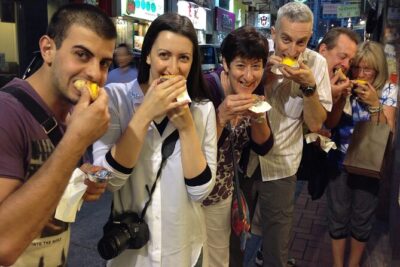
Hong Kong Food Tour: Central and Sheung Wan Districts
Read our review →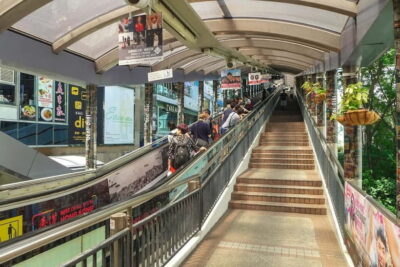
Hong Kong Day Tour: Priority Peak Tram, City Walk & Dim Sum
Read our review →
Browse the lists this tour appears in