
REVIEW · OSAKA FOOD TOURS
Osaka: 2-Hour Local Street Food Tour – Dotonbori & Namba
Osaka is best understood one bite at a time. This two-hour walk combines takoyaki, taiyaki, okonomiyaki, and other local favorites with the neon streets of Dotonbori, a quiet temple visit, and practical help from an English-speaking guide. I like the mix of famous sights and small food stops, and I especially like that the guide can shape the outing around what you want to eat.
The Glico Man photo stop gives first-time visitors an easy Osaka postcard, while Hozenji Temple offers a welcome pause from the noise. The main caution is cost: the $51 tour fee covers the guide, not your food or drinks, so your final bill depends on how much you order. Dietary needs also require care, since the tour information says vegan and gluten-free requests cannot be accommodated, despite a few individual accounts of guides finding suitable alternatives.
Five things worth knowing before you book
- Food costs are extra: The $51 price pays for the guided walk, while each dish and drink is purchased separately.
- You cover famous ground efficiently: Dotonbori, Namba, Ukiyo-Koji, and Hozenji Temple fit into a compact two-hour route.
- The guide is the real value: Guides such as Kaito, Hina, Fuka, Hiro, and Maru have been praised for helping with ordering, local customs, Japanese phrases, and less obvious places to eat.
- The food list is flexible: Possible tastes include takoyaki, takosen, taiyaki, apple candy, pork buns, okonomiyaki, kushikatsu, and doteyaki.
- It suits repeat visitors too: You can skip sights you already know and ask for food or streets that match your interests.
- The meeting point is central: Meet outside Starbucks TSUTAYA EBISUBASHI, where the guide carries a yellow DeepExperience sign.
Starting beneath the Glico Man sign
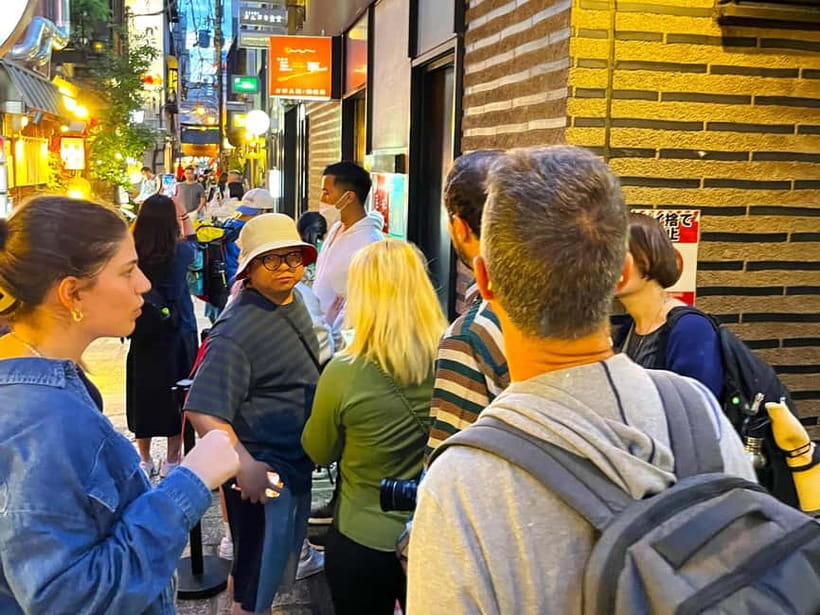
Your guide meets you outside Starbucks Coffee TSUTAYA EBISUBASHI. This is a practical starting point because it puts you right beside the main Dotonbori action, but do not simply wait inside the café. The instructions say to meet outside the building and look for the yellow sign with the DeepExperience logo.
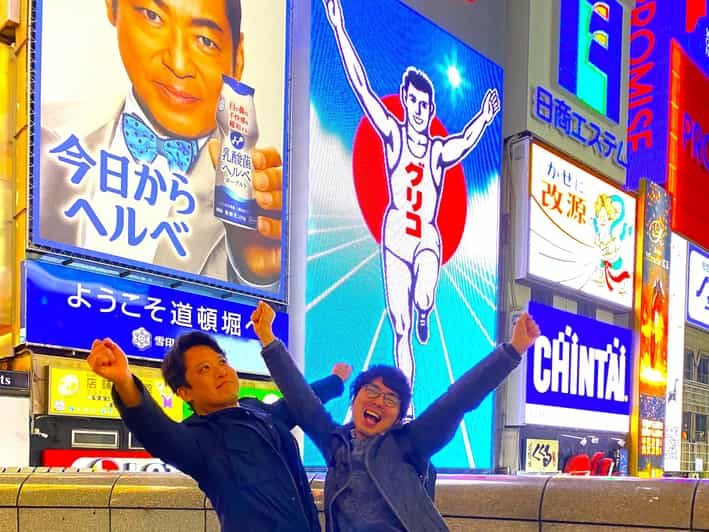
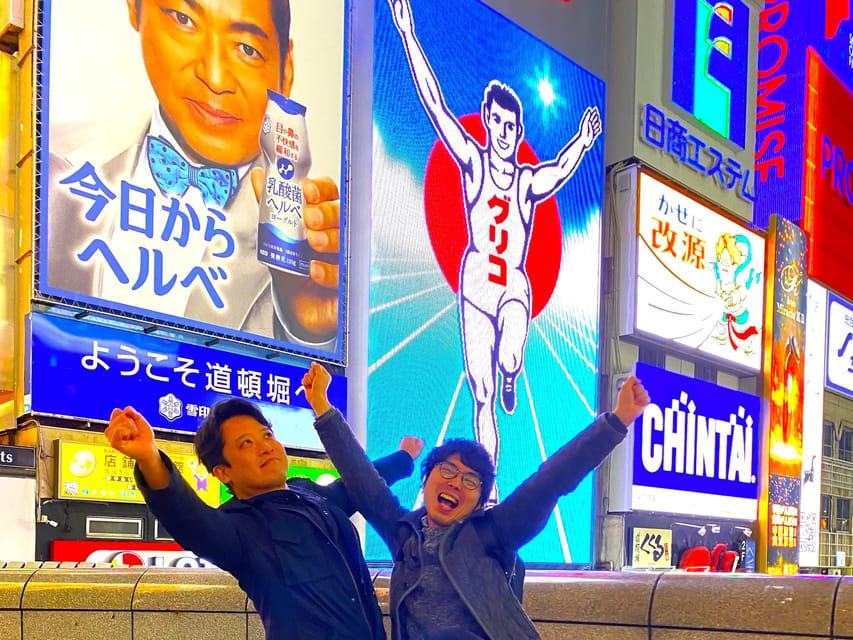
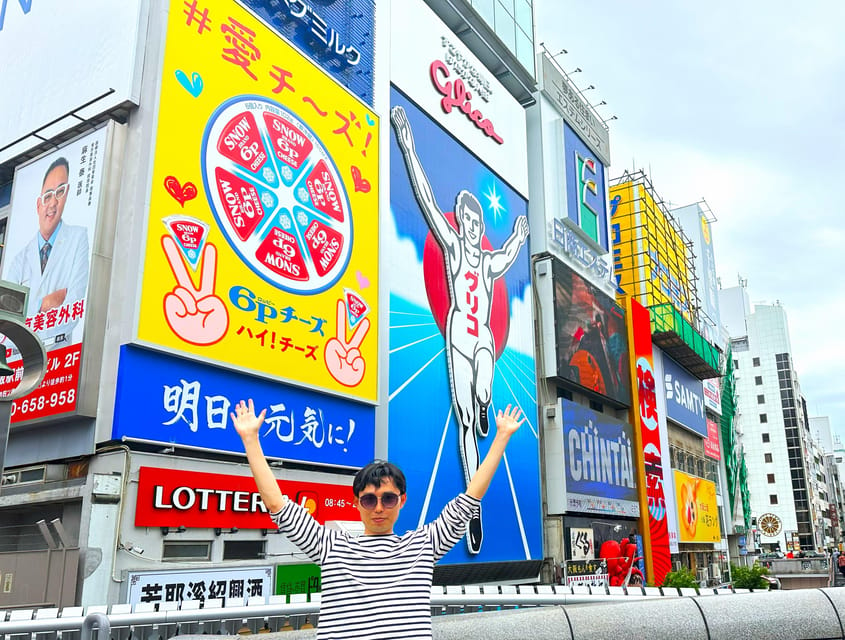
The first formal stop is the Glico Man sign, Osaka’s best-known commercial mascot. It is a quick photo opportunity, but it also gives your guide a useful opening to explain why Dotonbori became such a symbol of Osaka entertainment and eating.
Expect crowds, bright signs, and plenty of people taking the same photograph. The guide helps you get the picture without wasting too much of your short tour. If this is your first Osaka visit, it is a sensible place to begin. If you have already taken the standard Glico Man photo, tell your guide early so more time can go toward food or side streets.
More Street Food Tours in Japan
- Hungry Osaka Street Food Tour:15 Tastings & 3 Drinks with a Local
★ 5.0 · 1,727 reviews - Hungry Osaka Street Food Tour: 15 Dishes & 3 Drinks
★ 4.9 · 694 reviews - [1 Group Only] Osaka Street Food Tour for Family
★ 5.0 · 208 reviews
Dotonbori food stops: order small and taste widely
The first food section takes place around Dotonbori, with about 30 minutes set aside for tasting. This is not a sit-down dinner with a fixed menu. You pay for what you choose, and the guide helps you understand what is available and how to order.
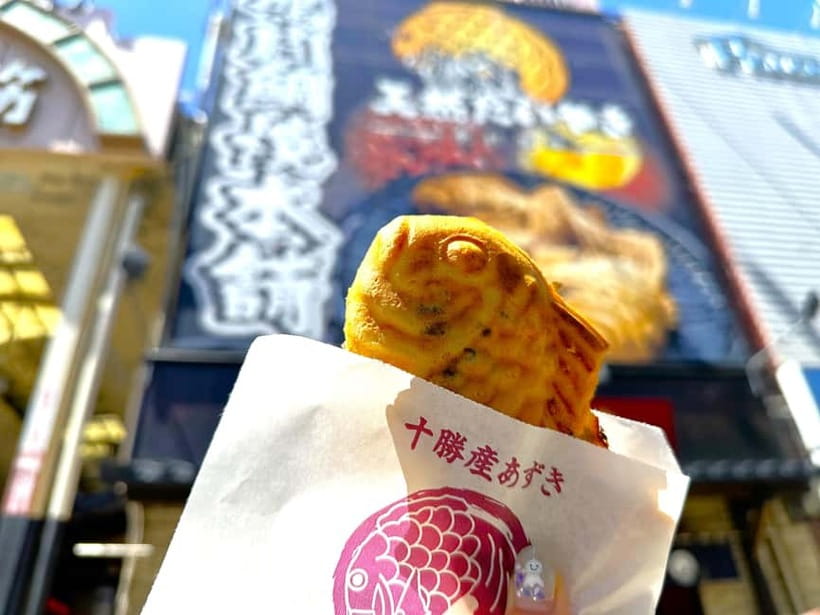
The classic starting point is takoyaki, Osaka’s soft, hot octopus dumplings. Takosen combines takoyaki with shrimp crackers, giving you a different texture and a useful comparison with the standard version. Taiyaki, the fish-shaped pastry, usually brings a sweet finish to this part of the walk, though exact stops can vary.
You may also encounter apple candy or pork buns. The point is not to eat a full serving of everything. It is to sample several Osaka specialties without committing your entire evening to one dish. I recommend sharing larger items when possible, especially if you want room for the next round.
A guide adds value here by explaining what you are eating and helping you avoid ordering blindly from a picture menu. Several guides have also taught useful Japanese food words and simple phrases. That small lesson can make later restaurant visits less awkward.
The drawback is the pace. Dotonbori is packed, and food stalls can have lines. A good guide may steer you away from the longest queue, but the area cannot be made quiet or empty. Bring patience, keep your belongings close, and wear shoes that can handle standing and short walks.
Ukiyo-Koji and Hozenji Temple: Osaka changes mood quickly
One of the most appealing parts of the route is the move from Dotonbori’s bright commercial strip into Ukiyo-Koji and Hozenji Temple. The contrast is the reason this tour is more than a snack crawl.
Ukiyo-Koji is a narrow lane that feels removed from the major thoroughfare. It gives you a brief look at the smaller-scale side of the Namba area, with tighter passageways and a slower rhythm. Your guide can point out details that are easy to miss when you are focused on signs and menus.
Hozenji Temple is scheduled for about 15 minutes. It sits quietly in the middle of the commercial district, making it one of the most useful stops for understanding Osaka’s character. You get a short cultural break without spending half a day at a major temple complex.
The visit is guided, so you can ask about the temple and local customs rather than simply taking a photograph and moving on. Keep expectations realistic: this is a compact city temple, not a grand religious site with extensive grounds. Its appeal comes from its setting and atmosphere.
For me, this is the route’s best piece of structure. Food alone can blur into one long sequence of snacks. The temple and side street give your senses a reset before the next eating section.
Namba: more than a parade of famous dishes
The tour then continues into Namba for another food stop of roughly 30 minutes. Namba is a major shopping and entertainment district, and it can feel just as busy as Dotonbori. The value here lies less in scenery and more in having someone help you choose.
Possible savory dishes include okonomiyaki, kushikatsu, and doteyaki. Okonomiyaki is the famous Osaka-style savory pancake, while kushikatsu consists of skewered items coated and fried. Doteyaki is a slow-cooked beef tendon dish with a sweet miso flavor.
You may instead be taken toward dumplings, udon, sushi, ramen, onigiri, beef, or other local foods. The exact selection depends on the guide, the open businesses, and your preferences. Several guides have been praised for asking what people actually want to eat instead of forcing everyone through an identical list.
That flexibility matters. One person may want familiar dishes, while another may be eager to try something that would be hard to order alone. Families and mixed groups can also benefit because the guide can help balance adventurous choices with safer ones.
The food is not included, so keep your ordering under control if you have a later dinner reservation. On the other hand, if this is your evening meal, the tour can become a useful way to build a dinner from several smaller portions.
More Street Food Tours in Osaka
- Umami Town Street Food Tour
★ 5.0 · 120 reviews - Eat Like a Local in Osaka – Private Custom Street Food Tour
★ 4.3 · 33 reviews
The local edge comes from the guides
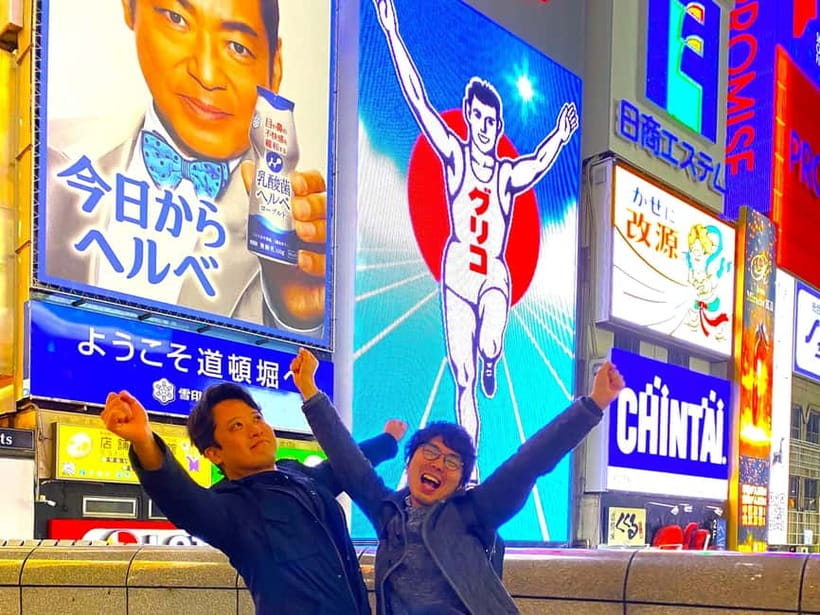
The strongest part of this outing is not a single dish. It is the guide’s ability to turn a crowded entertainment district into a more personal evening.
Kaito receives especially warm praise for clear English, local food knowledge, useful Japanese phrases, and easy conversation. He has helped people find small eateries, communicate with restaurant staff, and understand food customs. One group even found his phrase guide useful later in their Japan trip.
Hina has been praised for adjusting food choices, explaining popular Osaka dishes, and sharing further suggestions for the city. Fuka is noted for her friendly style and strong English, while Hiro has been described as patient and good at adjusting both pace and food stops.
Other guides, including Aki, Maru, Naoko, Namu, and Hori, have also been credited with finding places people would not have located alone. Some guests enjoyed returning to a restaurant the next day after discovering it during the tour. That is a useful test of value: the tour can give you leads for the rest of your Osaka stay, not just two hours of eating.
Guide quality can vary from person to person, as it does on any walking tour. The consistent strength here is the format. A private or small-group option gives the guide more room to ask what you like, what you have already seen, and what you want to avoid.
What $51 buys, and what it does not
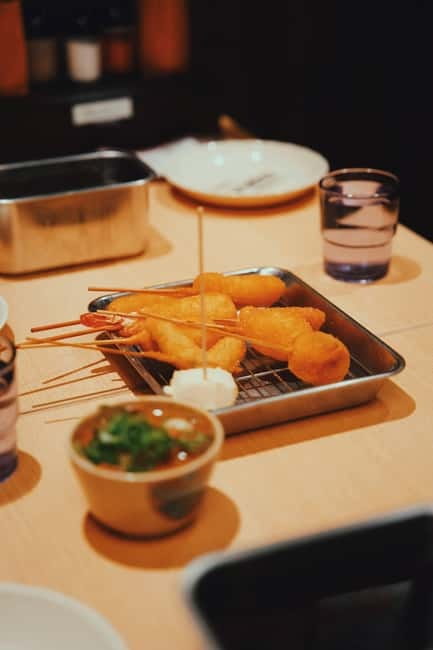
At $51 per person, this is not the cheapest way to eat in Osaka. You still pay for food and drinks, and two hours is a short time. If you are comfortable reading menus, using translation tools, and choosing stalls independently, you can spend less.
The fee becomes easier to justify if you want help with the social side of eating. Your guide can explain dishes, help you order, answer questions, introduce local phrases, and direct you toward places that are less obvious from the main signs. You are also paying for a compact orientation to Dotonbori and Namba, two areas that can feel confusing on a first visit.
The tour offers private or small-group arrangements, which may improve the value for couples, families, or friends who want a more personal route. A larger group could make the food decisions and movement slower, though the provided information does not specify a standard group size.
The best financial strategy is to decide how many dishes you want before you start. Since food is extra, the tour works well as a progressive dinner, but it can become expensive if you order every item that catches your eye.
Dietary restrictions need a clear warning
The official information says vegan and gluten-free requests cannot be accommodated. You should treat that as the rule and contact the operator before booking if food allergies or strict dietary requirements matter to you.
Some individual outings have included vegetarian or gluten-free alternatives after guides made extra arrangements. That is encouraging, but it should not be treated as guaranteed. A preference is different from a medical restriction, and Dotonbori street food often involves shared cooking surfaces, sauces, batter, or unclear ingredients.
For less strict preferences, the guide may be able to adjust the route. Tell the guide at the beginning exactly what you can and cannot eat. Do not wait until you are standing at a food counter.
Walking, timing, and family fit
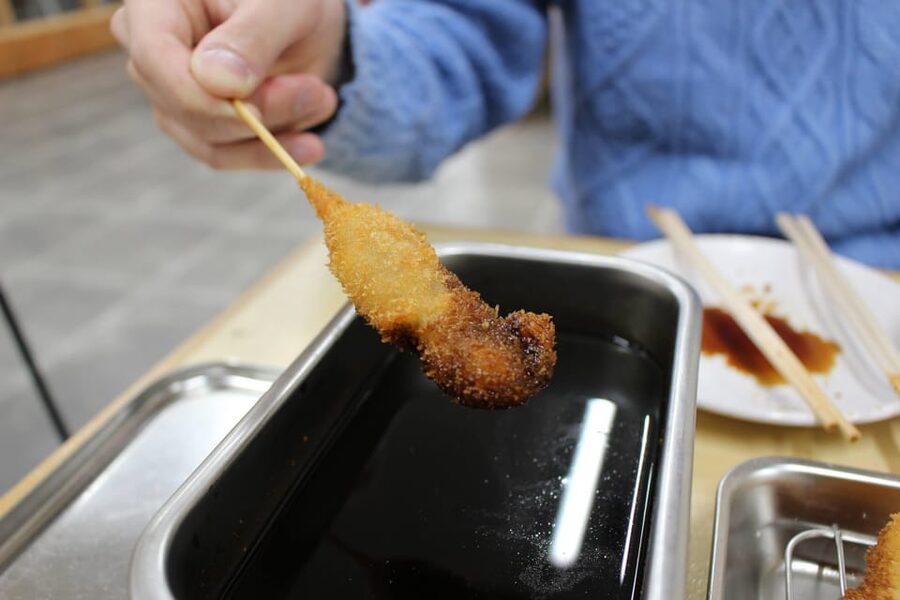
This is a two-hour urban walk, but it is not described as a long-distance hike. One guest specifically praised the fact that there was not much walking, leaving more time for street and restaurant food. Still, expect crowds, standing, short stretches through narrow lanes, and frequent stops.
The tour is wheelchair accessible, which is useful in principle, though Dotonbori’s crowds and narrow passages may affect how quickly you move. Ask about your exact group needs when booking rather than assuming every lane will be easy.
The activity can work for teenagers and curious older children, especially if they enjoy trying new food. One family had a particularly good time with a guide who kept teenagers engaged. Another account felt the evening was not ideal for children, so family suitability depends on age, attention span, and comfort with crowded streets.
An evening start can make sense because Dotonbori is especially atmospheric after dark, but starting times vary. Check availability for the date you want.
Who should take this tour?
I would choose it for a first Osaka visit if you want a fast introduction to the city’s food culture without spending hours researching restaurants. It is also useful on your first evening, when you want to learn the area before returning on your own.
Repeat visitors can get just as much from it if they tell the guide what they have already seen. Ask for smaller lanes, different dishes, local-style restaurants, or help with places you noticed but did not understand.
This is less suitable if you want a fixed meal with all costs included, a long historical walking tour, or guaranteed vegan and gluten-free food. It is also not the right choice if you dislike crowds or prefer to eat at a slow pace.
Final verdict: book it for guidance, not just food
Book this tour if you want a friendly local guide to make Dotonbori and Namba easier to understand. The food is appealing, but the better reason to go is the combination of ordering help, cultural context, side streets, Hozenji Temple, and recommendations you can use later.
The $51 fee is fair when the guide is active and the group is small, but remember that every dish costs extra. If you are happy to manage menus alone, spend the money on food instead. If you want to taste widely, learn a few Japanese phrases, and find places beyond the most obvious signs, this is a practical two-hour introduction to Osaka.
FAQ
Where does the Osaka street food tour meet?
Meet outside Starbucks Coffee TSUTAYA EBISUBASHI. The guide will be holding a yellow sign with the DeepExperience logo.
How long does the tour last?
The tour lasts two hours.
What areas does the tour visit?
The route covers Dotonbori and Namba, with a walk through Ukiyo-Koji and a visit to Hozenji Temple.
Is the Glico Man sign included?
Yes. The tour includes a guided visit and photo stop at the Glico Man sign in Dotonbori.
Is food included in the $51 price?
No. Food and drinks are not included, so you pay separately for the items you choose.
What foods might I try?
Possible foods include takoyaki, takosen, taiyaki, apple candy, pork buns, okonomiyaki, kushikatsu, and doteyaki. Other foods such as udon, sushi, ramen, dumplings, beef, and onigiri may also be available depending on the route and your preferences.
Is the tour available in English?
Yes. Live guiding is available in English and Japanese.
Can I book a private tour or small-group experience?
Yes. Private and small-group options are available.
Is the tour wheelchair accessible?
Yes, the activity is listed as wheelchair accessible.
Can the tour accommodate vegan or gluten-free diets?
The provided information says vegan and gluten-free requests cannot be accommodated. Some guides have found alternatives for individual dietary needs, but you should not assume this is guaranteed.
More 2-Hour Experiences in Osaka
- 2 Hour Historic Market Food Tour and Hands-On Biscuit Class
★ 5.0 · 251 reviews - Dublin: 2-Hour Premium Whiskey and Food Tasting Tour
★ 4.7 · 54 reviews - Palermo: 2-Hour Sicilian Cheese and Wine Tasting Tour
★ 4.8 · 52 reviews - 2-Hour Foodie Tour with 10 Tastings in Aix-en-Provence
★ 4.5 · 50 reviews
Just added in Osaka
- Hidden Osaka – Yukaku Red Light Tour & Culinary Adventure★ 4.8 · 96 reviews
- Eat Like a Local in Osaka – Private Custom Street Food Tour★ 4.3 · 33 reviews
- Osaka: Sushi Class in Dotonbori★ 4.9 · 160 reviews
- Osaka: Sushi Making in Spacious Studio (SAME-DAY OK!)★ 5.0 · 75 reviews
- Osaka: Gluten-Free Ramen and Gyoza Cooking Class★ 5.0 · 42 reviews
- Osaka: Kuromon Market Food Walking Tour (6 stops, 6 tastes)★ 4.6 · 272 reviews
- Osaka: Roll and Authentic Sushi Making Class in Dotonbori★ 4.9 · 239 reviews
- Osaka: Guided Food Tour with 12 Dishes at 4 Local Eateries★ 4.9 · 90 reviews
Street Food Tours, compared.
Ho Chi Minh City Street Food Tour & Sightseeing By Motorbike
Read our review →
Small Group Hanoi Street Food Tour with a Real Foodie
Read our review →
Saigon By Night and Street Food By Motorbike | Opt: Ao Dai Riders
Read our review →
Private Street Food Tour by Motorbike/Car with Local Students
Read our review →
Cinque Terre Park Day Trip with Optional Street Food
Read our review →
Street Food Tasting & Sightseeing Tour by Motorbike
Read our review →Browse the lists this tour appears in