
REVIEW · OSAKA FOOD TOURS
Osaka Food Adventure Tour: Walking with a Local Guide
Osaka eats well, and this tour knows where. I like the mix of six to ten local dishes and a small group capped at eight people. I also like that your guide helps you use Osaka’s public transportation, not just points at food stalls. The main catch is that you pay an extra ¥190 subway fare from Shinsekai to Namba, and Tsutenkaku Tower admission is not included.
The route links Osaka’s old entertainment quarter with its famous food streets, then finishes under the Glico sign in Dotonbori. Guides such as Ayako, Chiyoe, Kaoru, Hiro, Sue, Emi, Sumiyo, and Bryan have earned praise for their warmth, humor, local knowledge, and willingness to take guests to small shops they might otherwise pass. Come hungry, wear sensible shoes, and expect a tasting walk rather than a formal sit-down meal.
Key points to know before you book
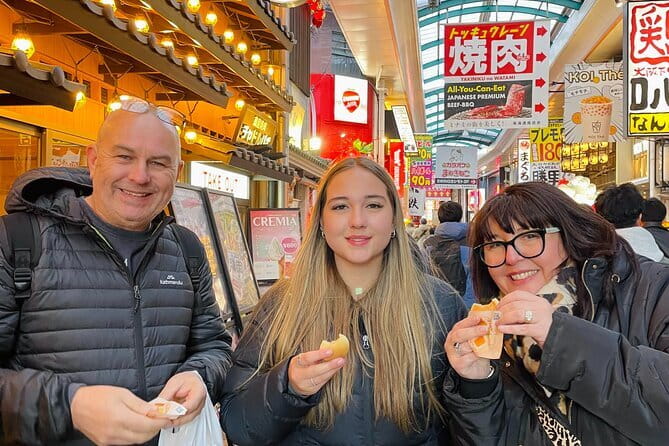
- Six to ten local tastings: Expect food such as kushikatsu, takoyaki, croquettes, wagashi, and steamed meat buns, with the exact choices changing by shop availability and group preference.
- A strong first look at Osaka food culture: The walk connects Shinsekai, Hozenji Yokocho, and Dotonbori, three very different parts of the city.
- Small-group attention: With no more than eight people, it is easier to ask questions, request food preferences, and keep up in crowded streets.
- Lunch or dinner timing: You can schedule the tour when your appetite is ready, rather than forcing a food crawl between meals.
- Practical transport help: The guide can show you how to use public transportation, though the subway ride to Namba costs ¥190 per person.
- A good value at $79.28: The price includes the food tastings, one alcoholic or non-alcoholic drink, and an English- or Japanese-speaking guide.
Why this three-hour Osaka food walk works
Osaka is often called Japan’s kitchen for good reason. Food is not tucked away in one market or one famous restaurant. It appears in department store basements, narrow alleys, old neighborhood shops, and bright entertainment districts.
That makes this three-hour walk useful. You are not simply handed a list of dishes. You move through several parts of the city and see how food fits into daily life. One stop may be a long-running sweets shop, another a casual stand selling fried skewers, and another a department store food hall with neatly arranged Japanese specialties.
I especially like the range. You may taste something familiar, such as a croquette, then move on to something less obvious, such as traditional wagashi or takoyaki from a long-established shop. The food is served in small portions, but six to ten tastings add up quickly.
Your guide also gives the walk its character. Ayako is praised for her passion and for introducing dishes that many first-time visitors would not know to order. Chiyoe, also called Aunty, is remembered for her care in guiding people through crowded streets. Kaoru has helped visitors navigate their return train to Kyoto, while Hiro has been praised for explaining both Osaka food and the area where it is eaten.
Those details matter. A food walk is only as good as the person making the introductions. Here, the guide is expected to order, explain, answer questions, and adjust the experience around what you like and dislike.
More Food Tours with Locals in Japan
- Hungry Osaka Street Food Tour:15 Tastings & 3 Drinks with a Local
★ 5.0 · 1,727 reviews - Eat Like a Local in Osaka – Private Custom Street Food Tour
★ 4.3 · 33 reviews - Eat and Drink Like a Local: Tokyo Ueno Food Tour-Taverns&Ramen
★ 5.0 · 957 reviews
Starting at Ebisucho Station and Tsutenkaku Tower
The meeting point is at Ebisucho Station, at 5 Chome-13 Nipponbashi in Naniwa Ward. The closest station exit to Shinsekai is the one you want. Tsutenkaku Tower should be visible from that side, which makes it a useful landmark if the station feels confusing.
The first stop is Tsutenkaku, Osaka’s 103-meter tower and one of the city’s best-known symbols. The planned time here is about 30 minutes. You can see the tower and the surrounding streets, but admission to the observation deck is not included in the tour price.
That arrangement is sensible for a food-focused walk. You are not required to pay for a tower visit if you would rather spend your time tasting and exploring. If you do want the view, ask about timing and admission before the tour begins, since the food stops remain the main purpose of the outing.
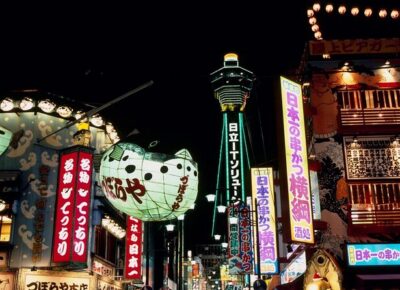
Tsutenkaku also gives you an immediate sense of Shinsekai. The tower rises above a district known for neon signs, older storefronts, casual restaurants, and a distinctly retro mood. It is not polished in the same way as Osaka’s newer shopping zones, and that is part of its appeal.
Shinsekai and the food Osaka does best
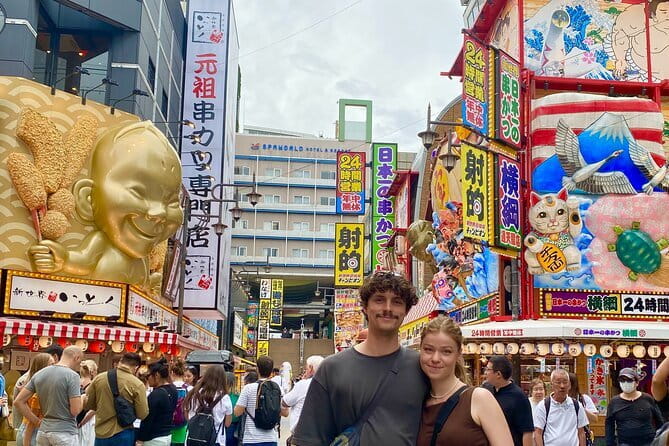
The tour spends about an hour and a half in Shinsekai, making it the longest section of the route. This is where the food focus really takes hold.
Kushikatsu is the local specialty most closely linked with the area. These are skewers of meat, seafood, or vegetables coated and fried, then served with dipping sauce. The tour gives you a chance to try the dish in the neighborhood where it became famous, rather than ordering a generic version somewhere far away.
The food examples also include croquettes from a historic butcher shop. A croquette is simple comfort food, but a good one can tell you plenty about Japanese everyday eating. You may also try takoyaki, Osaka’s well-known octopus balls, from what is described as the city’s oldest takoyaki shop.
Takoyaki is served hot, so follow your guide’s lead before taking a large bite. The outside can seem manageable while the center is still very warm. This is one of those small practical moments where having a local guide saves you from learning the hard way.
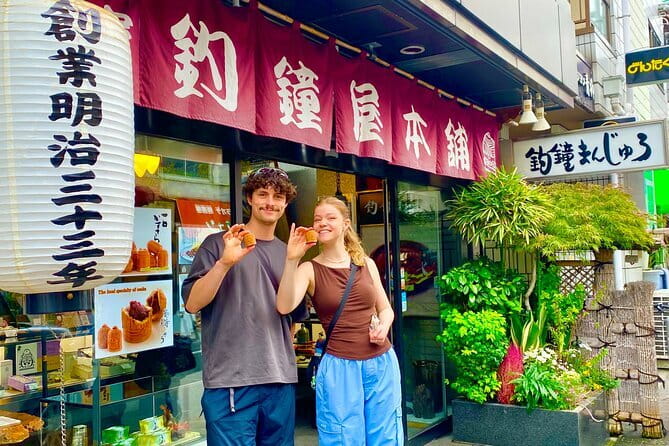
Another possible tasting is a steamed meat bun, known as butaman. This adds a soft, savory item to a route that already includes fried foods and sweets. Traditional wagashi from a 200-year-old shop may provide a sweeter pause.
The exact menu is not fixed. It can change based on what the group wants and which shops are open or well supplied that day. I see this as a fair trade. A rigid menu might sound reassuring, but a flexible one lets the guide respond to the neighborhood and avoid forcing a particular dish when a shop is unavailable.
The main issue is dietary restriction. The food may include meat, seafood, wheat, and dairy. If you have allergies or follow a restricted diet, contact the tour provider before booking and ask what changes are possible. Do not assume that every tasting can be replaced.
Takashimaya’s depachika: a short look at Japanese food presentation
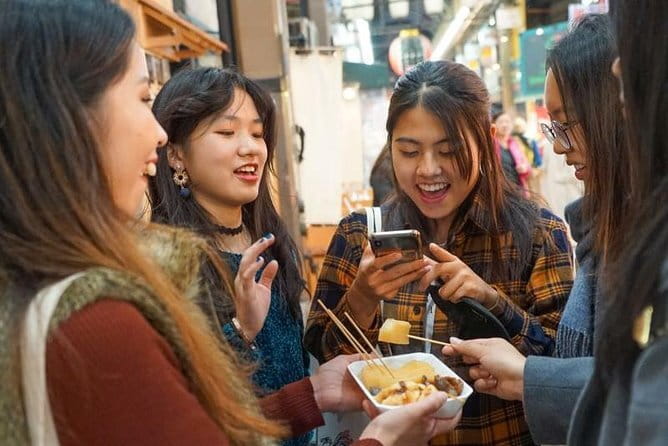
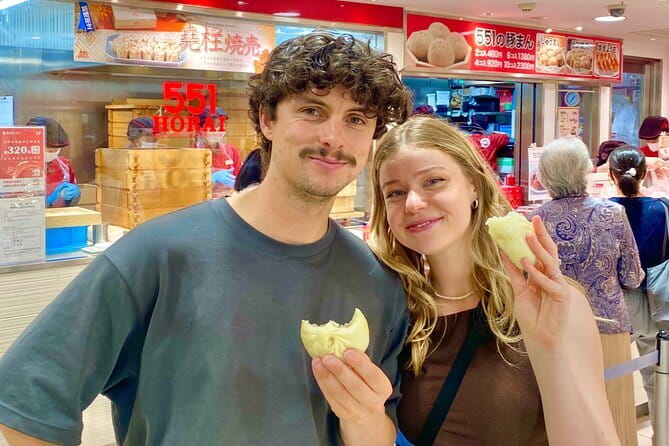
The route includes about 15 minutes at the Takashimaya Osaka Store. The food basement, called a depachika, is one of Japan’s most enjoyable food-shopping settings.
You may find beautifully arranged sweets, sushi, prepared dishes, fresh produce, and imported specialties. It is less about sitting down for a full meal and more about seeing the care put into food presentation and takeaway cooking.
Fifteen minutes is enough for an introduction, not enough for a long browse. That is important to understand. The stop adds contrast to the small neighborhood shops in Shinsekai. You see food sold in a refined department store setting, then continue to more informal streets.
The route description uses the word lunch, but the tour also offers dinner-time departures. That flexibility helps you plan around your day in Osaka. If you choose the evening, the food streets and signs around the route should feel different from a midday visit, though the specific atmosphere will depend on the day and weather.
More food tours with locals in Osaka:
- Naples: Street Food Walking Tour with Local Guide
★ 4.9 · 4,976 reviews - Rome: Street Food Tour with Local Guide
★ 4.8 · 4,077 reviews - Eat Like a Local: Venice 3-Hour Small-Group Food Tasting Tour
★ 5.0 · 3,137 reviews - Marrakech: Street Food Tour with a Local Guide
★ 4.9 · 3,119 reviews
Hozenji Yokocho and a quieter Osaka pause
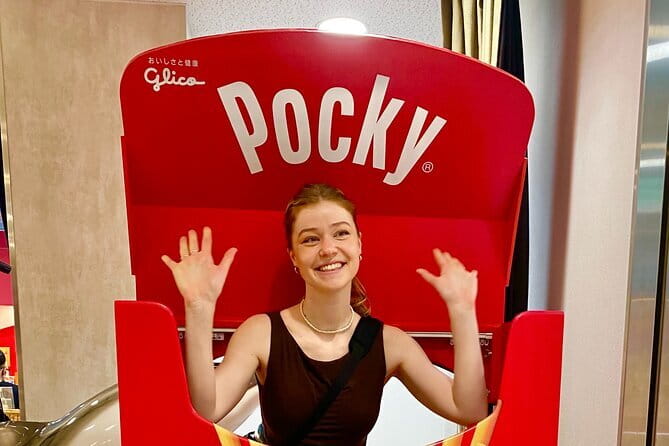
Hozenji Yokocho receives about ten minutes, so this is a brief stop rather than a long temple visit. The narrow alley is known for traditional buildings, small restaurants, and its connection to Hozenji Temple.
After the crowds and bright signs of Shinsekai, the alley offers a calmer change of pace. It is a good place to notice Osaka’s older side without leaving the central districts.
The short timing means you should not expect an extended cultural talk or a lengthy temple visit. Instead, think of it as a compact atmospheric stop between food tastings. Your guide can explain what you are seeing while keeping the walk moving toward Dotonbori.
This is also one reason the small group helps. Narrow lanes are easier to navigate when your guide can gather everyone quickly and explain where to stand without blocking the passage.
Dotonbori and the Glico sign finish
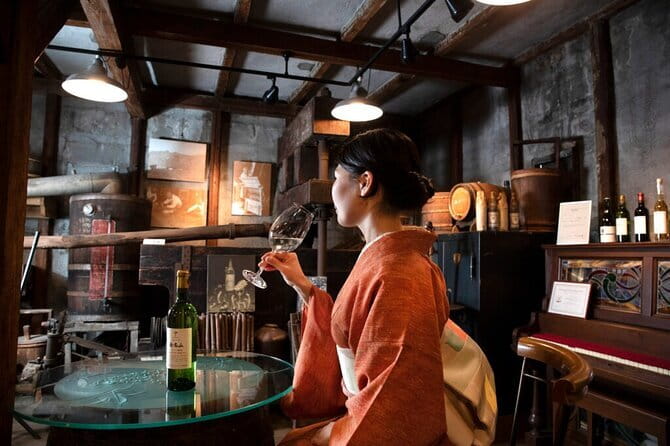
The tour ends at the Glico Sign in Dotonbori, at the bridge in front of the famous sign. The final section lasts about 30 minutes.
Dotonbori is Osaka’s big food-and-entertainment showcase, with bright billboards, crowded lanes, and the canal running through the district. It can feel loud and busy, especially at peak meal times. That is part of the fun, but it may be tiring if you prefer quiet streets.
Ending here works well because you finish near a major landmark and can continue exploring on your own. You are already in one of Osaka’s best-known areas for restaurants, shopping, and night walks.
The tour does not promise that every restaurant in Dotonbori will be visited. Instead, the guide uses the district as the final setting and point of orientation. You finish with a clear sense of how Shinsekai’s retro food streets differ from Dotonbori’s large signs and entertainment focus.
The guide can also help you understand the subway connection from Shinsekai to Namba. The fare is ¥190 per person and is not included. Have some yen ready, or ask your guide how to pay if you are unsure.
What you are likely to eat
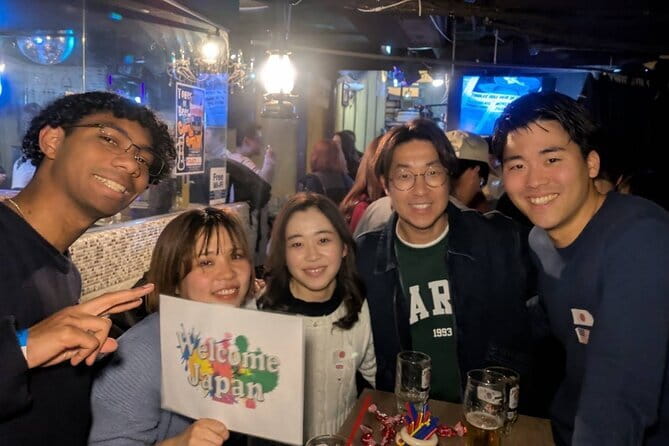
The food list is broad enough to please curious eaters, but it is not a menu guarantee. Possible tastings include:
- Croquettes from a long-running butcher shop
- Traditional wagashi from a 200-year-old sweets shop
- Kushikatsu, the fried skewers associated with Shinsekai
- Takoyaki from an old takoyaki shop
- Steamed meat buns, or butaman
- Additional local dishes selected according to shop availability and group preferences
You also receive one drink, either alcoholic or non-alcoholic. That is a useful inclusion, especially on an evening departure, but it does not cover extra snacks or additional drinks.
The six to ten food items are the heart of the value. Osaka food can be inexpensive when bought one item at a time, yet a first-time visitor may spend money on random choices and still miss the local specialties. A guide reduces that guesswork.
The portions and number of stops also mean you should not eat a large meal beforehand. The food is described as lunch, but the tasting format is closer to a substantial food crawl than a standard restaurant lunch.
Is $79.28 a fair price?
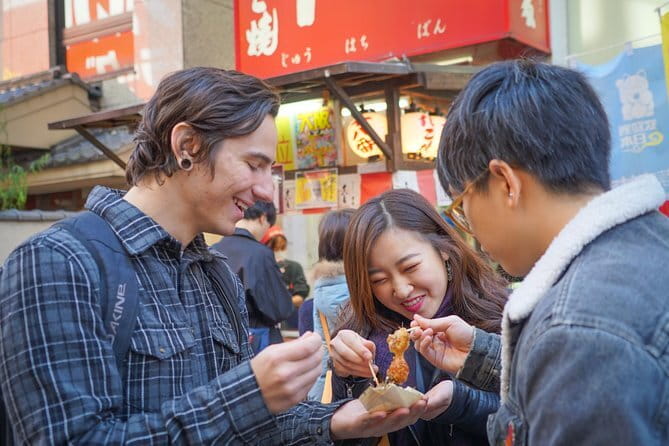
At $79.28 per person, the tour is not the cheapest way to eat in Osaka. You could buy individual snacks for less if you already know where to go and how to order.
The price becomes easier to justify if you value the guide and the structure. It includes six to ten local foods, one drink, and about three hours of walking through several food districts. You also receive help with transport and ordering, plus explanations of dishes you might otherwise skip.
For a first visit, that can be good value. The tour saves you from spending the first part of your Osaka stay searching for places and trying to work out what each dish is. It also gives you a list of areas and foods to revisit later.
I would be less enthusiastic about the price if you are already an experienced Osaka eater, speak Japanese comfortably, and have a carefully planned food route. In that case, you may prefer spending the same money on a single special meal.
Walking, group size, and guide style
The tour lasts about three hours and requires a moderate level of physical fitness. You will walk through streets, shops, and entertainment areas, and you may need to keep moving with the group in crowded places.
Several guide names receive strong praise for different reasons. Ayako is noted for her passion and personal introductions. Chiyoe is praised for looking after people in busy streets. Kaoru is described as funny and helpful, with good advice beyond the scheduled route. Hiro is associated with strong local knowledge of Osaka and its food. Sue is praised for taking people away from the main streets to find local snacks.
These descriptions suggest a friendly, personal style rather than a lecture. Bryan is also praised for being informative and engaging, while Emi is noted for keeping the walking manageable by using venues close together.
The group limit of eight is important. A food walk can become awkward when a large crowd squeezes into small shops. This size gives you a better chance to ask questions and tell the guide what you do or do not want to eat.
Who should book this Osaka food tour?
I would recommend it to first-time visitors who want an easy introduction to Osaka food without spending hours researching restaurants. It also suits people who enjoy trying several small dishes instead of committing to one large meal.
It is a good choice for pairs and small groups, especially if you want a guide who can help with ordering and transportation. It can also work well as an early Osaka activity because you finish with practical ideas about what to eat and where to return.
You may want a different plan if you have serious allergies, a strict diet, limited mobility, or little interest in fried food and casual street-style dishes. The route includes meat, seafood, wheat, and dairy, and the menu changes according to availability.
The walk is also less suited to anyone expecting a cooking class, an extended temple visit, or a tower observation experience. It is a guided tasting route through several districts, not a formal lesson or a full restaurant tour.
Book at least 24 hours ahead if your plans may change. Cancellation is free up to that point, while late cancellations and changes are not accepted. Poor weather can also lead to a new date or a full refund.
Final verdict: a smart first taste of Osaka
I would book this tour if I had three days or fewer in Osaka and wanted food, neighborhood atmosphere, and practical help in one outing. The strongest features are the small group, the range of tastings, and the guides’ ability to make unfamiliar food feel approachable.
The extra subway fare and excluded Tsutenkaku admission are easy to plan for. The bigger question is dietary flexibility and how much you enjoy crowded streets.
For most first-time visitors, the combination of Shinsekai’s kushikatsu, old sweets shops, Hozenji Yokocho, and Dotonbori makes the $79.28 price reasonable. You leave with a full stomach, a better sense of Osaka’s food culture, and a clearer idea of where to eat next.
FAQ
How long does the Osaka food tour last?
The tour lasts approximately three hours.
How many people can join the tour?
The group is limited to a maximum of eight people.
What food is included?
The tour includes six to ten local foods. Possible examples include croquettes, wagashi, kushikatsu, takoyaki, and steamed meat buns. The selection can change based on group preferences and shop availability.
Is a drink included?
Yes. One alcoholic or non-alcoholic drink is included.
Does the tour include Tsutenkaku Tower admission?
No. Admission to Tsutenkaku Tower is not included.
Is public transportation included in the price?
No. The subway fare from the Shinsekai area to Namba costs ¥190 per person and is not included.
Where does the tour end?
The tour ends at the bridge in front of the Glico Sign in Dotonbori.
Can the tour accommodate food allergies?
The food may include meat, seafood, wheat, and dairy. Contact Cooking Sun before booking to discuss dietary restrictions or possible accommodations.
Just added in Osaka
- Hidden Osaka – Yukaku Red Light Tour & Culinary Adventure★ 4.8 · 96 reviews
- Eat Like a Local in Osaka – Private Custom Street Food Tour★ 4.3 · 33 reviews
- Osaka: Sushi Class in Dotonbori★ 4.9 · 160 reviews
- Osaka: Sushi Making in Spacious Studio (SAME-DAY OK!)★ 5.0 · 75 reviews
- Osaka: Gluten-Free Ramen and Gyoza Cooking Class★ 5.0 · 42 reviews
- Osaka: Kuromon Market Food Walking Tour (6 stops, 6 tastes)★ 4.6 · 272 reviews
- Osaka: Roll and Authentic Sushi Making Class in Dotonbori★ 4.9 · 239 reviews
- Osaka: Guided Food Tour with 12 Dishes at 4 Local Eateries★ 4.9 · 90 reviews
Food Tours with Locals, compared.

Eat Like a Local: Venice 3-Hour Small-Group Food Tasting Tour
Read our review →
Street Food Tour with a Local Guide and Tastings
Read our review →
Hungry Osaka Street Food Tour:15 Tastings & 3 Drinks with a Local
Read our review →Browse the lists this tour appears in