
REVIEW · TOKYO FOOD TOURS
Best of Shibuya Food Tour
Shibuya tastes better after dark. This three-hour evening walk takes you past the famous crossing and into side-street eateries, food halls, and local hangouts that are easy to miss on your own. I like the mix of Japanese regional dishes and lesser-known corners, and I like that food, dessert, and one drink are included.
The guides are a major part of the experience. Alex, Jacob, Saika, Sandra, Melissa, Jane, and others have earned praise for their warmth, food knowledge, and helpful recommendations. The main caution is the $217 price, which feels high if your group receives a basic menu or fewer food stops than expected.
Key points before you book
- Five food stops are planned, with dishes that may include sushi, ramen, Hiroshima-style okonomiyaki, yakitori, gyoza, and dessert.
- The tour begins at 4:00 pm at the Hachiko mural and finishes near the Tokyu Food Show basement food hall.
- Small groups are capped at 10 people, making it easier to ask questions and keep up in crowded Shibuya.
- Food and one drink are included, but extra food, drinks, and transportation are not.
- Menus and restaurants can change because of restaurant schedules, holidays, weather, or other unexpected problems.
- You should arrive hungry, since the portions can add up quickly, especially when ramen, sushi, skewers, and dessert all appear.
Why this Shibuya food walk works
Shibuya is often reduced to one famous sight: the scramble crossing. That is a shame. The district has department-store food halls, narrow alleys, tiny restaurants, casual counters, and food from every part of Japan.
This tour gives you a local guide to connect those pieces. You are not simply handed a plate and sent on your way. As you move between stops, the guide explains Japanese customs, local food, and the stories behind places such as Hachiko and the Shibuya district.
I especially like the timing. Starting at 4:00 pm lets you see Shibuya before the evening fully gets going, then watch the streets glow as the tour continues. The city changes quickly at this hour. Shop windows brighten, office workers appear, and the neon signs become part of the meal.
The route is also practical for a first visit. You begin at a place that is easy to identify, pass through well-known areas, and finish near a major department-store food hall. You get the famous Shibuya sights without spending the whole tour in the most obvious tourist spots.
A few more food tours in Tokyo worth a look
- Tokyo: Shinjuku Food Tour (13 Dishes at 4 Local Eateries)
★ 5.0 · 6,603 reviews - Tokyo Tsukiji Fish Market Food and Culture Walking Tour
★ 5.0 · 3,184 reviews - Tokyo: Shinjuku Food Tour (15 Dishes and 4 Eateries)
★ 4.9 · 2,033 reviews
Meeting at Hachiko and finding your group
The meeting point is in front of the wall mural of Hachiko, near the Hachiko Exit of Shibuya Station. The listed address is Hachiko Family, 2 Chome-1 Dogenzaka, Shibuya.
Hachiko is the famous dog remembered for waiting at the station for his owner. It is one of Tokyo’s best-known meeting places, but it can still be crowded and confusing. Give yourself extra time to reach the Hachiko Exit, especially if you are coming through Shibuya Station for the first time.
The exact mural matters. One person had trouble because a taxi driver could not locate the wall art as easily as a convenience store or large storefront. I would not rely on a taxi dropping you directly at the meeting point. Use the station exit, then look for the mural and your guide.
Do not arrive late. The group moves between restaurants, and the guide may not be able to wait or arrange a meeting at a later stop. That is especially important because the first restaurant may be in a side street that is difficult to find without the group.
Hachiko, Myth of Tomorrow, and the first look at Shibuya
The opening stops are brief, but they help you understand the neighborhood before the eating begins. At Hachiko, your guide explains local customs and some of the area’s background.
You also pass the Myth of Tomorrow mural. This large artwork adds a cultural stop that many people walk past without understanding. It gives the guide a chance to talk about Japanese art and public spaces before the tour turns toward restaurants.
These stops do not take long, so do not expect a formal sightseeing tour of each attraction. Their value is in setting the scene. You get useful context without sacrificing too much of the three-hour schedule.
The tour is described as family-friendly, and the short cultural stops help keep children interested before the food begins. Children must be accompanied by an adult. Children aged 10 and above require a copy of passport information, and children receive chicken skewers instead of beef.
Center-gai and Shibuya Crossing
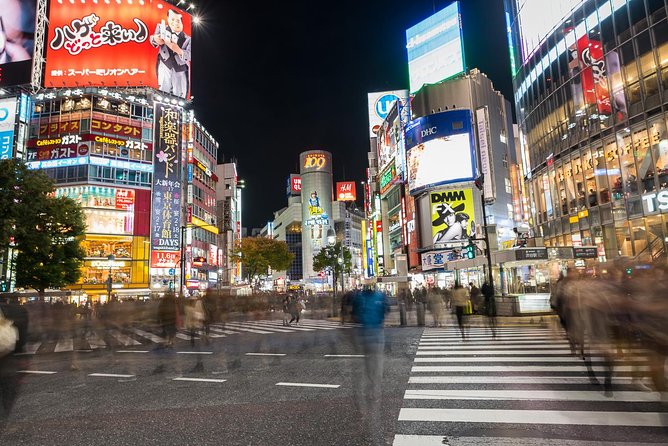
Center-gai is one of the main arteries of Shibuya. It is full of shops, signs, restaurants, and foot traffic. Your guide uses the area to point out places that look ordinary from the street but lead to casual Japanese food.
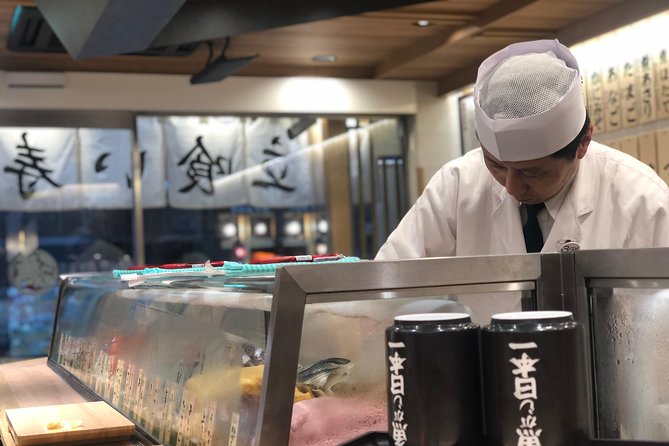
The famous Shibuya Crossing is also part of the route. You may already know it from photographs, but seeing the crossing in person gives the district its proper scale. Hundreds of people move across the intersection at once, while giant screens and signs tower above the streets.
The crossing itself takes only a minute or so on the stated route. That is sensible. The tour is about food and local corners, not standing at the intersection for an hour taking photographs.
You will want comfortable shoes. The tour lasts about three hours, includes several walks, and requires a moderate level of physical fitness. Shibuya has slopes, stairs, crowds, and busy pavements. The guide may slow the pace for the group, as Jane did for one couple, but this is still a walking tour.
Same city, a different table:
- Sushi Making Tokyo Roll and Authentic Japanese Sushi Class
★ 5.0 · 3,971 reviews - Tokyo: Roll and Authentic Sushi Making Class in Asakusa
★ 4.9 · 1,957 reviews - Best of Shinjuku: Izakaya Food Tour (4 Stops, 14+ Tastings)
★ 5.0 · 1,863 reviews - Tokyo: Sushi Making Class in a Happi Coat near a Famous Spot
★ 4.9 · 1,377 reviews
What you may eat at the five food stops
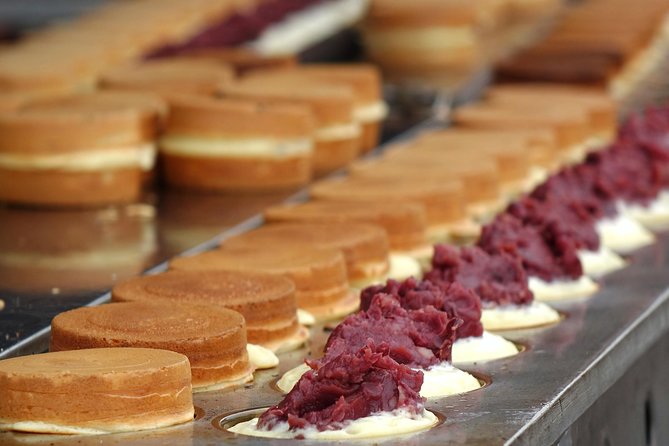
The food is the reason to book, and the range is broad. Menus can change, but the experience may include several styles of Japanese cooking rather than five versions of the same snack.
Sushi and seafood
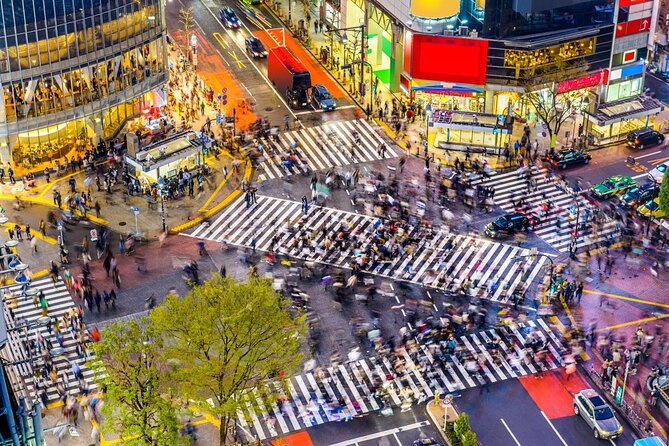
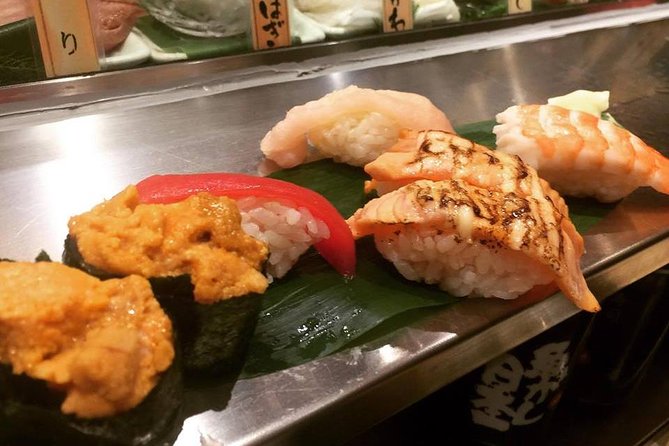
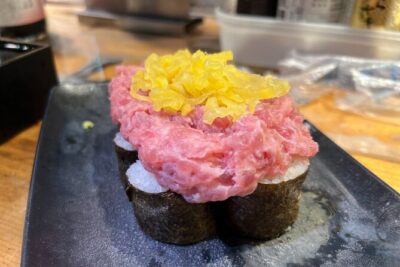
Different kinds of sushi may appear during the tour. One tasting included eight pieces of nigiri, while another food-focused evening was praised for very fresh sushi.
This is a useful way to try sushi in a group setting because the guide can explain what you are eating and how the stop fits into Japanese food culture. Still, do not assume the exact number of pieces or the same restaurant on every departure. Restaurant schedules and substitutions can change the menu.
Ramen
Ramen has been one of the most praised stops. The broth can make a big impression, and a guide may show you how to season it or how to approach the meal.
Ramen is also filling. If it appears early or midway through the route, pace yourself. The tour can include more food afterward, and some people finish with far more than they expected.
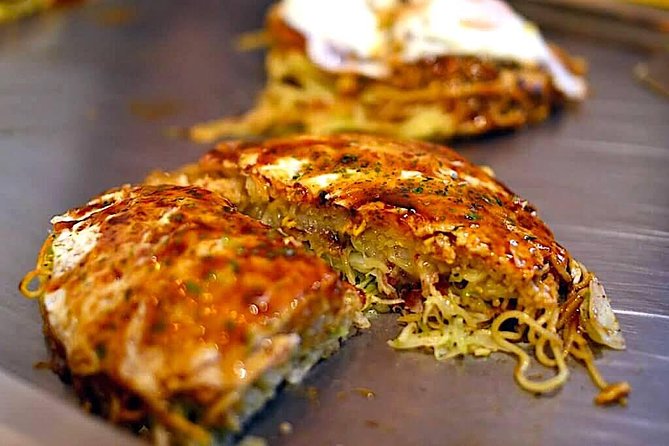
Hiroshima-style okonomiyaki
Okonomiyaki is a savory Japanese dish cooked with layers of ingredients. The Hiroshima style is a regional variation, so this stop gives you more than a generic introduction to Japanese food.
The food is often served in casual settings, which fits the purpose of the tour. You are not being taken only to polished dining rooms. You are seeing how different dishes fit into everyday eating in Japan.
Yakitori and other small dishes
Wagyu beef yakitori may be included, along with chicken wings, gyoza, cucumber, or other small dishes. Children receive chicken skewers instead of beef.
This is where the tour can become very filling. One menu described included ramen, sushi, a vegetable and egg dish with bacon, chicken wings, gyoza, and sliced cucumber. That is a substantial amount of food, but the exact selection is not guaranteed.
If you do not eat pork, tell the provider in advance. Saika was able to arrange non-pork options for one couple. Vegan and vegetarian options are also supported, but you should communicate your restrictions before the tour rather than waiting until you reach a restaurant.
Dessert and the department-store food hall
Dessert is included, giving the meal a proper finish. The tour also visits the Tokyu Food Show, a basement food hall where you can see the polished side of Japanese food shopping.
A depachika, or underground department-store food hall, is worth seeing even if you are not hungry. Displays can include prepared meals, sweets, seafood, boxed food, and carefully presented gift items. It is a good contrast to the small neighborhood eateries earlier in the walk.
The official ending point is at the Tokyu Department Store basement level under the station, near the Tokyu Food Show. That location is convenient for continuing your evening, but remember that hotel drop-off is not included.
The side streets, Shibuya 109, and Nonbei Yokocho
The route includes Shibuya 109 and Mega Don Quijote, two recognizable parts of the neighborhood. These are brief orientation points rather than long shopping visits.
Mega Don Quijote is useful context for understanding Tokyo’s all-hours shopping culture. It is not a food tasting by itself, but it helps show how Japanese retail combines snacks, household goods, cosmetics, souvenirs, and everyday necessities under one roof.
Nonbei Yokocho gives you a look at a much smaller scale of Shibuya. The name is associated with a narrow alley atmosphere and compact drinking spots. The tour may pass through or near the area as it moves between food stops.
This contrast is one of the tour’s best features. You see giant department stores and bright commercial streets, then turn into tighter lanes where the city feels more intimate. The guide is useful here because many restaurants are above street level or tucked behind unremarkable entrances.
How the guides shape the evening
The guide can make or break a food tour. The strongest feedback has centered on guides who explain food clearly, keep the group moving, and share useful advice for the rest of a Tokyo visit.
Jacob has been praised for his Japanese language ability, local knowledge, and restaurant suggestions. Alex has helped people find a good view of Shibuya Crossing and offered dinner recommendations that worked well later in the trip. Melissa brought energy and warmth to the food and sightseeing portions.
Saika has been especially helpful with dietary needs, while Sandra has handled family groups thoughtfully, including restroom stops for children. Jane has adjusted the walking pace for slower members of the group.
Those details matter more than a memorized speech. A good guide watches the group, explains unfamiliar dishes, and helps you feel comfortable ordering. Guide assignments can change, so you cannot count on a particular person unless the provider confirms it.
The maximum group size is 10. That is small enough for conversation and questions, though the experience may feel less private if the group fills completely.
Is $217 a fair price?
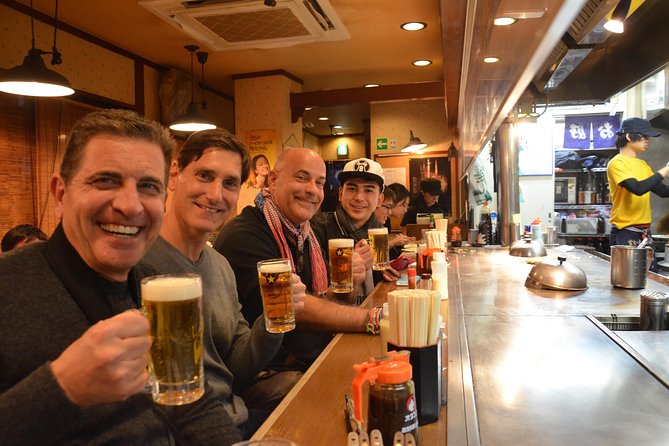
At $217 per person, this is an expensive food walk. The price includes a local guide, five food stops, dessert, and one drink. It does not include hotel transportation, extra food, extra drinks, or train and taxi costs.
The value depends on what you want. If you would happily spend an evening finding restaurants, decoding menus, and locating side-street venues yourself, you may decide the price is too high. One less-positive experience felt that the food and guiding did not justify the cost, especially when the meal felt ordinary.
If you value convenience and cultural explanation, the calculation looks better. You are paying for access to several places in one evening, help with ordering, a fixed tasting plan, and a guide who can explain what you are seeing. You also avoid losing time to restaurants that are full, difficult to locate, or aimed mainly at visitors.
Food portions appear generous, which helps the value. Several people finished completely full, and one person specifically advised arriving very hungry. Still, generous quantity is not the same as high-end quality. This is a local-style tasting route, not a luxury dining experience.
Who should book this experience?
I would choose this tour for a first evening in Tokyo, especially if you want an easy introduction to Shibuya and Japanese food. It is also a good fit for families with older children, couples who want structure, and solo visitors who prefer company at small restaurants.
It suits curious eaters who want variety. You may try sushi, ramen, okonomiyaki, skewers, dumplings, dessert, and food-hall specialties in one outing.
I would be more cautious if you are a strict food specialist expecting famous restaurants or a carefully fixed menu. The stops can change, and some meals may feel average rather than exceptional. I would also think twice if $217 is a major part of your food budget.
The tour has free cancellation up to 24 hours before the start time. It requires good weather and a minimum number of people, so a weather or minimum-group cancellation can result in another date or a full refund. Changes made within 24 hours are not accepted.
Final call: book it for guidance, not just dinner
Book the Best of Shibuya Food Tour if you want a social, guided evening that combines food with local context. The strongest reasons are the small group, generous amount of food, side streets, and guides who can help with ordering and later restaurant choices.
Skip it if you mainly want the cheapest way to eat in Shibuya. You can spend much less on individual meals, and the exact quality of the stops may vary.
My practical advice is simple: book it early if the timing works, arrive at Hachiko well before 4:00 pm, communicate dietary needs, and eat only a light snack beforehand. You will see the famous Shibuya, but the real value is in the turns away from it.
FAQ
How long does the Best of Shibuya Food Tour last?
The tour lasts approximately three hours.
What time does the tour start?
The listed start time is 4:00 pm.
Where does the tour meet?
The meeting point is in front of the wall mural of Hachiko near the Hachiko Exit of Shibuya Station, at 2 Chome-1 Dogenzaka, Shibuya, Tokyo.
Where does the tour finish?
The tour finishes at the Tokyu Department Store basement level under the station, near the Tokyu Food Show.
How many people can join the tour?
The group has a maximum of 10 people.
What food is included?
Five food stops, dessert, and one drink are included. Possible dishes include sushi, ramen, Hiroshima-style okonomiyaki, yakitori, and other Japanese foods.
Are extra drinks included?
No. One drink is included, but additional food and drinks are not included.
Is the tour suitable for children?
Yes. The tour is family-friendly, but children must be accompanied by an adult. Children receive chicken skewers instead of beef.
Can the tour accommodate dietary restrictions?
Vegan and vegetarian options are available, and non-pork options may be arranged. You should communicate dietary restrictions in advance.
What happens if the weather is poor?
The experience requires good weather. If it is canceled because of weather, you will be offered another date or a full refund.
Just added in Tokyo
- Tokyo: Allstar Food Tour★ 4.7 · 29 reviews
- Tokyo: West-Side Cycling and Food Tour with Guide★ 5.0 · 37 reviews
- Tokyo: Togoshi Ginza Street Food Tour★ 5.0 · 34 reviews
- Tokyo Tsukiji Food & Culture Private Tour Licensed Guide★ 4.9 · 28 reviews
- Tokyo: Wagyu and Sushi Gastronomic Journey★ 4.3 · 24 reviews
- Tokyo: Sushi and Ramen Cooking Class with Sake Pairing Set★ 5.0 · 81 reviews
- Tokyo: Sushi Making Class★ 4.9 · 390 reviews
- Tokyo: Shibuya Food Tour (13 dishes and 4 Eateries)★ 5.0 · 178 reviews
Tokyo Food Tours, compared.
Shinjuku Food Tour (13 Dishes at 4 Local Eateries)
Read our review →
Sushi Making Tokyo Roll and Authentic Japanese Sushi Class
Read our review →
Tokyo Tsukiji Fish Market Food and Culture Walking Tour
Read our review →
Shinjuku Food Tour (15 Dishes and 4 Eateries)
Read our review →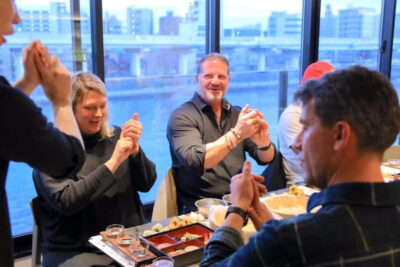
Roll and Authentic Sushi Making Class in Asakusa
Read our review →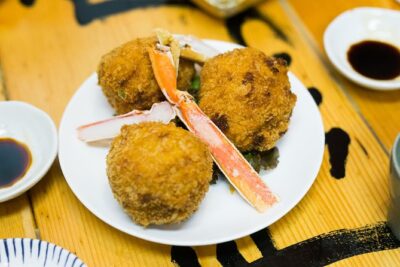
Best of Shinjuku: Izakaya Food Tour (4 Stops, 14+ Tastings)
Read our review →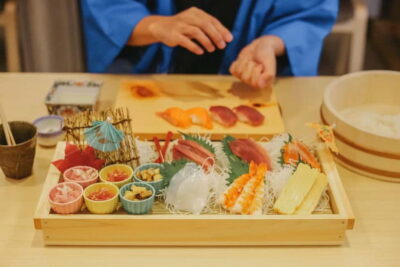
Sushi Making Class in a Happi Coat near a Famous Spot
Read our review →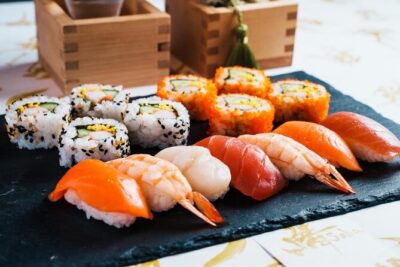
Sushi Making Tokyo! Popular Maki Sushi & Japanese Sushi(+Recipe!)
Read our review →Browse the lists this tour appears in