
REVIEW · OSAKA FOOD TOURS
Osaka: Local Foodie Tour in Dotonbori and Shinsekai
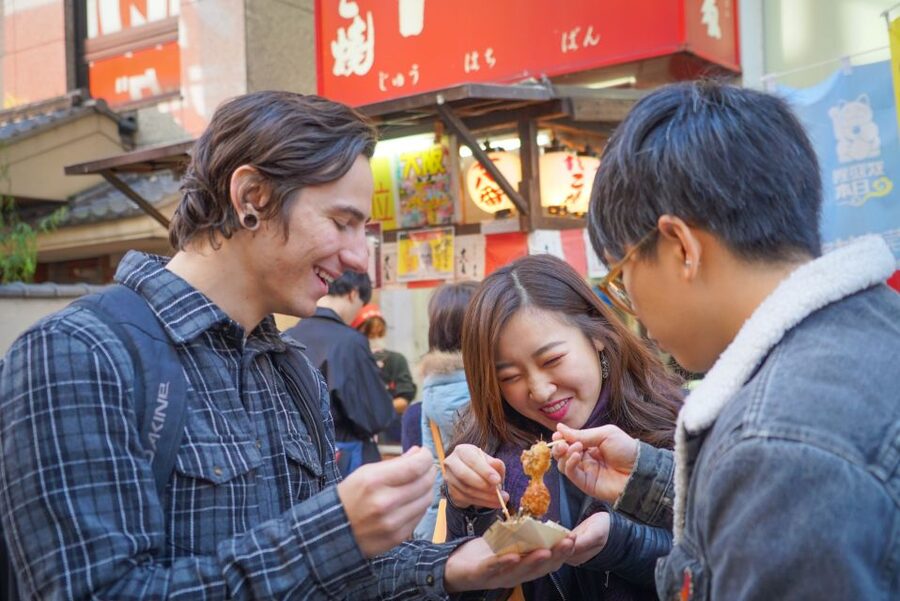
Osaka serves dinner with a side of history. This three-hour food walk links old Shinsekai with neon-lit Dotonbori, giving you six kushikatsu pieces, okonomiyaki, takoyaki, and three drinks along the way. I like the mix of eating and walking, and I like that guides such as Mich, Yuma, Tea, Taku, and Alice add local stories rather than simply pointing out restaurants. The main drawback is that this is not a good fit for vegans, people with gluten intolerance, or anyone needing last-minute dietary changes.
I also like the pace. You get time in restaurants, but you are not parked at one table for three hours. You pass a narrow historic food alley, visit a small temple, and move from Shinsekai to Dotonbori by train. The ¥190 transport fare is extra, and the tour begins promptly, so arrive early at the FamilyMart outside Dobutsuen-mae Station Exit 1.
Key points at a glance
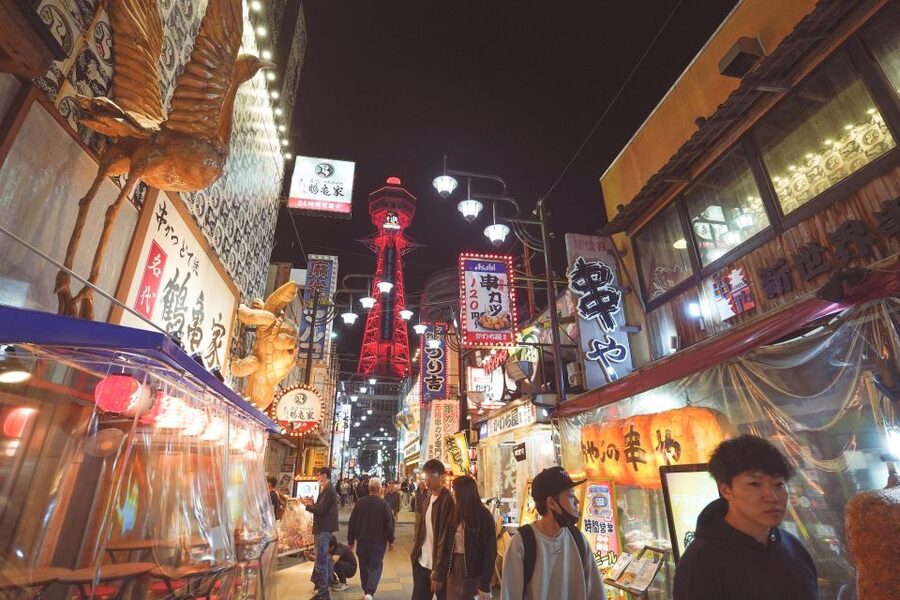
- Shinsekai opens the evening: Walk Jan-Jan Yokocho, see the Billiken statue, and look up at Tsutenkaku Tower before eating kushikatsu.
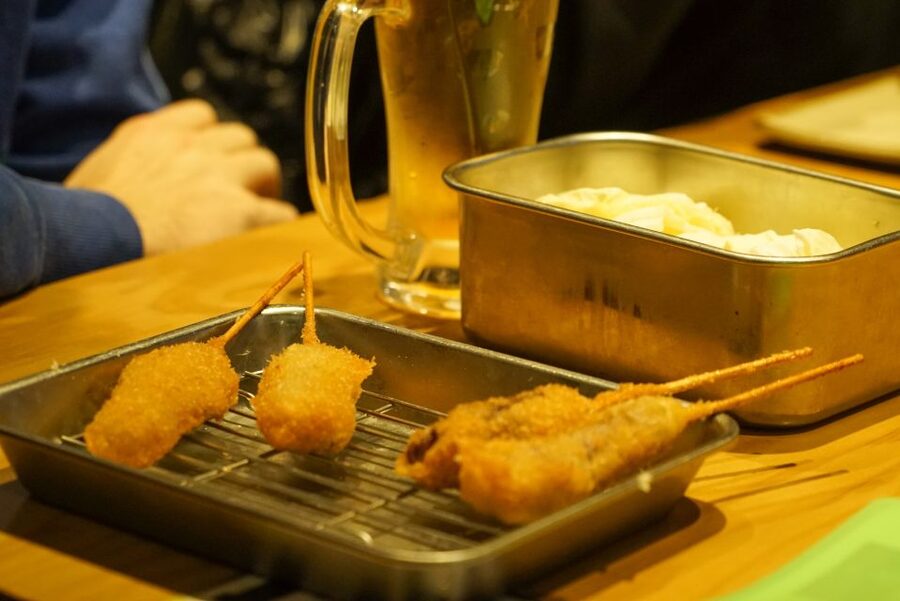
- The food is substantial: Six deep-fried skewers, one okonomiyaki, a box of takoyaki, and three drinks can easily replace dinner.
- A 1.2-meter alley adds history: The decorated passage recreates the feel of central Osaka from more than 80 years ago.
- Dotonbori brings hands-on cooking: At the okonomiyaki stop, you may cook your own savory pancake at the table.
- Small groups make a difference: Private and small-group options allow room for questions and a more relaxed pace.
- Dietary planning matters: Vegetarian arrangements must be requested ahead, and even vegetarian kushikatsu uses pork-broth dashi.
Starting in Shinsekai beneath Tsutenkaku Tower
Meet your English-speaking guide in front of FamilyMart Sanno Dobutsuen-mae, directly outside Exit 1 of Dobutsuen-mae Station. Look for the guide holding a MagicalTrip sign. This is a simple meeting point, but the station area can be busy, so I would arrive at least 10 minutes early.
Shinsekai gives you a very different first impression of Osaka than Dotonbori. The district has a retro feel, with old arcades, shuttered shopfronts, bright signs, and Tsutenkaku Tower watching over it all. The name means New World, but parts of the area feel wonderfully old-fashioned.
Your guide leads you through Jan-Jan Yokocho, an alley known for inexpensive local food and a strong neighborhood character. You also pass the Billiken statue, a familiar Osaka figure with a quirky smile and raised feet. The walk is not just a route to the first restaurant. It helps you understand why Osaka food culture feels casual, generous, and closely tied to ordinary streets.
This is one of the tour’s strongest features. Guides such as Shinya, Yuma, Peco, and Taku have been praised for explaining local customs, nearby sights, and the transport system. That kind of help is especially useful on your first evening, when Osaka’s signs, stations, and restaurant choices can feel like a lot to sort out.
A few more food tours in Osaka worth a look
- Osaka: Shinsekai Food Tour with 13-15 Dishes at 5 Eateries
★ 4.8 · 2,204 reviews - Osaka Food Tour: 13 Dishes at 5 Local Eateries
★ 5.0 · 2,149 reviews - Hungry Osaka Street Food Tour:15 Tastings & 3 Drinks with a Local
★ 5.0 · 1,727 reviews
Kushikatsu in its home neighborhood
The first major food stop is kushikatsu, a Shinsekai specialty made from ingredients placed on skewers, coated, and deep-fried. You receive six pieces, enough to get a proper taste rather than a single sample.
The appeal is partly the setting. Eating kushikatsu in Shinsekai connects the dish to the district where it has long been part of the local food scene. The meal is informal and filling, with a crisp coating and a mix of flavors from the different skewers.
You also receive one of the tour’s three included drinks at the stops, with alcoholic and non-alcoholic choices available. That flexibility works well for a mixed group. You can have a traditional drink, beer, or a soft drink without splitting off from everyone else.
Come hungry. Several people who enjoyed this experience found the portions larger than expected, especially once the okonomiyaki and takoyaki arrived later. This is not a light tasting walk where you nibble one bite at each stop. It is closer to a moving dinner with cultural stops between courses.
A practical warning matters here. Even the vegetarian kushikatsu option uses dashi made with pork broth. If you cannot eat dashi, tell the operator in advance so other vegetarian dishes can be prepared. Same-day requests cannot be accommodated, and allergy-free meals are not guaranteed because the food comes from kitchens the tour company does not operate.
A narrow alley that feels like an old Osaka postcard
After Shinsekai, the route heads toward Dotonbori and includes an unusual passage only about 1.2 meters wide. Artwork on the walls gives the alley a museum-like feel, presenting Osaka as it looked more than 80 years ago.
This small stop works because it changes the tone of the evening. One moment you are in a food district under a famous tower. The next, you are walking through a narrow corridor built around old Osaka scenes. It takes only a short time, but it gives you a clear sense of how much urban history can survive in a tiny space.
The alley is also a good example of why a guide helps. You could pass it without realizing its importance, especially while following the crowds and signs around Namba. Your guide explains what you are seeing and connects the artwork to the older center of Osaka.
Do not expect a large museum or a long historical lecture. This is a compact visual stop. Its value comes from the contrast with the huge signs and packed streets nearby.
A quiet temple between Namba’s bright signs
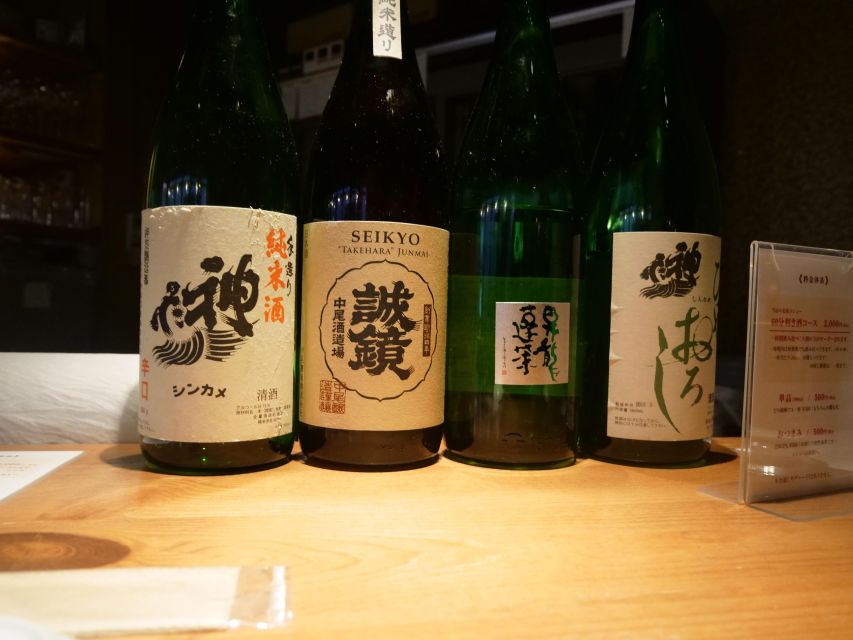
The route then pauses at a small temple tucked among Namba’s shopping streets and neon signs. The change is striking. Osaka can feel loud and fast, but a temple courtyard offers a short break and a chance to learn basic etiquette for temples and shrines.
One visitor especially enjoyed learning how to behave at these religious sites, and that is useful information to receive early in your Japan trip. Your guide can explain customs in a straightforward way, so you do not have to guess when to bow, where to stand, or how to approach the site respectfully.
This stop is not designed as a major temple visit. It is a short cultural pause in the middle of an evening focused on food. I like that balance. You get more than restaurant hopping, but the tour does not pretend to be a full religious or architectural tour.
The walk between stops is also part of the experience. Several guides, including Tea and Taku, have helped visitors understand the area and find other restaurants for later. If you are staying in Osaka for a few nights, keep a note of the places and streets your guide recommends.
Same city, a different table:
- Sushi Making Osaka Roll and Authentic Japanese Sushi Class
★ 5.0 · 1,220 reviews - Osaka Local Foodie Walking Tour in Dotonbori and Shinsekai
★ 5.0 · 985 reviews - Hungry Osaka Street Food Tour: 15 Dishes & 3 Drinks
★ 4.9 · 694 reviews - Kuromon Market Food Walking Tour in Osaka (6 stops, 6 tastes)
★ 5.0 · 550 reviews
Okonomiyaki becomes part of the entertainment
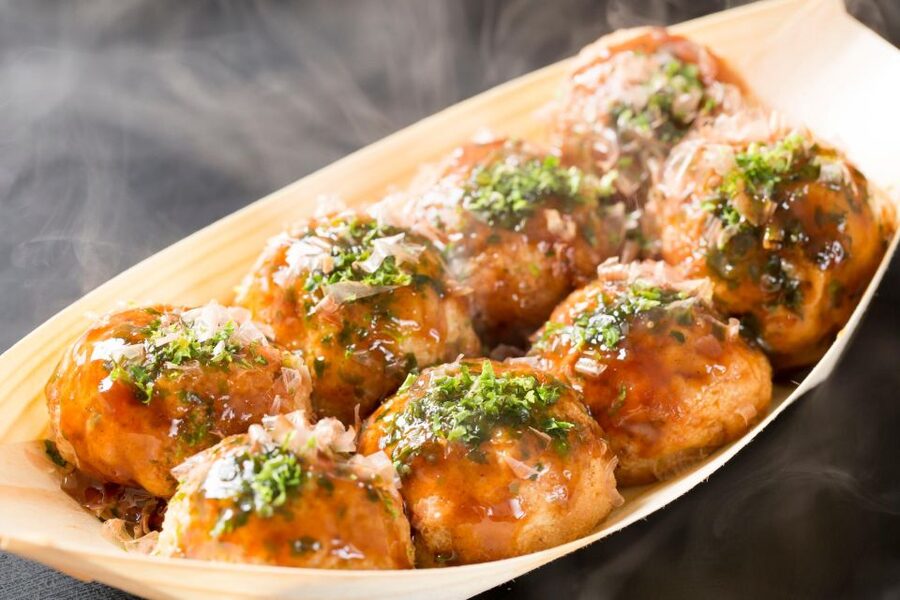
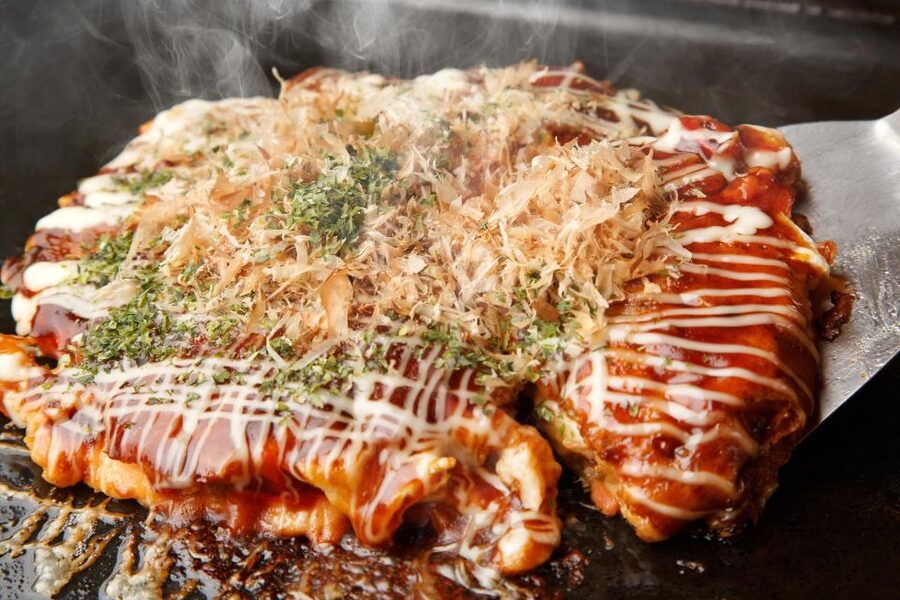
In Dotonbori, the food turns more interactive with okonomiyaki. This savory Japanese pancake is made with a batter and other ingredients, then cooked on a hot plate. Depending on the restaurant setup and your guide’s arrangement, you may cook your own at the table, which many people consider a highlight.
I can see why. Cooking the dish gives you a role in the meal, and it creates an easy moment for conversation. You are not simply waiting for food to arrive. You are watching it take shape and learning how the dish fits into Osaka’s food culture.
The included portion is one piece of okonomiyaki. Along with the kushikatsu, takoyaki, and drinks, that is plenty for most people. You can buy extra food and drinks if you want, but do not assume you will need to order more.
Dotonbori is often called the nation’s kitchen, a nickname linked to Osaka’s merchant past and its importance in the rice trade during the Edo period. Today, the area is famous for giant signs, restaurants, shopping streets, and constant activity. Your guide helps you move through it without wasting time deciding where to turn.
The tradeoff is noise and crowds. Dotonbori is not a calm setting, especially after dark. If you want a quiet private meal, this is not the right dining plan. If you want to see the famous food center while someone else handles the route, it works very well.
Takoyaki closes the meal with Osaka’s signature bite
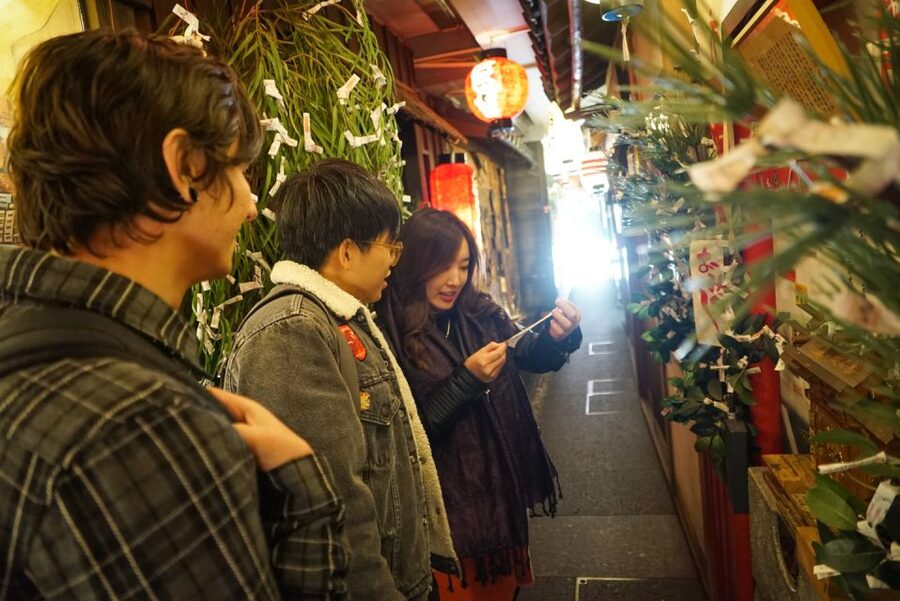
The final food stop focuses on takoyaki, the hot octopus-filled balls associated with Osaka. You receive one box, giving you a proper taste of a dish that is easy to spot all over the city but harder to judge on your own.
Takoyaki is usually served hot, so be careful with the first bite. The texture can be soft inside and crisp outside, and the heat lingers. Your guide can explain how locals eat it and how it differs from the other dishes you have already tried.
By this point, you may be very full. That is not a complaint, but it is worth planning around. The tour includes enough food to function as your evening meal, and you may want a lighter lunch beforehand.
The three included drinks also help make the food stops feel complete. Alcohol and non-alcoholic options are available, but additional drinks cost extra. If you are budgeting closely, keep that in mind before ordering another round.
What the guides add to the evening
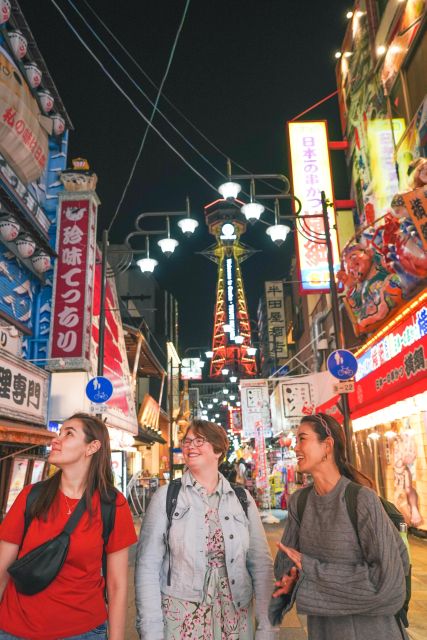
The guide is a major part of the value here. The strongest experiences in this format depend less on formal sightseeing and more on having someone who can explain what you are eating, keep the group moving, and make the city feel manageable.
The guide team includes people such as Mich, Yuma, Tea, Taku, Shinya, Alice, Yoshi, Peco, Eri, Yumi, and Jimmy. The feedback about these guides repeatedly points to friendly conversation, clear English, local food advice, and help with transport or nearby restaurants.
Some groups have ended up with only a family or a pair of people, creating an almost private experience. Other departures have had around seven people. The advertised format allows private or small groups, but the exact group size can vary.
Families may find the tour especially easy because the guides can keep children involved and make the food less intimidating. Teenagers also have plenty to enjoy, from the colorful streets to the hands-on okonomiyaki. Solo visitors can benefit from the social side of eating in several places without having to face unfamiliar restaurants alone.
Is $108 good value for three hours?
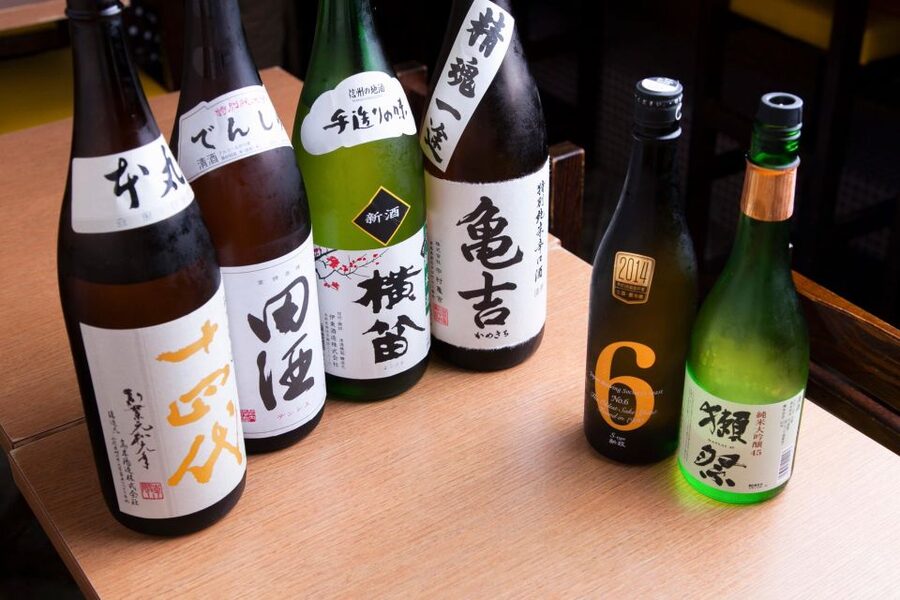
At $108 per person, this is not the cheapest way to eat in Osaka. You can buy kushikatsu, okonomiyaki, and takoyaki independently for less if you already know where to go and feel comfortable ordering.
The price makes more sense when you count what you are paying to avoid. You receive six kushikatsu pieces, one okonomiyaki, one box of takoyaki, and three drinks. You also get an English-speaking guide, a planned route through two well-known districts, cultural explanations, and help navigating the move from Shinsekai to Dotonbori.
The transport fare of ¥190 from Shinsekai to Dotonbori is not included. That is a small extra cost, but it should be listed in your budget. Additional food and drinks are also separate.
For a first night in Osaka, I think the value is strongest. You learn what the local dishes are, see two important evening districts, and receive ideas for later meals. If you already know Osaka well, speak Japanese, and enjoy choosing your own restaurants, the added cost may be harder to justify.
Timing, food limits, and practical details
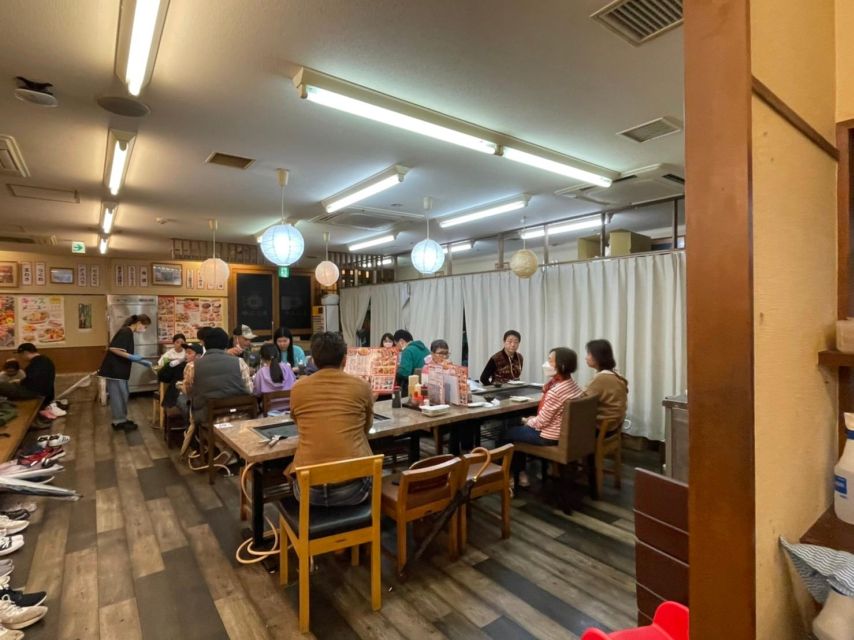
The tour lasts three hours, with starting times based on availability. Because it includes several eating stops and a transfer between districts, the schedule matters. The tour starts on time, and arriving late can mean missing the group without a refund or rescheduling.
Vegetarian arrangements must be selected while booking or requested at least one day before the tour. Vegans and people with gluten intolerance should not book this experience. The operator cannot guarantee allergy-free food or provide every requested substitution.
Free cancellation is available up to 24 hours before the start, and you can reserve now and pay later. Those policies offer useful flexibility, but they do not change the strict late-arrival rule.
Wear comfortable shoes. You will walk through narrow passages, station areas, food streets, and shopping districts, with periods of standing and sitting. The tour is not described as accessible for every mobility need, so ask the provider before booking if you have specific access concerns.
Who should book this Osaka food walk?
I would recommend it most strongly to first-time visitors who want an easy introduction to Osaka food and nightlife. It is also a good fit for families, couples, solo visitors, and small groups who would rather follow a local guide than research each stop.
Food lovers will appreciate the range, but you do not need to be a serious food expert. The mix of walking, history, temple etiquette, and casual meals gives non-food-focused visitors plenty to enjoy as well.
I would skip it if you need a strict gluten-free or vegan menu, dislike crowded evening districts, or prefer to choose every restaurant yourself. I would also avoid booking it on your arrival day if there is any chance of a delayed train or flight, since the tour cannot wait for late arrivals.
My verdict
Book this tour if you want to eat your way through Osaka without spending your first evening guessing where to go. The best parts are the Shinsekai setting, the generous food, the quiet cultural pauses, and the chance to cook okonomiyaki with a guide who can explain the city around you.
The price is fair for a guided introduction, though it is more than you would spend ordering the same dishes independently. Request dietary arrangements early, bring an appetite, and arrive before the meeting time. For many visitors, this is an efficient and entertaining way to get your Osaka bearings while ending the night with a full stomach.
FAQ
Where does the tour meet?
Meet in front of FamilyMart Sanno Dobutsuen-mae, directly outside Exit 1 of Dobutsuen-mae Station. The guide will hold a sign saying MagicalTrip.
How long does the tour last?
The food walk lasts three hours. Starting times depend on availability.
What food is included?
The tour includes six pieces of kushikatsu, one piece of okonomiyaki, one box of takoyaki, and three drinks.
Are alcoholic drinks included?
Yes. The three included drinks can be alcoholic or non-alcoholic.
Is transportation included?
The ¥190 transportation fare from Shinsekai to Dotonbori is not included.
Can vegans join the tour?
No. The tour is not suitable for vegans.
Can people with gluten intolerance join?
No. The tour is not suitable for people with gluten intolerance.
Can vegetarians be accommodated?
Vegetarian arrangements are possible if requested when booking or at least one day in advance. Vegetarian kushikatsu still uses pork-broth dashi, so tell the operator ahead of time if you cannot consume dashi.
Are allergies guaranteed to be accommodated?
No. You should report allergies at least one day before the tour, but allergy-free meals and all substitutions cannot be guaranteed.
What happens if I arrive late?
The tour starts on time. If you arrive late and miss the group, you cannot join later, receive a refund, or reschedule.
Just added in Osaka
- Hidden Osaka – Yukaku Red Light Tour & Culinary Adventure★ 4.8 · 96 reviews
- Eat Like a Local in Osaka – Private Custom Street Food Tour★ 4.3 · 33 reviews
- Osaka: Sushi Class in Dotonbori★ 4.9 · 160 reviews
- Osaka: Sushi Making in Spacious Studio (SAME-DAY OK!)★ 5.0 · 75 reviews
- Osaka: Gluten-Free Ramen and Gyoza Cooking Class★ 5.0 · 42 reviews
- Osaka: Kuromon Market Food Walking Tour (6 stops, 6 tastes)★ 4.6 · 272 reviews
- Osaka: Roll and Authentic Sushi Making Class in Dotonbori★ 4.9 · 239 reviews
- Osaka: Guided Food Tour with 12 Dishes at 4 Local Eateries★ 4.9 · 90 reviews
Osaka Food Tours, compared.
Shinsekai Food Tour with 13-15 Dishes at 5 Eateries
Read our review →
Osaka Food Tour: 13 Dishes at 5 Local Eateries
Read our review →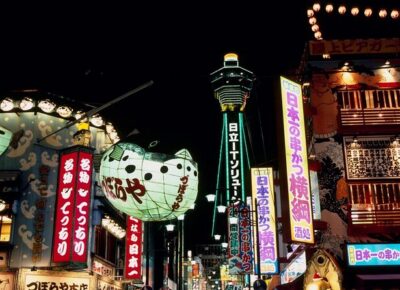
Hungry Osaka Street Food Tour:15 Tastings & 3 Drinks with a Local
Read our review →
Sushi Making Osaka Roll and Authentic Japanese Sushi Class
Read our review →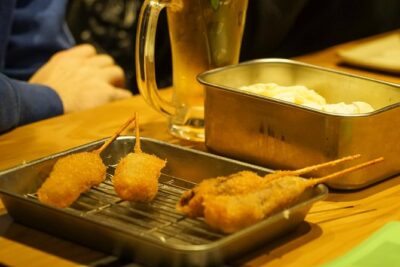
Osaka Local Foodie Walking Tour in Dotonbori and Shinsekai
Read our review →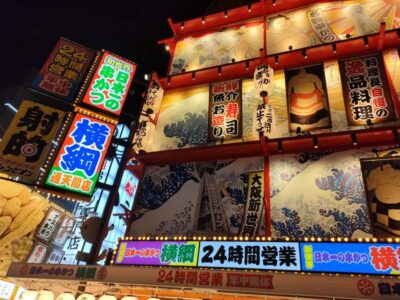
Hungry Osaka Street Food Tour: 15 Dishes & 3 Drinks
Read our review →
Kuromon Market Food Walking Tour in Osaka (6 stops, 6 tastes)
Read our review →
Guided Food Tour with 12 Dishes at 4 Local Eateries
Read our review →Browse the lists this tour appears in