
REVIEW · TOKYO FOOD TOURS
Tokyo: Shinjuku Food Tour (15 Dishes and 4 Eateries)
Come hungry, leave with a better map of Tokyo. This three-hour Shinjuku food tour combines local dishes with an evening walk through Golden Gai, Omoide Yokocho, and Kabukicho. I like the small-group format, which makes crowded streets and tiny dining rooms easier to handle, and I like the broad menu, from sashimi and sake to tonkatsu, yakitori, takoyaki, and regional Okinawan food.
The main consideration is that the dish count can be confusing: the experience title refers to 15 dishes, while the details promise up to 13 dishes at four eateries. Menus also change with season, supply, and restaurant availability. Two stops may involve food from a stall eaten on the street, so this is not four formal restaurant meals.
The best parts of the Shinjuku food walk
- Four different food settings: You visit a stall, an izakaya, a traditional eatery, and a gastrobar rather than eating one large meal in one place.
- A useful first-night introduction: The route brings you through Golden Gai, Omoide Yokocho, and Kabukicho, three very different parts of Shinjuku.
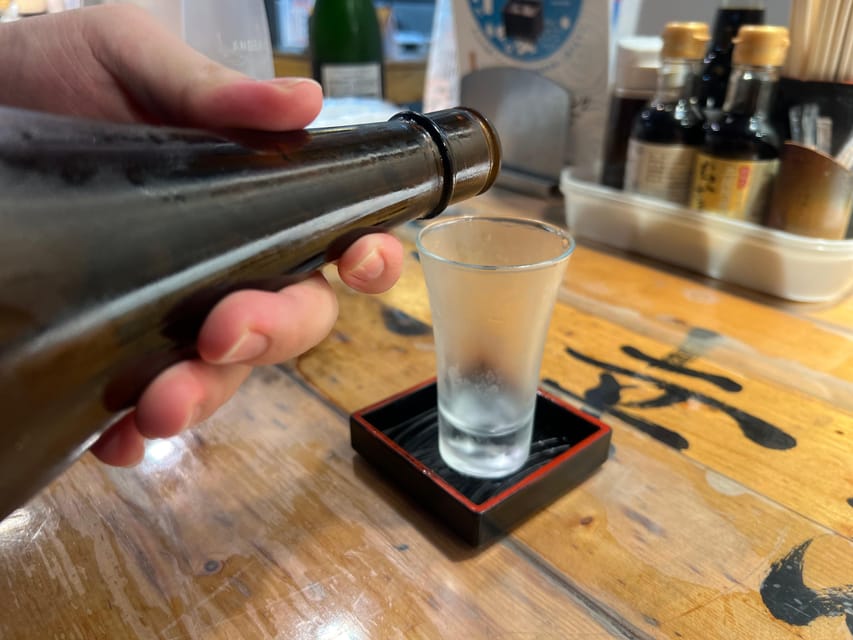
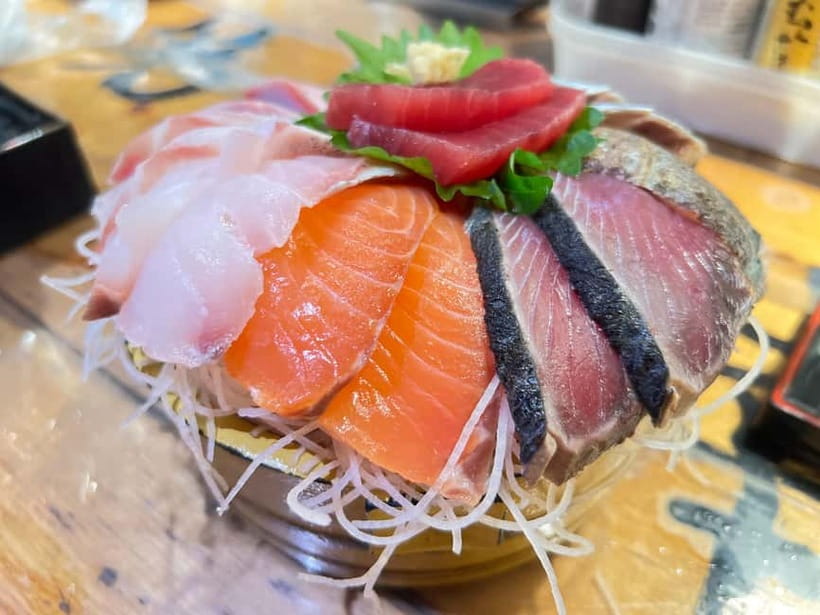
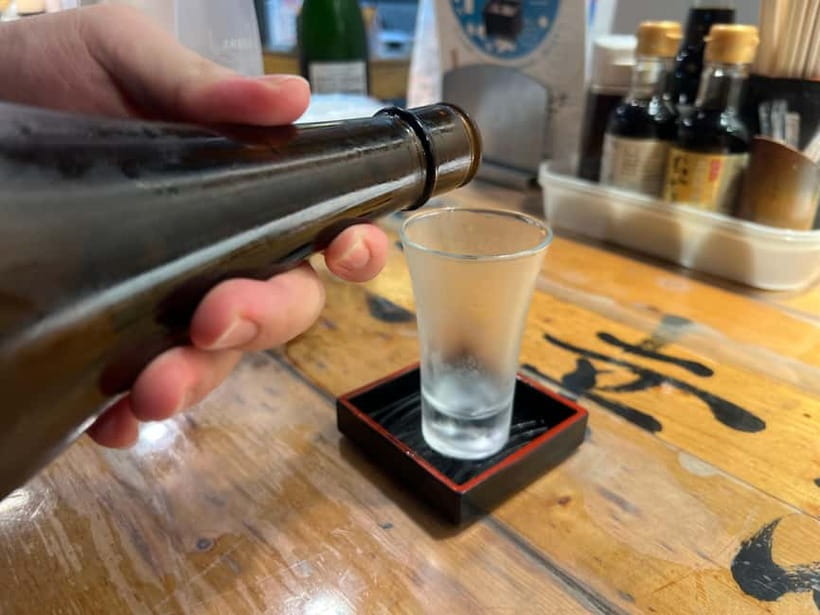
- A wide Japanese menu: Expect possibilities such as sashimi, mackerel, sake, pork cutlet, chicken skewers, takoyaki, tempura tuna, seaweed salad, Okinawan dishes, and taiyaki.
- Guides add cultural context: Guides such as Daichi, Fu, Igor, Hina, Aika, and Sabina have been praised for explaining local customs, food, and Shinjuku landmarks.
- Good value for a substantial evening: At $85, the price includes food at four stops, two drinks, the walking tour, and practical advice for the rest of your stay.
- A few practical limits: Tell the operator about food restrictions before you go, and download WhatsApp because the guide uses it to contact you.
Why this tour works well in Shinjuku
Shinjuku can feel like several cities packed into one district. A vast station, office towers, red-light streets, old drinking lanes, department stores, and tiny local restaurants all sit close together. You can spend an evening wandering happily, or you can spend an hour staring at menus you cannot read.
This tour gives you a useful framework. Instead of treating Shinjuku as one giant entertainment zone, your guide helps you see how its different streets work. You get food, a neighborhood walk, and enough background to return later on your own.
I especially like the way the experience mixes familiar and less obvious dishes. Tonkatsu and yakitori are easy starting points, while Okinawan food, mackerel, tempura tuna, seaweed salad, or a dish you have never considered ordering give the meal some surprise. The guide also handles the ordering process, which is valuable in compact restaurants where space and menus may be limited.
The tour is listed at $85 per person. That is more than you would pay for a casual solo dinner, but the comparison is not quite fair. You are paying for food at four places, two drinks, three hours of guiding, restaurant selection, translation help, and an introduction to a difficult district. If you use the guide’s advice for the rest of your Tokyo visit, the value improves.
I would not book it mainly to save money on dinner. I would book it to make one evening easy, social, and varied.
A few more food tours in Tokyo worth a look
- Tokyo: Shinjuku Food Tour (13 Dishes at 4 Local Eateries)
★ 5.0 · 6,603 reviews - Tokyo Tsukiji Fish Market Food and Culture Walking Tour
★ 5.0 · 3,184 reviews - Best of Shinjuku: Izakaya Food Tour (4 Stops, 14+ Tastings)
★ 5.0 · 1,863 reviews
Meeting near Shinjuku Station without getting lost
The meeting point is outside the blue AOKI sign beside Starbucks Nishiguchi, on the west side of Shinjuku Station. This is practical once you are in the right area, but Shinjuku Station is famously large and confusing, so do not leave the meeting point until the last minute.
The directions suggest using Yodobashi Camera as a nearby landmark if you need help finding the area. I recommend checking the map before leaving your hotel and allowing extra time to get out of the station. Your guide contacts you through WhatsApp, so download it before the tour and make sure you can receive messages.
The tour returns to the α 107 Building after about three hours. Starting and finishing in the same general area makes it easy to continue into Shinjuku nightlife or return to your hotel.
Golden Gai: tiny lanes and a look at old Shinjuku
Golden Gai is scheduled as the first major walking section, and it gives you an immediate sense of how tightly packed Shinjuku can be. The area is known for narrow lanes and very small bars, often packed close together. Your guide provides context about the neighborhood rather than simply pointing at neon signs.
This is a good place to ask questions about Japanese drinking culture and the role of small bars in Tokyo nightlife. The guide can also explain the difference between places aimed at regular customers and spots that welcome newcomers.
Golden Gai is more atmospheric than spacious. You will be walking through narrow passages, and the area may feel crowded. It is not the place for a broad sightseeing route or quiet conversation at every moment. Still, as an opening chapter to the tour, it works well because you quickly see a side of Tokyo that is easy to miss from the main roads.
The food stops are the real focus, so do not expect a long visit inside every bar or lane. Think of Golden Gai as a guided orientation, followed by eating.
Omoide Yokocho: old-style streets and informal food
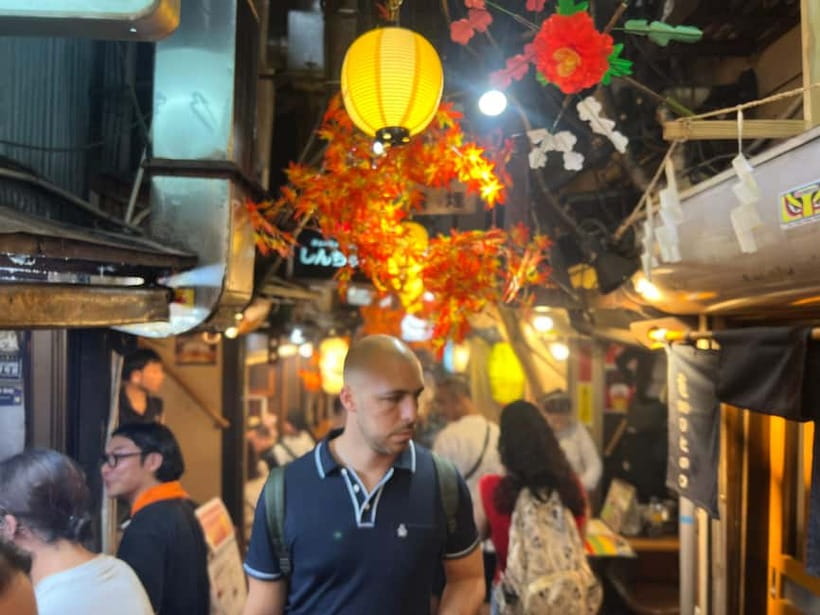
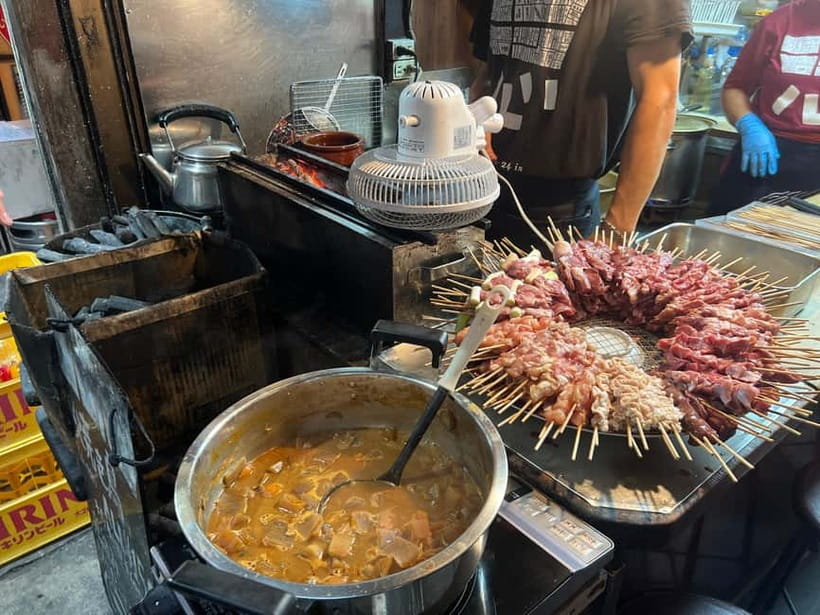
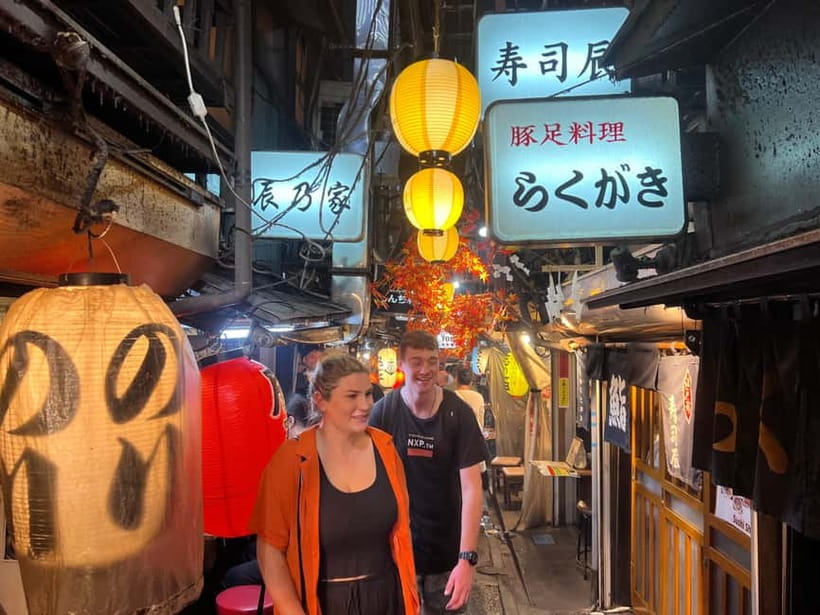
Omoide Yokocho, sometimes translated as Memory Lane, offers a different mood. Its narrow passageways and small food businesses give you a glimpse of an older, more informal Shinjuku. Several people have singled out the atmosphere of this lane, even when it was not one of the main eating stops.
This section is useful because your guide can explain what you are seeing while you walk. You may learn why certain foods are associated with casual drinking streets, how yakitori fits into after-work dining, and how older lanes survived beside modern Shinjuku.
One important detail is that food from two eateries may be taken outside and eaten on the street. That can feel wonderfully casual, but it also means the experience is not four seated restaurant visits. If you want table service at every stop, this format may disappoint you.
I see the street eating as part of the appeal. It keeps the evening moving and lets you experience Shinjuku in the same practical way many people enjoy its small food lanes. Just wear comfortable shoes and expect to stand or walk between tastings.
Same city, a different table:
- Sushi Making Tokyo Roll and Authentic Japanese Sushi Class
★ 5.0 · 3,971 reviews - Tokyo: Roll and Authentic Sushi Making Class in Asakusa
★ 4.9 · 1,957 reviews - Tokyo: Sushi Making Class in a Happi Coat near a Famous Spot
★ 4.9 · 1,377 reviews - Sushi Making Tokyo! Popular Maki Sushi & Japanese Sushi(+Recipe!)
★ 5.0 · 1,314 reviews
Kabukicho after dark: food, signs, and local orientation
The final walking area is Kabukicho, Shinjuku’s famous nightlife district. The tour presents it as a place to understand, not simply a backdrop for photos. Your guide can point out the difference between ordinary restaurants, bars, entertainment venues, and streets that require a little more care from first-time visitors.
This is where the food tour becomes more useful than a simple restaurant crawl. You learn how to read the neighborhood and where the busy streets lead. Guides such as Fu, Igor, and Daichi have been praised for mixing local facts with humor and practical advice, while guides such as Hina and Aika have been praised for being attentive and welcoming.
Kabukicho is energetic, noisy, and crowded. If you prefer calm streets and long meals, the pace may feel brisk. If you want a first look at Tokyo nightlife without figuring out the district alone, the guided walk is a strong feature.
What you may eat across the four stops
The exact menu changes, so you should treat the following as likely examples rather than a fixed promise. The tour details mention up to 13 Japanese dishes, while the title refers to 15. Ask your guide at the start what is planned that evening.
Fresh fish and a drink to begin
Sashimi and mackerel are among the possible first dishes, along with Japanese sake. Fresh fish gives the meal a clean, savory start, and the sake provides a simple introduction to a drink that can seem confusing when faced with a long menu.
One particularly praised dish has been mackerel, which makes sense as a useful comparison with more familiar sashimi. Mackerel has a stronger flavor than many first-time diners expect, so this is a good moment to ask your guide about preparation and regional preferences.
The tour includes two complimentary drinks, alcoholic and non-alcoholic options. If you do not drink alcohol, you can still take part without losing the value of the experience.
Tonkatsu and the comfort-food course
Tonkatsu is a breaded pork cutlet, usually served as a hearty, satisfying dish. It is one of the easiest foods on this tour to recommend to cautious eaters because it is recognizable, filling, and still distinctly Japanese in style.
One stop may feature a long-running tonkatsu restaurant in central Shinjuku. The precise restaurant can vary, but the appeal is clear: you get to try a classic comfort food in a place selected for its local reputation rather than simply choosing the nearest chain.
Several food highlights focus on the pork, and the quantity can be generous. I would avoid eating a large meal before the tour. Even if each serving is not full-sized, repeated tastings add up quickly.
Yakitori, takoyaki, and casual bites
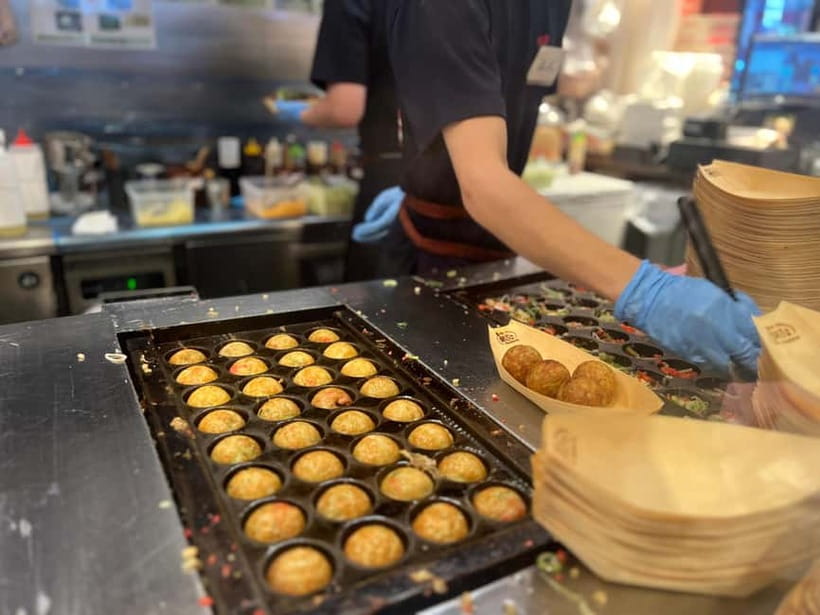
Yakitori brings grilled chicken skewers into the meal, while takoyaki offers a hot, savory snack associated with casual Japanese eating. These dishes suit the street sections of the tour because they are easy to share and connect naturally with Shinjuku’s late-night food culture.
Takoyaki can be very hot inside, so take your time. It is a small practical point, but rushing a mouthful while walking is a poor way to remember Tokyo.
The guide can also help you understand what you are eating and how locals approach it. That small explanation matters when a dish includes an unfamiliar texture or condiment.
Okinawan dishes and a sweet finish
Some tour groups have visited an Okinawan restaurant, giving the menu a regional turn rather than limiting it to standard Tokyo fare. This is one of the more valuable parts of the experience because Japan’s food culture is not one single menu. Okinawan cooking has its own ingredients and traditions, and you get a taste of that difference within the same evening.
A sweet final stop may include taiyaki, a fish-shaped cake filled with something sweet or savory. Families have found this part especially approachable, and children can enjoy it even after trying more unfamiliar dishes.
The final selection depends on supply and restaurant availability. You should arrive curious, not attached to one exact dish.
The guides make or break the evening
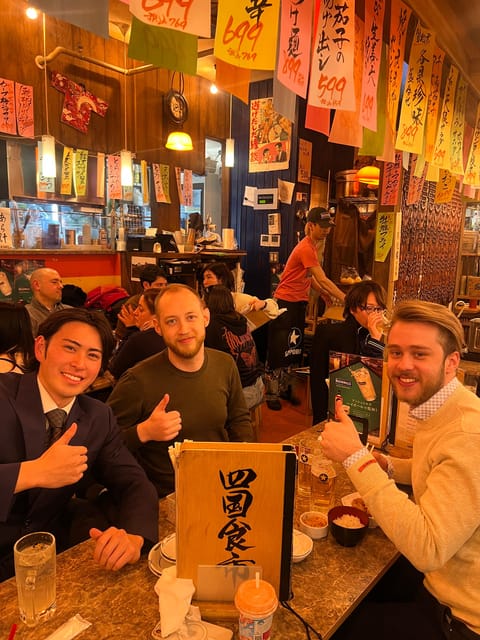
Food tours depend heavily on the person leading them. The most praised guides on this experience, including Daichi, Fu, Igor, Hina, Aika, Sabina, Lloyd, and others, are described as friendly, clear, entertaining, and good at explaining local customs.
That range of names also tells you something practical: you may not receive the same guide shown in a particular description or photograph. The company uses multiple English-speaking guides, and the quality can vary slightly from person to person. The strongest guides appear to add stories about Shinjuku, answer questions, keep the group together, and explain why each stop was chosen.
Small groups are a real advantage here. Shinjuku’s streets are crowded, and tiny eateries do not suit a large crowd. A smaller group makes it easier to hear the guide, share dishes, and ask for help with food restrictions.
Tell the operator about allergies, religious restrictions, or other dietary needs before the tour. The information provided does not promise that every restriction can be accommodated, so you should get a clear answer before booking if your needs are serious.
How much walking and eating should you expect?
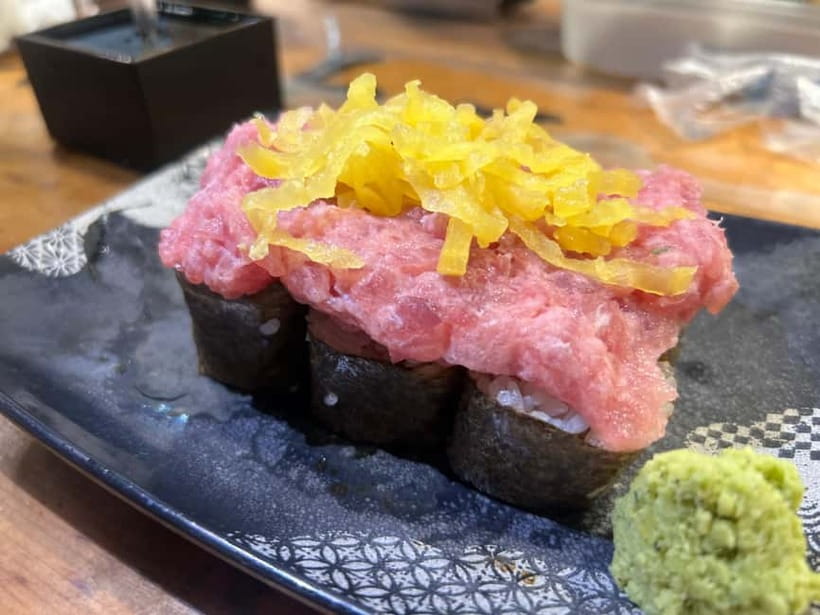
The activity lasts three hours and is built around walking between four food stops. The route is not presented as a strenuous hike, but you will be on your feet in busy streets and may stand while eating some dishes.
Wear sturdy, comfortable shoes. Bring an appetite, but do not arrive stuffed. One person found the portions too large to finish, while several others described the meal as plentiful and filling. That is good news for value, but it also means this is not a light tasting tour.
The pace should suit most people who enjoy eating in stages. You get time to see each area, listen to the guide, and move on before the evening becomes a single long restaurant sitting. Still, anyone with mobility concerns should ask the operator for current route details, since the supplied information does not describe accessibility.
Who should book this Shinjuku food tour?
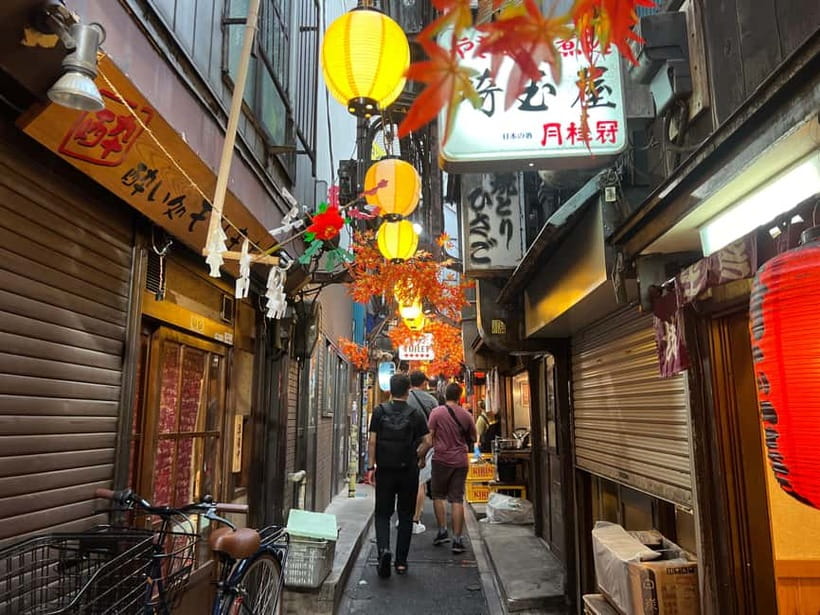
I would recommend it most strongly to first-time visitors who want an easy introduction to Shinjuku after dark. It is also a good choice for solo visitors and couples who would rather share dishes with a small group than decode restaurant menus alone.
Families can enjoy it too. The food range includes approachable choices such as pork cutlet and taiyaki, and one family of four found the experience suitable for adults and children. Picky eaters should still review the possible menu before booking.
Food-focused visitors may like the variety, but serious diners should remember that this is an introduction, not a detailed culinary seminar. The explanations are tied to the neighborhoods, customs, and dishes, which gives the evening breadth rather than deep technical detail.
I would skip it if you dislike crowded nightlife areas, want four seated restaurant meals, or need a guaranteed fixed menu. I would also think twice if $85 is beyond your dinner budget, since the value depends on appreciating the guide and neighborhood walk as much as the food itself.
Booking details worth knowing before you go
The experience costs $85 per person and includes an English-speaking guide, the walking route, food at four eateries, and two complimentary drinks. The food settings include one stall, one izakaya, one traditional eatery, and one gastrobar.
You can cancel up to 24 hours before the tour for a full refund, and reserve now while paying later. Starting times vary, so check availability for your date.
The operator asks you to provide food restrictions in advance. Download WhatsApp before the tour because that is how the guide contacts participants. These are small steps, but they prevent the most avoidable problems.
Should you book it?
Book this tour if you want a guided first evening in Shinjuku with plenty to eat and enough local context to make the district less confusing. The combination of 13 possible dishes, four different food settings, two drinks, and three famous neighborhoods gives you a lot in a short time.
My main caution is the fixed-menu uncertainty. The dish total may be 13 or described as 15, dishes can change, and some food may be eaten outside rather than at a table. If you accept that flexible format, $85 is a fair price for a social food walk that can give your Tokyo visit an excellent opening night.
FAQ
How long is the Shinjuku food tour?
The tour lasts three hours, although the exact pace can vary depending on the group and restaurant stops.
How many dishes are included?
The detailed information describes up to 13 Japanese dishes at four eateries, while the experience title refers to 15 dishes. Ask about the evening’s menu because dishes can change with season and availability.
Which neighborhoods does the tour visit?
The route includes Golden Gai, Omoide Yokocho, and Kabukicho, with the tour starting and ending near the α 107 Building.
Where is the meeting point?
Meet outside by the blue AOKI sign next to Starbucks Nishiguchi, on the west side of Shinjuku Station. Yodobashi Camera is a nearby landmark that can help you find the area.
What food might be included?
Possible dishes include sashimi, mackerel, Japanese sake, tonkatsu, yakitori, takoyaki, tempura tuna, seaweed salad, Okinawan food, and taiyaki. The exact selection is not fixed.
Are drinks included?
Yes. The tour includes two complimentary drinks, with alcoholic and non-alcoholic options.
Is the tour conducted in English?
Yes. The tour includes a live English-speaking guide.
Is food served at four restaurants?
The experience includes food at four eateries: one stall, one izakaya, one traditional eatery, and one gastrobar. Food from two stops may be eaten on the street, so not every stop is a formal seated restaurant visit.
Can I report food restrictions?
Yes. You should advise the operator about food restrictions before the tour. The provided information does not guarantee that every dietary requirement can be accommodated.
How much does the tour cost?
The listed price is $85 per person. It includes the guide, walking tour, food at four eateries, and two complimentary drinks.
Can I cancel the booking?
You can cancel up to 24 hours in advance for a full refund. You can also reserve now and pay later, subject to the booking conditions.
Just added in Tokyo
- Tokyo: Allstar Food Tour★ 4.7 · 29 reviews
- Tokyo: West-Side Cycling and Food Tour with Guide★ 5.0 · 37 reviews
- Tokyo: Togoshi Ginza Street Food Tour★ 5.0 · 34 reviews
- Tokyo Tsukiji Food & Culture Private Tour Licensed Guide★ 4.9 · 28 reviews
- Tokyo: Wagyu and Sushi Gastronomic Journey★ 4.3 · 24 reviews
- Tokyo: Sushi and Ramen Cooking Class with Sake Pairing Set★ 5.0 · 81 reviews
- Tokyo: Sushi Making Class★ 4.9 · 390 reviews
- Tokyo: Ramen Tasting Tour with 6 Mini Bowls of Ramen★ 4.9 · 432 reviews
Tokyo Food Tours, compared.
Shinjuku Food Tour (13 Dishes at 4 Local Eateries)
Read our review →
Sushi Making Tokyo Roll and Authentic Japanese Sushi Class
Read our review →
Tokyo Tsukiji Fish Market Food and Culture Walking Tour
Read our review →
Roll and Authentic Sushi Making Class in Asakusa
Read our review →
Best of Shinjuku: Izakaya Food Tour (4 Stops, 14+ Tastings)
Read our review →
Sushi Making Class in a Happi Coat near a Famous Spot
Read our review →
Sushi Making Tokyo! Popular Maki Sushi & Japanese Sushi(+Recipe!)
Read our review →
Tokyo Sushi Making Class in Tsukiji with Professional Chef
Read our review →Browse the lists this tour appears in