
REVIEW · JAPAN FOOD TOURS
Tokyo : Asakusa Food Tour – 12 Dishes & 3 Drinks
Small plates tell big stories. This three-hour evening tour gives you a tasty introduction to Asakusa, with 12 Japanese dishes and three drinks served across local-style restaurants and bars. I especially like the chance to try foods many first-time visitors might skip, including monjayaki, yakisoba, sake from several parts of Japan, convenience-store ice cream, and taiyaki.
I also like the relaxed evening route. You eat at an izakaya, stop at a sake bar, stroll along Hoppy Street, and finish near beautifully lit Senso-ji Temple. The main consideration is that this is an English-only tour, and extras beyond the included food and drinks must be paid for in cash.
Key points at a glance
- Twelve dishes in three hours: You get a broad sample of Japanese comfort food instead of one long restaurant meal.
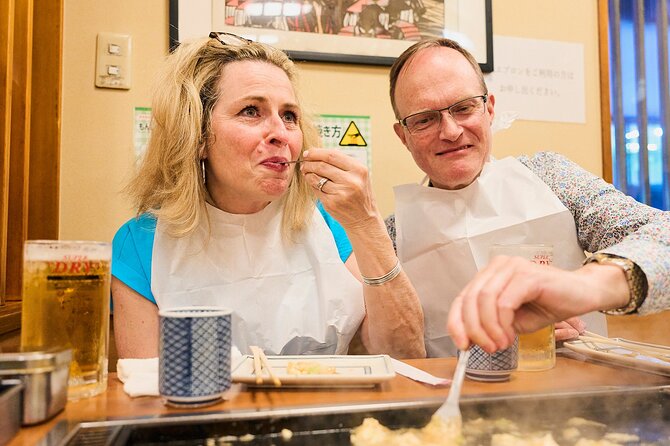
- Hands-on old Tokyo cooking: Rokumonsen Honten serves okonomiyaki and other dishes tied to Asakusa’s downtown food culture.
- Three included drinks: The sake stop gives you several styles to taste, from dry and crisp to sweet and fragrant.
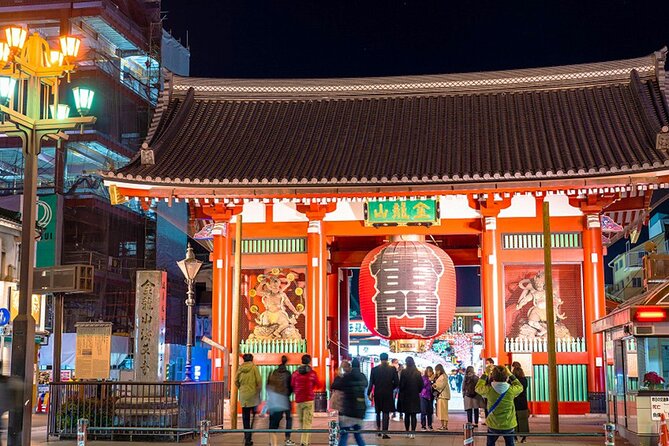
- A useful evening route: The tour includes Hoppy Street, Taiyaki Sawada, and Senso-ji after dark.
- Small-group feel: The maximum group size is 15 people, a manageable number for restaurant stops and conversation.
- Strong guide praise: Ai and Nonoka receive particular praise for friendly English, local insight, and warm hosting.
Why this Asakusa food tour works well
Asakusa is one of Tokyo’s best areas for an evening food walk because it offers more than polished department-store dining. Here, old shopping streets, small restaurants, bars, temple grounds, and casual Japanese comfort food sit close together.
This tour makes good use of that setting. Rather than sending you to one expensive tasting menu, it breaks the evening into several stops. That gives you more chances to try unfamiliar dishes and see how people eat in casual neighborhood places.
The tour costs $89.83 per person. That is not a bargain basement price, but the value depends on how much you want handled for you. The fee includes the food, three drinks, restaurant reservations, and an English-speaking guide. You are also paying for someone to make the ordering process easier and explain what is in front of you.
If you already feel comfortable ordering in Tokyo and know the foods you want, you could probably spend less by eating independently. If you want to sample 12 dishes without guessing at menus, the price makes more sense.
The rating is 4.9 from 44 reviews, with 98 percent recommending the experience. That lines up with the strongest part of the tour: the guides. Ai is praised for her friendly English and local knowledge, while Nonoka is described as engaging and good at explaining both food and place. A good guide matters here because the evening depends on pacing, introductions, and helping you try dishes you may not recognize.
A few more food tours in Japan worth a look
- Tokyo: Shinjuku Food Tour (13 Dishes at 4 Local Eateries)
★ 5.0 · 6,603 reviews - Tokyo Tsukiji Fish Market Food and Culture Walking Tour
★ 5.0 · 3,184 reviews - Osaka: Shinsekai Food Tour with 13-15 Dishes at 5 Eateries
★ 4.8 · 2,204 reviews
Meeting at Kaminarimon at 6:30 pm
The tour begins at the Kaminarimon Police Box, at 1-chōme-3-1 Asakusa. The start time is 6:30 pm, so you will see Asakusa shift from daytime sightseeing to evening dining.
Allow yourself enough time to reach the meeting point. The tour ends back where it starts, which is convenient if you are staying in Asakusa or need to find your way onward from a familiar spot.
A mobile ticket is accepted, and booking confirmation is provided at the time of booking. The group can include up to 15 people. That is large enough to create a social mood, but still small enough for a guide to keep everyone together at restaurants and on the streets.
The tour is conducted in English only. Japanese language support is not available, so you should choose this experience only if you are comfortable following explanations in English.
Rokumonsen Honten and the appeal of Japanese pancakes
The first scheduled food stop is Rokumonsen Honten, where you try okonomiyaki. This savory Japanese pancake is made for sharing and is one of the best introductions to casual Osaka and old downtown-style eating.
The appeal is not just the finished dish. At many okonomiyaki restaurants, the food is cooked on a hot plate at the table or in front of you. That gives the meal a bit of theater without turning it into a formal show.
The tour also highlights monjayaki, a softer savory pancake associated with Tokyo’s old downtown food culture. Monjayaki has a looser texture than okonomiyaki, so do not expect a neat pancake that you slice into tidy wedges. It is the kind of food that rewards curiosity more than photographic perfection.
You spend about 50 minutes at this stop, with admission included. That is enough time for the guide to explain what you are eating and for the group to settle into the evening.
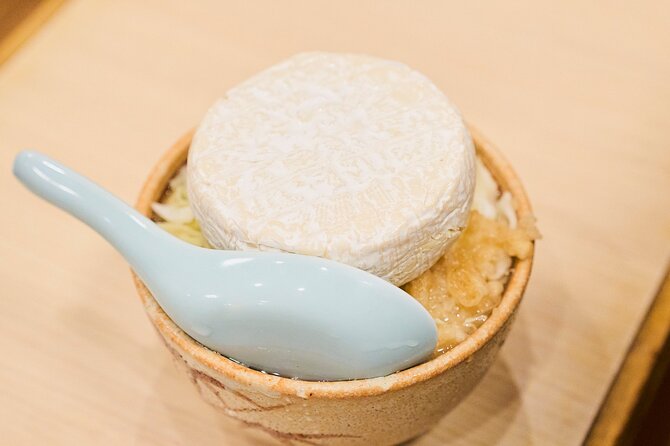
One especially appealing detail is the mention of a Tokyo pancake with Camembert. If that combination appears in your meal, expect a playful meeting of Japanese street-food technique and a familiar European cheese. I would approach this stop with an open mind. The point is not to find a dish that tastes exactly like food at home.
You may also encounter yakisoba, Japanese stir-fried noodles, among the 12 dishes. The exact serving order can vary, but the larger idea is clear: you are sampling filling, everyday foods rather than only delicate sushi or expensive raw fish.
Wasake Sake Experience and three included drinks
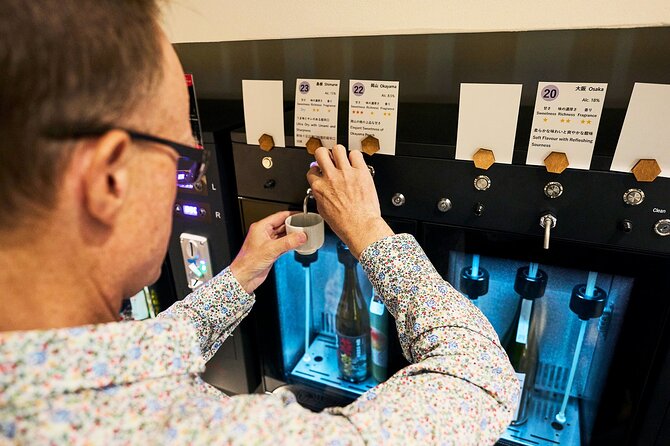
The sake stop lasts about 50 minutes and is one of the more useful parts of the evening for anyone who has struggled to understand Japanese rice wine.
Sake varies widely. Some styles are crisp and dry, while others are fragrant and sweet. Tasting several kinds side by side gives you a better sense of those differences than ordering one unidentified cup with dinner.
Your guide explains how sake is made, how to enjoy it, and how different styles pair with food. That turns the stop into more than a drinking break. You get a simple framework for choosing sake later in your trip.
The tour includes three drinks. Because alcohol is part of the experience, think about your own pace. You do not need to treat each tasting as a race, especially since the evening continues with more food and walking.
The sake bar also adds a social element. The experience is designed to help you meet people along the way, and a shared tasting gives a group an easy subject for conversation. If you are traveling alone, this may be one of the most useful features.
Extras are not included. Bring cash for anything beyond the food and three drinks, as the tour specifically asks you to pay for extras in cash. This is a small point, but it can save you an awkward search for an ATM after the meal has begun.
Same city, a different table:
- Sushi Making Tokyo Roll and Authentic Japanese Sushi Class
★ 5.0 · 3,971 reviews - Osaka Food Tour: 13 Dishes at 5 Local Eateries
★ 5.0 · 2,149 reviews - Tokyo: Shinjuku Food Tour (15 Dishes and 4 Eateries)
★ 4.9 · 2,033 reviews - Tokyo: Roll and Authentic Sushi Making Class in Asakusa
★ 4.9 · 1,957 reviews
Hoppy Street and the feel of old Asakusa
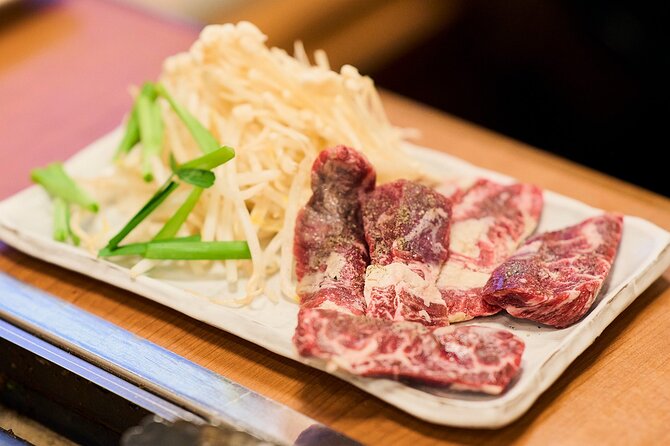
The route includes a stroll through Hoppy Street, a well-known drinking area near Asakusa’s temple district. The walk helps break up the meal and gives you a sense of the neighborhood beyond the restaurant tables.
This is where the tour feels most like an evening in Asakusa rather than a restaurant crawl. You move between food, drink, and local streets, with your guide pointing out useful context about the area.
Do not expect a long sightseeing walk. The full tour lasts around three hours, and food is the main purpose. Still, the short walk matters. It gives you time to reset your palate, see the neighborhood after dark, and understand how dining fits into the district.
The route should suit you if you want a little sightseeing with your meal. It may feel too brief if your main goal is a detailed architectural or historical tour of Asakusa.
Taiyaki Sawada for a warm fish-shaped dessert
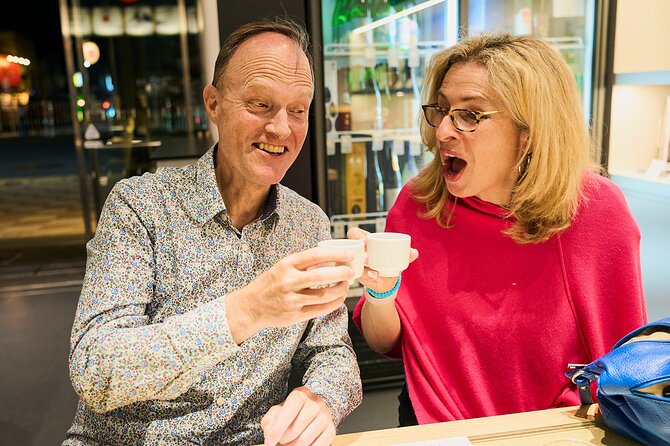
At Taiyaki Sawada, you finish the food portion with taiyaki. This popular Japanese dessert is a warm, fish-shaped pancake filled with the option of your choice.
Taiyaki is easy to like because it is simple, warm, and portable. The fish shape adds a bit of fun, but the important question is the filling. Since the available filling can vary, your guide or the shop will explain the choices at the time.
The stop lasts about 15 minutes. That short visit makes sense for a dessert bought and eaten on the move. It also keeps the whole evening from becoming too slow after several savory dishes and drinks.
The tour also includes convenience-store ice cream among its food experiences. That may sound ordinary, but it reflects a useful side of Japanese food culture. Not every memorable bite comes from a famous restaurant. Small packaged treats and everyday snacks are part of how people eat in modern Tokyo.
Senso-ji after dark
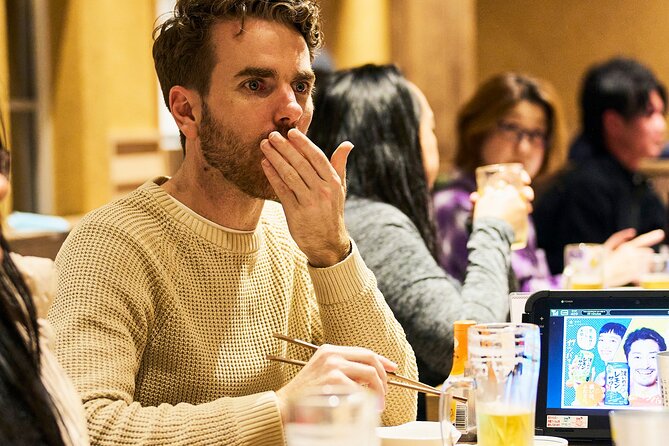
The final sightseeing stop is Senso-ji Temple, Tokyo’s oldest temple. You have about 10 minutes here, and admission is free.
The short visit is best treated as a photo and orientation stop, not a full temple tour. At night, the temple is illuminated and often feels calmer than during the busiest daytime hours. The change in light gives you a different view of a place many people first see in the afternoon.
This is a smart way to finish the tour. After eating and drinking, you get a quiet visual pause before returning to the meeting point. You can also use the moment to ask your guide for tips about enjoying Asakusa on your own.
The time is limited, so do not book this tour expecting a detailed explanation of every building or religious feature at Senso-ji. Its role here is to add a sense of place to the food route.
Food variety, portion size, and pacing

The headline promise is 12 unique dishes and three drinks. That is a generous range for a three-hour tour, but it also means the portions are likely intended for tasting rather than a single large meal.
I like this format for a first evening in Tokyo. You can test unfamiliar foods without committing to a full order of each one. If you dislike one dish, another stop is coming soon.
The tradeoff is pace. You will be eating at several points during the evening, and the food may arrive in quick succession. People with small appetites should pace themselves and tell the guide if they need a moment.
The tour appears best suited to curious eaters who want variety. It is less suited to someone seeking a slow, luxurious dinner at one restaurant. It may also be a poor fit if you have strict dietary restrictions, since the available information does not specify vegetarian, vegan, allergy, or gluten-free arrangements.
The tour includes many food types, but it does not give a full dish-by-dish menu in advance. If you need to know every ingredient before booking, contact the provider first.
Guides, group size, and the social side
A food tour can succeed or fail on the guide. Here, Ai and Nonoka receive especially warm praise for being friendly, hospitable, and easy to understand in English.
Ai is singled out for her local insight and for making people feel comfortable while eating and drinking. Nonoka is praised for keeping the evening engaging and explaining Japanese foods and customs. Those details matter because some of the dishes may be unfamiliar, and a relaxed guide can make the difference between trying something new and quietly passing it by.
With a maximum of 15 people, you should expect a shared group experience rather than private attention. The upside is the chance to meet fellow tourists and compare impressions over food. The downside is that restaurant seating and conversation may not always move at your preferred speed.
I would book this for a solo visitor, a couple, or a small group wanting an easy first taste of Asakusa nightlife. If you prefer complete independence, a private guide, or a quiet dinner, this format may not suit you.
Practical details before you book
The experience lasts approximately three hours and starts at 6:30 pm. It ends at the original meeting point, so plan the rest of your evening with that return location in mind.
Bring cash. The included food and drinks are covered, but extras are not, and the tour specifically says cash is required for those additional purchases.
Most people can participate. If you need wheelchair access, notify the provider in advance so the restaurant reservation can be adjusted. The information does not promise full accessibility without prior notice, so this is worth handling before the tour date.
Free cancellation is available if you cancel at least 24 hours before the local start time. Cancellations or changes made within 24 hours are not refunded, so check your plans carefully before the deadline.
The tour has had more than 10 bookings in the past month, and its 4.9 rating suggests steady interest. That does not mean every part will suit every eater, but it does support the idea that the basic format is well received.
Should you book the Asakusa food tour?
I would book this tour if you want a guided first evening in Asakusa, enjoy trying several small dishes, and like the idea of combining food with a little neighborhood sightseeing. The mix of okonomiyaki, monjayaki, yakisoba, sake, taiyaki, ice cream, Hoppy Street, and Senso-ji gives you a broad introduction in one night.
The $89.83 price is reasonable if you would otherwise spend time guessing at menus, arranging several stops, and paying separately for tastings. It is less attractive if you only want one substantial dinner or already know Asakusa well.
Book with the right expectations: this is a social tasting walk, not a private culinary class or a full temple tour. Bring cash, arrive at Kaminarimon before 6:30 pm, and come ready to sample foods outside your usual order. For many first-time visitors to Tokyo, that is exactly what makes the evening useful.
FAQ
How long does the Asakusa food tour last?
The tour lasts approximately three hours.
What time does the tour start?
It starts at 6:30 pm.
Where does the tour meet?
The meeting point is the Kaminarimon Police Box at 1-chōme-3-1 Asakusa, Taito City, Tokyo 111-0032, Japan.
Where does the tour end?
The tour ends back at the meeting point.
How many people can join the tour?
The maximum group size is 15 people.
Is the tour conducted in English?
Yes. The tour is conducted in English only, and Japanese language support is not available.
Can I cancel for a full refund?
Yes, if you cancel at least 24 hours before the experience start time. Cancellations or changes made less than 24 hours before the start time are not refunded.
Just added in Japan
- Tokyo: Asakusa & Sensoji ー Oldest Temple Walking Tour (2hrs)★ 5.0 · 213 reviews
- Asakusa Highlights: Street Food Crawl Tour (7+ Local Bites)★ 5.0 · 206 reviews
- Tokyo: Allstar Food Tour★ 4.7 · 29 reviews
- Tokyo: West-Side Cycling and Food Tour with Guide★ 5.0 · 37 reviews
- Tokyo: Wagyu and Sushi Gastronomic Journey★ 4.3 · 24 reviews
- Tokyo: Togoshi Ginza Street Food Tour★ 5.0 · 34 reviews
- Tokyo Tsukiji Food & Culture Private Tour Licensed Guide★ 4.9 · 28 reviews
- Tokyo: Sushi and Ramen Cooking Class with Sake Pairing Set★ 5.0 · 81 reviews
Japan Food Tours, compared.
Shinjuku Food Tour (13 Dishes at 4 Local Eateries)
Read our review →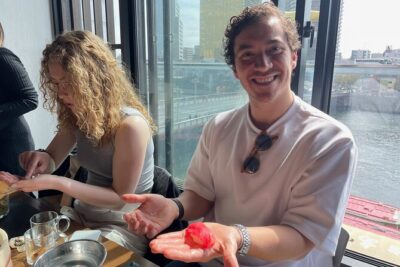
Sushi Making Tokyo Roll and Authentic Japanese Sushi Class
Read our review →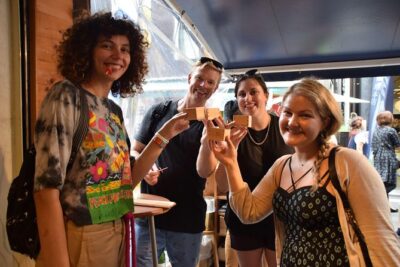
Tokyo Tsukiji Fish Market Food and Culture Walking Tour
Read our review →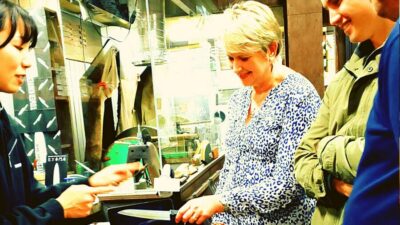
Shinsekai Food Tour with 13-15 Dishes at 5 Eateries
Read our review →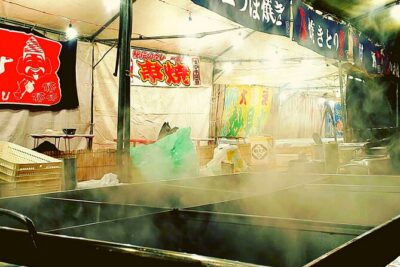
Osaka Food Tour: 13 Dishes at 5 Local Eateries
Read our review →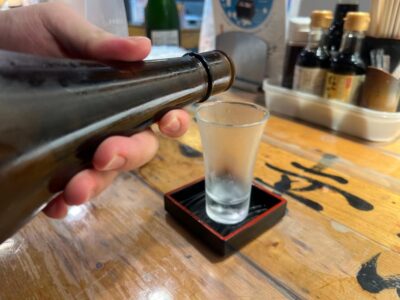
Shinjuku Food Tour (15 Dishes and 4 Eateries)
Read our review →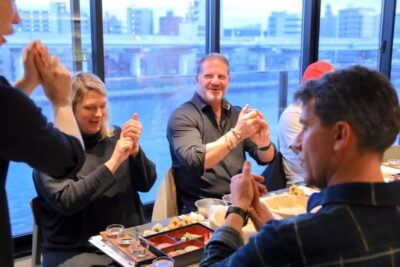
Roll and Authentic Sushi Making Class in Asakusa
Read our review →
Ramen Cooking Class at Ramen Factory in Kyoto
Read our review →Browse the lists this tour appears in