
REVIEW · OSAKA FOOD TOURS
Osaka: Ramen and Gyoza Cooking Class in Dotonbori
Fresh noodles change everything. This hands-on class in Dotonbori takes you from wheat flour to a bowl of soy sauce ramen, then adds handmade chicken gyoza for a complete Japanese meal. I like the small-group teaching, with as many as eight people and two instructors, and I like that you receive recipes so you can repeat the dishes at home. The main consideration is time: plan on roughly two to three hours, not a quick drop-in meal.
The class is also a good cultural lesson, not just a cooking demonstration. You learn about dashi made with chicken bones and dried sardines, different kinds of miso, Japanese eating customs, and the small details that make noodles and dumplings work. English instruction is clear, and instructors such as Miki, June, Kasa, and Yoshi have been praised for their patience and personal help. Finding Cooking Sun Osaka, room 807, can take a little care, so allow extra time before the start.
Key points to know before booking
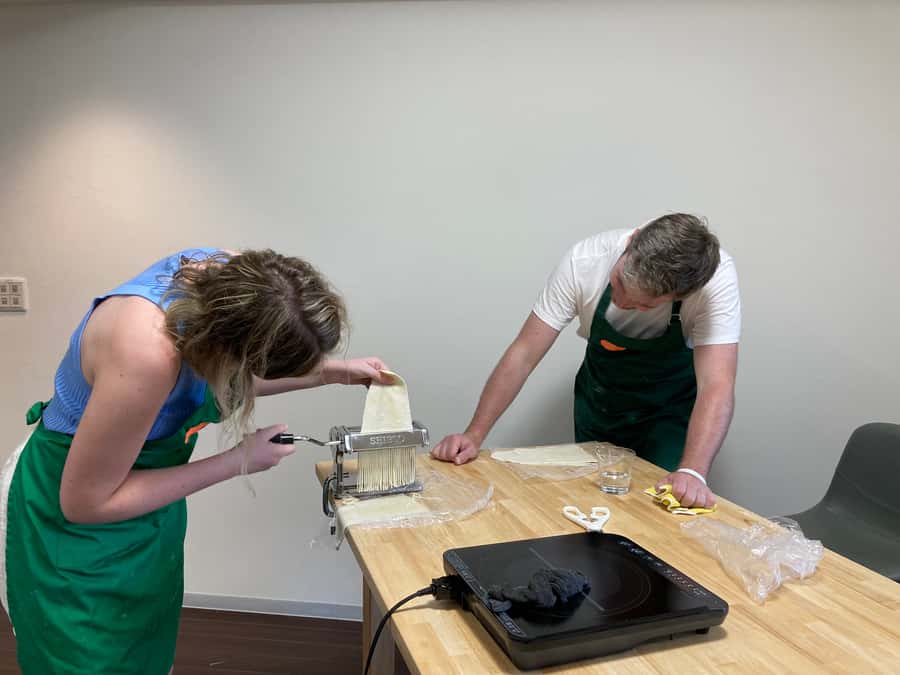
- You make the ramen noodles from wheat, kneading the dough and cutting it with a noodle machine.
- The broth begins with chicken bones and dried sardines, giving you a useful introduction to Japanese soup-making.
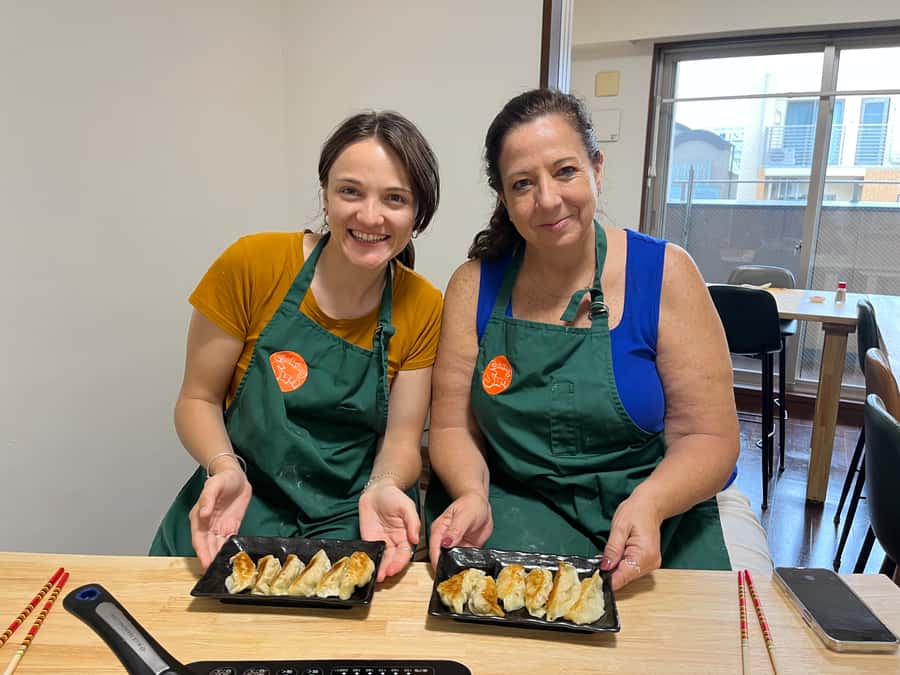
- The gyoza filling uses minced chicken, and you shape the dumplings yourself rather than simply watching.
- Two English-speaking instructors help a small group, with a maximum of eight people noted for the class.
- Vegetarian and vegan adjustments may be possible, and fish-broth substitutions have also been made when requested.
- The class ends with a full meal, so come hungry and leave room for both ramen and gyoza.
Starting in Dotonbori at Cooking Sun Osaka
The meeting point is Cooking Sun Osaka, in room 807. At the entrance, press 807 and then the button marked 呼出, which means call. That detail matters because this is not described as a street-side shop with a large tour desk. You need to follow the building instructions rather than wait for someone to collect you outside.
The activity begins and ends at the same meeting point. There is no hotel pickup or drop-off, so you are responsible for reaching the building and returning to your own plans afterward. Since Dotonbori is one of Osaka’s busiest visitor areas, I would not cut the timing close. Give yourself a few extra minutes to locate the building and use the entrance system.
Once inside, the setup appears designed for participation rather than watching from the back of a room. The kitchen has enough space for people to work, and the small class size means you can ask questions without shouting across a crowd. Two instructors can also keep an eye on several cooking steps at once.
That personal attention is one of the strongest reasons to choose this class. If your dough is too sticky, your dumpling folding is uneven, or you fall behind, the instructors can step in and show you what to change. You are not left trying to copy a demonstration from several metres away.
More Cooking Classes in Japan
- Osaka: Roll and Authentic Sushi Making Class in Dotonbori
★ 4.9 · 239 reviews - Osaka: Cooking Class Ramen & Gyoza Course in Nanba
★ 4.9 · 86 reviews - Osaka: Gluten-Free Ramen and Gyoza Cooking Class
★ 5.0 · 42 reviews
Kneading wheat into ramen noodles
The first major task is making the noodles from scratch. You work with wheat dough, kneading it before resting and shaping it. This is the moment when ramen stops looking like a simple bowl of soup and starts to make sense as a prepared dish with several separate parts.
The class then shows you how to cut the dough with a noodle machine. That is a practical touch. Hand-cutting noodles would be difficult to reproduce at home, while a machine gives you a clear feel for thickness, length, and consistency. You get to operate the equipment instead of merely hearing an explanation.
I like this part because it changes the way you see restaurant ramen. The finished bowl can arrive in minutes, but the noodles have their own process, texture, and timing. You learn that fresh noodles are not just a decorative addition to broth. They are one of the central elements of the meal.
The instructors keep the process moving, but the pace is not meant to feel rushed. A well-run class needs to coordinate resting dough, broth preparation, gyoza filling, and cooking. Several people specifically valued the timing, saying they had enough time to complete each step while the class stayed on schedule.
You do not need to arrive as a cook. The instructions are designed to be followed step by step, and the teaching style has been praised for being patient and clear. That makes the class suitable for nervous beginners, as well as people who already cook at home and want to learn a Japanese method.
Building a soy sauce ramen broth
The standard ramen made here is soy sauce ramen. The broth uses chicken bones and dried sardines, introducing you to a combination that helps explain the savory taste found in many Japanese noodle soups.
Dried sardines, often called niboshi in Japan, bring a strong seafood flavor. That can be useful for learning, but it is also something you should consider if you dislike fish. The class has accommodated people who did not want fish broth, and plant-based adjustments have also been made. Still, tell the instructors about dietary needs as early as possible rather than waiting until you arrive.
You also learn about miso and how it can change the soup. The basic preparation is soy sauce ramen, but you may be able to add miso to create a miso-style version. The class includes discussion of different types of miso and when to use them, giving you information that goes beyond this single meal.
The broth section is valuable because it gives context to the finished dish. You are not just following a recipe with anonymous ingredients. You learn what each part contributes and how a small change can shift the taste. That makes the recipe more useful after your holiday.
Toppings can be added to suit your preference, so the bowl becomes your own version rather than an identical serving handed to every person. The precise topping choices are not specified, so I would think of this as a chance to personalize the ramen within the ingredients available that day, not a guarantee of a particular topping menu.
Folding minced-chicken gyoza by hand
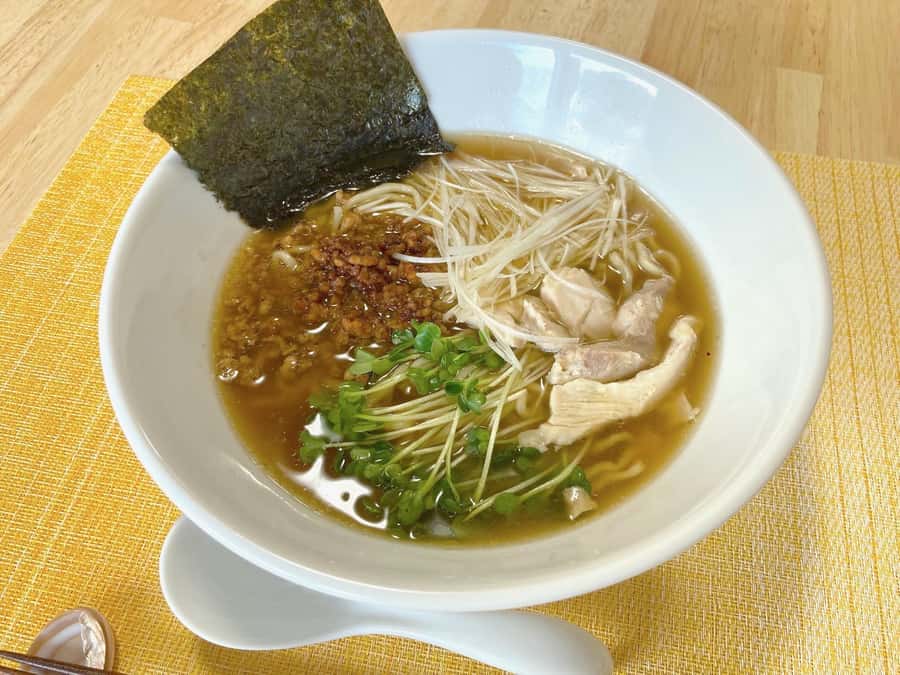
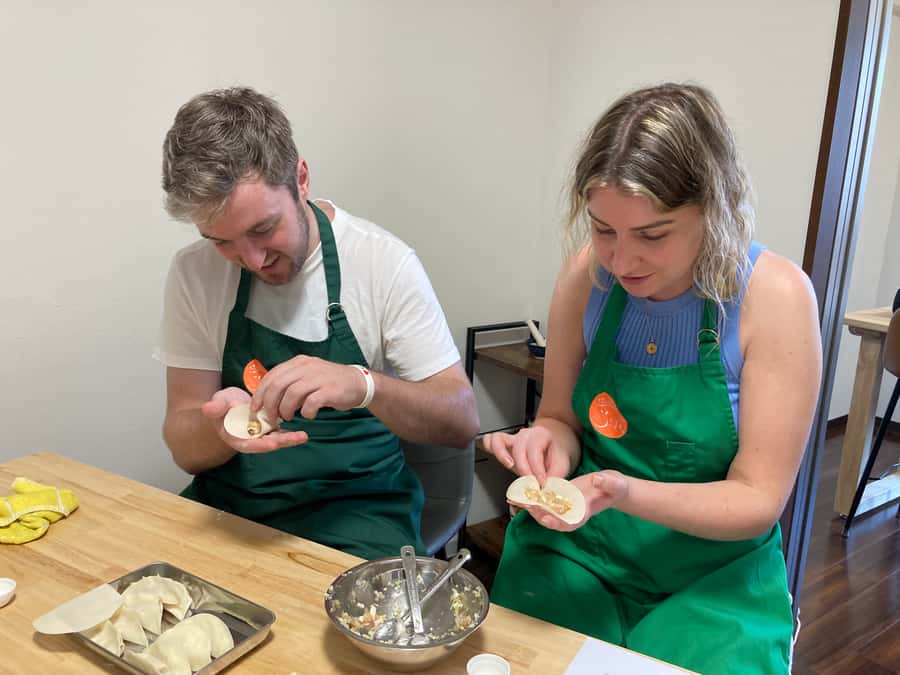
While the ramen dough rests and the broth develops, you prepare the gyoza. The filling uses minced chicken, and you shape the dumplings yourself.
Gyoza making is a good group activity because each person quickly develops a different folding style. Some dumplings may look neat, while others may resemble small edible parcels with a mind of their own. That is part of the fun, and the instructors are there to help you handle the wrappers and filling.
The class treats gyoza as more than a side dish. In Japan, ramen and gyoza are commonly ordered together, so making both gives you a better understanding of a familiar ramen-shop combination. You finish with a meal that feels like a proper set rather than a single bowl of noodles.
The food quality is one of the most praised parts of the experience. The ingredients are included, and the finished gyoza has repeatedly been described as delicious. One useful sign is that people who expected the food to be good found the result better than expected. That matters with a cooking class, because the meal is your reward for doing the work.
You also receive recipes to take home. For me, this adds real value to the $70 price. You are not paying only for lunch and a few holiday photographs. You are paying for instruction, ingredients, kitchen use, and a recipe you can try again. The ability to recreate the noodles and dumplings gives the class a longer life after you leave Osaka.
More Sushi and Ramen Tours in Osaka
- Sushi Making Osaka Roll and Authentic Japanese Sushi Class
★ 5.0 · 1,220 reviews - Osaka: Five Must-See Highlights Walking Tour & Ramen Lunch
★ 4.7 · 411 reviews - Osaka Sushi Making Experience
★ 5.0 · 400 reviews - Osaka: Sushi Class in Dotonbori
★ 4.9 · 160 reviews
Eating the meal you made
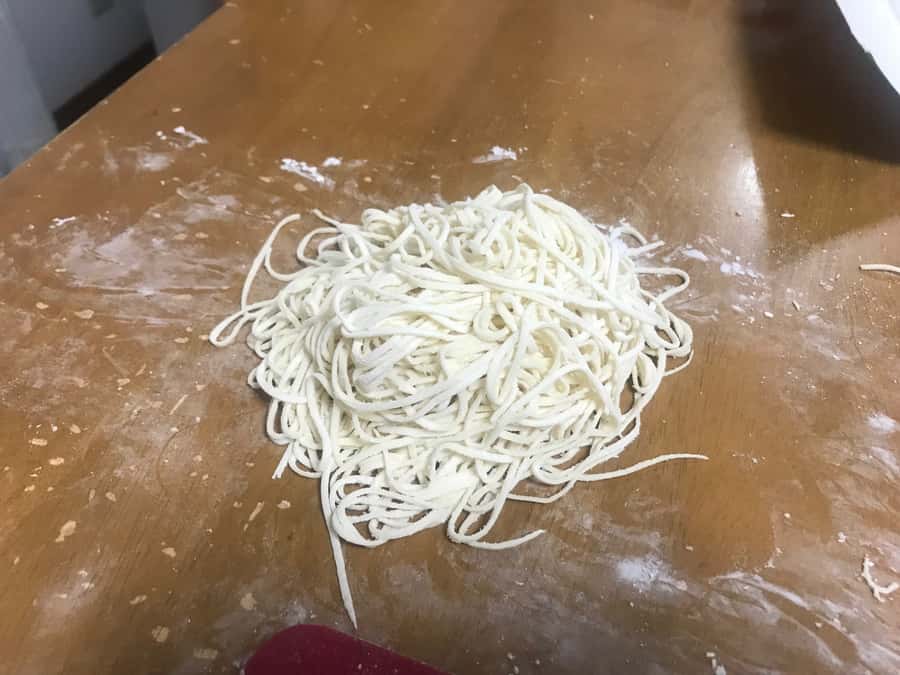
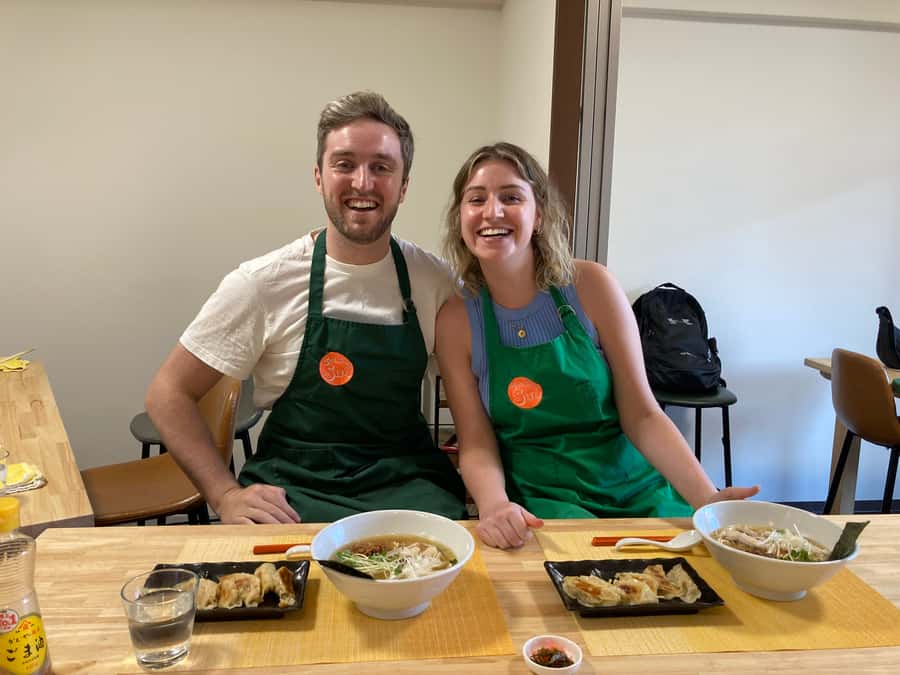
The final stage is simple and satisfying: sit down and eat your ramen and gyoza. You have made the noodles, prepared the broth, filled the dumplings, and watched the separate pieces become one meal.
Come hungry. The class produces a substantial meal, and one participant specifically advised arriving with an appetite. You may also want to avoid scheduling another food-heavy activity immediately afterward. Dotonbori is full of tempting places to eat, but this class already gives you a full Japanese meal.
The meal also lets you judge your own work. Fresh noodles can have a different texture from packaged ramen, and handmade gyoza often feel more personal than restaurant dumplings, even when the folds are not perfect. The instructors can explain what worked and what you might change at home.
Some classes rush through the eating portion because the next group is waiting. Here, the overall timing has been praised as comfortable, with no sense that people were being pushed through every stage. The food is not an afterthought. It is the payoff.
The instructors and English teaching
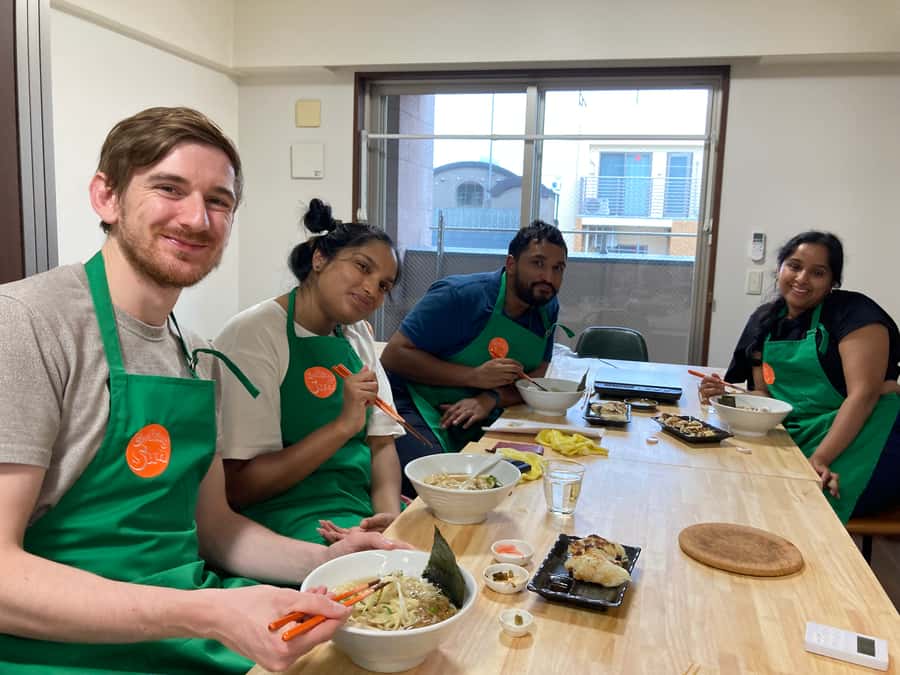
The English-language instruction is a major strength. The class has been led by friendly instructors including Miki, June, Kasa, and Yoshi, and the teaching style is described as clear, kind, and patient.
That is important in a hands-on class. A recipe can be translated, but cooking also depends on visual clues: how firm the dough feels, how much filling belongs in a wrapper, and when the broth is ready. An instructor who watches your hands and corrects small problems can save you from a disappointing final dish.
The two-instructor format is especially helpful for a small group. If one person needs help with noodles while another is folding gyoza, the class can continue without leaving anyone stranded. The instructors also take photos when requested, which is a thoughtful extra for couples and families.
The class has worked well for families, including an 11-year-old and a 14-year-old. Children still need to follow kitchen instructions, but the mix of kneading, cutting, filling, and eating gives them several jobs to handle. Couples and solo participants should also fit comfortably into the format.
Dietary adjustments and practical limits
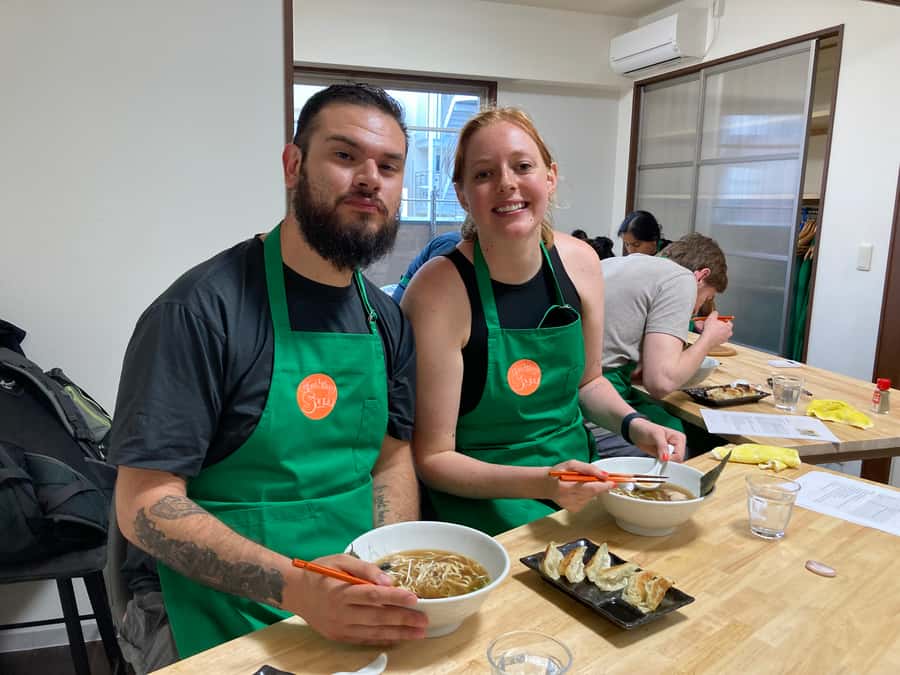
Vegetarian and vegan guests should contact the provider before the class or clearly explain their needs at the start. A plant-based version was prepared for one vegan participant, and fish-broth substitutions have been made for people who did not want that flavor.
That is encouraging, but the supplied details do not promise a fixed vegan, vegetarian, or allergy-free menu for every date. If you have a serious allergy or strict dietary requirement, ask before paying or make the request well in advance. The basic recipe includes chicken and dried sardines, so substitutions are not automatic unless arranged.
The class is in English. That makes it a sensible pick if you want detailed instruction without relying on translation apps. It also means you can ask about Japanese ingredients and food customs as you work.
The length is another practical point. Allow around two to three hours. One description puts the class at three hours, while another participant described it as about two hours. The difference may reflect the pace of the group or the day’s schedule, so do not plan a train departure or timed attraction immediately afterward.
Is $70 a fair price?
At $70 per person, this is not the cheapest meal you can buy in Osaka. You can eat ramen and gyoza for much less. The question is not simply whether the food costs $70. The question is what you want from the afternoon.
I think the price is reasonable if you value participation. Your fee includes all cooking ingredients, English instruction, use of the kitchen, the meal, and recipes to take home. You also get direct help from two instructors in a small group, rather than watching a large demonstration.
The price is less attractive if you only want to sample ramen. Osaka has plenty of ramen shops, and a restaurant meal will be faster and cheaper. This class earns its cost through the process: kneading the dough, operating the noodle machine, preparing the broth, folding gyoza, and understanding how the dishes fit into Japanese food culture.
The strong satisfaction rating, 5 out of 5 from 378 reviews, supports the idea that the class delivers what it promises. Still, ratings cannot tell you if you enjoy cooking. If you dislike working with dough or prefer a quiet meal, choose a restaurant instead.
Who should book this Osaka class?
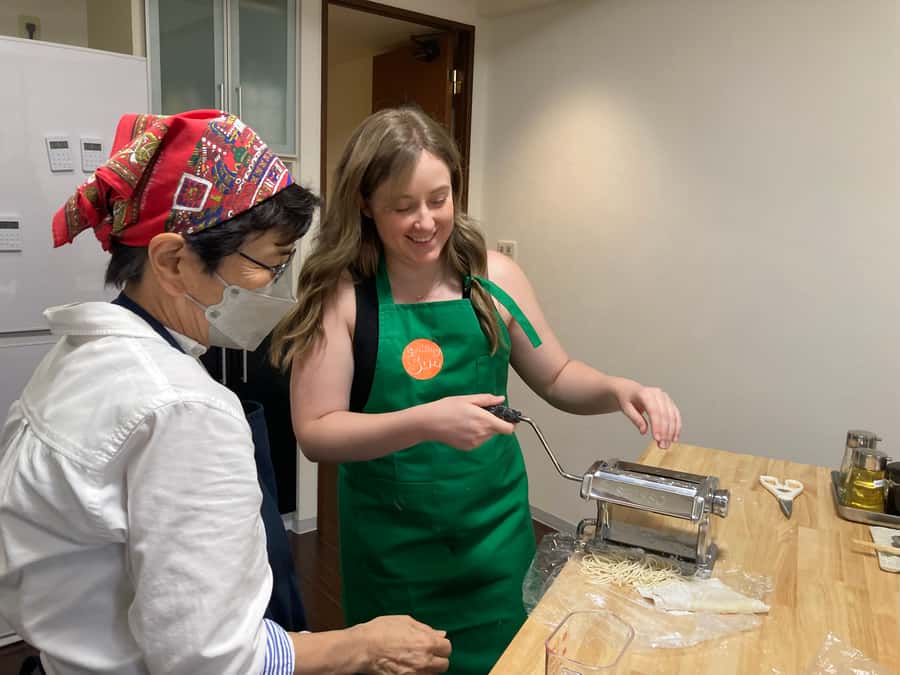
I would recommend it to couples, families, and first-time visitors who want an activity with a clear result at the end. It works especially well on a rainy day or when you want a break from temples, shopping, and city sightseeing.
It is also a good choice for anyone who plans to cook Japanese food at home. The recipe handouts and ingredient explanations give you something useful to carry beyond the holiday. You will leave with more than a photograph of a bowl of ramen.
Food lovers who already know Osaka ramen may still enjoy it, but the appeal is the hands-on work rather than rare or advanced cuisine. This is a standard soy sauce ramen with chicken gyoza, designed to teach the basics well.
I would be cautious if your schedule is packed, your diet is highly restricted, or you strongly dislike seafood flavors. Ask about substitutions before booking, and leave plenty of time for the class and meal.
FAQ
Where does the cooking class start?
It starts at Cooking Sun Osaka, room 807. At the entrance, press 807 and then press the 呼出, or call, button.
Where does the activity finish?
The class ends back at the same meeting point.
How much does the class cost?
The price is $70 per person.
What food do you make?
You make ramen and gyoza. The ramen uses wheat noodles and a soy sauce broth, while the gyoza filling uses minced chicken.
Are the ramen noodles made from scratch?
Yes. You knead wheat dough, allow it to rest during the cooking process, and cut the noodles with a noodle machine.
Is the class taught in English?
Yes. English instruction is provided.
Are ingredients included?
Yes. All ingredients used in the cooking class are included.
Can vegetarian or vegan guests attend?
Vegetarian and vegan adjustments may be possible. A plant-based option and substitutions for fish broth have been provided, but you should explain your dietary needs before or at the start of the class.
Should you book the ramen and gyoza class?
Book it if you want to understand how ramen and gyoza are made, not simply eat them. The small group, two instructors, recipe handouts, and full meal make the $70 fee fair for a hands-on Osaka activity.
I especially like the combination of practical skills and local food context. You learn the dough, the broth, the dumplings, and the customs around ordering ramen with gyoza. Allow two to three hours, arrive hungry, plan extra time to find room 807, and ask ahead about dietary changes. With those points covered, this is a friendly, useful, and tasty addition to an Osaka itinerary.
More Workshops in Osaka
- Sushi Making Tokyo Roll and Authentic Japanese Sushi Class
★ 5.0 · 3,971 reviews - Tokyo: Sushi Making Class in a Happi Coat near a Famous Spot
★ 4.9 · 1,377 reviews - Tokyo Sushi Making Class in Tsukiji with Professional Chef
★ 5.0 · 1,177 reviews - Athens: Food Market Visit and Cooking Class with Wine
★ 4.9 · 1,087 reviews
More cooking classes in Osaka
- Authentic Pizza Making Class in Naples with Appetizers and Drink
★ 5.0 · 3,178 reviews - Tokyo: Roll and Authentic Sushi Making Class in Asakusa
★ 4.9 · 1,957 reviews - Ramen Cooking Class at Ramen Factory in Kyoto
★ 5.0 · 1,937 reviews - Small Group Cooking Class & Market Food Tour in Florence
★ 5.0 · 1,574 reviews
Just added in Osaka
- Hidden Osaka – Yukaku Red Light Tour & Culinary Adventure★ 4.8 · 96 reviews
- Eat Like a Local in Osaka – Private Custom Street Food Tour★ 4.3 · 33 reviews
- Osaka: Sushi Class in Dotonbori★ 4.9 · 160 reviews
- Osaka: Sushi Making in Spacious Studio (SAME-DAY OK!)★ 5.0 · 75 reviews
- Osaka: Gluten-Free Ramen and Gyoza Cooking Class★ 5.0 · 42 reviews
- Osaka: Kuromon Market Food Walking Tour (6 stops, 6 tastes)★ 4.6 · 272 reviews
- Osaka: Roll and Authentic Sushi Making Class in Dotonbori★ 4.9 · 239 reviews
- Osaka: Local Foodie Tour in Dotonbori and Shinsekai★ 4.7 · 95 reviews
Cooking Classes, compared.
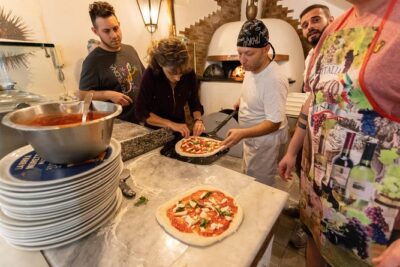
Authentic Pizza Making Class in Naples with Appetizers and Drink
Read our review →
Roll and Authentic Sushi Making Class in Asakusa
Read our review →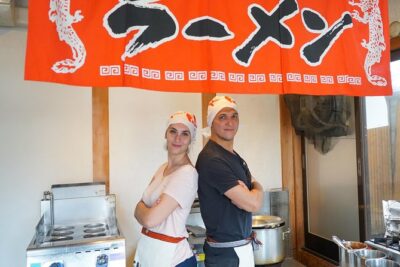
Ramen Cooking Class at Ramen Factory in Kyoto
Read our review →
Small Group Cooking Class & Market Food Tour in Florence
Read our review →
Sushi Making Class in a Happi Coat near a Famous Spot
Read our review →
Tokyo Sushi Making Class in Tsukiji with Professional Chef
Read our review →
Food Market Visit and Cooking Class with Wine
Read our review →
Browse the lists this tour appears in