
REVIEW · TOKYO FOOD TOURS
Tokyo Night Foodie Tour in Shinjuku – Seasonal Sushi, Wagyu Beef
Tokyo after dark is best explored hungry. This three-hour Shinjuku tour links seasonal omakase sushi, table-grilled Wagyu beef, and a guided walk through Kabukicho, with a small group capped at seven people. I like the strong food pairing and the chance to ask a local guide questions as you go. The main consideration is that the advertised meeting area and the actual sushi restaurant may not be the same place, so expect some walking between stops.
I also like the tour’s easygoing pace. Guides such as Molly, Mimi, Yuma, Aoi, and Yosh have been praised for helping with menus, explaining local customs, and offering useful ideas for the rest of your Tokyo visit. If you have strict allergies or dietary needs, though, this is not a worry-free choice because the kitchens cannot guarantee allergy-free meals or substitutions.
Key points at a glance
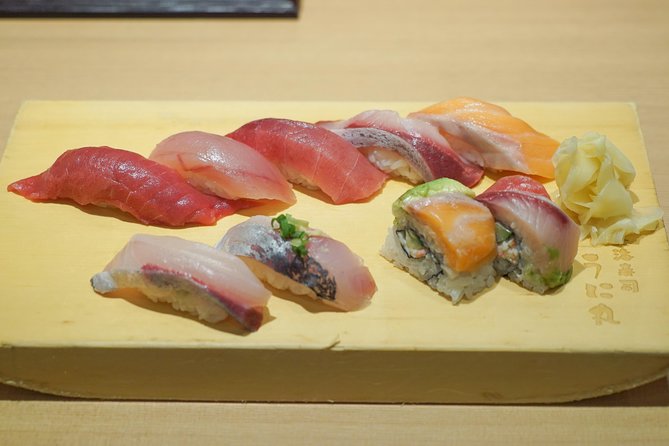
- Eight-piece omakase sushi and A5 Wagyu: The food is the heart of the evening, with chef-selected sushi followed by several cuts of beef grilled at the table.
- Small group of seven or fewer: A compact group gives you more room to ask questions and makes restaurant seating easier to manage.
- Kabukicho after dark: The walking portion brings neon streets, nightlife districts, Godzilla Road, and the famous Godzilla Head into the evening.
- Dessert or a drink to finish: The final stop in Nishishinjuku adds a relaxed close to the meal.
- Good first-night orientation: The combination of food, neighborhood streets, and local advice can help you feel more comfortable exploring Shinjuku on your own.
- Dietary limits need advance planning: Vegetarian requests must be made by the day before, and allergy-free meals cannot be guaranteed.
Why this Shinjuku food tour works
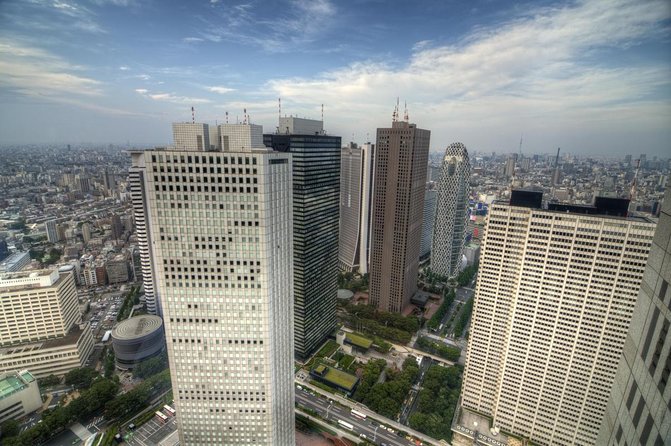
Shinjuku can feel like several cities packed into one district. Huge station exits, glowing signs, narrow lanes, office towers, bars, theaters, and restaurants all compete for your attention. A guide helps you make sense of it without spending your first evening staring at a map.
This experience keeps the route focused on food and nightlife rather than trying to cover all of Tokyo. You begin with sushi, move on to Wagyu, walk through Kabukicho, pause at Godzilla Road, and finish with dessert or a drink. That gives the evening a clear rhythm: sit down, eat, walk, look around, then sit down again.
The small group matters here. With a maximum of seven people, your guide has a fair chance of helping with menu choices and answering questions about Japan, Tokyo life, and local customs. Several guides have been singled out for this personal touch. Yuki helped an older parent choose from the menu, while Mimi answered questions about both food and daily life in Japan.
I would consider this a food tour first and a neighborhood tour second. You do get a useful look at Shinjuku after dark, but the best reason to book is the chance to eat well in places that may be difficult to arrange on your own.
More Sushi and Ramen Tours in Tokyo
- Sushi Making Tokyo Roll and Authentic Japanese Sushi Class
★ 5.0 · 3,971 reviews - Tokyo: Roll and Authentic Sushi Making Class in Asakusa
★ 4.9 · 1,957 reviews - Best of Shinjuku: Izakaya Food Tour (4 Stops, 14+ Tastings)
★ 5.0 · 1,863 reviews
Meeting the guide near Nishishinjuku
The stated meeting point is at 1-chōme-2-8 Nishishinjuku, Shinjuku City. The area is near public transportation, but Shinjuku is not the place to cut your arrival time too close. Give yourself enough time to find the correct exit and meeting point, especially if you are arriving during the evening rush.
Once the group is together, the guide introduces the evening and begins the walk toward the first food stop. The tour lasts about three hours, although the listed stop times add up to less than that. The difference is likely used for walking, ordering, seating, and moving between restaurants, so you should not expect three hours of continuous eating.
Your guide is a major part of the experience. The food is fixed around the tour’s main stops, but the conversation can make the evening feel more personal. Yuma has been praised for explaining the cultural meaning of the places along the route, while Aoi and Minnie were noted for making sure everyone felt included.
This is also a good time to ask questions. Guides have helped with menu choices, explained food, and suggested places to visit later in the trip. I would book this early in your Tokyo stay if you want local ideas for the following days.
Omoide Yokocho and the sushi course
The route brings you into the area around Omoide Yokocho, a compact restaurant district known for its narrow lanes and small eateries. The name appears in the route, but do not assume you will sit down inside those famous little lanes. The sushi restaurant may be about a 15-minute walk away, according to the experience details.
That clarification matters. If you are expecting a meal in a tiny Omoide Yokocho stall, you may be surprised by the actual arrangement. The point is less about dining in one specific lane and more about using the area as part of the walk between Shinjuku’s food districts.
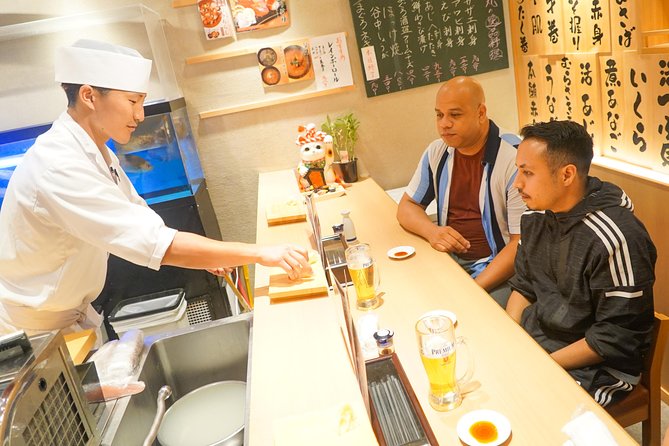
The first main meal is an omakase sushi course. Omakase means you leave the selection to the chef, who chooses the food. The tour description refers to seasonal creations, and one detailed account describes an eight-piece omakase serving. The exact pieces can vary, which is part of the appeal, but it also means this is not the best format if you need complete control over every ingredient.
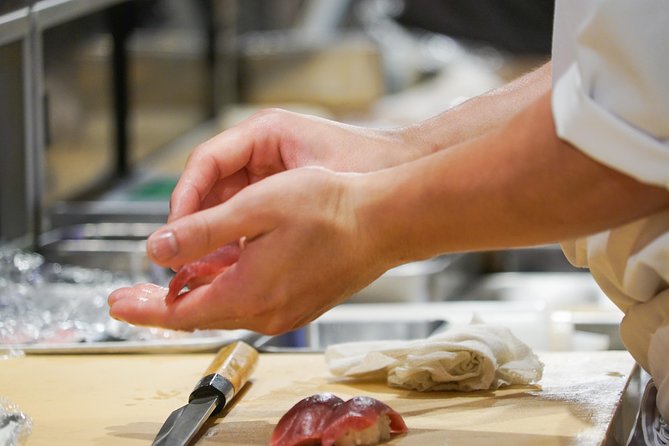
The sushi is prepared in a setting where you can watch the chef work, which adds something beyond simply receiving a plate. You get a closer look at how the meal is presented and can ask your guide about what you are eating. One small criticism worth keeping in mind is that the amount of food explanation may depend on the guide. If you want more detail, ask directly.
The food portions appear to be generous enough for most people when combined with the Wagyu course and final stop. One person described the amount as just right after arriving straight from a flight, while others finished the evening feeling very full. You should not plan a large dinner before this tour.
Walking through Kabukicho’s neon core
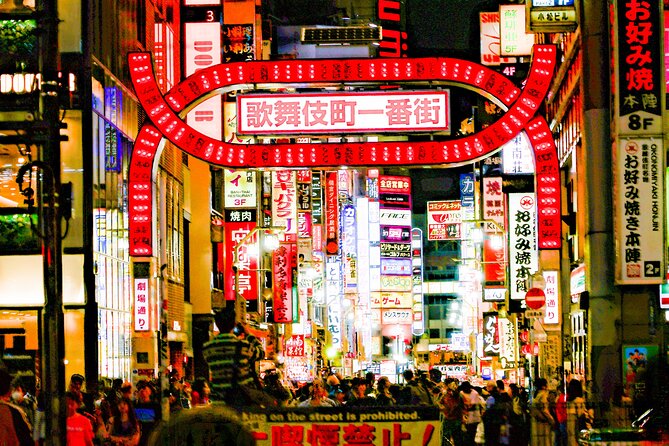
After sushi, the group continues through Kabukicho, Tokyo’s famous entertainment district. This is the part of the evening where the food gives way to atmosphere. Neon signs, restaurants, theaters, bars, and nightlife venues create a setting that looks very different from quiet temple areas or daytime shopping streets.
The walk is listed at about 40 minutes. That does not mean you will be marching nonstop. The pace has been described as relaxed, which is useful if you want time to look around and listen. It also makes the tour a reasonable choice for people who prefer a slower evening walk rather than a fast food crawl.
Kabukicho can feel intense, particularly at night. A guide helps you understand what you are seeing and gives the neighborhood some context. You may learn about the district, local culture, and how the area fits into modern Tokyo. The tour does not turn the walk into a formal lecture, which suits the setting. You are there to notice the streets as they come alive.
The drawback is that this is still an active nightlife area. Some venues on the tour may permit smoking, and the operator cannot always change locations because of that. If smoke is a serious concern, consider this before booking.
Same city, a different table:
- Tokyo: Shinjuku Food Tour (13 Dishes at 4 Local Eateries)
★ 5.0 · 6,603 reviews - Tokyo Tsukiji Fish Market Food and Culture Walking Tour
★ 5.0 · 3,184 reviews - Tokyo: Shinjuku Food Tour (15 Dishes and 4 Eateries)
★ 4.9 · 2,033 reviews - Tokyo: Sushi Making Class in a Happi Coat near a Famous Spot
★ 4.9 · 1,377 reviews
Godzilla Road and the famous Godzilla Head
The Godzilla stop is short, listed at about five minutes, but it gives the walk a memorable landmark. The Godzilla Head rises above the Toho Building area and is a favorite photo stop for fans of the monster. The route calls it Godzilla Road and includes a close look at the head.
Do not expect a full attraction visit or a long museum-style presentation. This is a brief stop during the neighborhood walk. Its value is visual: it gives you a distinctive piece of Tokyo pop culture amid the signs and nightlife.
The stop also breaks up the evening nicely. After a seated meal and before the second restaurant, you get a quick chance to take photographs and reset your appetite. If you are not interested in Godzilla, the stop is short enough that it will not dominate the tour.
Wagyu grilled over a shichirin stove
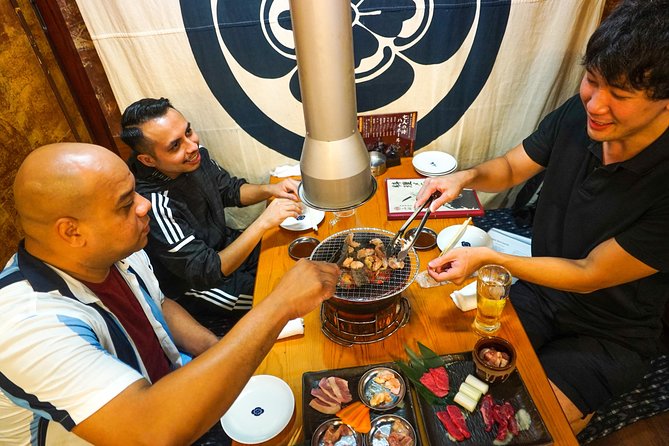
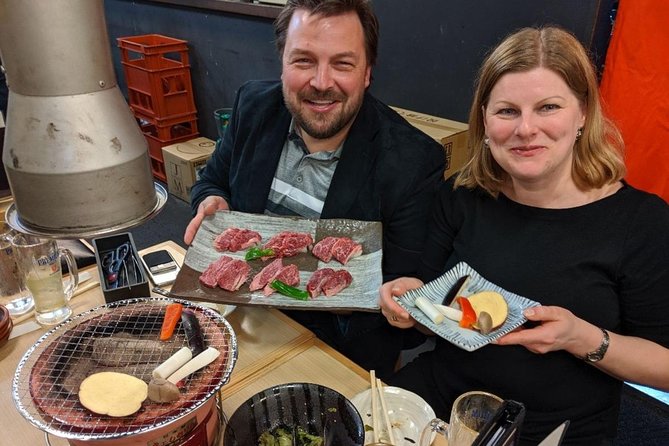
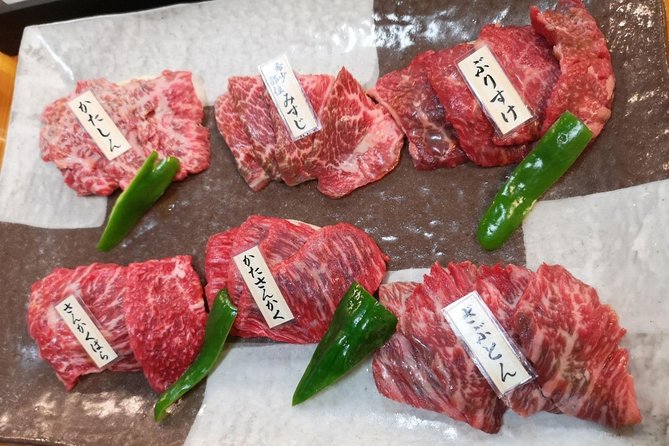
The second major food stop is the evening’s other big reason to book. At a yakiniku restaurant, the beef is grilled over a traditional shichirin stove at the table. The experience details refer to five cuts of A5 Wagyu, though the exact selection can depend on the meal arrangement.
Wagyu is prized for its marbling and rich texture. Here, the cooking becomes part of the meal rather than something done out of sight. You can watch the beef grill and eat it while it is fresh from the heat. For many people, this is the most memorable course of the night.
I like the contrast between the sushi and the beef. Sushi offers careful preparation and seasonal selection. Yakiniku is more hands-on and social. Together, the courses show two very different sides of Japanese dining in a single evening.
The portions also seem to be substantial. Several people finished feeling well fed, and the Wagyu was often the favorite course. If you are bringing children or adults who are not used to rich food, keep in mind that the full combination can be filling.
Smoking may be allowed at some restaurant stops. Also, Wagyu restaurants are not necessarily suitable for every dietary restriction. Vegetarian options have been available in some cases, but you must request a vegetarian course by the day before. A same-day request cannot be accommodated.
Dessert or a drink in Nishishinjuku
The final stop takes place in Nishishinjuku and offers a choice of Japanese dessert or a drink. The listed time is about 30 minutes, making this more than a quick sweet bite. It gives the group a chance to sit, talk, and finish the night at a calmer pace.
The choice of dessert or drink may depend on the group and the venue. One group selected dessert as its third food stop, while another enjoyed a combination of food and Sapporo beer. Because the final option can vary, ask your guide what is available that evening.
This last stop is useful for another reason: it gives you time to collect recommendations. The guides have helped people find additional restaurants and activities for the rest of their stay. After walking through Kabukicho with someone who knows the area, you may feel more comfortable returning on your own.
The tour ends back at the meeting point. That makes the route simple, but remember that you will still need to arrange your own transport afterward if you are staying elsewhere in Tokyo.
What the price includes in practical terms
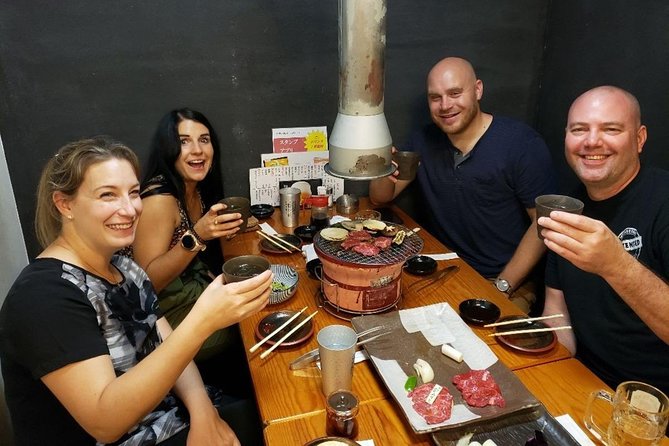
The price is $111.62 per person. That is not a budget night out, but it covers more than a single restaurant meal. You are paying for two substantial food experiences, a final dessert or drink, a guide, neighborhood walking, and the convenience of having the restaurants arranged.
The value is strongest if you want to try both omakase sushi and Wagyu but would feel unsure choosing the right places on your own. It is also useful if you want context with your meal. The guide can help with ordering, explain what is on the table, and point out places you might otherwise pass without noticing.
The value is weaker if you only want a cheap meal or if you already have restaurant reservations in Shinjuku. You may also prefer to spend the money directly on one longer omakase meal rather than dividing the evening between sushi, beef, and dessert.
Group discounts may be available, so check the booking price for your party. The maximum of seven people keeps the evening more personal than a large coach-style food tour.
Weather, walking, and dietary planning
Tokyo weather can be severe. Summer temperatures may reach 40°C, while winter lows can fall to -5°C. Much of the tour takes place indoors, but the route includes outdoor walking through Shinjuku and Kabukicho. Dress for the forecast and wear shoes you can comfortably use for several short walks.
Rain does not necessarily ruin the experience. One person completed the tour during heavy rain and still found it worthwhile, but bad weather can make the walking sections less pleasant. A compact umbrella or rain jacket is sensible in wet seasons.
The operator cannot guarantee allergy-free food because the restaurants are independent kitchens. Substitutions may not be possible at every stop, though the team will try to compensate at another venue. Tell the operator about vegetarian needs by the day before, not when you arrive.
For everyone else, the food is designed to be enjoyed as part of a set route. If you are a particularly selective eater, ask for details before booking rather than relying on substitutions.
Who should book this Tokyo night tour?
I would recommend it to first-time Tokyo visitors who want a guided introduction to Shinjuku after dark. It is also a good fit for couples, adult families, and solo diners who like meeting a few other people over a shared meal.
Food lovers will get the most from it, especially if omakase sushi and Wagyu are both on your Japan wish list. The combination is unusual enough to make the evening feel special, while the walking portion keeps you from sitting in restaurants for the entire night.
It may not suit you if you need strict allergy control, dislike smoky restaurant settings, or want complete freedom to choose every dish. It is also not a pure sightseeing walk. The food is the main event, and the neighborhood stops support it.
Should you book the Shinjuku night food tour?
Book it if you want a well-organized evening with sushi, Wagyu, and Kabukicho in one compact route. The strongest parts are the small group, the quality of the main food stops, and the guides’ ability to help with menus and local questions.
I would schedule it near the beginning of your Tokyo visit. That way, suggestions from guides such as Mimi, Molly, Yuma, Aoi, or Yosh can shape the rest of your stay, and you can return to Shinjuku with more confidence.
Skip it if you are looking for a low-cost meal, have serious dietary restrictions, or already know exactly where you want to eat. For everyone else, $111.62 buys a full evening rather than just a plate of food, and the mix of dinner and neighborhood walking is a fair deal. Free cancellation is available up to 24 hours before the start time, so you have some flexibility when planning.
FAQ
How long does the Tokyo Night Foodie Tour last?
The tour lasts approximately three hours.
Where does the tour begin?
It begins at 1-chōme-2-8 Nishishinjuku, Shinjuku City, Tokyo 160-0023, Japan.
Where does the tour end?
The experience ends back at the meeting point.
What food is included?
The main food stops include seasonal sushi and Japanese Wagyu beef. The final stop includes a Japanese dessert or a drink.
Is omakase sushi included?
Yes. The sushi stop offers an omakase-style experience, where the chef selects the seasonal sushi. One described course includes eight pieces.
Is A5 Wagyu included?
The experience includes Wagyu, and one described arrangement includes five cuts of A5 Wagyu grilled at the table. Exact selections may vary.
How large is the group?
The tour has a maximum of seven travelers.
Can vegetarians join the tour?
A vegetarian course may be available if requested by the day before. A vegetarian request made on the day of the tour cannot be accommodated.
Can the tour guarantee allergy-free food?
No. The operator cannot guarantee allergy-free meals, and substitutions may not be possible at every restaurant.
Is cancellation free?
You can cancel for a full refund up to 24 hours before the experience start time. Cancellations or changes made less than 24 hours before the start time are not accepted for a refund.
More evening experiences in Tokyo
- Tokyo After 5: Authentic Japanese Food & Drink Night Tour
★ 4.5 · 560 reviews - Tokyo: 3-Hour Food Tour of Shinbashi at Night
★ 4.9 · 45 reviews - Winner 2025 Florence Sunset Food & Wine Tour by Eating Europe
★ 5.0 · 5,015 reviews - Saigon By Night and Street Food By Motorbike | Opt: Ao Dai Riders
★ 5.0 · 4,066 reviews
Just added in Tokyo
- Tokyo: Allstar Food Tour★ 4.7 · 29 reviews
- Tokyo: West-Side Cycling and Food Tour with Guide★ 5.0 · 37 reviews
- Tokyo: Togoshi Ginza Street Food Tour★ 5.0 · 34 reviews
- Tokyo Tsukiji Food & Culture Private Tour Licensed Guide★ 4.9 · 28 reviews
- Tokyo: Wagyu and Sushi Gastronomic Journey★ 4.3 · 24 reviews
- Tokyo: Sushi and Ramen Cooking Class with Sake Pairing Set★ 5.0 · 81 reviews
- Tokyo: Sushi Making Class★ 4.9 · 390 reviews
- Tokyo: Ramen Tasting Tour with 6 Mini Bowls of Ramen★ 4.9 · 432 reviews
Sushi and Ramen Tours, compared.
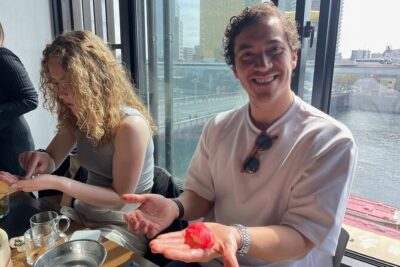
Sushi Making Tokyo Roll and Authentic Japanese Sushi Class
Read our review →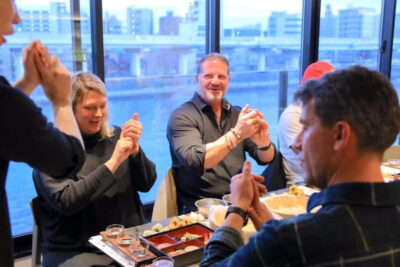
Roll and Authentic Sushi Making Class in Asakusa
Read our review →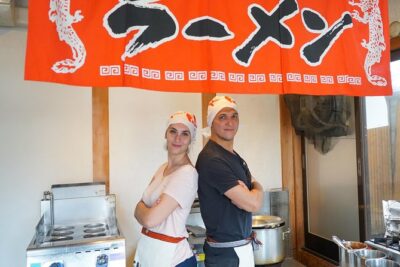
Ramen Cooking Class at Ramen Factory in Kyoto
Read our review →
Best of Shinjuku: Izakaya Food Tour (4 Stops, 14+ Tastings)
Read our review →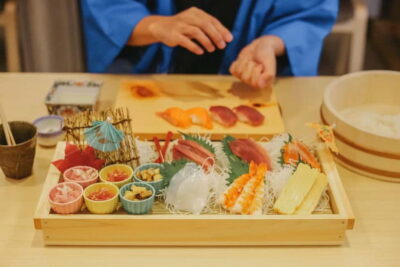
Sushi Making Class in a Happi Coat near a Famous Spot
Read our review →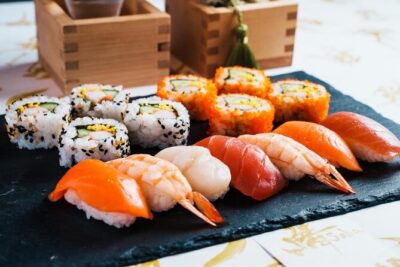
Sushi Making Tokyo! Popular Maki Sushi & Japanese Sushi(+Recipe!)
Read our review →
Sushi Making Osaka Roll and Authentic Japanese Sushi Class
Read our review →
Tokyo Sushi Making Class in Tsukiji with Professional Chef
Read our review →Browse the lists this tour appears in