
REVIEW · TOKYO FOOD TOURS
Tokyo: Wagyu and Sushi Gastronomic Journey
Shinjuku tastes better after dark. This three-hour food and walking tour joins sushi, Wagyu beef, and the narrow lanes of Tokyo’s famous nightlife district. I like the mix of serious food guidance and old-school neighborhood wandering, and I like that the group is limited to 10 people. The main catch is the $154 price, which is fair only if you value dinner, drinks, and a guide who helps you make sense of Shinjuku.
I also like the balance between food and culture. You are not parked in one restaurant all evening: you move through Kabukicho, Omoide Yokocho, Hanazono Shrine, and Golden Gai. Keep in mind that transport costs are extra, usually 200 to 800 yen, and the tour can run closer to three and a half hours than three.
Key points to know before booking
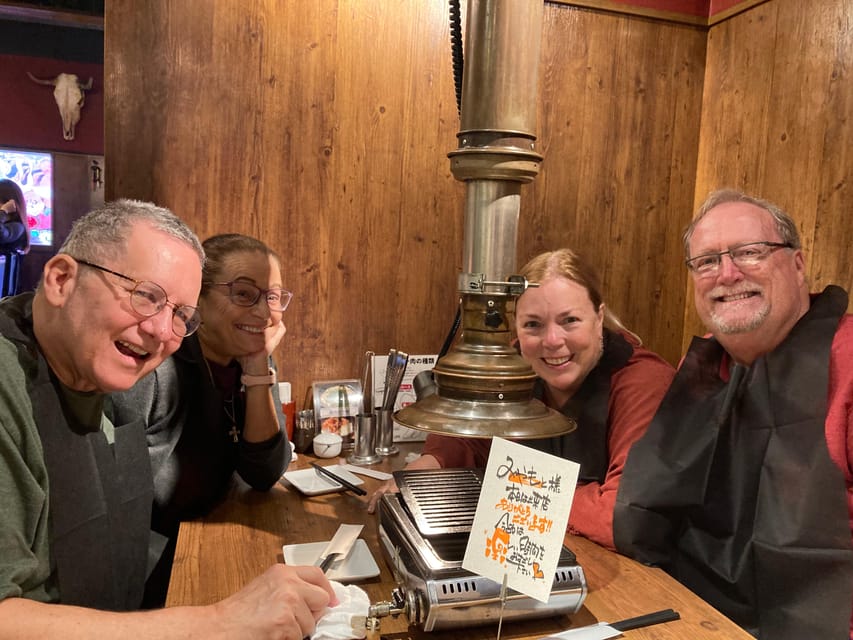
- Wagyu and sushi share the spotlight: You taste two of Japan’s best-known foods while learning about beef grades, regions, seasonal fish, and traditional preparation.
- Shinjuku after dark is part of the meal: Neon-lit Kabukicho, the Godzilla Head, Omoide Yokocho, and Golden Gai give the evening a strong sense of place.
- Two food venues are included: Dinner and alcoholic drinks are part of the price, with alcohol available only to participants aged 20 and above.
- The group stays small: A maximum of 10 people makes it easier to ask questions and keep together in tight alleys.
- The route begins near the 3rd Burger: Meet in front of the restaurant at 7-chōme-10-5 Nishishinjuku.
- The tour ends in Golden Gai: Plan your trip home from Shinjuku Golden Gai rather than from the starting point.
Why this Shinjuku food tour works
Shinjuku can feel like several cities squeezed into one district. One block brings giant signs, department stores, and packed streets. A few minutes later, you are looking at a small shrine or squeezing through an alley lined with tiny bars.
This tour makes that contrast useful. Instead of treating Shinjuku as a backdrop for dinner, it connects the food to the neighborhood. You get an evening of eating, but you also get a guided introduction to places that can be confusing on your own.
The strongest part is the combination of Wagyu and sushi. These foods are often marketed abroad as luxury treats, but the tour gives you a chance to understand what you are tasting. You learn about Wagyu’s background, flavor, and regional differences, then watch sushi chefs work with seasonal ingredients and careful technique.
That guidance matters. A good piece of sushi can be gone in seconds, and without context it is easy to notice only that it tastes fresh. With a guide explaining the ingredients and methods, you have a better chance of recognizing why one piece differs from another.
The food focus is serious, but this is not a formal cooking lesson. You are eating at two separate venues, walking between key parts of Shinjuku, and seeing how locals use the district at night. Think of it as a guided food crawl with cultural stops, not a long seated tasting menu.
More Sushi and Ramen Tours in Tokyo
- Sushi Making Tokyo Roll and Authentic Japanese Sushi Class
★ 5.0 · 3,971 reviews - Tokyo: Roll and Authentic Sushi Making Class in Asakusa
★ 4.9 · 1,957 reviews - Best of Shinjuku: Izakaya Food Tour (4 Stops, 14+ Tastings)
★ 5.0 · 1,863 reviews
Meeting near the 3rd Burger
The tour starts at 7-chōme-10-5 Nishishinjuku, directly in front of the 3rd Burger. That detail is worth saving before you leave your hotel. Shinjuku has many large stations, exits, and busy corners, so arriving in the general area is not quite the same as arriving at the meeting point.
Give yourself extra time to get there. You will want to find the correct station exit, orient yourself, and locate the restaurant without rushing. If you do not make contact by the day of the tour, the booking may be canceled, with a full refund issued in that situation.
From the meeting point, expect the evening to build gradually. The group moves into Kabukicho, where the tour shifts from ordinary city streets to Shinjuku’s neon-heavy entertainment center.
Kabukicho, neon, and the Godzilla Head
The first guided section focuses on Kabukicho and lasts about an hour and a half according to the stated itinerary. This is the part of the walk that gives you Shinjuku’s modern face: bright signs, nightlife businesses, restaurants, and the constant motion of one of Tokyo’s best-known entertainment areas.
The Godzilla Head on top of the Shinjuku Toho Building is an easy landmark to spot and a fun pop-culture moment. It also helps you understand the scale of the area. Shinjuku is not trying to be subtle here. The signs are tall, the streets are packed, and the district feels designed for evening energy.
Your guide can make the area easier to read. Kabukicho has a reputation that may sound more mysterious than it feels during a standard sightseeing walk. You stay with the group, learn about the district, and see the public spaces without needing to work out the route alone.
This portion may appeal most if you want a broad introduction to Tokyo nightlife. If you prefer quiet lanes and traditional architecture from the start, it may feel loud and commercial. That is not a flaw so much as a clear feature of the neighborhood.
Hanazono Shrine, a quiet pause
Hanazono Shrine offers a sharp change of pace. The shrine sits amid the city, giving you a chance to step away from the bright signs and pause among traditional religious features.
The value of this stop is not simply that it is photogenic. It shows how old customs and modern city life occupy the same small area. You can learn about Japanese religious practices and see how a place of worship fits into a district better known for restaurants, bars, and nightlife.
I like this kind of stop on a food walk because it breaks up the eating. Three hours of rich food can become tiring, while a short cultural pause gives the evening a better rhythm. It also keeps the tour from feeling like a checklist of restaurants.
The information provided does not specify how long you remain at the shrine, so expect it to be a sightseeing stop rather than a long temple-style visit. Wear shoes you can walk in and be ready to spend much of the evening outdoors.
Same city, a different table:
- Tokyo: Shinjuku Food Tour (13 Dishes at 4 Local Eateries)
★ 5.0 · 6,603 reviews - Tokyo Tsukiji Fish Market Food and Culture Walking Tour
★ 5.0 · 3,184 reviews - Tokyo: Shinjuku Food Tour (15 Dishes and 4 Eateries)
★ 4.9 · 2,033 reviews - Tokyo: Sushi Making Class in a Happi Coat near a Famous Spot
★ 4.9 · 1,377 reviews
Omoide Yokocho and tiny comfort-food stops
Omoide Yokocho is one of the most atmospheric parts of the route. This narrow alley is known for tiny bars and small eateries serving yakitori and other Japanese comfort foods.
The appeal is scale. Instead of wide dining rooms and polished restaurant fronts, you see a compact network of places built around close quarters and quick meals. Even if your main dinner stops are focused on Wagyu and sushi, Omoide Yokocho adds a useful look at another side of Japanese eating culture.
You should not assume that every food item in this alley is included in the tour. The stated inclusions cover dinner at two food venues, while Omoide Yokocho is described as part of the walking route. If you spot something tempting, ask your guide whether it is included before ordering.
This is also a place where a small group helps. Ten people can move through a narrow alley more easily than a large coach group, though you should still expect stops and a slower pace. Keep your belongings close and stay aware of the group when the walkway gets crowded.
Sushi with a guide’s eye
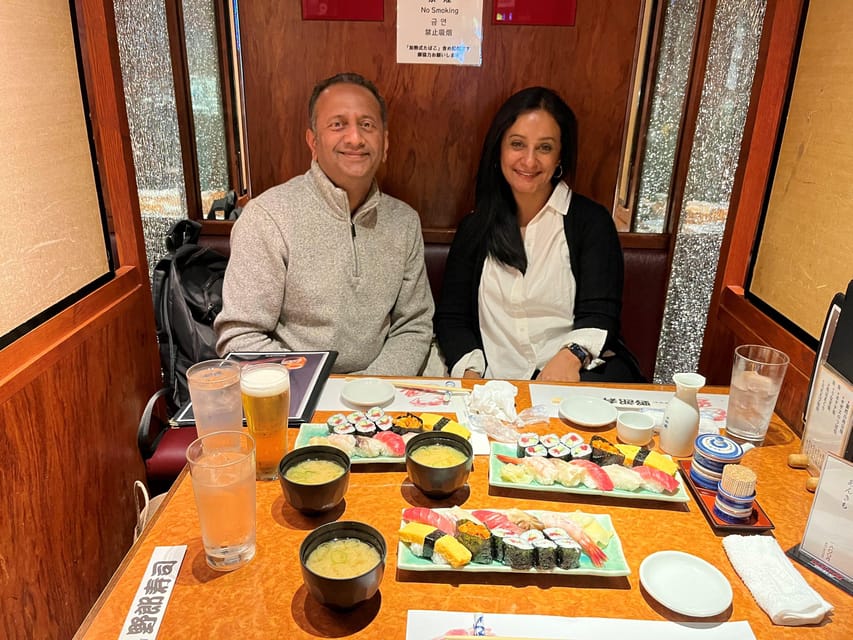
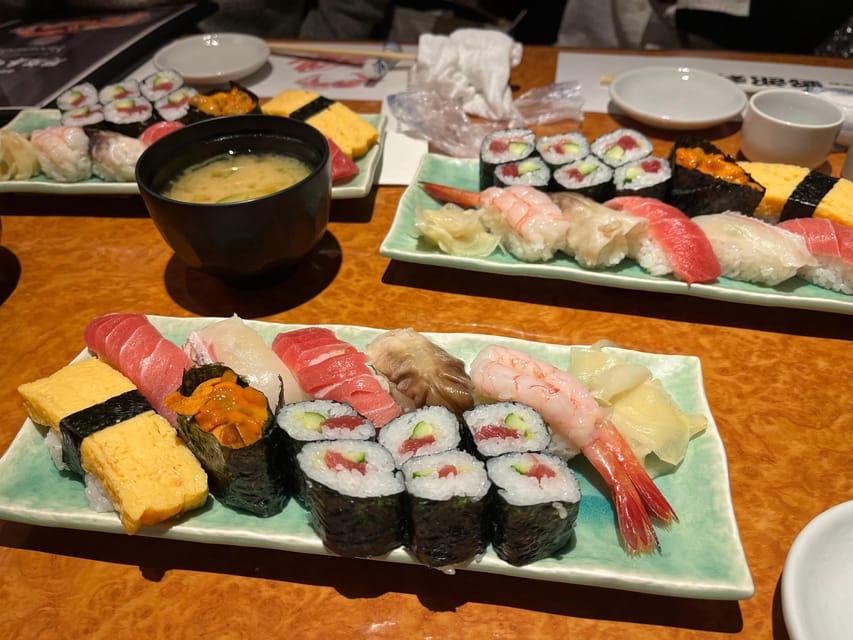
The sushi portion is built around fresh seasonal ingredients and traditional knife work. You get to watch the precision behind each piece rather than treating sushi as a simple plate of fish and rice.
That distinction is useful. Sushi quality depends on details that are easy to miss, including the ingredient itself, the cut, the rice, and the way the piece is assembled. The guide’s explanations can turn a quick meal into a lesson in Japanese food culture without making the dinner feel like school.
The menu is not specified in advance, so you should not expect a guaranteed list of fish or a fixed number of pieces. What you can count on is the chance to sample sushi with guidance and to ask questions about what is served.
This part suits first-time sushi diners especially well. If you already know Japanese food, you may value the seasonal and regional context more than basic explanations. Either way, the experience is more useful than simply arriving at a famous counter with no idea what to order.
Wagyu beef and the value of a shared dinner
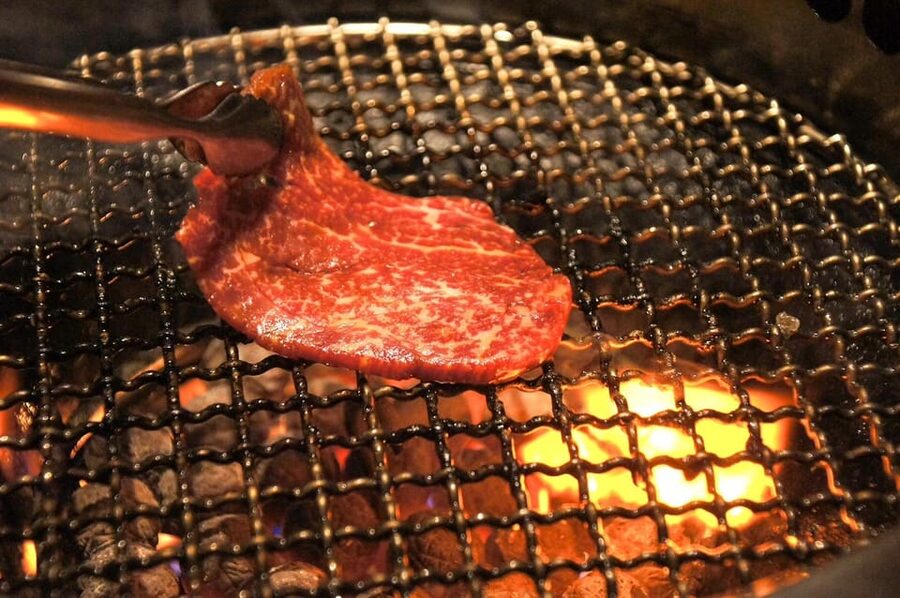
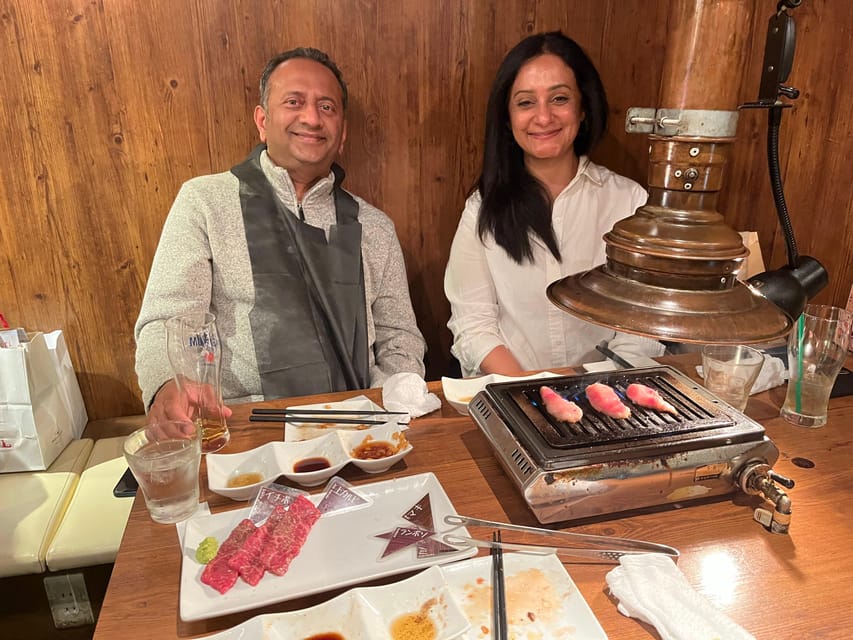
Wagyu is the evening’s other main event. The guide discusses its origins, flavor, and regional variations, then you taste the beef as part of dinner.
The word Wagyu covers more than one specific steak. Learning about regional differences gives you a better framework for understanding why the meat can vary in texture, marbling, and flavor. The information supplied does not identify a particular Wagyu region or grade, so you should not book expecting a named brand such as Kobe unless the operator confirms it separately.
The food is clearly the most praised part of the experience. Multiple diners describe the beef as tender, mouthwatering, and a special treat, while the sushi is repeatedly described as fresh and excellent. One participant specifically called it a first Japanese barbecue experience and found the Wagyu to be the highlight.
That gives you a useful expectation: this is likely to satisfy someone who wants a celebratory meal, but it is not the cheapest way to eat in Shinjuku. At $154 per person, the value comes from having the dinner, two food venues, drinks, neighborhood walk, and English-speaking guide bundled together.
If you would rather choose your own restaurant and order a large amount of food, the price may feel high. If you want to avoid menu confusion and pair a special dinner with a well-planned evening walk, the cost is easier to justify.
Golden Gai and Tokyo’s smallest bars
The final major section takes you through Shinjuku Golden Gai, a maze of narrow lanes filled with more than 200 small bars. The area offers an intimate drinking setting and a look at Tokyo’s postwar urban culture.
Golden Gai is not a conventional sightseeing attraction. Its appeal comes from the tiny scale and unusual layout. Each bar can have its own character, but many are extremely small, and not every place is designed for a large group or a casual drop-in.
The tour gives you a way to see the area without having to choose a bar at random. Your guide can explain the setting and help you understand what makes Golden Gai different from the larger nightlife streets nearby.
Alcoholic drinks are included for participants aged 20 and older. The supplied details do not specify the number or type of drinks, so consider the included alcohol a helpful part of the evening rather than an open bar.
The tour finishes in Golden Gai. That is convenient if you want to continue your night in Shinjuku, but less convenient if you hoped to return directly to your starting point. Check your route home before the tour begins, especially if you are staying outside the district.
What the small group changes
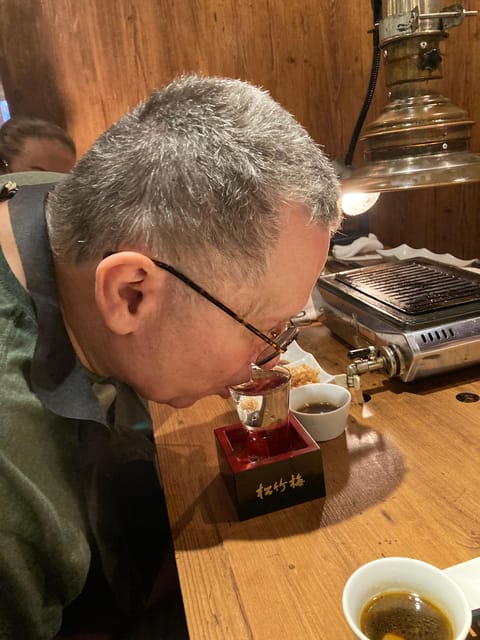
The maximum group size is 10. That is a practical advantage in Shinjuku, where crowded sidewalks and narrow lanes can make a large tour frustrating.
A small group also gives you a better chance to ask about the food. The guide can explain a dish, answer a question about Wagyu, or help you understand what you are seeing at the shrine without having to address a crowd.
Guide quality matters a great deal here. Emma received especially warm praise for being friendly, personable, and able to connect food explanations with stories about dining in Tokyo and her time in the United States. Other feedback also highlights guides who were warm, enthusiastic, and good at linking food with local culture.
No specific guide is guaranteed, so treat Emma’s name as an example rather than a promise. The repeated praise for the guiding style does suggest that the human side of the tour is a major part of its appeal.
Timing, transport, and who should book
The stated duration is three hours, but the additional information allows three to three and a half hours. Build in a little flexibility. A food tour can run longer when the group is moving through crowded streets or spending time at two dining venues.
Transportation is not included. The expected cost is about 200 to 800 yen, depending on what you need during the evening. Most of the experience is a walking route through central Shinjuku, but you should keep some cash or a convenient payment option available for those transport costs.
This tour suits you best if:
- You want a guided introduction to Shinjuku after dark.
- You enjoy both food and neighborhood history.
- You are curious about Wagyu and sushi but want help understanding them.
- You prefer a small group over a large organized outing.
- You are comfortable walking through crowded streets and narrow alleys.
- You are at least 20 and would like the included alcoholic drinks.
It may not suit you if you need a quiet, slow meal, dislike nightlife districts, or want a detailed menu confirmed before booking. It also may not be ideal for someone seeking a purely traditional Japan experience, since Kabukicho and Golden Gai are central to the evening.
Should you book the Wagyu and sushi tour?
I would book this if you want one efficient evening that combines premium Japanese food with the character of Shinjuku. The food receives the strongest praise, but the route is what gives the meal context: neon Kabukicho, the Godzilla Head, Hanazono Shrine, Omoide Yokocho, and Golden Gai all fit into one compact outing.
At $154, it is a splurge. You are paying for dinner, drinks for eligible adults, two food venues, a local English-speaking guide, and a small group. That is good value for a first night in Tokyo when you want confidence and structure, less so if you already know Shinjuku and prefer independent dining.
Book it when the goal is a social, food-centered introduction to the district. Skip it when you want a quiet restaurant evening or a fixed tasting menu. For the right person, it is a tasty way to get oriented, with enough local color to keep the night from becoming just another expensive dinner.
FAQ
How much does the Tokyo Wagyu and sushi tour cost?
The listed price is $154 per person.
How long does the tour last?
The tour is advertised as three hours, with the additional information noting that it may last three to three and a half hours.
Where does the tour start?
It starts at 7-chōme-10-5 Nishishinjuku, directly in front of the 3rd Burger.
Where does the tour finish?
The tour finishes at Shinjuku Golden Gai.
What food is included?
Dinner is included, with visits to two distinct food venues. The experience includes Wagyu beef and sushi, though the exact menu is not specified.
Are alcoholic drinks included?
Yes. Alcoholic beverages are included for participants aged 20 and above.
Is transportation included?
No. Transportation costs are separate and are expected to range from 200 to 800 yen.
How large is the group?
The tour is limited to 10 participants.
Is the tour conducted in English?
Yes. It includes a live English-speaking local guide.
Just added in Tokyo
- Tokyo: Allstar Food Tour★ 4.7 · 29 reviews
- Tokyo: West-Side Cycling and Food Tour with Guide★ 5.0 · 37 reviews
- Tokyo: Togoshi Ginza Street Food Tour★ 5.0 · 34 reviews
- Tokyo Tsukiji Food & Culture Private Tour Licensed Guide★ 4.9 · 28 reviews
- Tokyo: Sushi and Ramen Cooking Class with Sake Pairing Set★ 5.0 · 81 reviews
- Tokyo: Sushi Making Class★ 4.9 · 390 reviews
- Tokyo: Best of Shibuya Food Tour★ 4.7 · 119 reviews
- Tokyo: Ramen Tasting Tour with 6 Mini Bowls of Ramen★ 4.9 · 432 reviews
Sushi and Ramen Tours, compared.
Sushi Making Tokyo Roll and Authentic Japanese Sushi Class
Read our review →
Roll and Authentic Sushi Making Class in Asakusa
Read our review →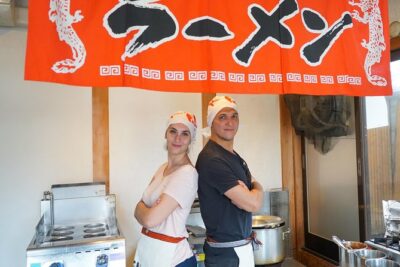
Ramen Cooking Class at Ramen Factory in Kyoto
Read our review →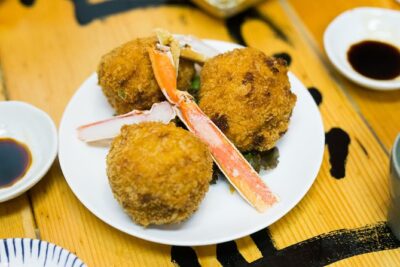
Best of Shinjuku: Izakaya Food Tour (4 Stops, 14+ Tastings)
Read our review →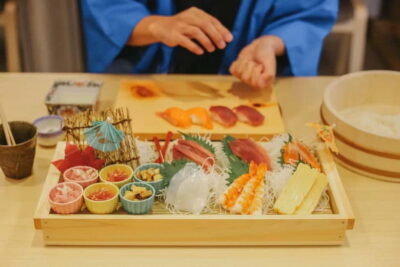
Sushi Making Class in a Happi Coat near a Famous Spot
Read our review →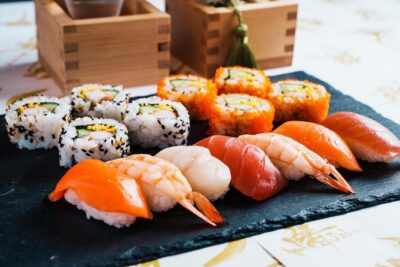
Sushi Making Tokyo! Popular Maki Sushi & Japanese Sushi(+Recipe!)
Read our review →
Sushi Making Osaka Roll and Authentic Japanese Sushi Class
Read our review →
Tokyo Sushi Making Class in Tsukiji with Professional Chef
Read our review →Browse the lists this tour appears in