REVIEW · TOKYO FOOD TOURS
Ramen Making from Scratch +Akihabara Tour –Cooking Class
Ramen starts with flour. This three-hour experience combines an Akihabara walk, a Japanese supermarket visit, and a hands-on cooking class in a central Tokyo kitchen. I especially like the chance to make fresh noodles yourself and the small group size, limited to six people. The main point to consider is that you must travel by train to the studio and pay for that short ride with your own IC card or ticket.
You meet at 11 a.m. outside the Central Ticket Gate at JR Akihabara Station. I also like that the class goes beyond a standard cooking demonstration: you see the ingredients in a real supermarket, then prepare the broth, noodles, and toppings yourself. The drawback is that the menu cannot accommodate vegans or vegetarians, and the class is not suitable for children under five or wheelchair users.
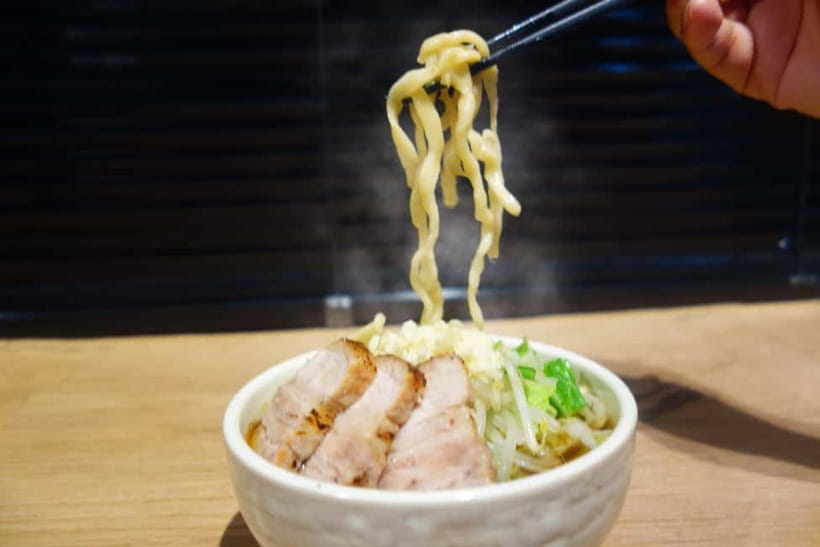
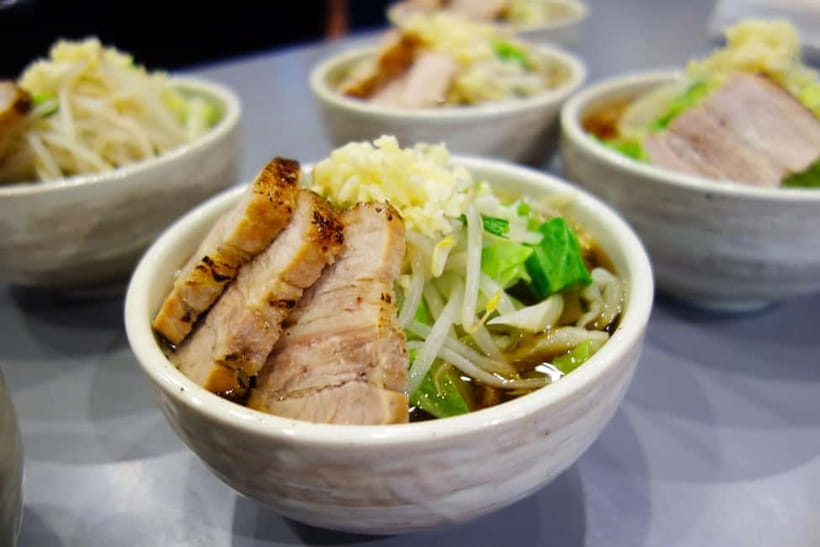
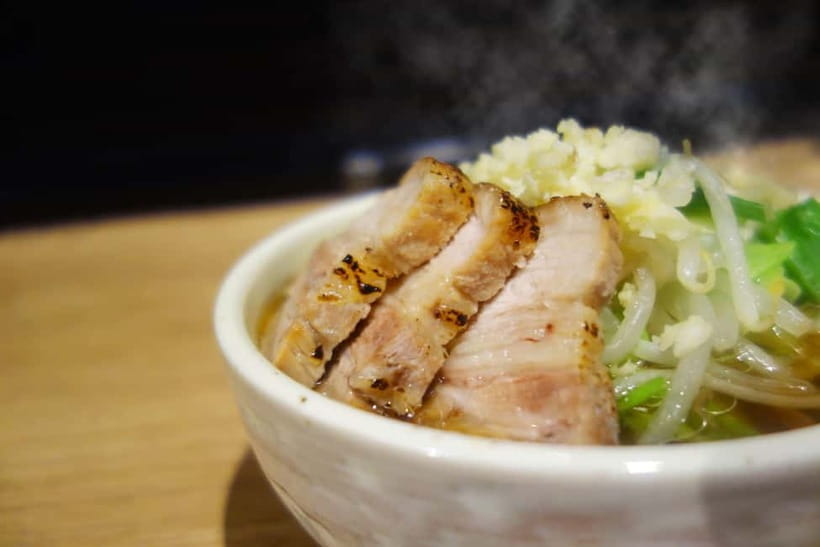
The final bowl is Jiro-style ramen, a hearty style known for fresh noodles, a strong broth, and generous toppings. Past participants have praised the friendly guide and chef, with one Italian couple calling the experience especially interesting and another participant saying the ramen was the best meal of their Japan trip.
Key points to know before booking
- Fresh noodles from flour: You make the ramen noodles yourself instead of simply assembling a prepared meal.
- Akihabara before the kitchen: A short walking tour connects electric-town sights, anime culture, and Japanese food shopping.
- Supermarket ingredient lesson: The guide explains the ingredients used that day and how they fit into the finished bowl.
- English instruction: The class is taught in English, making this a practical choice for visitors who want clear cooking guidance.
- Small group format: With no more than six participants, you should have a better chance to follow each step and ask questions.
- Train ride included in the plan, not the price: You travel from Suehirocho Station to the kitchen studio, but the fare is paid separately.
Starting at JR Akihabara Station at 11 a.m.
Your meeting point is outside the Central Ticket Gate at JR Akihabara Station. This is an important detail because Akihabara has several stations and many exits, so give yourself extra time to find the correct gate.
The group leaves after a short wait, but you should not treat the 11 a.m. start as flexible. If you are more than 10 minutes late, the guide may continue without you. You would then need to make your own way to the kitchen studio, and there is no refund for missing the departure.
The experience requires at least two people per reservation. The group limit is six, which keeps the outing more personal than a large food tour. You can expect an English-speaking guide for the walk and an English-speaking instructor in the kitchen.
More Cooking Classes in Japan
- Tokyo: Roll and Authentic Sushi Making Class in Asakusa
★ 4.9 · 1,957 reviews - Tokyo: Sushi Making Class in a Happi Coat near a Famous Spot
★ 4.9 · 1,377 reviews - Tokyo Sushi Making Class in Tsukiji with Professional Chef
★ 5.0 · 1,177 reviews
A 20-minute look at Akihabara
The first part is a short walking tour through Akihabara. This is not a full neighborhood tour, and you will not have hours to browse shops. Instead, the walk gives your cooking class some local setting before you begin handling ingredients.
Akihabara is famous for electronics, anime, games, and other parts of modern Japanese pop culture. The route takes you through some of the colorful streets on the way to a supermarket. For a first-time visitor, this is a useful introduction because it shows a side of Tokyo that has little to do with temples or traditional gardens.
I like the way the walk links the neighborhood to the meal. You are not simply dropped into a kitchen with no context. You see the streets, learn about the area, then move toward the ingredients that will become lunch.
Still, keep your expectations in check. The walking portion lasts about 20 minutes, so it is best viewed as a short orientation rather than a full sightseeing tour. If Akihabara is a major priority for you, plan to return on another day for more shopping and exploring.
Seeing Japanese ingredients at a local supermarket
The supermarket stop also lasts about 20 minutes. This is one of the most useful parts for anyone who wants to understand everyday Japanese food beyond restaurant menus.
Your guide points out the ingredients used in the ramen prepared that day and explains how they are used. You get to see the products in the setting where local shoppers buy food, rather than only hearing about them in a cooking studio.
That matters because ramen is more than noodles and soup. The ingredients, toppings, seasoning, and preparation all shape the final bowl. A supermarket walk gives you a better sense of how Japanese cooks work with packaged and fresh foods in daily life.
The stop is brief, so you should not expect a long shopping lesson or time to examine every aisle. Its value comes from the connection to the class. Pay attention to the products the guide highlights, and ask questions while you have the chance.
Taking the train to the Patia kitchen studio
After Akihabara and the supermarket, you take a train to the cooking studio. The ride takes about 15 to 30 minutes, depending on the route and timing.
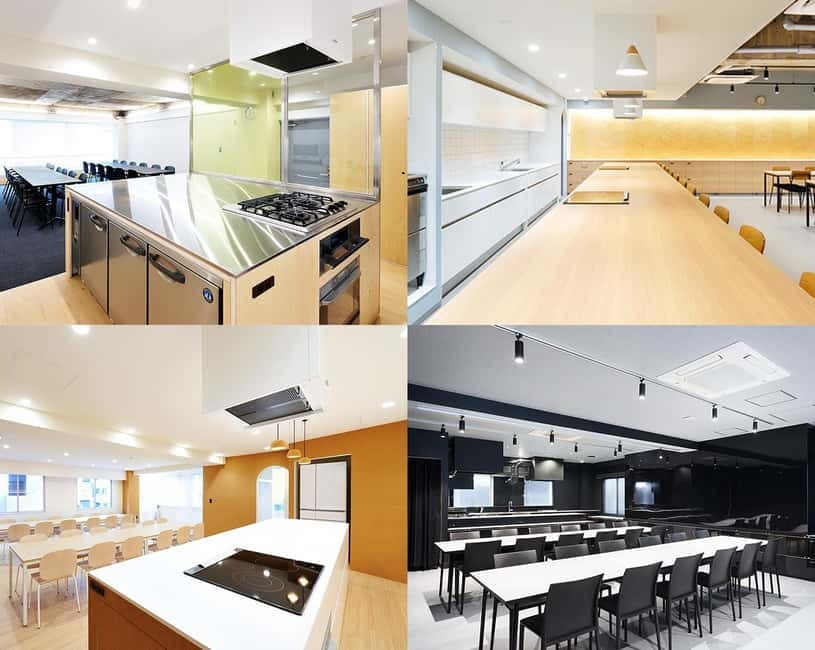
The studio is part of the Patia Kitchen Studios group, with modern cooking spaces in central Tokyo. The rooms are described as spacious and comfortable, and they have been used for Japanese television programs. The venue is also only a few minutes from the nearest station.
The train fare is not included in the $120 price. You need your own Suica or another IC card, or you can buy a ticket. If you do not have an IC card, the guide will help you purchase one.
This is a small but important planning point. Keep your transport card ready, and do not assume every part of the experience is covered by the booking price. The studio is a different location from the Akihabara meeting point, so you finish the class there rather than returning to the station where you began.
More Cooking Classes in Tokyo
- Ramen & Gyoza Cooking Class in Tokyo with Local Supermarket Visit
★ 5.0 · 823 reviews - Tokyo: Tsukiji Fish Market Sushi Making Class with Pro Chef
★ 4.9 · 506 reviews - Tokyo: Sushi Making Class
★ 4.9 · 390 reviews - Tokyo: Sushi and Ramen Cooking Class with Sake Pairing Set
★ 5.0 · 81 reviews
Making the noodles by hand
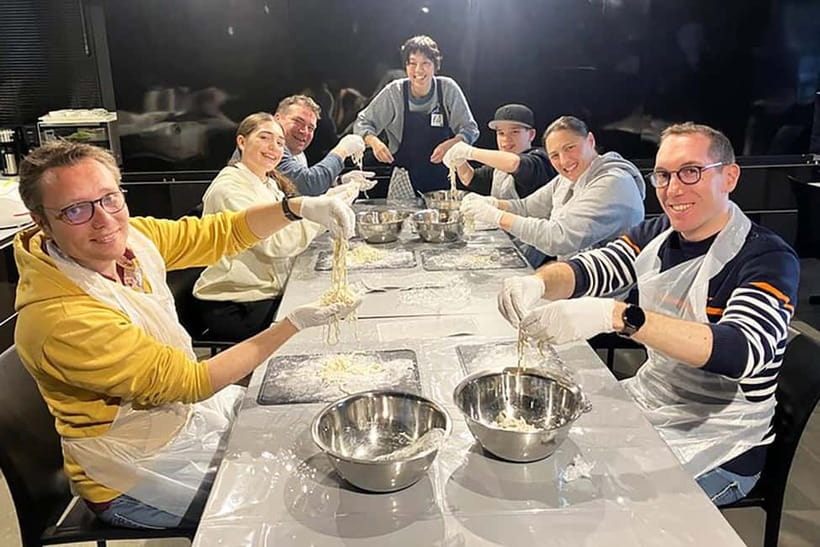
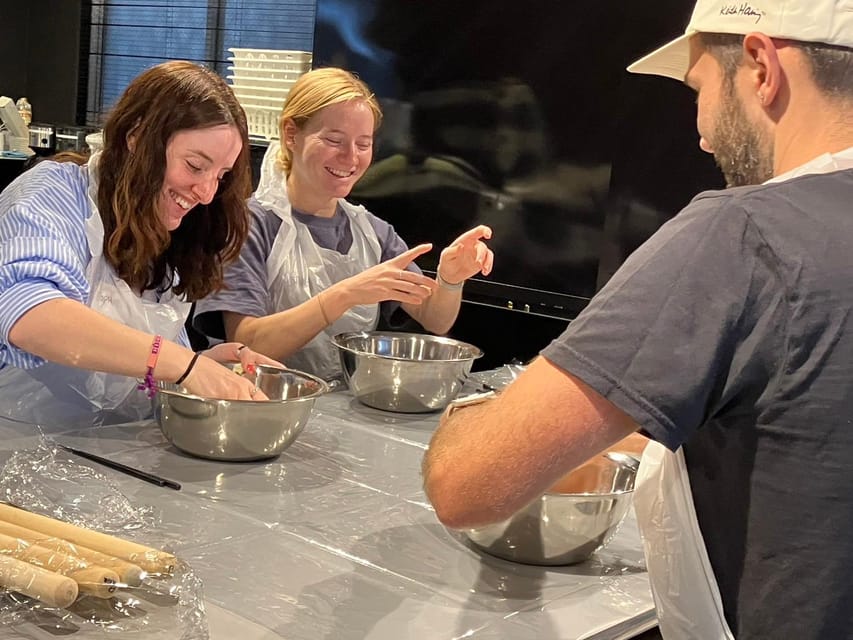
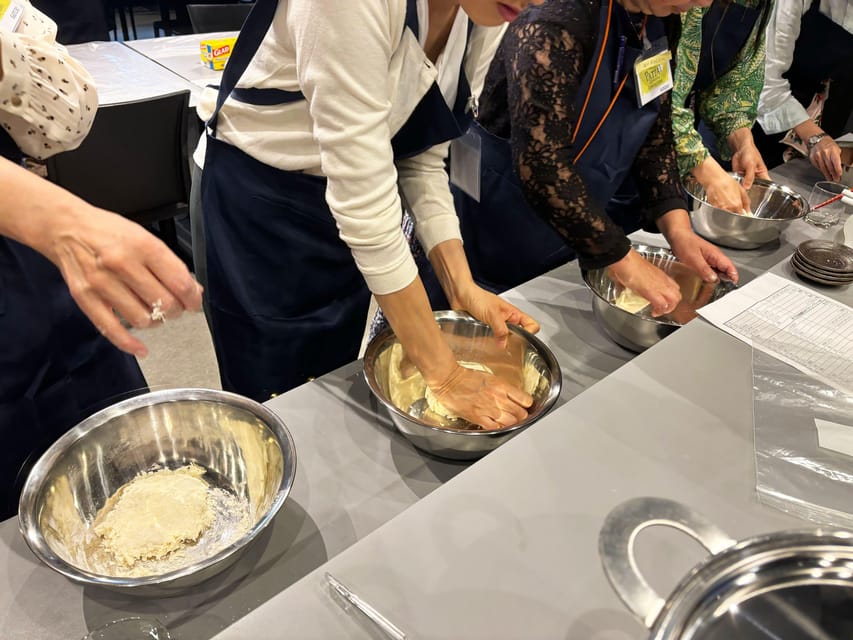
The main class lasts about 90 minutes. You prepare ramen from the basic components, including fresh noodles, broth, and toppings.
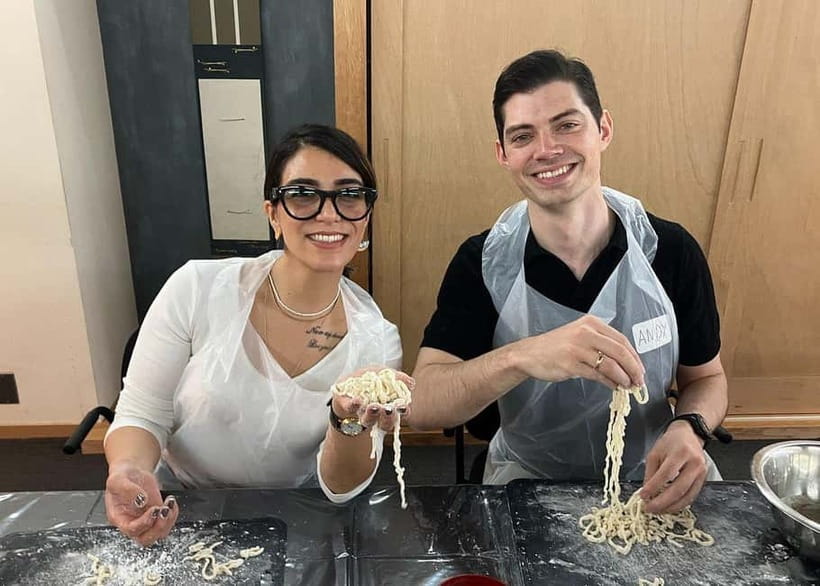
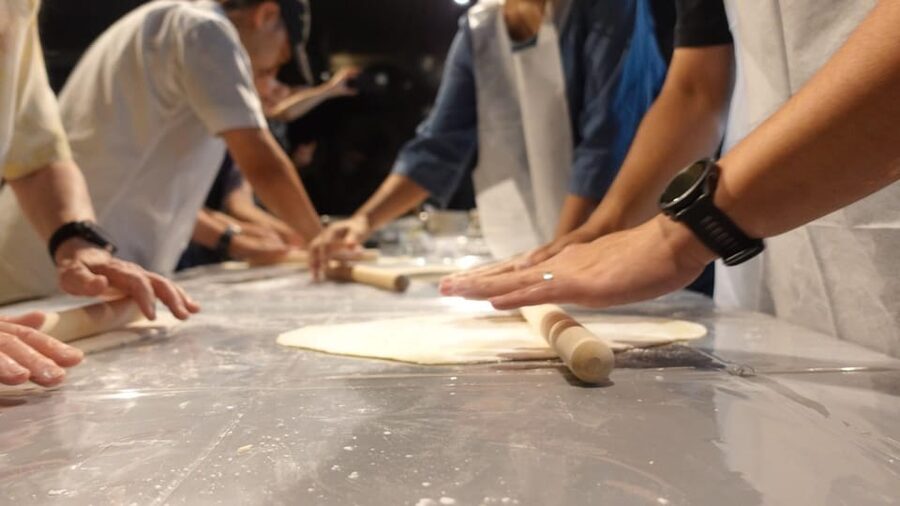
The most unusual feature is making the noodles from flour. This gives you a better sense of the work behind a bowl of ramen. You are not simply placing noodles into hot soup. You learn how the dough becomes the base of the meal, then bring the other parts together.
For many people, this will be the most satisfying part of the experience. The process is active, but the instructor guides you through it in English. You should have time to follow the steps, watch the technique, and take part rather than standing at the side while someone else cooks.
The class focuses on Jiro-style ramen, a filling and distinctive style. The experience provider describes this as the only class where you can learn Jiro-style ramen in English. That makes it a particularly good match for someone who has already tried ramen in Japan and wants to understand how a specific style is made.
The description does not give a fixed recipe for every date, so the exact ingredients may vary. What you can count on is the basic structure: prepare the broth, make fresh noodles, work with toppings, and assemble the finished bowl.
Understanding the broth and toppings
The broth and toppings are prepared as part of the class. These elements give you a chance to see how the ramen comes together as a complete meal rather than as separate cooking tricks.
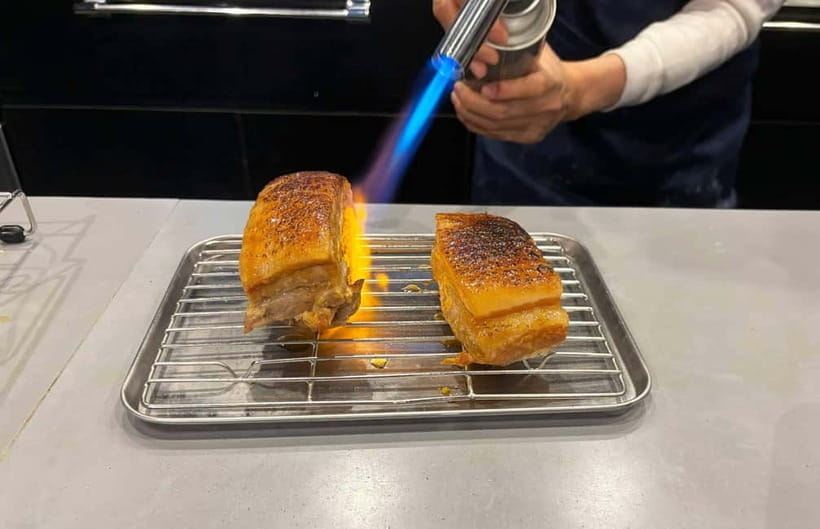
The final dish includes chashu, the usual pork topping, unless you request a change to chicken more than 48 hours before the class. This is helpful if you eat chicken but avoid pork. You need to make the request in advance, since a last-minute change is not promised.
There are no vegan or vegetarian options. That limitation is firm, so this is not a good choice if you avoid all meat or animal products. The experience is also not suitable for people with back problems, and wheelchair users should not book it.
The class ends with you eating the ramen you prepared. Several participants have given the meal particularly high praise, including one person who considered it the best ramen of an entire Japan trip. Taste is personal, of course, but that reaction points to the value of making a dish fresh and eating it immediately.
What the $120 price gets you
At $120 per person, this is not a cheap lunch. You are paying well above the cost of ordering a bowl of ramen at a neighborhood restaurant. The price makes more sense when you count the whole experience: an Akihabara walk, a supermarket visit, instruction in English, ingredients, food and drink, the cooking session, and downloadable photographs.
The small group limit also matters. With up to six people, the guide and instructor can give clearer attention than they could in a large class. If you want a quiet, private lesson, this is not a private booking, but the group should still feel manageable.
I see the strongest value for people who care about food and want to learn a skill during their Tokyo visit. If you only want a quick meal, the price will feel high. If you want a structured activity that combines neighborhood sightseeing with cooking, the cost is easier to justify.
The class also gives you something to remember beyond a restaurant receipt. You learn how ingredients look before cooking, how noodles are made, and how the separate parts of ramen are prepared. Those details can change the way you order ramen later in Japan.
Timing, comfort, and practical limits
The full experience lasts about three hours. That includes roughly 20 minutes of walking in Akihabara, 20 minutes in the supermarket, 15 to 30 minutes on the train, and about 90 minutes in the kitchen. The timing leaves little room for major delays.
Wear clothes that allow comfortable movement. No special clothing is listed, but you should be prepared to work in a kitchen and walk between stops. People with back problems should skip this activity because the class may require standing and moving around.
Baby strollers are not allowed, and smoking is not allowed. Children under five cannot take part. Families with older children should also consider whether a three-hour cooking class suits their children, since the experience is designed around active food preparation rather than simple sightseeing.
Photos taken during the experience can be downloaded later. This is a nice extra, particularly if you want a record of the noodle-making process without stopping to take pictures at every stage yourself.
Free cancellation is available up to 24 hours in advance for a full refund. You can also reserve now and pay later, which helps if your Tokyo schedule is still changing.
Who will enjoy this ramen class most
I would recommend this experience to food-focused visitors, first-time Tokyo visitors who want a guided introduction to Akihabara, and anyone curious about how ramen is made from basic ingredients.
It also suits couples and small groups well. The minimum reservation is two people, and the maximum group size is six. The class received a perfect 5 rating from 25 ratings, with special praise for the friendly guide, the chef, the ingredient explanations, and the taste of the finished ramen.
English speakers should find the class easy to follow because both the tour and cooking instruction are in English. The experience is also a good choice if you want a structured activity in the middle of a Tokyo trip, especially on a day when you would rather do something hands-on than visit another museum.
I would not choose it for a vegetarian or vegan meal, a fully accessible outing, a stroller-friendly family activity, or a quick stop between major sightseeing plans. You also need to be punctual and comfortable changing locations by train.
Should you book the Akihabara ramen experience?
Book it if you want to make fresh noodles, learn about Japanese supermarket ingredients, and eat a Jiro-style bowl prepared with your own hands. The strongest parts are the English instruction, the small group, and the clear connection between the Akihabara walk and the cooking session.
Think twice if $120 feels too high for lunch, if you need a vegetarian menu, or if standing and train travel will be difficult. For everyone else, this is a well-shaped three-hour activity that gives you more than a meal. It shows you how a familiar Japanese dish is built, from flour and ingredients to the final bowl.
FAQ
Where does the ramen experience begin?
It begins at 11 a.m. outside the Central Ticket Gate at JR Akihabara Station.
How long does the experience last?
The experience lasts about three hours.
Is the instruction in English?
Yes. The guide and cooking instructor provide the experience in English.
How many people can join the group?
The group is limited to six participants. At least two people are required per reservation.
Is the train ride to the kitchen studio included?
The train ride is part of the route, but the fare is not included. You should use a Suica or another IC card, or buy a ticket. The guide can help you buy one if needed.
Where does the experience finish?
It finishes at the kitchen studio, which is different from the Akihabara meeting point.
Can the pork chashu be changed to chicken?
Yes, but you must request the change more than 48 hours before the experience.
Are vegan or vegetarian options available?
No. Vegan and vegetarian options are not available.
What happens if I arrive more than 10 minutes late?
The group may leave without you. You would then need to travel directly to the kitchen studio, and no refund is provided for the delay.
More Workshops in Tokyo
- Shinjuku Tokyo: Authentic Japanese Home-Style Culinary Class
★ 4.9 · 125 reviews - Shibuya Tokyo: Sushi Making Class (Vegan/Vegetarian/Halal)
★ 4.7 · 29 reviews - Authentic Pizza Making Class in Naples with Appetizers and Drink
★ 5.0 · 3,178 reviews - Ramen Cooking Class at Ramen Factory in Kyoto
★ 5.0 · 1,937 reviews
More Sushi and Ramen Tours in Tokyo
- Sushi Making Tokyo Roll and Authentic Japanese Sushi Class
★ 5.0 · 3,971 reviews - Best of Shinjuku: Izakaya Food Tour (4 Stops, 14+ Tastings)
★ 5.0 · 1,863 reviews - Sushi Making Tokyo! Popular Maki Sushi & Japanese Sushi(+Recipe!)
★ 5.0 · 1,314 reviews - Tokyo Night Foodie Tour in Shinjuku – Seasonal Sushi, Wagyu Beef
★ 5.0 · 1,161 reviews
Just added in Tokyo
- Tokyo: West-Side Cycling and Food Tour with Guide★ 5.0 · 37 reviews
- Tokyo: Allstar Food Tour★ 4.7 · 29 reviews
- Tokyo: Togoshi Ginza Street Food Tour★ 5.0 · 34 reviews
- Tokyo Tsukiji Food & Culture Private Tour Licensed Guide★ 4.9 · 28 reviews
- Tokyo: Wagyu and Sushi Gastronomic Journey★ 4.3 · 24 reviews
- Tokyo: Sushi and Ramen Cooking Class with Sake Pairing Set★ 5.0 · 81 reviews
- Tokyo: Sushi Making Class★ 4.9 · 390 reviews
- Tokyo: Ramen Tasting Tour with 6 Mini Bowls of Ramen★ 4.9 · 432 reviews
Cooking Classes, compared.

Authentic Pizza Making Class in Naples with Appetizers and Drink
Read our review →
Roll and Authentic Sushi Making Class in Asakusa
Read our review →
Ramen Cooking Class at Ramen Factory in Kyoto
Read our review →
Small Group Cooking Class & Market Food Tour in Florence
Read our review →
Sushi Making Class in a Happi Coat near a Famous Spot
Read our review →
Tokyo Sushi Making Class in Tsukiji with Professional Chef
Read our review →
Food Market Visit and Cooking Class with Wine
Read our review →