REVIEW · TOKYO FOOD TOURS
Tokyo: Roll and Authentic Sushi Making Class in Asakusa
Make lunch, then make sushi. In historic Asakusa, this 100-minute class gives you a friendly introduction to maki rolls and nigiri, with English-speaking instructors guiding every step. I like the lighthearted sushi-history quiz, and I like that solo visitors, couples, and families can all join in. The one consideration is timing: some people find the class slightly rushed and would welcome another 30 minutes.
At $58 per person, the class is not the cheapest meal in Tokyo, but it includes instruction, ingredients, and plenty of sushi to eat afterward. Fresh fish, patient teachers, and an easy-to-find location near Sensoji make it a good value if you want more than another restaurant meal.
Key points before you book
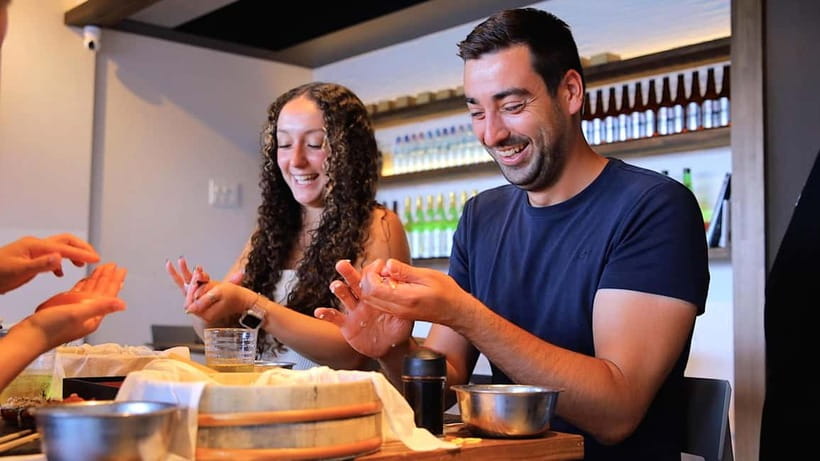
- Two classic sushi styles: Make both rolled maki and hand-formed nigiri.
- Sushi history with a quiz: Learn how sushi developed through a playful, interactive introduction.
- English-speaking local team: Instructors such as Hitomi, Moe, Ken, Jun, Kaori, and Ryouko help keep the class clear and lively.
- Asakusa setting: The meeting point is about three minutes from Asakusa Station, close to Sensoji Temple and Tokyo Skytree.
- Good for mixed groups: No previous cooking skill is needed, and solo visitors, couples, families, teenagers, and children can take part.
- Dietary options available: Vegan, vegetarian, gluten-free, halal, and allergy-friendly menus can be arranged if requested during booking.
Why this Asakusa sushi class works so well
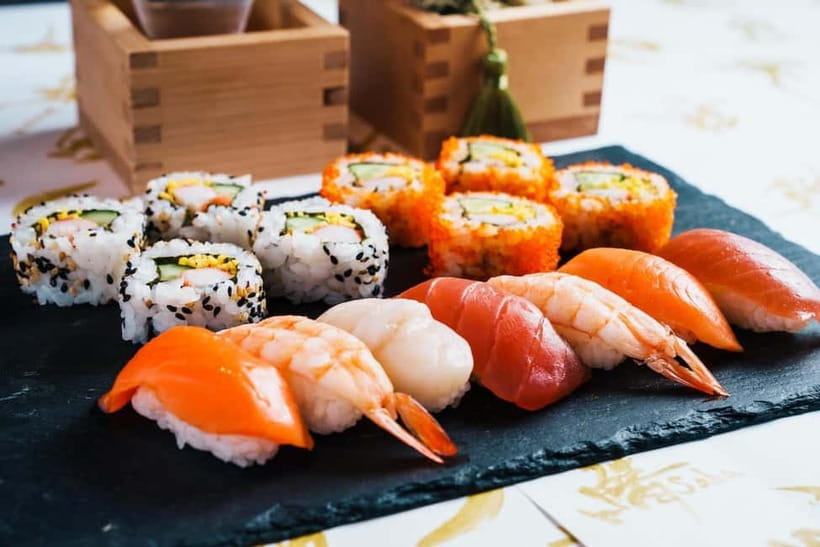
Tokyo has no shortage of sushi restaurants. You can eat excellent nigiri at a counter, watch a chef work, and move on to the next sight. This class offers something different: you handle the ingredients, shape the sushi yourself, and then eat the result.
That hands-on element matters. Sushi looks simple when an expert makes it, but rice placement, pressure, and rolling technique take a little practice. The instructors break the process into manageable steps, so you can make attractive sushi even if your first roll is not perfectly neat.
The class has earned a 4.9 rating from 1,957 reviews, and the praise is remarkably consistent. The strongest points are the friendly staff, fresh ingredients, clear explanations, and cheerful atmosphere. The team is not just there to demonstrate. They walk around, help with tricky steps, and encourage you when your rice or seaweed refuses to cooperate.
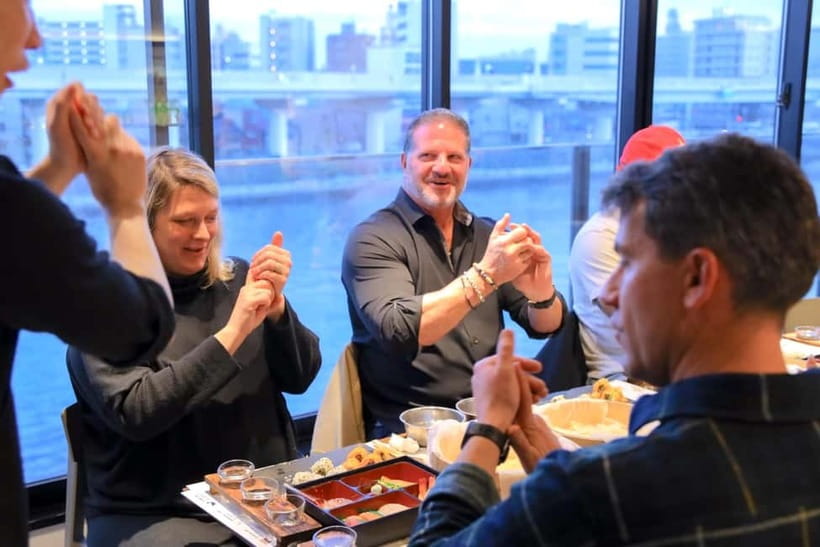
The tone is lively rather than formal. There may be clapping, jokes, and plenty of group energy. That will suit you if you want a social activity. If you prefer a quiet, traditional cooking lesson, the presentation may feel a little tourist-oriented.
More Cooking Classes in Japan
- Tokyo: Sushi Making Class in a Happi Coat near a Famous Spot
★ 4.9 · 1,377 reviews - Tokyo Sushi Making Class in Tsukiji with Professional Chef
★ 5.0 · 1,177 reviews - Ramen & Gyoza Cooking Class in Tokyo with Local Supermarket Visit
★ 5.0 · 823 reviews
Arriving near Sensoji Temple
The meeting point is about three minutes from Asakusa Station. That makes the class easy to pair with Sensoji Temple, Nakamise shopping street, or a walk toward Tokyo Skytree.
The location is one of the practical strengths here. You do not need to spend a large part of your day crossing Tokyo for a short activity. I would schedule the class alongside your Asakusa sightseeing rather than treating it as a separate destination.
Asakusa gives the lesson a useful setting. This is one of Tokyo’s best areas for seeing older religious and neighborhood traditions alongside the modern city. You can visit Sensoji before or after class, then connect the meal with the place you have been exploring.
The activity is also close to Tokyo Skytree, making it possible to combine sushi making with a trip to the tower area. The exact walking arrangements are not provided, so check your map when planning the day, but the class location is clearly convenient for the district.
The opening quiz turns sushi into a story
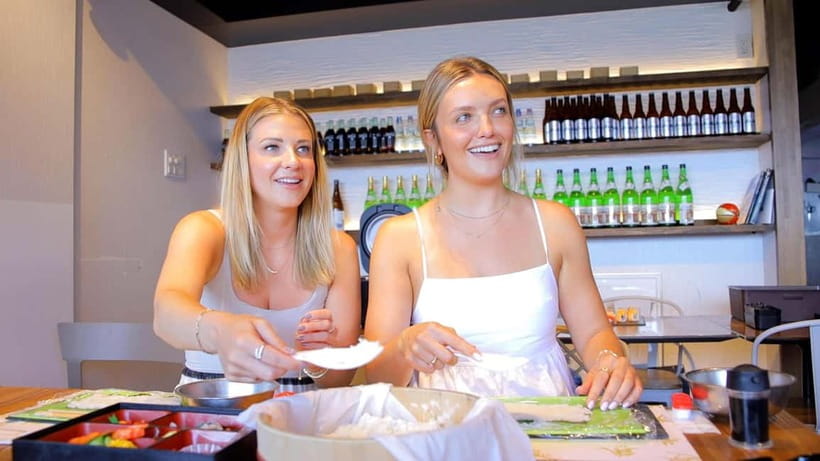
The class begins with an interactive introduction to sushi history. Rather than receiving a long lecture, you take part in a lighthearted quiz that explains how sushi developed and how different styles evolved.
This is a smart way to start. Sushi is not simply raw fish placed on rice, and the quiz gives you some context before you begin preparing food. You also learn about the difference between familiar modern rolls and more traditional Japanese forms.
The historical section is brief enough to keep the pace moving. It does not attempt to cover every detail of Japanese food culture, but it gives you useful background and helps explain why you will make both maki and nigiri.
Several people especially enjoyed the contrast between authentic Japanese sushi and more recently developed styles. If you have eaten sushi around the world, this part can help you notice how preparation and presentation vary.
Making maki: the fun, messy first success
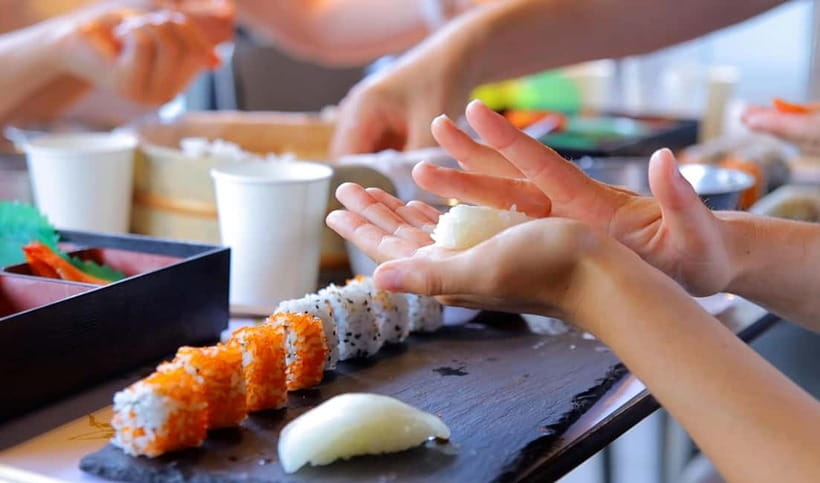
Maki is the rolled sushi most people recognize. You work with seaweed, rice, and fillings, then use the rolling technique shown by the instructor.
The process looks easy until you try to keep the rice even and the roll tight. That is part of the fun. Instructors provide clear demonstrations, physical examples, and step-by-step guidance. Helpers move around the room to offer tips when a roll starts to collapse.
You should not expect restaurant-chef precision on your first attempt. The class is designed for beginners, and the goal is to make good-looking, tasty sushi while learning the basic method. By the end, you should have a roll you are proud to eat, even if it is not perfectly shaped.
This section works especially well for families and teenagers. Several families with children enjoyed having a task everyone could do together. A parent and child can compare rolls, laugh at uneven slices, and still end up with a satisfying meal.
More Cooking Classes in Tokyo
- Tokyo: Tsukiji Fish Market Sushi Making Class with Pro Chef
★ 4.9 · 506 reviews - Tokyo: Sushi Making Class
★ 4.9 · 390 reviews - Tokyo: Sushi and Ramen Cooking Class with Sake Pairing Set
★ 5.0 · 81 reviews - Shibuya Tokyo: Sushi Making Class (Vegan/Vegetarian/Halal)
★ 4.7 · 29 reviews
Making nigiri shows why sushi takes practice
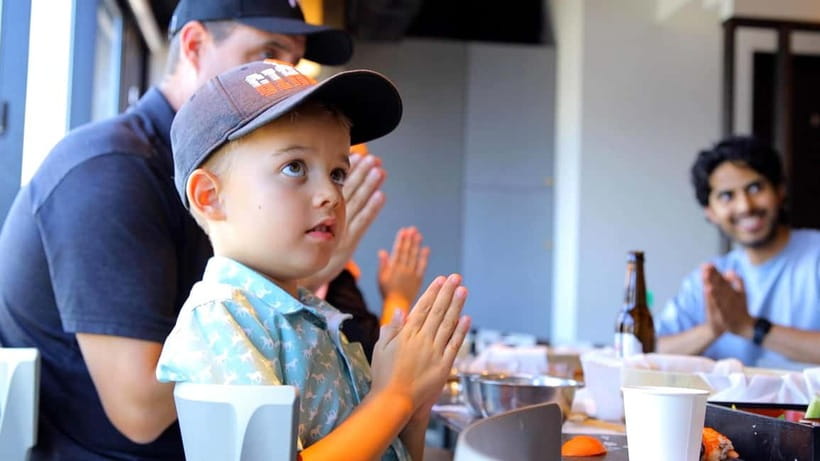
Nigiri is the more traditional form: a small portion of seasoned rice topped with fish or another ingredient. It has fewer components than maki, but the shape and balance are less forgiving.
The instructors demonstrate how to form the rice and place the topping. You learn that nigiri is not simply a lump of rice with fish on top. The rice must hold together without being packed too firmly, and the topping should sit neatly.
This is where the class earns its value as a lesson rather than just a meal. You begin to understand the hand movements behind a dish that can seem effortless at a sushi counter.
The ingredients are repeatedly praised for freshness and quality. Fish quality can make or break a sushi class, and this is one area where the experience appears to perform well. The meal is not presented as a premium omakase, but the ingredients are good enough to make your own work taste rewarding.
Eating what you made is the best part
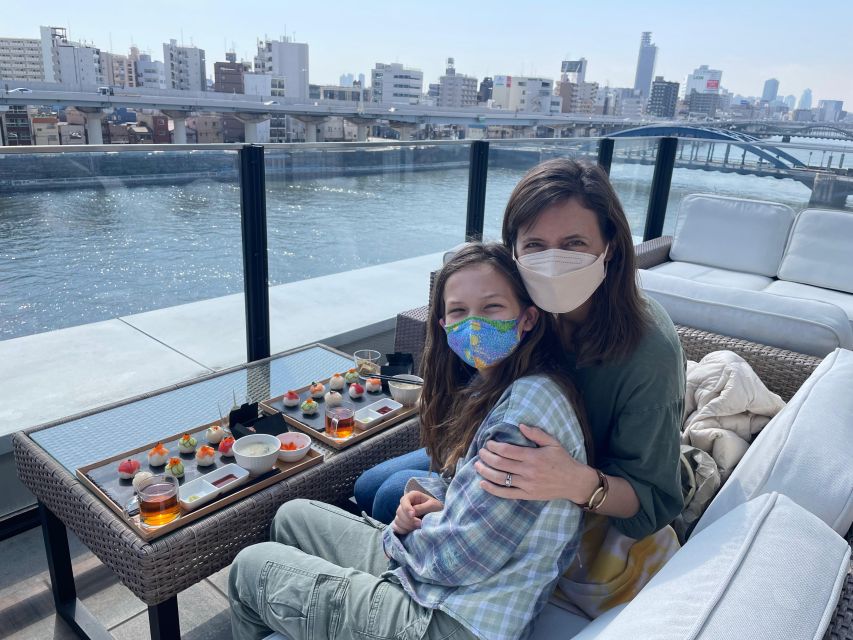
After the preparation, you sit down and eat the sushi you made. This simple ending gives the class a clear payoff. Your lunch or dinner is not just served to you, it reflects the work you have completed.
The amount of food appears generous for most people. Several families found there was plenty of sushi to share, and one family of six said they had enough for everyone. One person wished for a little more rice, so very hungry diners may want to keep expectations realistic.
Some sessions also offer sake flights and beer for an additional drink experience, according to the supplied details. These options can add a pleasant adult touch, but they are not part of the listed inclusions, so you should treat them as optional rather than guaranteed.
Eating together also makes the class social. Solo visitors can meet other people at the table, while couples and families get an activity with a natural finish. You are not just watching a demonstration and leaving with a recipe sheet. You are sharing a meal made during the class.
The instructors make the difference
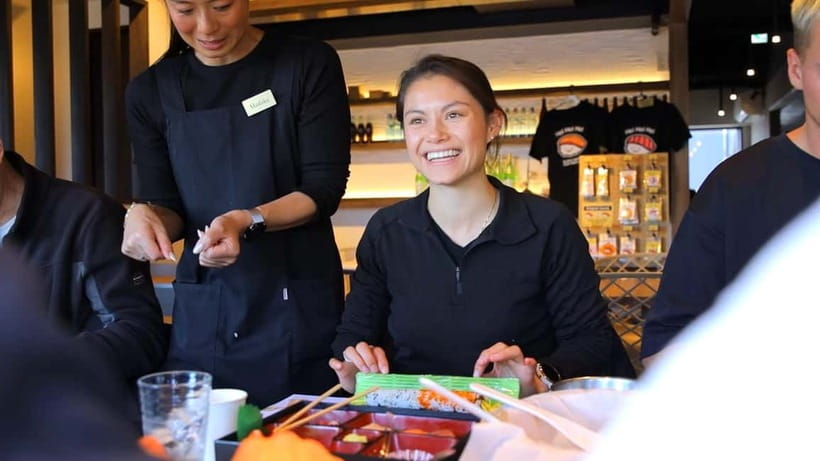
The staff receive the strongest praise. Hitomi is described as sweet, patient, and easy to follow. Moe helped create a comfortable atmosphere for a solo participant. Ken was praised for his humor, while Jun, Kaori, and Ryouko were noted for making the history and demonstrations engaging.
Other instructors and helpers named in the feedback include Tomona, Hide, Kazu, Kenshin, Fanno, Pika, and Ryouko. Staff assignments can change, but the consistent point is clear: the class depends heavily on an energetic teaching team.
The instructors speak English, and the activity is structured for people with no previous sushi-making experience. Explanations are supported by demonstrations and hands-on help, which is useful when verbal instructions alone are not enough.
The tone may not suit everyone. One person enjoyed the class but felt it was more tourist-focused, especially the clapping and group enthusiasm, than traditionally Japanese. I see that as an honest tradeoff. You get accessibility and fun in English, but not a quiet apprenticeship with a sushi chef.
How much time you really need
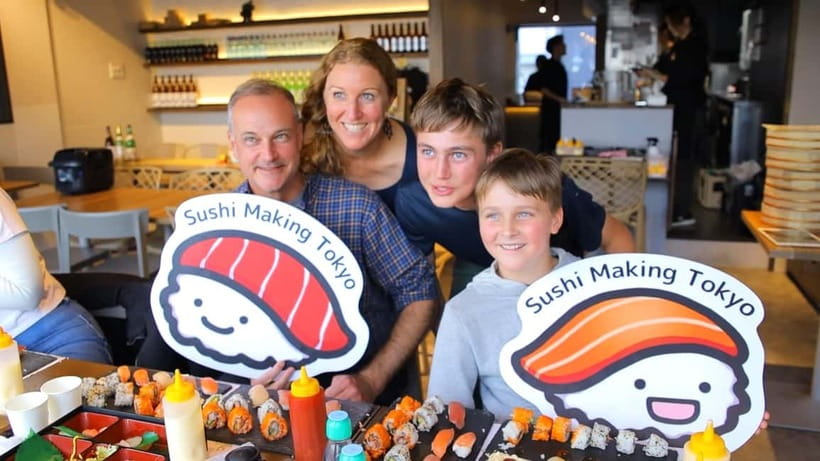
The advertised duration is 100 minutes. That is long enough for the quiz, explanations, both sushi styles, and eating what you make.
Some people experienced the activity as closer to 80 minutes, while another person wanted an extra 30 minutes because the process felt slightly rushed. This may depend on the session, group size, and pace of the instructors.
I would avoid booking it immediately before a train, timed attraction, or airport transfer. Give yourself some breathing room, especially if you want to ask questions or take photos of your finished sushi.
For most visitors, 100 minutes is a useful middle ground. A shorter class might feel too thin, while a much longer session could become repetitive for children or people who only want a taste of sushi preparation.
Price, value, and what the fee covers
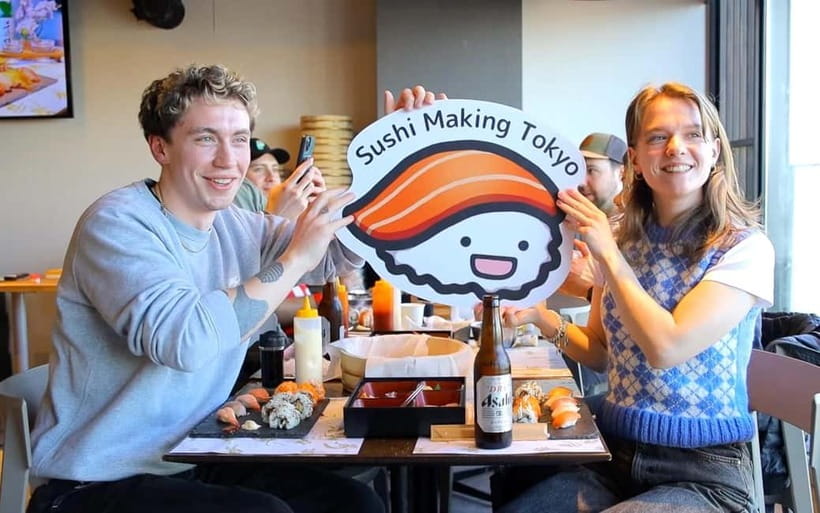
At $58 per person, this is more expensive than buying a basic sushi lunch. The comparison is not quite fair, though, because the price includes the cooking class, ingredients, and instructor support.
You are paying for three things at once:
- A meal
- A beginner cooking lesson
- A social cultural activity in central Tokyo
That makes the price reasonable for couples, families, and solo visitors who want an experience rather than another restaurant stop. The fresh ingredients and generous portions improve the value, especially if you would otherwise pay for a separate lunch.
The class is less compelling if your only goal is eating the finest possible sushi. At this price, you should choose a respected sushi restaurant instead if you care more about the chef’s technique than your own participation.
Dietary needs and access
The menu can be changed for vegan, vegetarian, gluten-free, halal, and allergy requirements. Meat, nuts, fruits, and dairy are not used in the standard ingredient list noted for menu changes.
You must contact the provider when making the reservation if you need a modified menu. Same-day changes are not accepted, and ingredient specifications cannot be accommodated beyond the available menu options.
This is important for anyone with serious allergies. The information confirms that options exist, but it does not promise that every individual ingredient request can be met. Contact the provider before booking and explain your needs clearly.
The activity is wheelchair accessible. Hotel pickup and drop-off are not included, so you will make your own way to the Asakusa meeting point.
Who should book this activity
I would recommend the class to first-time visitors who want a clear, low-pressure introduction to Japanese food culture. It also suits families, teenagers, couples, and solo visitors who prefer doing something active instead of simply sitting at a restaurant.
It is particularly useful for a first or second day in Asakusa. The nearby sights give you a full neighborhood plan, and the cooking class adds structure to a district that can otherwise feel like a series of temples and shopping streets.
You may want to skip it if you dislike group participation, clapping, or upbeat instruction. It is also not the best choice if you want advanced sushi technique or a long, quiet lesson focused on knife skills.
FAQ
How long does the sushi-making class last?
The advertised duration is 100 minutes. Some sessions may feel closer to 80 minutes, while some participants have wished for additional time.
How much does the class cost?
The listed price is $58 per person.
Where does the class meet?
The meeting point is about three minutes from Asakusa Station. It is close to Sensoji Temple and Tokyo Skytree.
Is the class taught in English?
Yes. The instructor language is English, and English-speaking local staff guide the class.
What types of sushi do you make?
You make two types: maki sushi, which is rolled sushi, and nigiri sushi, which is hand-formed rice topped with an ingredient.
Are ingredients and instruction included?
Yes. The class, ingredients, and instructor are included. Hotel pickup and drop-off are not included.
Do I need previous sushi-making experience?
No. The class is designed for beginners, and no previous experience is required.
Can the menu accommodate dietary needs?
Vegan, vegetarian, gluten-free, halal, and allergy-friendly menu changes are available. You must request a change when making your reservation, since same-day changes are not accepted.
Can I cancel the booking?
You can cancel up to 24 hours in advance for a full refund. Reserve now and pay later is also available.
Should you book this Asakusa sushi class?
Book it if you want to learn by doing, eat a generous serving of sushi, and spend time with an upbeat local team. The strongest reasons are the fresh ingredients, patient English-speaking instruction, and convenient Asakusa location.
I would especially choose it for a family day, a couples activity, or a solo afternoon near Sensoji. Just allow a little extra time around the 100-minute schedule, request any dietary changes early, and expect a cheerful group lesson rather than a quiet traditional apprenticeship.
More Workshops in Tokyo
- Shinjuku Tokyo: Authentic Japanese Home-Style Culinary Class
★ 4.9 · 125 reviews - Ramen Making from Scratch +Akihabara Tour –Cooking Class
★ 5.0 · 25 reviews - Authentic Pizza Making Class in Naples with Appetizers and Drink
★ 5.0 · 3,178 reviews - Ramen Cooking Class at Ramen Factory in Kyoto
★ 5.0 · 1,937 reviews
More Sushi and Ramen Tours in Tokyo
- Sushi Making Tokyo Roll and Authentic Japanese Sushi Class
★ 5.0 · 3,971 reviews - Best of Shinjuku: Izakaya Food Tour (4 Stops, 14+ Tastings)
★ 5.0 · 1,863 reviews - Sushi Making Tokyo! Popular Maki Sushi & Japanese Sushi(+Recipe!)
★ 5.0 · 1,314 reviews - Tokyo Night Foodie Tour in Shinjuku – Seasonal Sushi, Wagyu Beef
★ 5.0 · 1,161 reviews
Just added in Tokyo
- Tokyo: Allstar Food Tour★ 4.7 · 29 reviews
- Tokyo: West-Side Cycling and Food Tour with Guide★ 5.0 · 37 reviews
- Tokyo Tsukiji Food & Culture Private Tour Licensed Guide★ 4.9 · 28 reviews
- Tokyo: Wagyu and Sushi Gastronomic Journey★ 4.3 · 24 reviews
- Tokyo: Togoshi Ginza Street Food Tour★ 5.0 · 34 reviews
- Tokyo: Sushi and Ramen Cooking Class with Sake Pairing Set★ 5.0 · 81 reviews
- Tokyo: Sushi Making Class★ 4.9 · 390 reviews
- Tokyo: Ramen Tasting Tour with 6 Mini Bowls of Ramen★ 4.9 · 432 reviews
Cooking Classes, compared.
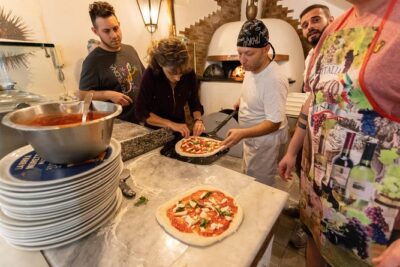
Authentic Pizza Making Class in Naples with Appetizers and Drink
Read our review →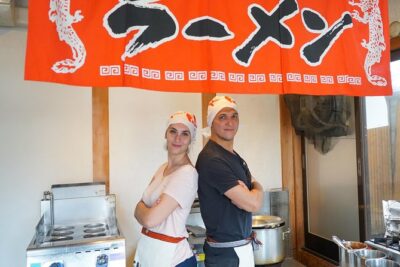
Ramen Cooking Class at Ramen Factory in Kyoto
Read our review →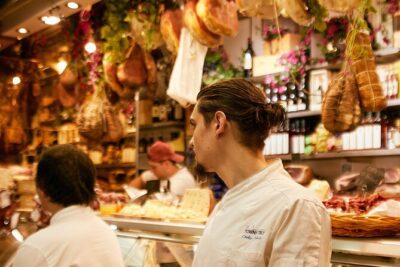
Small Group Cooking Class & Market Food Tour in Florence
Read our review →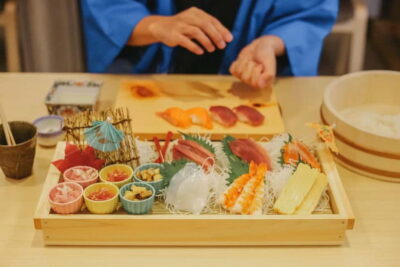
Sushi Making Class in a Happi Coat near a Famous Spot
Read our review →
Tokyo Sushi Making Class in Tsukiji with Professional Chef
Read our review →
Food Market Visit and Cooking Class with Wine
Read our review →