
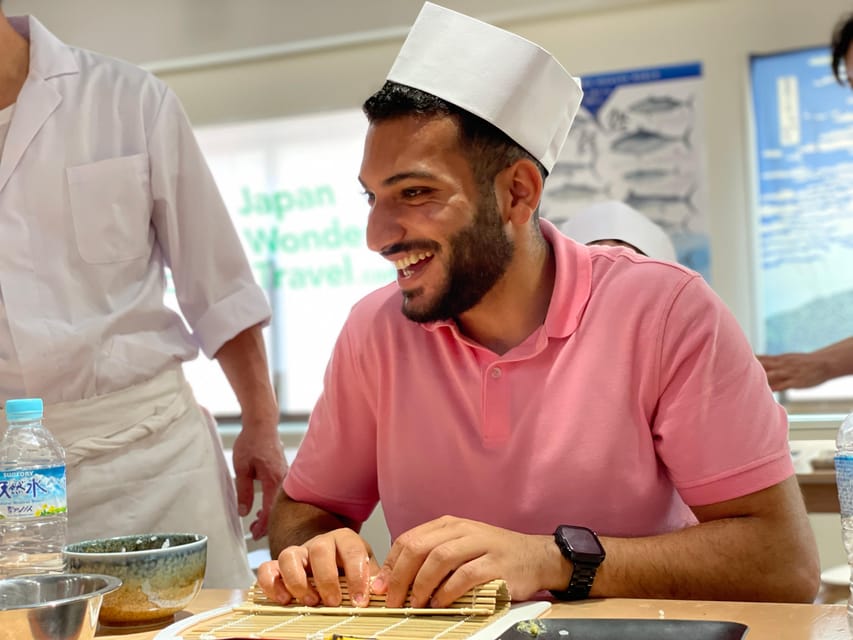
REVIEW · TOKYO FOOD TOURS
Tokyo: Tsukiji Fish Market Sushi Making Class with Pro Chef
Sushi starts with a knife. This Tsukiji workshop takes you beyond eating at the market and into the careful work behind each piece, with a professional sushi master, an English-speaking host, and ingredients sourced from Tsukiji. I especially like the hands-on format, which lets you prepare four kinds of nigiri and one maki roll, and the chance to watch a fish disassembly demonstration before you pick up your own tools. The class also gives you a proper meal, with extra sushi from the chef, dashi soup, and green tea.
I also like the setting: a small Japanese-style classroom on the third floor of a traditional building in the outer market. It feels more personal than a large cooking school, and past sessions have often been small enough for questions and individual help. The main drawback is practical rather than culinary: there are stairs, dietary choices are limited, and the activity can run past its scheduled finish, so do not book it right before a train or timed attraction.
Key points to know before you book
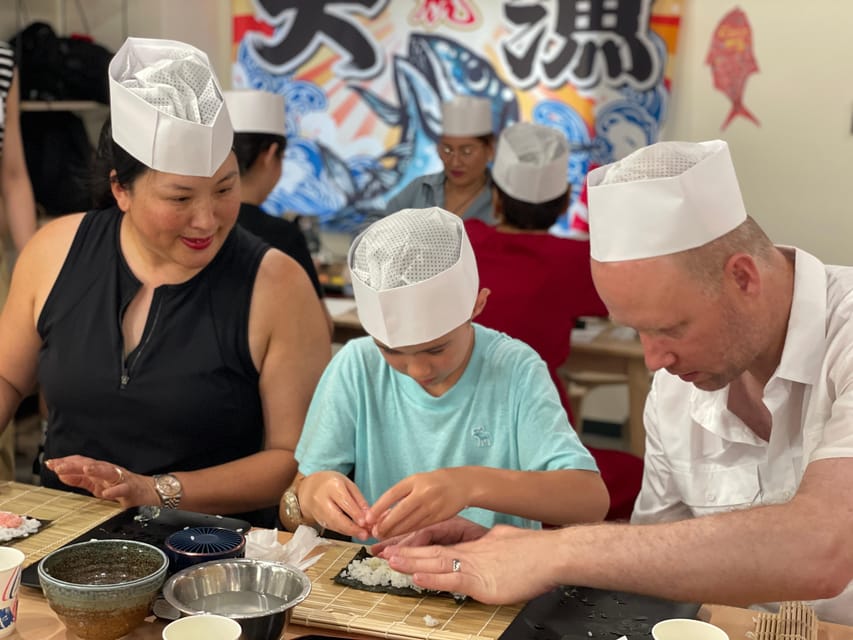
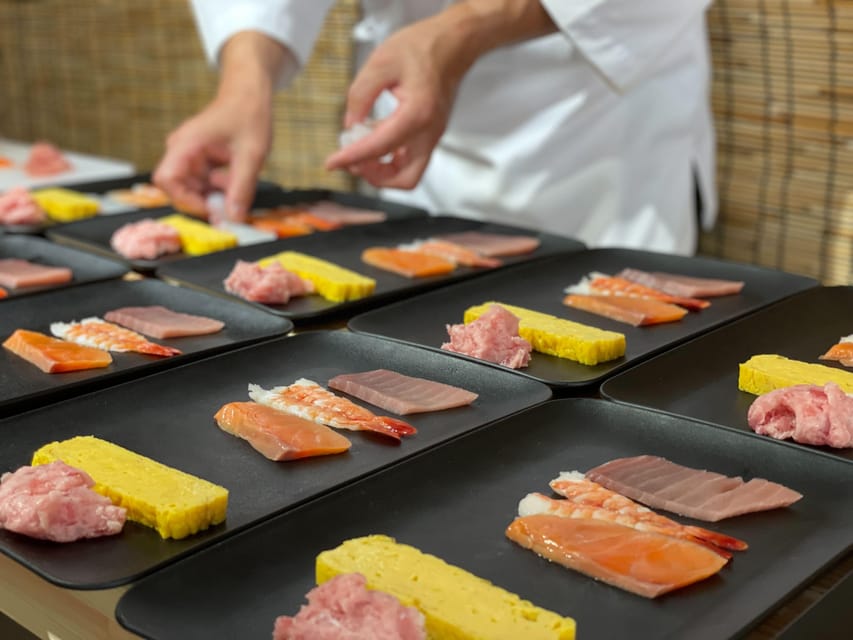
- You make five types of sushi: four different nigiri pieces and one maki roll, then eat what you prepare.
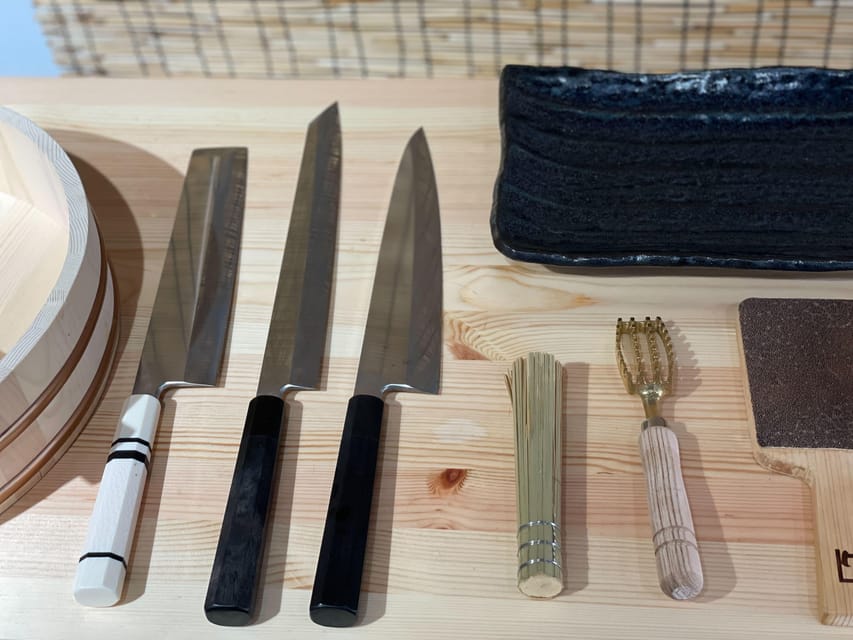
- A professional chef demonstrates fish preparation: the lesson includes a fish disassembly show and an introduction to Japanese knives.
- The class takes place inside Tsukiji Outer Market: some options include a market walk, but market guidance is not included with every booking.
- The experience is taught in English: an English-speaking host interprets and keeps the lesson moving.
- The price is $63 per person: that includes the class, ingredients, utensils, your sushi, extra chef-made sushi, tea, soup, and a hat.
- The building has stairs only: the classroom is on the third floor, so it is not suitable for wheelchair users or people with mobility impairments.
Why this Tsukiji sushi class is worth your morning
Tsukiji is more than a place to grab a sushi breakfast. It is a working food district where seafood, knives, rice, presentation, and timing all meet. A class here gives you a useful extra layer: instead of only asking which fish looks good, you learn what happens before the food reaches your plate.
The lesson is aimed at beginners. You do not need previous cooking experience, and the hosts guide you through each movement. The chef shows the work at close range, then lets you try it yourself. That balance matters. A sushi demonstration can be beautiful but passive. Here, you get to test how much pressure is needed, how to shape the rice, and how to keep the finished piece together.
I would not expect restaurant-level knife skills after 90 minutes. Sushi chefs spend years refining their touch. But you should leave with a clear sense of the basic method and enough practical knowledge to try simple sushi at home.
The class is also a good fit for people who want food with cultural context. The session covers what sushi is, how different types are formed, how fish is prepared, and how sushi is traditionally served and eaten. Some sessions also include explanations of sushi history and nearby shrines, depending on the option and guide.
More Cooking Classes in Japan
- Tokyo: Roll and Authentic Sushi Making Class in Asakusa
★ 4.9 · 1,957 reviews - Tokyo: Sushi Making Class in a Happi Coat near a Famous Spot
★ 4.9 · 1,377 reviews - Tokyo Sushi Making Class in Tsukiji with Professional Chef
★ 5.0 · 1,177 reviews
Entering the traditional classroom above the outer market
The classroom sits in a traditional Japanese building in the center of Tsukiji Outer Market. You climb to the third floor by stairs, then settle into a classic Japanese-style room with the tools and tableware laid out for the lesson.
This small setting is one of the strongest parts of the experience. Reports from several sessions describe groups of around six people, while the activity is also suitable for smaller groups of one to four. A smaller class means you can hear the chef, ask about a particular cut, and receive help before your sushi collapses into a small rice accident.
The organizers provide proper utensils and tableware sourced from local shops. That detail is more useful than it may sound. You are not simply rolling ingredients on a disposable mat at a generic cooking studio. The setting, knives, dishes, and presentation all help explain why sushi is treated as a craft.
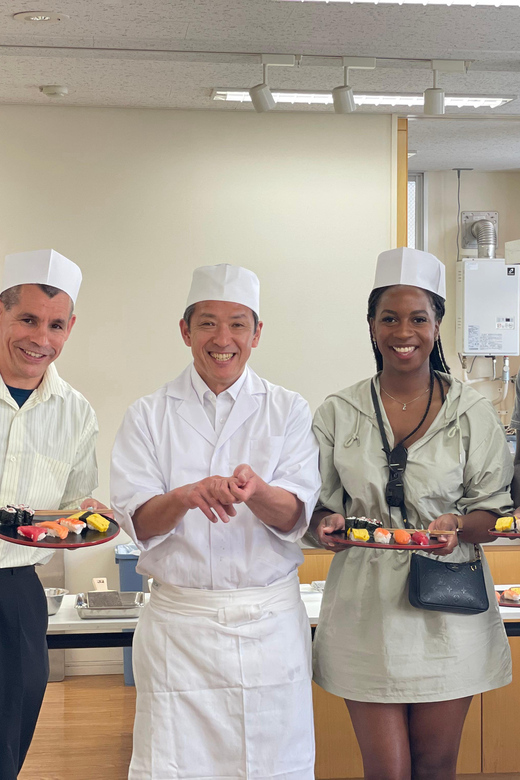
You receive a hat as part of the class. It is a small touch, but families often enjoy the visual side of the session, especially when everyone is preparing food together.
Meeting instructions can vary by the option you select. Read them carefully before setting out, especially if you have chosen a version with a market walk.
Watching the chef break down fish
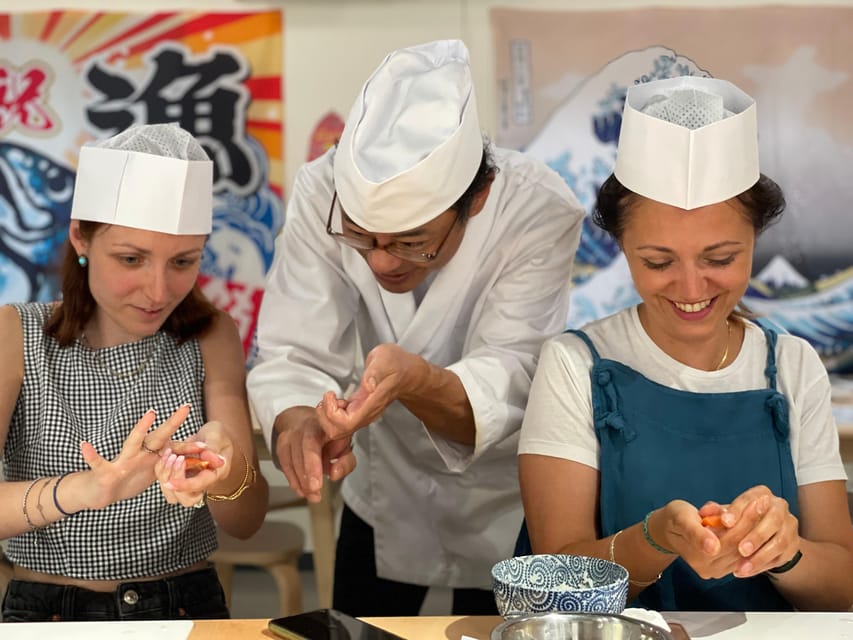
The class begins with a fish disassembly demonstration by the sushi master. This is where you see the difference between handling fish at home and preparing it for sushi.
The chef explains the steps used to prepare fish, along with the purpose of Japanese knives. You get to watch the speed and accuracy of an experienced professional before trying anything yourself. Several sessions have included a bonus lesson on preparing fish for sashimi, which adds useful context even though your main task is making sushi.
This demonstration is valuable for two reasons. First, it shows that sushi is not just rice topped with fish. The cut, grain, thickness, temperature, and presentation all matter. Second, it lets you watch the chef’s technique without the pressure of copying it immediately.
The chef names vary by session, but past classes have been led by professionals such as Tanaka, Kana, Kate, Koro, Ike, and Ishii. The host may also vary, with Satoko, Yuko, AJ, Shoko, Micky, and others helping to interpret and guide the group.
That rotating team is worth noting. The exact personality of your session will depend on who leads it, but the setup consistently pairs the chef with an English-speaking host. The host handles explanations and questions while the chef concentrates on technique.
Making four nigiri and one maki roll
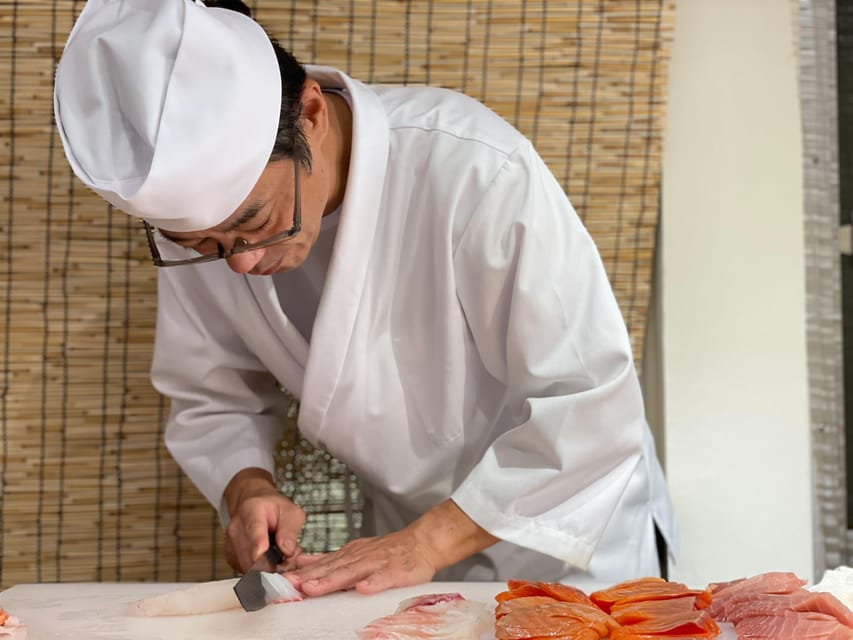
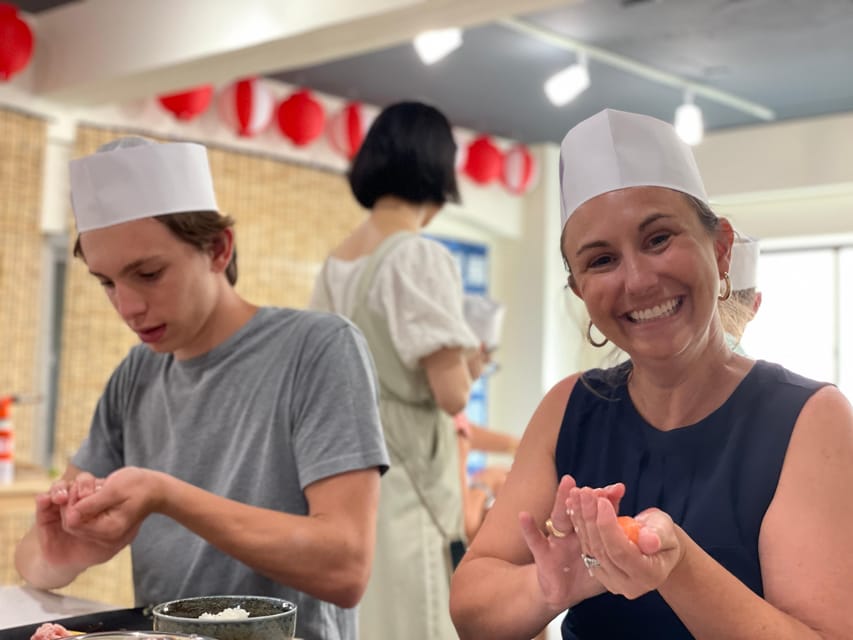
Once the demonstration ends, you move into the practical part. You learn how to form nigiri sushi and make a rolled type, or maki. The included food is four different nigiri sushi pieces and one maki sushi.
Nigiri looks simple, but it rewards a light touch. You shape the rice, add the topping, and try to create a piece that holds together without becoming dense. The chef guides you through the steps and corrects your technique as needed.
Maki gives you a different challenge. You spread and arrange the filling, then roll it neatly enough to cut into pieces. It is usually the more forgiving format for beginners, though keeping the roll even still takes some care.
The class is not designed to turn you into a sushi professional. It gives you a well-paced introduction to the basic forms, with enough repetition to make the method stick. Several people leave feeling able to try sushi at home, which is a good sign that the instruction is practical rather than just decorative.
The ingredients are fresh and sourced from Tsukiji. That does not mean the menu is customized to every taste. The point is to learn the standard approach to sushi using seafood and traditional accompaniments.
More Cooking Classes in Tokyo
- Ramen & Gyoza Cooking Class in Tokyo with Local Supermarket Visit
★ 5.0 · 823 reviews - Tokyo: Sushi Making Class
★ 4.9 · 390 reviews - Tokyo: Sushi and Ramen Cooking Class with Sake Pairing Set
★ 5.0 · 81 reviews - Shibuya Tokyo: Sushi Making Class (Vegan/Vegetarian/Halal)
★ 4.7 · 29 reviews
Eating your work beside the chef’s sushi
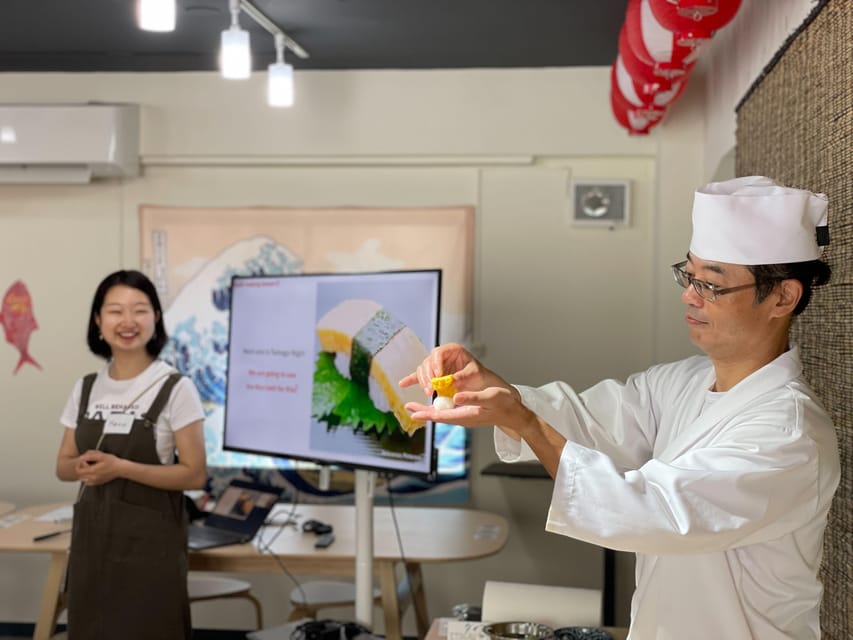
The best part comes after the preparation. You eat the sushi you made, then watch the master prepare an additional piece. The chef uses freshly prepared wasabi, and you can compare your own work with the professional version.
This comparison is a quiet lesson in itself. You notice the chef’s speed, the neat shape of the rice, and the way the fish sits on top. The food you make does not need to look perfect to taste good, but seeing the chef’s piece gives you a clear target.
The meal also includes traditional dashi soup and fine green tea. These are not just filler items. They complete the meal in a Japanese style and give you a chance to slow down after the hands-on work.
Extra food and drink are not included, so do not expect a full market feast beyond the sushi served during the class. The included amount is enough to make the session feel like both a lesson and a meal, but serious eaters may want to explore Tsukiji afterward.
Adding a market walk or shrine visit
The location makes it easy to pair the class with time in Tsukiji. Some versions include a guided walk through the market before the sushi lesson. In those sessions, guides have explained fish, other foods sold in the area, and local food customs.
Other sessions focus on the classroom only. Guidance through the market is not included with every option, so check the exact booking details rather than assuming a walking tour is part of the price.
When included, the walk adds real value. You can see the food district before learning how the chef uses its ingredients. Guides such as Tack, Tadashi, Sean, and Shoko have also taken groups to nearby shrines and explained aspects of Japanese religious practice.
Allow extra time after the class if you want to browse the market on your own. The tour may finish later than the scheduled end, and Tsukiji deserves more than a quick dash to the next appointment.
How much value you get for $63
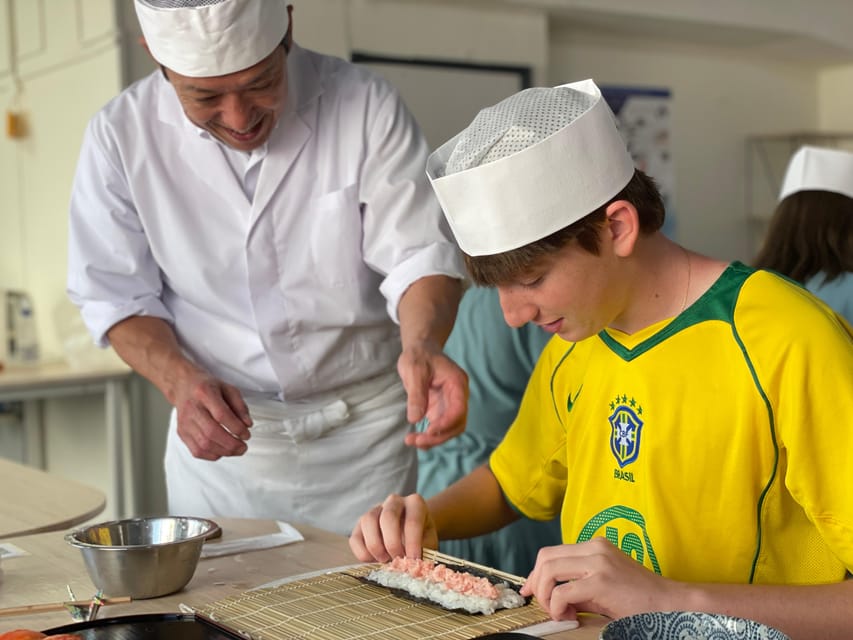
At $63 per person, this is not the cheapest way to eat sushi in Tokyo. It is also not merely a meal. You are paying for instruction from a professional chef, an English-speaking host, fresh ingredients, use of proper tools, the sushi you make, extra sushi from the master, tea, soup, and a market-centered location.
That makes the price reasonable for a visitor who wants an activity rather than another restaurant stop. A meal in Tsukiji may cost less, but it will not show you how the fish is prepared or let you practice nigiri and maki.
The value is strongest for couples, families, food lovers, and small groups. Parents have used the class with children around school age, and older children who can pay attention can take part. The minimum age is four, but the practical advice is to judge your child’s patience rather than rely only on the age limit. Knife work and raw fish require attention.
The value is weaker if you already make sushi regularly or want an advanced chef-training session. This is a basic introduction, taught in a friendly and accessible way.
Dietary limits and access details
Tell the operator about allergies when you reserve. Allergy-related requests may be possible, but they are not guaranteed.
The activity does not accommodate vegan, vegetarian, halal, kosher, or gluten-free requests as a standard matter. One past session was able to accommodate gluten-free needs, but you should not count on that. Ask before booking and wait for clear confirmation.
The classroom is on the third floor with stairs only. The activity is not suitable for wheelchair users or people with mobility impairments. If stairs are difficult for you, choose another food experience.
The class is family-friendly, but the raw seafood, knife demonstration, and need to listen carefully make it better for children who can stay focused. The experience is not suitable for children under four.
How to plan the timing
The listed duration can range from 90 minutes to four hours, depending on the option you choose. The shorter format is likely to focus on the sushi lesson, while longer versions may include a market walk or other guided elements.
Build in breathing room. Do not schedule a museum reservation, airport transfer, or long-distance train immediately after the class. Several sessions have run beyond the expected finishing time, and the operator asks you to mention any later appointment in advance.
The class is taught in English. An English-speaking host interprets and explains the chef’s instructions, so you do not need to speak Japanese to follow the process.
Cancellation is flexible up to 24 hours before the activity for a full refund, and the reserve-now-pay-later option allows you to hold a place without paying immediately. Those terms are useful when your Tokyo plans are still changing.
Who should book this sushi lesson?
I would choose this class if you want to do more than photograph Tsukiji. It gives you a reason to pay attention to the tools, the fish, the rice, and the small movements that make sushi look effortless.
It suits:
- First-time sushi makers
- Couples looking for a shared activity
- Families with attentive children
- Small groups that want personal help
- Food lovers curious about Japanese technique
- Visitors staying near Tsukiji who want to combine a market visit with lunch
I would skip it if you need vegetarian or vegan food, cannot manage stairs, dislike raw seafood, or want an advanced knife-skills course. I would also avoid booking it on a tightly timed day.
Should you book the Tsukiji sushi-making class?
Yes, if you want a friendly, practical introduction to sushi in the middle of Tokyo’s famous fish-market district. The strongest features are the professional chef, the chance to make both nigiri and maki, the fresh Tsukiji ingredients, and the small-group feel reported in many sessions.
Book the option that includes the market walk if that part matters to you. If you mainly want hands-on instruction, the 90-minute class may be enough. Either way, leave room for stairs, questions, extra sushi, and a little browsing after the lesson.
The experience earns its high 4.9 rating because it keeps the focus on doing. You watch the master, try the technique, eat the results, and leave with a better understanding of why good sushi demands such careful work.
FAQ
How long does the sushi-making class last?
The activity lasts between 90 minutes and four hours, depending on the option selected. Check the available start times and duration before booking.
What sushi will I make?
You will make four different nigiri sushi pieces and one maki sushi roll. The chef also prepares additional sushi for you to eat.
Is the class taught in English?
Yes. An English-speaking host interprets and guides the session, while a professional sushi master teaches the preparation techniques.
Is a market tour included?
It depends on the option booked. Some versions include a guided walk through Tsukiji Outer Market, while market guidance is not included in every option.
Is the class suitable for children?
The activity is family-friendly and is not suitable for children under four. Children should be able to listen carefully and manage a class involving food preparation and knife demonstrations.
Can vegetarians or vegans join?
No. The activity does not accommodate vegetarian or vegan requests. Halal, kosher, and standard gluten-free requests are also not accommodated, though allergy-related requests may sometimes be considered.
Is the classroom accessible by wheelchair?
No. The classroom is on the third floor of a traditional building with stairs only. It is not suitable for wheelchair users or people with mobility impairments.
More Market Food Tours in Tokyo
- Tsukiji Fish Market Small-Group Food Walking Tour
★ 5.0 · 621 reviews - Tsukiji Fish Market: Street Food & Culture Walking Tour
★ 4.8 · 259 reviews - Tokyo: Toyosu Tuna Auction &Tsukiji Market Gourmet Adventure
★ 4.8 · 187 reviews
More Market Food Tours in Japan
- Tokyo Tsukiji Fish Market Food and Culture Walking Tour
★ 5.0 · 3,184 reviews - Tsukiji Fish Market Guided Tour and Sushi Making with Pro Chef
★ 5.0 · 775 reviews - Tokyo: Tsukiji Fish Market Food and Culture Walking Tour
★ 4.7 · 757 reviews - Tsukiji Fish Market: Street Food & Culture Walking Tour
★ 5.0 · 669 reviews
Just added in Tokyo
- Tokyo: Allstar Food Tour★ 4.7 · 29 reviews
- Tokyo: West-Side Cycling and Food Tour with Guide★ 5.0 · 37 reviews
- Tokyo: Wagyu and Sushi Gastronomic Journey★ 4.3 · 24 reviews
- Tokyo: Togoshi Ginza Street Food Tour★ 5.0 · 34 reviews
- Tokyo Tsukiji Food & Culture Private Tour Licensed Guide★ 4.9 · 28 reviews
- Tokyo: Sushi and Ramen Cooking Class with Sake Pairing Set★ 5.0 · 81 reviews
- Tokyo: Sushi Making Class★ 4.9 · 390 reviews
- Tokyo: Ramen Tasting Tour with 6 Mini Bowls of Ramen★ 4.9 · 432 reviews
Market Food Tours, compared.


Tokyo Tsukiji Fish Market Food and Culture Walking Tour
Read our review →
London Bridge & Borough Market Food Tour with 7 Authentic Dishes
Read our review →
Small Group Cooking Class & Market Food Tour in Florence
Read our review →
Nishiki Market Brunch Walking Tour (7 Tastings + Brunch)
Read our review →
Bologna Food & Market Tour with 6 Tastings, Pasta, Wines & More
Read our review →
Browse the lists this tour appears in