REVIEW · TOKYO FOOD TOURS
Tokyo Sushi Making Class in Tsukiji with Professional Chef
Sushi tastes better when you make it. This 90-minute class puts you in a traditional Japanese room near Tsukiji Market, where a professional chef demonstrates fish preparation, explains sushi basics, and guides you through five nigiri and one rolled sushi. I like the hands-on format and the chance to eat a fresh lunch you made yourself.
I also like how easily this fits into a Tokyo day. You can visit the Tsukiji Outer Market before or after class, and the English-speaking host keeps the instructions clear. The main drawback is practical: the classroom is on the third floor with stairs only, and the session can run beyond its planned finish.
Key points at a glance
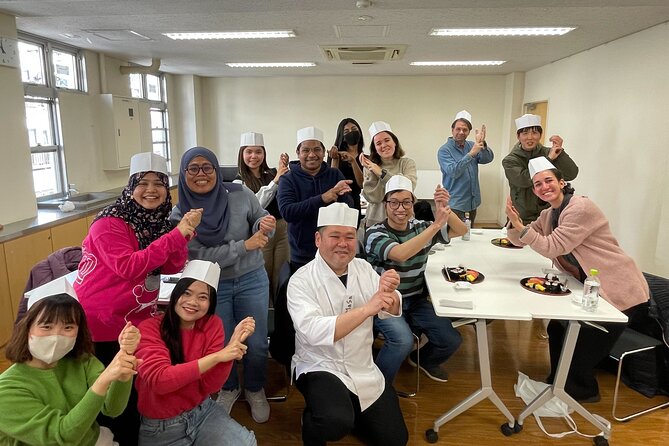
- Fish-cutting demonstration: Watch the sushi chef break down fish and explain the knives used in professional preparation.
- Six pieces of sushi to make: Prepare five different nigiri and one rolled sushi, with help at each stage.
- Tsukiji location: Meet near the Outer Market, a useful setting for anyone already exploring Tokyo’s food district.
- English support: An English-speaking host translates and explains the chef’s instruction throughout the class.
- Family-friendly pace: Children and first-time sushi makers can take part, with staff offering help when needed.
- Good short activity: The class lasts about 1 hour and 30 minutes and includes the sushi you prepare.
Why this Tsukiji sushi class is worth your time
Tokyo offers endless food experiences, but this one gives you something more lasting than a meal. You learn how sushi is shaped, handled, and presented, then sit down and eat the result. That makes the class useful for beginners, families, and anyone who wants more context behind the food on a restaurant counter.
The setting helps. You meet at 4-chōme-16-2 Tsukiji, Chuo City, close to the Tsukiji Outer Market and other market areas. The class takes place in a traditional Japanese-style building rather than a large modern cooking studio. That gives the experience a local feel, although the room is upstairs and you need to use stairs.
I especially like the balance between watching and doing. You are not simply handed ingredients and told to copy a recipe. First, the chef demonstrates key techniques. Then you make the sushi yourself, with the chef and host correcting your movements when needed.
The session is also short enough to fit around sightseeing. At roughly 90 minutes, it works well before lunch, after a morning at the market, or during a rainy afternoon when outdoor plans are less appealing. You should still leave some time around it, since the activity may finish later than scheduled.
More Cooking Classes in Japan
- Tokyo: Roll and Authentic Sushi Making Class in Asakusa
★ 4.9 · 1,957 reviews - Tokyo: Sushi Making Class in a Happi Coat near a Famous Spot
★ 4.9 · 1,377 reviews - Ramen & Gyoza Cooking Class in Tokyo with Local Supermarket Visit
★ 5.0 · 823 reviews
Arriving at Tsukiji’s food district
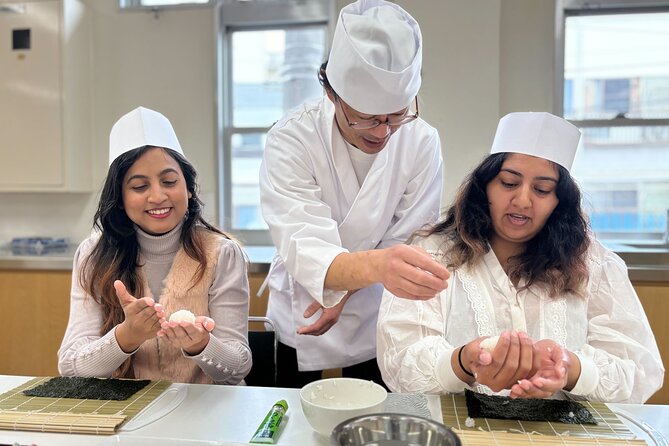
Tsukiji is one of Tokyo’s best areas for food-focused sightseeing. The modern wholesale fish market moved to Toyosu, but Tsukiji’s Outer Market remains a popular place for shops, small restaurants, seafood sellers, and cooking-related businesses. This class places you close to that atmosphere without requiring hotel pickup.
You make your own way to the meeting point at 千社額棟, 4-chōme-16-2 Tsukiji. The experience ends at the same location, so you do not need to arrange a separate return transfer. The meeting point is near public transportation, but you should check your route before setting out because Tsukiji has several nearby stations and a busy network of side streets.
I recommend arriving with enough time to find the building. The classroom is described as being in a less obvious local building, and the activity is not a walking tour with a guide collecting you from your hotel. Give yourself room to locate the address, especially if you are coming directly from another Tokyo neighborhood.
The market area is part of the appeal. You can look around before class, but be careful not to eat a large meal first. Your sushi lunch is included, and the portions are designed to be enjoyed after the preparation work.
Watching the chef prepare the fish
The class begins with a fish disassembly demonstration. This is more than a quick cooking trick. You get to see the sequence used to prepare fish for sushi and learn why professional knives matter.
The chef explains the different steps and introduces the knives used in sushi preparation. You may already know how important a sharp knife is in a kitchen, but sushi makes that lesson especially clear. Clean cuts affect texture, appearance, and how easily the fish sits on the rice.
This demonstration gives you a better idea of the skill behind a restaurant sushi counter. The pieces may look simple when served, but the preparation calls for control and precision. Watching the chef first also makes the later practice easier because you have seen the intended motion before handling the ingredients yourself.
The English-speaking host helps explain the chef’s instruction. Past sessions have included hosts such as Yuko, Yoko, Yugo, Kanon, Emma, Miky, and AJ, while chefs including Tanaka and Kate have led different classes. Staff assignments can vary, but the important point is that English support is part of the experience.
The presentation also covers sushi types and some background about sushi’s place in Japanese food culture, including its connection to Edo, the old name for Tokyo. This adds useful context without turning the class into a long lecture.
Making five nigiri and one rolled sushi
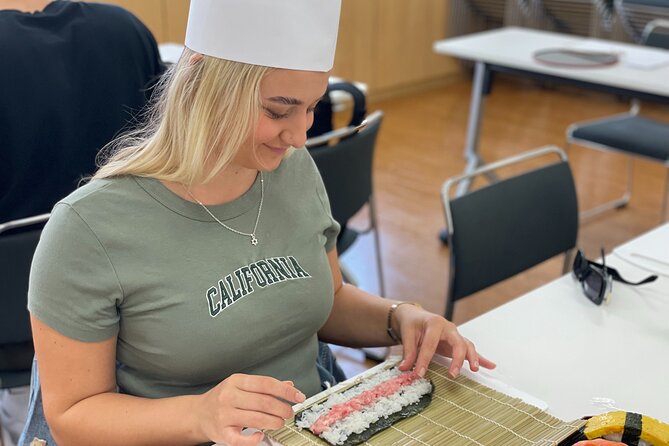
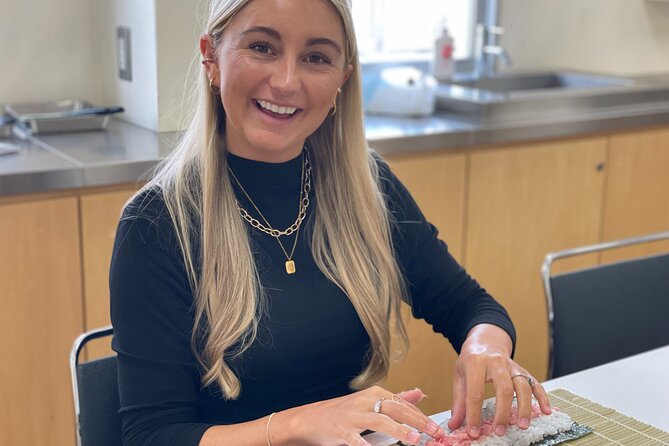
After the demonstration, you move to the practical part. You learn how to form nigiri sushi and prepare a rolled style, often called maki. The included food consists of five different nigiri pieces and one roll, so you get more than one chance to practice.
Nigiri looks easy until you try to form it evenly. You need the right amount of rice, a light touch, and enough pressure to keep the piece together without crushing it. The chef demonstrates the proper steps, and the host helps explain them in English.
The rolled sushi gives you a different task. You work with the ingredients and rolling method, then see how the finished piece holds its shape when cut. This is a good pairing because you learn two basic styles in one short session.
You do not need previous cooking experience. The class is built for beginners, and staff assist when your rice shape or rolling technique goes slightly wrong. That matters because many people arrive expecting their sushi to look like a chef’s first time. It probably will not, and that is part of the fun.
You can also expect plenty of pictures. Several participants have appreciated being able to photograph their completed sushi, and the staff may help capture the moment. Your own plate becomes both lunch and a small souvenir of the activity.
More Cooking Classes in Tokyo
- Tokyo: Tsukiji Fish Market Sushi Making Class with Pro Chef
★ 4.9 · 506 reviews - Tokyo: Sushi Making Class
★ 4.9 · 390 reviews - Tokyo: Sushi and Ramen Cooking Class with Sake Pairing Set
★ 5.0 · 81 reviews - Shibuya Tokyo: Sushi Making Class (Vegan/Vegetarian/Halal)
★ 4.7 · 29 reviews
Eating the sushi you prepared
The best part comes after the work. You eat the five nigiri and one rolled sushi you made, turning the lesson into lunch.
Fresh ingredients are sourced from the market, and the experience includes proper sushi utensils and tableware. The food is prepared for the class, so you are not simply practicing with empty rice and sample ingredients. You get to taste the results of your own technique.
The sushi master also prepares another piece while you eat and serves it with fresh wasabi. This gives you a useful comparison between your beginner effort and the chef’s finished version. You can notice the difference in shape, rice handling, and presentation without feeling that your own work has failed.
I like this arrangement because it keeps the class honest. The food is not just a prop for a photograph. It is the main reward, and you get a proper meal from the ingredients you handled.
Arrive with a little appetite. One participant’s practical advice was to avoid filling up beforehand, and that makes sense here. You will want room for the sushi after spending time preparing it.
What makes the guides and chef helpful
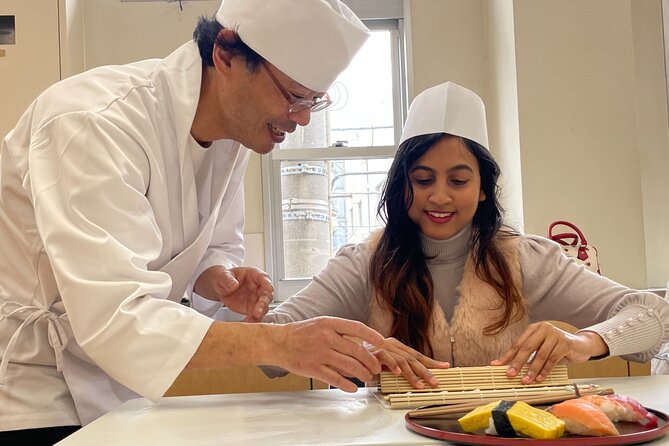
The class uses two kinds of instruction. The sushi chef provides the technical demonstration, while the English-speaking host explains, translates, and keeps the group moving.
That division works well for an international audience. You can watch the chef’s hands closely without worrying that an explanation is being lost. The host also helps with individual questions and offers encouragement when someone is unsure about the next step.
The people leading different sessions have received strong praise for being friendly, clear, and patient. Yuko and Yoko have helped explain the chef’s lessons in English. Yugo has been described as energetic and good at keeping the mood light, while Kanon and Emma have also helped first-time participants feel comfortable. Chef Tanaka and Chef Kate have been singled out for clear demonstrations and careful guidance.
Names may change depending on the date of your booking, so do not choose the class expecting one particular instructor. Instead, expect an English-supported lesson led by a sushi professional and an assisting host.
The tone appears suited to families. Children from about 7 to 12 have taken part, and some young participants tried sushi or sashimi for the first time because they had helped make it. That is a real benefit: children are often more willing to taste unfamiliar food when they have shaped it themselves.
The three Tsukiji stops and what they mean
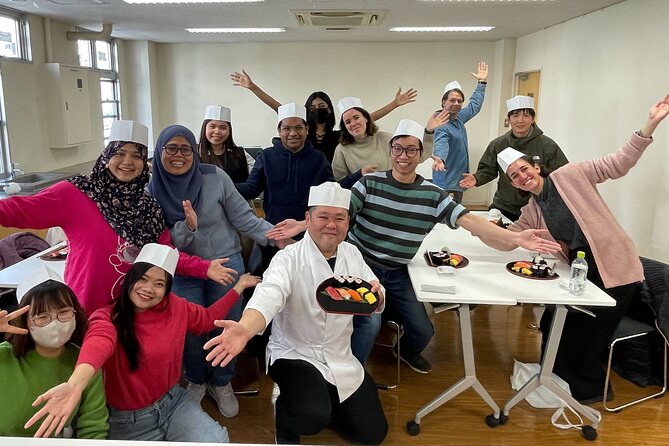
The experience is associated with three Tsukiji areas: Tsukiji Fish Market, Tsukiji Jogai Market, and Tsukiji Nippon Fish Port Market. These names describe the food district surrounding the class rather than a long guided sightseeing route.
The Tsukiji Fish Market connection matters because the ingredients and sushi lesson fit the neighborhood. You are learning about seafood in one of Tokyo’s best-known food areas, not in a distant classroom disconnected from the subject.
The Tsukiji Jogai Market, or Outer Market, is especially useful before or after class. It has shops and food stalls where you can continue looking at Japanese ingredients and kitchen goods. The activity itself does not promise a full guided market walk, so you should plan your own time if you want to explore.
The Tsukiji Nippon Fish Port Market adds another seafood-related reference point to the area. Together, these stops give the class a strong neighborhood setting, but the main scheduled activity remains the sushi lesson. Do not book it expecting a lengthy market tour.
This is one reason the location works best for people who want to combine activities. You can browse the market, attend the class, then continue sightseeing elsewhere in Tokyo. The return to the meeting point makes that plan simple.
Price, timing, and practical value
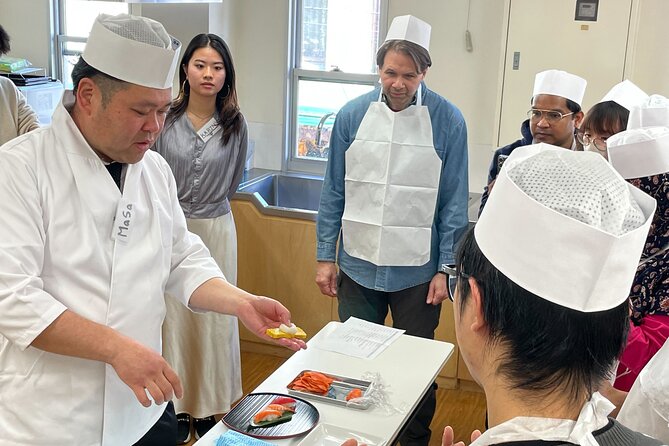
At $49.74 per person, this is not the cheapest lunch in Tokyo. It is also more than you would pay for a basic supermarket sushi box. The value comes from combining food with instruction, a fish-preparation demonstration, an English-speaking host, market-sourced ingredients, and a meal you prepare yourself.
For a first sushi class, the price is reasonable because the session is active from start to finish. You are not paying only for a demonstration. You make six pieces, receive guidance, use proper utensils, and eat the results.
The 90-minute duration is another strength. A longer cooking class may offer more recipes, but it would take a larger part of your sightseeing day. This shorter format gives you a real introduction without requiring a full afternoon.
Group size can reach 20 people. That is not a private lesson, and the room may feel busy at the maximum size. Still, the class includes hands-on work and staff support, so it should not feel like watching a chef from the back of a hall.
The activity includes the sushi you make, the English-speaking host, professional instruction, fresh ingredients, utensils, and tableware. Hotel transfers, extra food and drinks, and transportation to and from attractions are not included.
Who should book this class
I would recommend it most strongly to:
- First-time sushi makers who want clear instruction
- Families looking for a short activity children can take part in
- Food lovers who already plan to visit Tsukiji
- Visitors who want lunch and a cultural activity in one booking
- Couples or friends who enjoy making photographs and shared memories
- People looking for an indoor plan on a rainy day
You should think twice if you need a fully accessible venue, since the room is on the third floor and there is no elevator information provided. You should also contact the operator about allergies before booking. Allergy requests may be considered, but they cannot always be accommodated.
Halal and kosher requests are not accommodated, and kosher meals are specifically unavailable. If dietary restrictions are important to your plans, ask before paying rather than assuming substitutions will be possible.
The class is less suitable if you want a quiet, private chef lesson or a long market tour. It is a social, practical introduction with a possible group size of 20 and a focus on basic sushi-making skills.
Booking advice for your Tokyo itinerary
Place this class on a day when you can be flexible by at least a little. The advertised duration is about 1 hour and 30 minutes, but the session may go beyond its scheduled finish. Avoid booking a train, show, restaurant reservation, or airport transfer immediately afterward.
You can cancel for a full refund up to 24 hours before the local start time. Changes or cancellations inside that period are not accepted for a refund, so check your Tokyo schedule before confirming.
Because the class ends at the meeting point, it pairs neatly with nearby sightseeing. Visit Tsukiji before class if you want to browse while shops are open, or use the class as your main reason to visit the district and continue exploring afterward.
Should you book the Tsukiji sushi class?
Yes, if you want a practical food experience rather than another restaurant meal. The fish-cutting demonstration, patient English support, fresh ingredients, and six pieces of sushi give you plenty to do in a short time. The class also works unusually well for families because children can try food they helped create.
The tradeoffs are clear. You must climb stairs, dietary accommodations are limited, the group may include up to 20 people, and the class is not a full guided tour of Tsukiji. For most beginners, though, the balance is good.
Book it if you want to leave Tokyo with a new skill, a fresh lunch, and a better understanding of why simple-looking sushi takes real practice. Save room in your stomach, allow extra time at the end, and plan to explore the market around your lesson.
FAQ
How long does the sushi-making class last?
The activity lasts approximately 1 hour and 30 minutes. It may run beyond the scheduled ending time, so avoid arranging an appointment immediately afterward.
Where does the class meet?
The meeting point is 千社額棟, 4-chōme-16-2 Tsukiji, Chuo City, Tokyo 104-0045, Japan. You make your own way there.
Where does the activity end?
The class ends back at the meeting point.
What sushi will I make?
You will make five different nigiri sushi pieces and one rolled sushi.
Is the sushi included in the price?
Yes. The sushi you prepare is included, along with fresh ingredients, utensils, and tableware.
Is the class taught in English?
An English-speaking host assists with the class and explains or translates the sushi chef’s instruction.
Do I need previous sushi-making experience?
No. The class is suitable for beginners, and the chef and staff guide you through the preparation steps.
Can children join the class?
Yes. The experience has been enjoyed by families with children, including children between 7 and 12 years old.
Can the class accommodate food allergies or special diets?
You should report allergies when making a reservation. Allergy-related requests may be considered but cannot always be accommodated. Halal and kosher requests are not accommodated.
More Workshops in Tokyo
- Shinjuku Tokyo: Authentic Japanese Home-Style Culinary Class
★ 4.9 · 125 reviews - Ramen Making from Scratch +Akihabara Tour –Cooking Class
★ 5.0 · 25 reviews - Authentic Pizza Making Class in Naples with Appetizers and Drink
★ 5.0 · 3,178 reviews - Ramen Cooking Class at Ramen Factory in Kyoto
★ 5.0 · 1,937 reviews
More Sushi and Ramen Tours in Tokyo
- Sushi Making Tokyo Roll and Authentic Japanese Sushi Class
★ 5.0 · 3,971 reviews - Best of Shinjuku: Izakaya Food Tour (4 Stops, 14+ Tastings)
★ 5.0 · 1,863 reviews - Sushi Making Tokyo! Popular Maki Sushi & Japanese Sushi(+Recipe!)
★ 5.0 · 1,314 reviews - Tokyo Night Foodie Tour in Shinjuku – Seasonal Sushi, Wagyu Beef
★ 5.0 · 1,161 reviews
Just added in Tokyo
- Tokyo: Allstar Food Tour★ 4.7 · 29 reviews
- Tokyo: West-Side Cycling and Food Tour with Guide★ 5.0 · 37 reviews
- Tokyo: Togoshi Ginza Street Food Tour★ 5.0 · 34 reviews
- Tokyo Tsukiji Food & Culture Private Tour Licensed Guide★ 4.9 · 28 reviews
- Tokyo: Wagyu and Sushi Gastronomic Journey★ 4.3 · 24 reviews
- Tokyo: Sushi and Ramen Cooking Class with Sake Pairing Set★ 5.0 · 81 reviews
- Tokyo: Sushi Making Class★ 4.9 · 390 reviews
- Tokyo: Ramen Tasting Tour with 6 Mini Bowls of Ramen★ 4.9 · 432 reviews
Cooking Classes, compared.
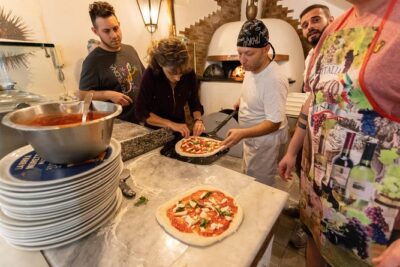
Authentic Pizza Making Class in Naples with Appetizers and Drink
Read our review →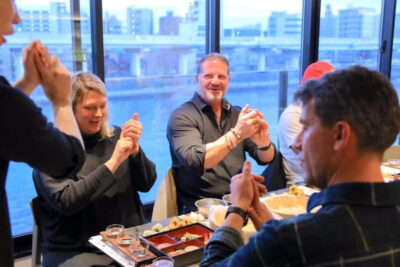
Roll and Authentic Sushi Making Class in Asakusa
Read our review →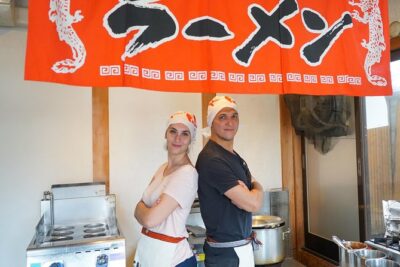
Ramen Cooking Class at Ramen Factory in Kyoto
Read our review →
Small Group Cooking Class & Market Food Tour in Florence
Read our review →
Sushi Making Class in a Happi Coat near a Famous Spot
Read our review →
Food Market Visit and Cooking Class with Wine
Read our review →