
REVIEW · JAPAN FOOD TOURS
Made from flour in 30min! Ramen-noodle Making Experience!
Fresh noodles, fast lesson, full bowl.
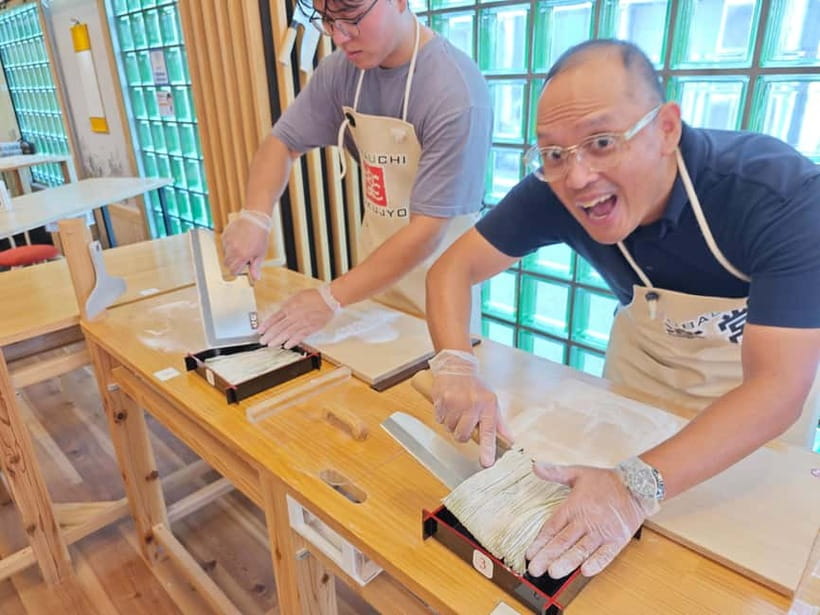
Making ramen from flour sounds like a half-day project, but SOBAGIRI-RAKUJYO reduces it to a lively 30-minute workshop followed by a meal. In a bright, open studio on Kappabashi Kitchenware Street, you mix, knead, stretch, and cut the noodles by hand with a large noodle knife.
I especially like the short format, which fits neatly between shopping and sightseeing in Asakusa, and the all-inclusive meal, with your own noodles, one drink, and Japanese snacks. The main consideration is safety: you must handle a large, heavy knife, and children who cannot do so independently need to work with a parent.
Key points to know before you book
- You cut every noodle by hand: This is not a demonstration followed by a machine-made bowl. You learn the fine cutting method yourself.
- The workshop takes about 30 minutes: The full experience is listed at 50 minutes, with time afterward to eat the noodles cooked by staff.
- You can choose more than soy sauce: Miso, shio, vegan, and vegan soup curry ramen are among the available options.
- One drink and Japanese snacks are included: Beer, highball, lemon sour, juice, and non-alcoholic beer are listed choices.
- The setting is spacious and bright: The ground-floor studio can handle up to 30 people, though this booking is limited to six participants.
- It sits in Kappabashi, about 25 minutes from Sensoji Temple: It is easy to pair with kitchenware shopping and a walk through Asakusa.
Why this short ramen class works so well
SOBAGIRI-RAKUJYO focuses on one satisfying skill: turning flour into ramen noodles with a knife. The process reflects a Japanese noodle-cutting technique passed down from the Edo period, from 1603 to 1868, but the class is built for modern sightseeing schedules.
You do not spend an hour watching a long lecture. The staff have developed a quicker method for mixing flour and water, kneading the dough, flattening it, and cutting it into thin strips. That makes the experience approachable for families, first-time cooks, and anyone with only a spare hour in Asakusa.
I like this kind of activity because you get a clear result. You are not simply shaping dough for a photo. Your noodles go into your own bowl, and the staff cook them while you move to the eating area.
The short length is also useful if you are planning a full day around Asakusa. You can visit Sensoji Temple, walk to Kappabashi, make noodles, eat, and continue shopping without surrendering a large part of your day.
The format is advertised as 30 minutes for making and 30 minutes for dining, while the listed activity duration is 50 minutes. In practical terms, expect a compact workshop and a meal afterward, and avoid scheduling your next activity too tightly.
More sushi and ramen tours in Japan:
- Sushi Making Tokyo Roll and Authentic Japanese Sushi Class
★ 5.0 · 3,971 reviews - Tokyo: Roll and Authentic Sushi Making Class in Asakusa
★ 4.9 · 1,957 reviews - Ramen Cooking Class at Ramen Factory in Kyoto
★ 5.0 · 1,937 reviews
Finding the studio on Kappabashi Kitchenware Street
The restaurant is on the first floor of Kappabashi, the part of Tokyo known for kitchen tools, restaurant supplies, cookware, knives, and food samples. The meeting point is diagonally across from a food sample specialty store marked by a large beetle object.
That landmark matters because Kappabashi can feel confusing if you are looking for a small storefront among rows of specialist shops. Arrive 10 minutes before your reserved time, as the session begins with reception and hand washing.
The shop itself is designed more like a clean cooking studio than a dark workshop. The description emphasizes a bright Japanese-style interior, an open kitchen, and a proper table setup. That makes it a comfortable choice if you want an activity that feels polished and easy to photograph.
The spacious ground floor can accommodate up to 30 people at once, but this particular experience is limited to six participants. A small group should mean less waiting and clearer help while you use the knife.
The 30-minute noodle-making lesson
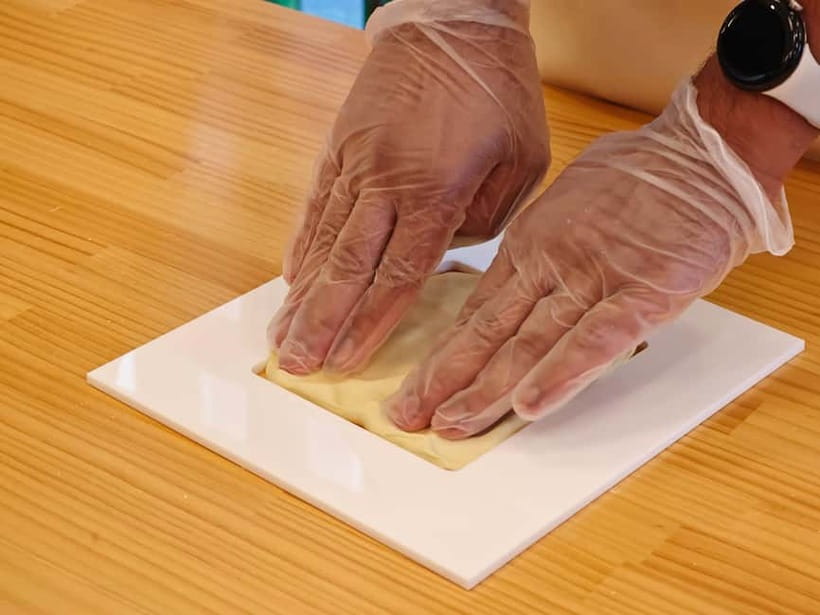
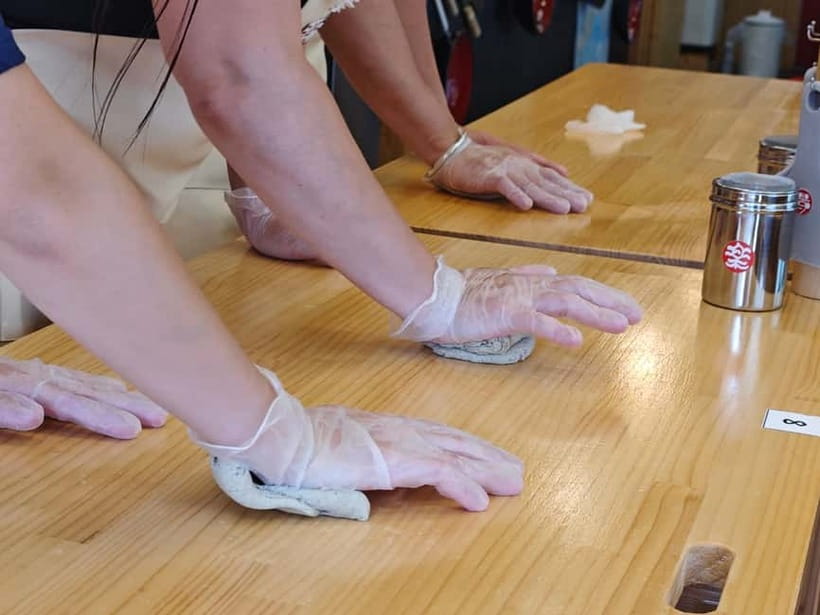
After reception and hand washing, the practical work begins. You take part in the full process, starting with flour and water before kneading the dough and stretching it flat.
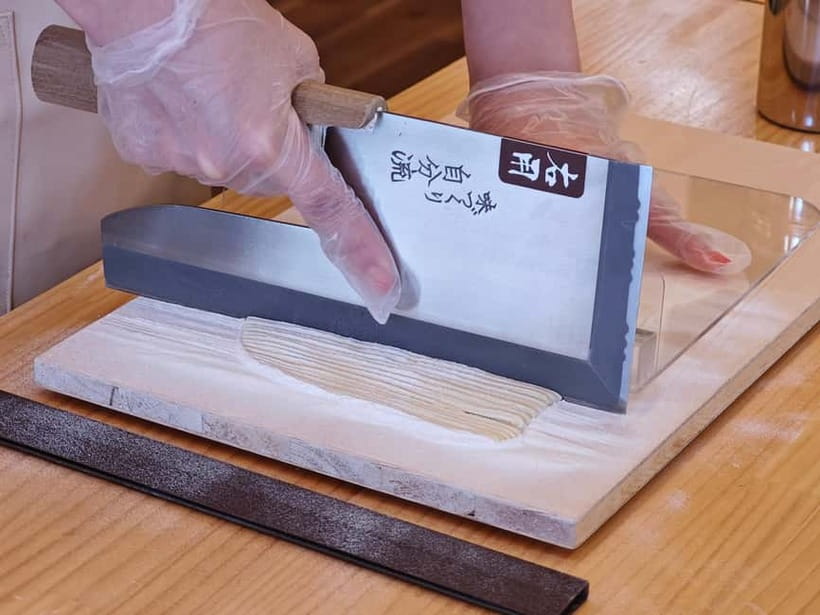
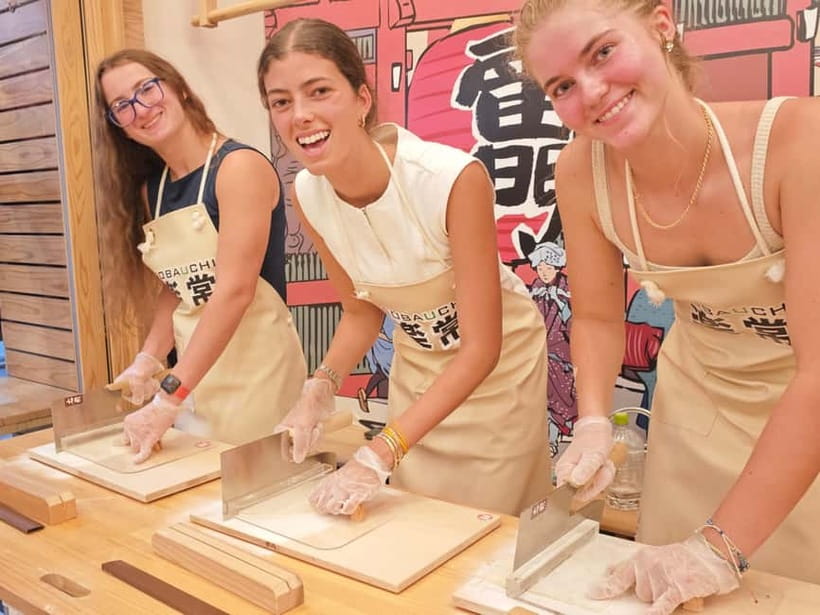
The unusual part is the cutting. Many visitors have seen noodles made with a pasta machine, but here you cut them one by one with a large knife designed for noodle preparation. The instructor teaches a fine, controlled technique and explains how to work safely.
This is where the experience becomes more than a food tasting. The motion requires care and attention, but the class is intended for people from around the world, not professional cooks. The teaching style is described as gentle, careful, and slightly amusing, which should help keep the mood relaxed.
You should still take the safety instructions seriously. The knife is large and heavy, and any injury is the participant’s responsibility. Parents are responsible for their children, and a child joining alone must be able to knead and use the knife independently.
For younger children, the practical rule is simple: if they cannot handle the equipment safely, they must work with a parent. One adult must accompany each child in a parent-child pairing, and three participants at one table are not allowed.
That makes the class a better fit for older children and families who are happy to participate together, rather than parents hoping to watch from the side. Observation-only entry is generally not allowed, and you need to order the meal as part of the experience.
Your noodles become a proper bowl of ramen
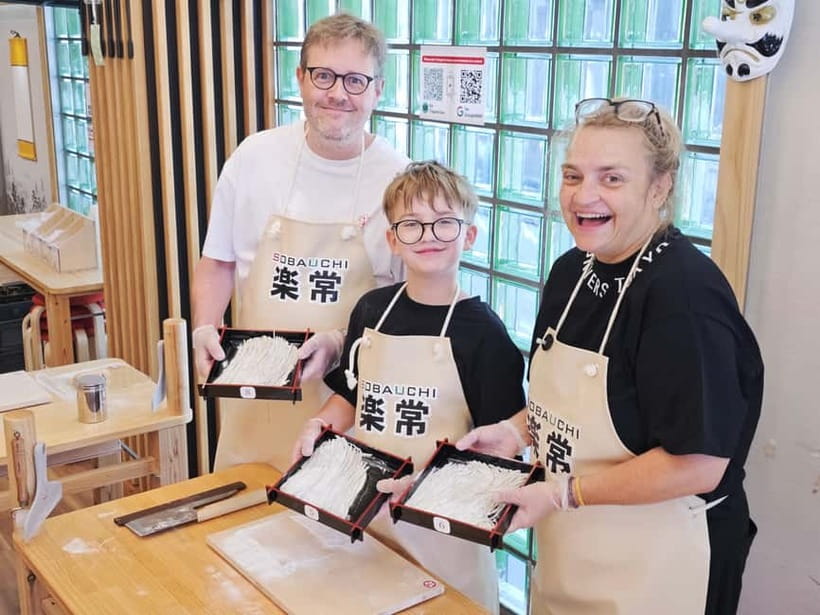
Once you finish cutting, staff cook the noodles and serve them back to you. The fact that your own noodles remain identifiable matters: you get to taste the result of the work you just completed, rather than receiving a generic bowl prepared in advance.
The available flavors give the meal more range than a standard soy-sauce-only class. Choices include:
- Miso ramen
- Soy sauce ramen
- Shio ramen
- Vegan ramen
- Vegan soup curry ramen
The soy sauce version comes with ramen broth, egg, and pork according to the supplied meal details. A vegetarian or vegan diner can choose an appropriate option, but you should confirm your selection when booking or on arrival if dietary needs are important.
The noodle quality may surprise you. The class uses a fast process, but that does not mean the result is treated as a novelty. The completed noodles are cooked and served as a real meal, with soup and toppings available according to the chosen style.
You may also receive ingredients to add to the ramen, depending on the meal setup. The recipe for the soup is described as a trade secret, though the staff offer a small piece of advice that you can try back home.
Same city, a different table:
- Tokyo: Shinjuku Food Tour (13 Dishes at 4 Local Eateries)
★ 5.0 · 6,603 reviews - Tokyo Tsukiji Fish Market Food and Culture Walking Tour
★ 5.0 · 3,184 reviews - Osaka: Shinsekai Food Tour with 13-15 Dishes at 5 Eateries
★ 4.8 · 2,204 reviews - Osaka Food Tour: 13 Dishes at 5 Local Eateries
★ 5.0 · 2,149 reviews
Drinks and snacks add real value
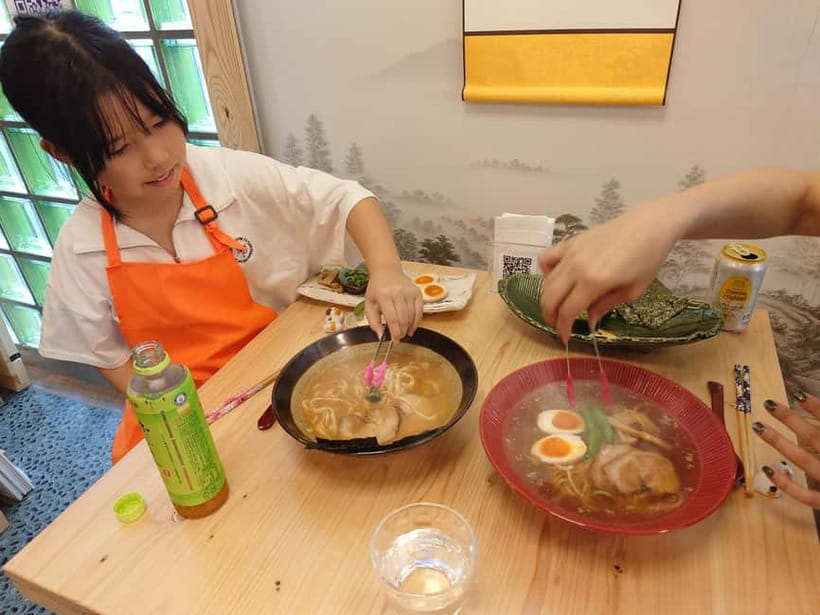
One drink is included in the price. Choices listed include beer, highball, lemon sour, juice, and non-alcoholic beer, giving both adults and children a useful range.
You also get free snacks from Japanese manufacturers in the eating area. The snacks are all-you-can-eat, which turns the post-class period into more than a quick bowl of noodles.
This matters when you compare the $57 price. You are paying for instruction, ingredients, use of the studio and knife, cooking by staff, a ramen meal, one drink, and unlimited snacks. It is not the cheapest way to eat ramen in Tokyo, but it offers a food activity and a meal in one stop.
The value is strongest if you want something hands-on. If your only aim is a filling bowl of ramen, a regular restaurant will cost less. If you want to learn a Japanese noodle technique, make your own food, and enjoy a drink in a well-organized setting, the package is easier to justify.
What the atmosphere feels like
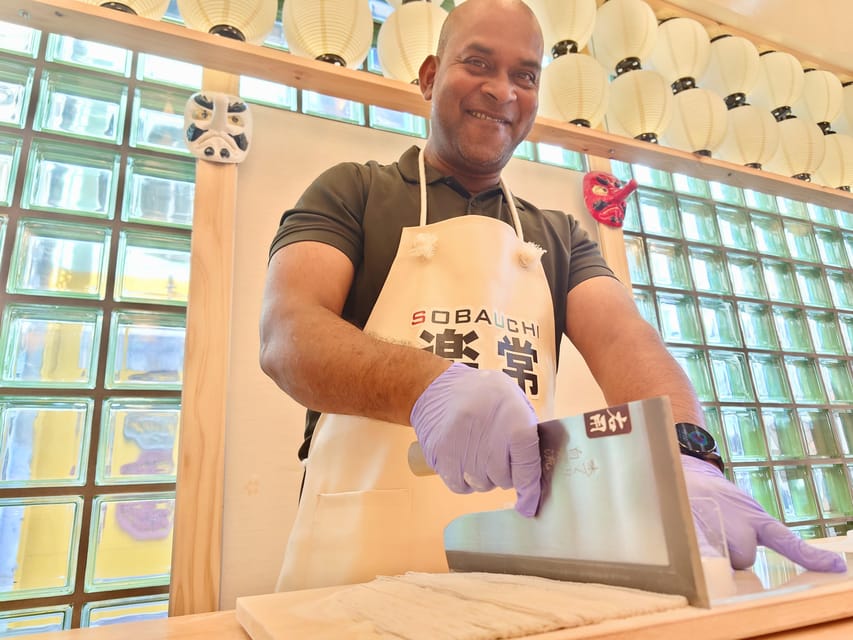
The studio is presented as clean, open, bright, and stylish. That is a useful distinction for anyone who dislikes cramped cooking classes or rough workshop conditions.
The open kitchen lets you see the food side of the experience, while the generous floor space should make it easier to follow the instructions. The decoration is also described as photogenic, so you can expect a setting that works well for family photos and group pictures.
Staff take professional-style photos during the workshop, then share them by QR code. This is a thoughtful touch because flour-covered hands and a large knife do not make ideal phone-handling conditions.
The photo service also means you can stay focused on the lesson instead of asking someone to stop and take pictures. Some photos may include playful edits, making them a pleasant souvenir of the activity.
The instructor speaks Japanese and English, and an English audio guide is included. The combination should help international visitors follow the steps, although this remains a physical lesson, not a lecture. Watch the demonstration carefully and ask for help when you need it.
Who should book this experience
I would recommend this class to couples, families, friends, and small groups who want a quick activity with a clear payoff. It suits people who like food, practical crafts, and experiences that fit around a larger sightseeing day.
It is especially useful in Asakusa because Kappabashi already gives you a reason to visit. After the class, you can continue browsing knives, pans, restaurant signs, and kitchen gadgets, or head back toward Sensoji Temple.
Families should read the age and safety rules closely. Children under 2 are not suitable, and the information also lists children under 3 as unsuitable. That wording is repetitive, but the safe interpretation is that very young children should not participate.
People with gluten intolerance cannot take part, and those with buckwheat allergies are also excluded. The experience is called ramen-making, but the safety information specifically requires attention to buckwheat and gluten restrictions.
Wheelchair users can be accommodated, and the venue is described as wheelchair accessible. The small-group format is also helpful for anyone who benefits from direct instruction rather than a large public demonstration.
The drawbacks to keep in mind
The knife work is the main limitation. This is not a class where you can simply relax while an instructor does the difficult part. You need to knead and cut the dough yourself, and the equipment requires responsible handling.
The total timing also needs a little care. The workshop itself takes around 30 minutes, but you should allow time for reception, hand washing, cooking, and eating. The official duration is 50 minutes, while the promotional outline describes about 30 minutes of making and 30 minutes of dining.
The cancellation record also suggests one practical point: confirm your reservation and arrive on time. One very poor account describes a scheduled session being cancelled on arrival, although the overall rating is 4.8 from 24 reviews and the other supplied feedback is strongly positive. The published policy allows a full refund when you cancel at least 24 hours ahead.
Finally, the meal is not optional. You cannot enter simply to watch someone else make noodles, and attendants who do not participate may need to pay for their own meal. That is worth clarifying when booking for a family or group.
Is $57 a fair price?
At $57 per person, this is a mid-range Tokyo food activity rather than a bargain meal. A plain bowl of ramen costs far less, but that comparison misses the main point.
You receive a guided noodle-making lesson, your own handmade noodles, staff preparation, a choice of ramen styles, one drink, and all-you-can-eat Japanese snacks. You also get access to a clean studio and photographs shared by QR code.
I consider the price fair for visitors who want a compact cultural activity. The class turns lunch into something you actively make, and the 50-minute format protects the rest of your day.
The value drops if you dislike cooking, have strict food restrictions, or mainly want to eat without handling a heavy knife. In those cases, a standard ramen shop is the better choice.
Should you book SOBAGIRI-RAKUJYO?
Book it if you want a hands-on Asakusa activity that is short, friendly, and easy to pair with Kappabashi shopping. The best reasons are the manual noodle cutting, the choice of ramen flavors, the included drink and snacks, and the fact that you eat the noodles you made.
I would choose the experience for a family with children old enough to handle the equipment safely, a couple looking for a different meal, or a small group that wants photos and a shared task.
Skip it if you cannot eat gluten or buckwheat, if you prefer to avoid knife work, or if you want only an inexpensive bowl of ramen. For everyone else, the compact schedule and full meal make this a sensible way to add a little cooking to an Asakusa day.
FAQ
Where is the ramen-making experience located?
It is on the first floor of SOBAGIRI-RAKUJYO in Kappabashi, Asakusa, on Kappabashi Kitchenware Street. The meeting point is diagonally across from a food sample specialty store with a large beetle object.
How long does the experience take?
The listed duration is 50 minutes. The noodle-making portion takes about 30 minutes, followed by time to eat the noodles cooked by the staff.
What do I make during the class?
You work with flour and water, knead the dough, stretch it flat, and cut the noodles by hand with a large knife made for noodle cutting.
Which languages are available?
The instructor languages are Japanese and English. An English audio guide is also included.
Which ramen flavors can I choose?
Available choices include miso ramen, soy sauce ramen, shio ramen, vegan ramen, and vegan soup curry ramen.
Is a drink included?
Yes. One drink is included, with choices such as beer, highball, lemon sour, juice, and non-alcoholic beer.
Are snacks included?
Yes. Japanese snacks from selected manufacturers are available free of charge in the eating space, with an all-you-can-eat arrangement.
Can children participate?
Children under 2 and children under 3 are listed as unsuitable. Older children must be able to knead and use the large, heavy knife safely. If they cannot, they must participate with a parent.
Can wheelchair users join?
Yes. The experience is listed as wheelchair accessible.
Who cannot participate because of food restrictions?
People with buckwheat allergies and people with gluten intolerance cannot participate.
Do I need to arrive early?
Yes. You should arrive 10 minutes before your reserved time for reception and preparation.
Can I enter only to watch?
No. Observation-only entry is generally not allowed. Participants are expected to order the meal as part of the experience.
Just added in Japan
- Tokyo : Asakusa Food Tour – 12 Dishes & 3 Drinks★ 5.0 · 44 reviews
- Tokyo: Asakusa & Sensoji ー Oldest Temple Walking Tour (2hrs)★ 5.0 · 213 reviews
- Asakusa Highlights: Street Food Crawl Tour (7+ Local Bites)★ 5.0 · 206 reviews
- Tokyo: Allstar Food Tour★ 4.7 · 29 reviews
- Tokyo: West-Side Cycling and Food Tour with Guide★ 5.0 · 37 reviews
- Tokyo Tsukiji Food & Culture Private Tour Licensed Guide★ 4.9 · 28 reviews
- Tokyo: Wagyu and Sushi Gastronomic Journey★ 4.3 · 24 reviews
- Tokyo: Togoshi Ginza Street Food Tour★ 5.0 · 34 reviews
Sushi and Ramen Tours, compared.
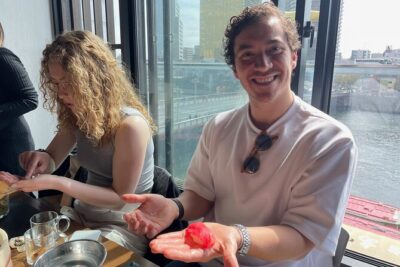
Sushi Making Tokyo Roll and Authentic Japanese Sushi Class
Read our review →
Roll and Authentic Sushi Making Class in Asakusa
Read our review →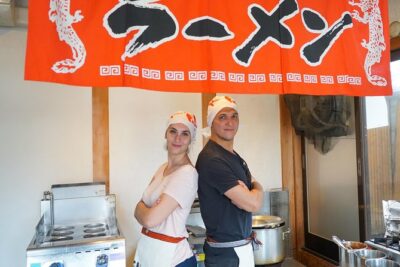
Ramen Cooking Class at Ramen Factory in Kyoto
Read our review →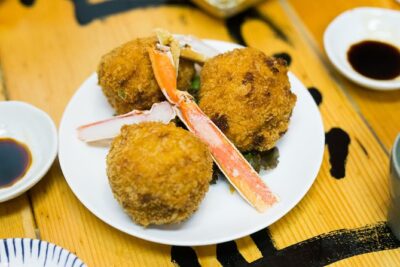
Best of Shinjuku: Izakaya Food Tour (4 Stops, 14+ Tastings)
Read our review →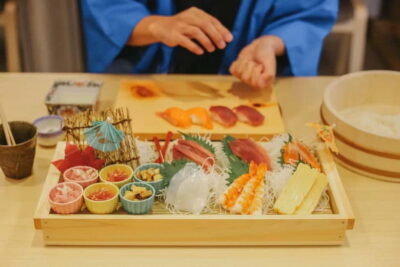
Sushi Making Class in a Happi Coat near a Famous Spot
Read our review →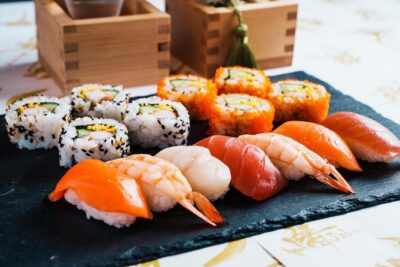
Sushi Making Tokyo! Popular Maki Sushi & Japanese Sushi(+Recipe!)
Read our review →
Sushi Making Osaka Roll and Authentic Japanese Sushi Class
Read our review →
Tokyo Sushi Making Class in Tsukiji with Professional Chef
Read our review →Browse the lists this tour appears in